Baklava Recipe
Table of Contents
Layers of History Baked Into Every Bite
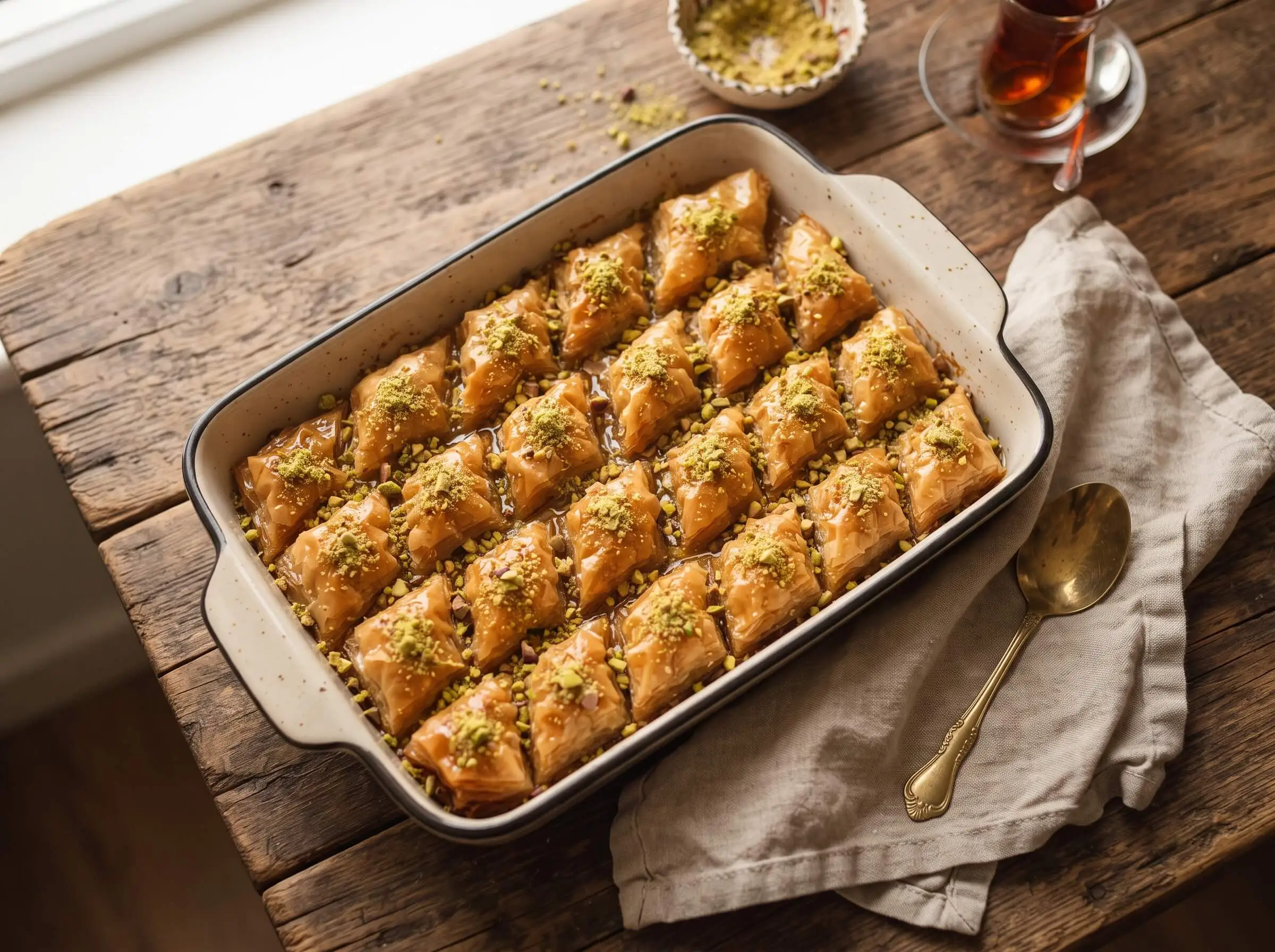
Few desserts carry as much shared cultural history as baklava, a rich, flaky pastry made from layers of phyllo dough, chopped nuts, and a sweet syrup that soaks through every layer. This baklava recipe walks through the classic method, delivering that same crisp, syrupy, nutty dessert enjoyed across Greece, Turkey, and much of the Middle East.
Baklava’s exact origins are genuinely disputed, with Greek, Turkish, and various Middle Eastern culinary traditions all claiming close ties to the dessert’s development, something Smithsonian Magazine has explored when covering the complicated, shared history behind baklava and how it spread throughout the former Ottoman Empire. A greek baklava recipe specifically often leans toward using walnuts and a honey-based syrup, while other regional versions might favor pistachios or a syrup built more around sugar, giving each version a slightly distinct character despite sharing the same basic structure.
Working with phyllo dough is often what intimidates people most when they first try a recipe for baklava, and King Arthur Baking has written detailed guidance on handling phyllo, explaining that keeping the thin sheets covered with a damp towel while working is essential, since phyllo dries out and becomes brittle within just a few minutes of exposure to air.
Getting the syrup right is just as important as the pastry itself. Serious Eats has explained the science behind pouring cold syrup over hot baklava, or hot syrup over cooled baklava, noting that a significant temperature contrast between the syrup and the pastry when they meet helps the syrup absorb evenly throughout the layers rather than just pooling on top or making the top layer soggy while leaving the bottom dry.
Nuts themselves carry plenty of nutritional value beyond just flavor. Healthline has written about the health benefits of walnuts and pistachios specifically, noting they’re both good sources of healthy fats and various nutrients, though baklava’s syrup and butter content certainly still make it a dessert best enjoyed in moderation rather than an everyday health food.
Whether you’re after an easy baklava recipe for your first attempt at working with phyllo dough or you’re specifically chasing an authentic greek baklava recipe experience, this version walks through every layer, cut, and syrup step needed to get that perfect balance of crisp and syrupy sweetness.
Why You’ll Love This Recipe
This baklava recipe walks through handling phyllo dough clearly and carefully, making it a genuinely approachable easy baklava recipe even if you’ve never worked with this delicate pastry before.
The combination of buttery, crisp layers and warm, spiced nuts soaked in sweet syrup delivers that same rich, indulgent flavor found in bakery-quality baklava.
This dessert also keeps and travels well, making it a great make-ahead option for holidays, gatherings, or simply having something sweet on hand for days.
What to Serve With Baklava
A cup of strong coffee or tea pairs beautifully here, since the bitterness helps balance out the sweetness of the syrup-soaked pastry.
A small scoop of vanilla or pistachio ice cream alongside a piece of baklava turns it into an even more indulgent dessert.
For a dessert spread, serving baklava alongside other Mediterranean or Middle Eastern sweets creates a beautiful, varied presentation.
How This Baklava Recipe Comes Together
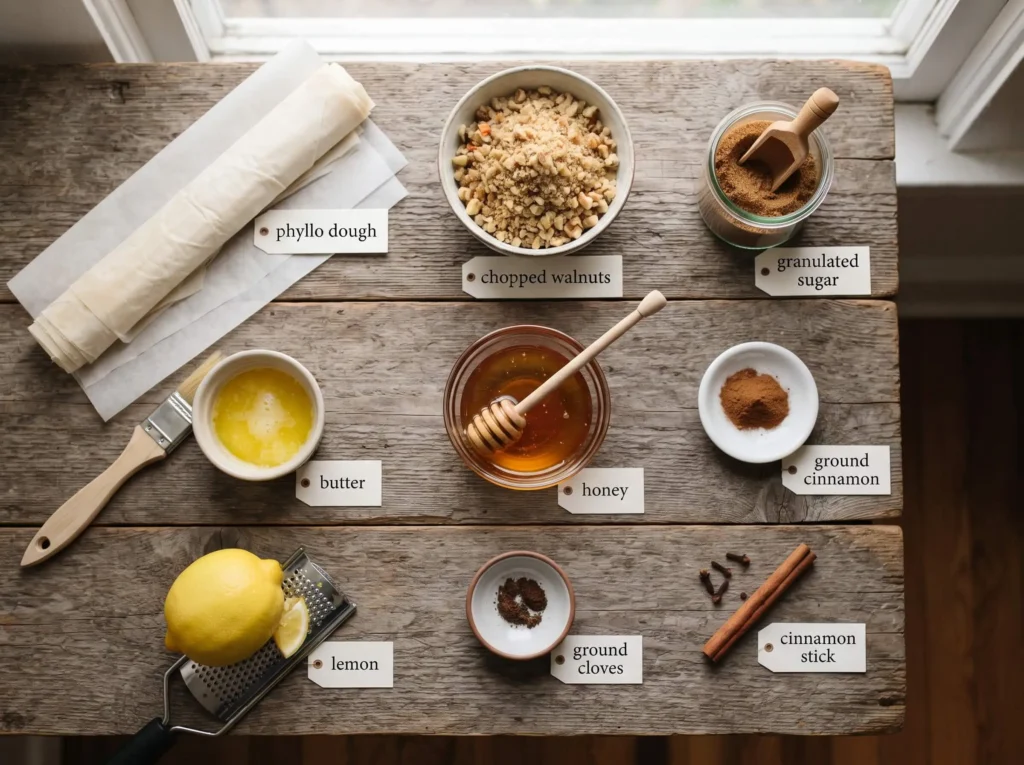
This recipe is built in three main stages: layering buttered phyllo sheets with a spiced, chopped nut filling, cutting the assembled pastry into diamond or square shapes before baking, then pouring a sweet syrup over the hot baklava right after it comes out of the oven. Here’s everything you’ll need.
Baklava Recipe
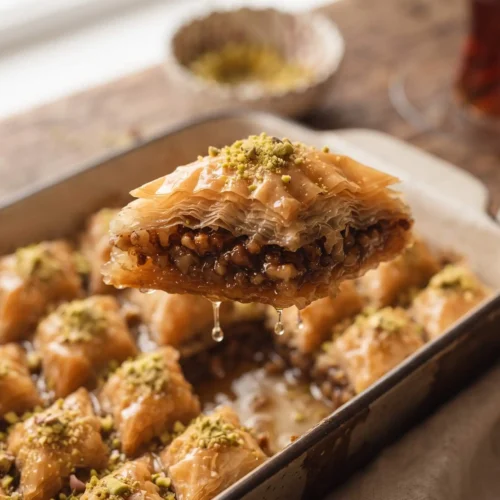
Baklava Recipe

Equipment
- 9×13 baking dish
- Pastry brush
- sharp knife
- Small saucepan
Ingredients
Filling
- 3 cups walnuts finely chopped
- 1 tsp ground cinnamon
- ¼ tsp ground cloves
- 2 tbsp granulated sugar
Pastry
- 1 lb phyllo dough thawed
- 1 cup unsalted butter melted
Syrup
- 1 cup granulated sugar
- 1 cup water
- ¾ cup honey
- 1 cinnamon stick
- 1 tbsp lemon juice
Instructions
Prepare The Filling and Layer the Baklava
- In a bowl, combine the finely chopped walnuts, cinnamon, cloves, and sugar, mixing well until evenly combined. Set aside while you prepare the phyllo.
- Brush the bottom of a 9×13 baking dish with melted butter. Working with one sheet of phyllo at a time and keeping the rest covered with a damp towel, layer about 8 sheets of phyllo into the dish, brushing each sheet lightly with melted butter before adding the next.
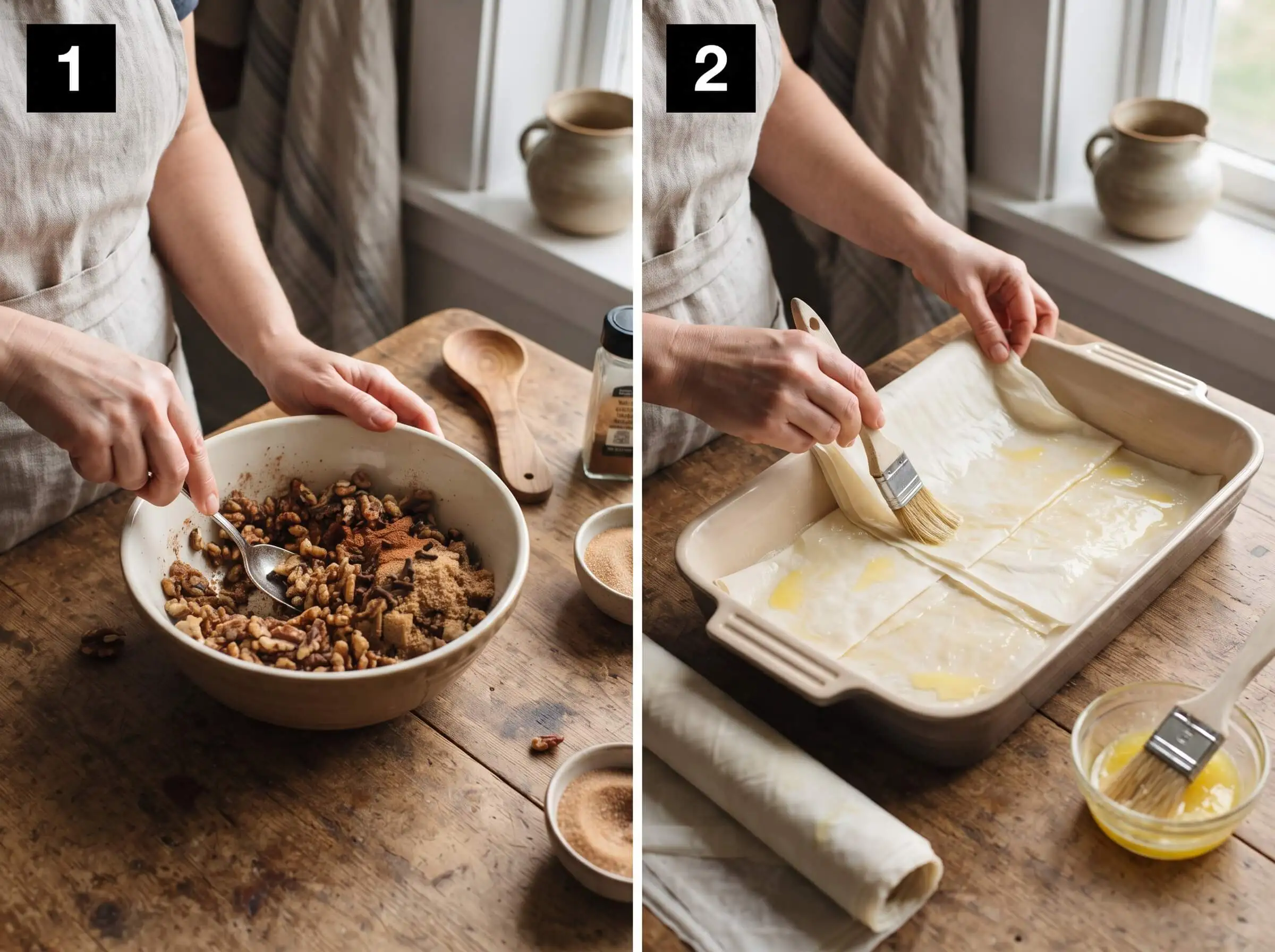
Put The Filling
- Sprinkle about a third of the walnut mixture evenly over the layered phyllo. Add another 6-8 sheets of phyllo, brushing each with butter as before, then sprinkle another third of the walnut mixture. Repeat with another layer of phyllo and the remaining walnut mixture, then top with the final 8 sheets of phyllo, brushing each with butter, including a generous final layer on top.
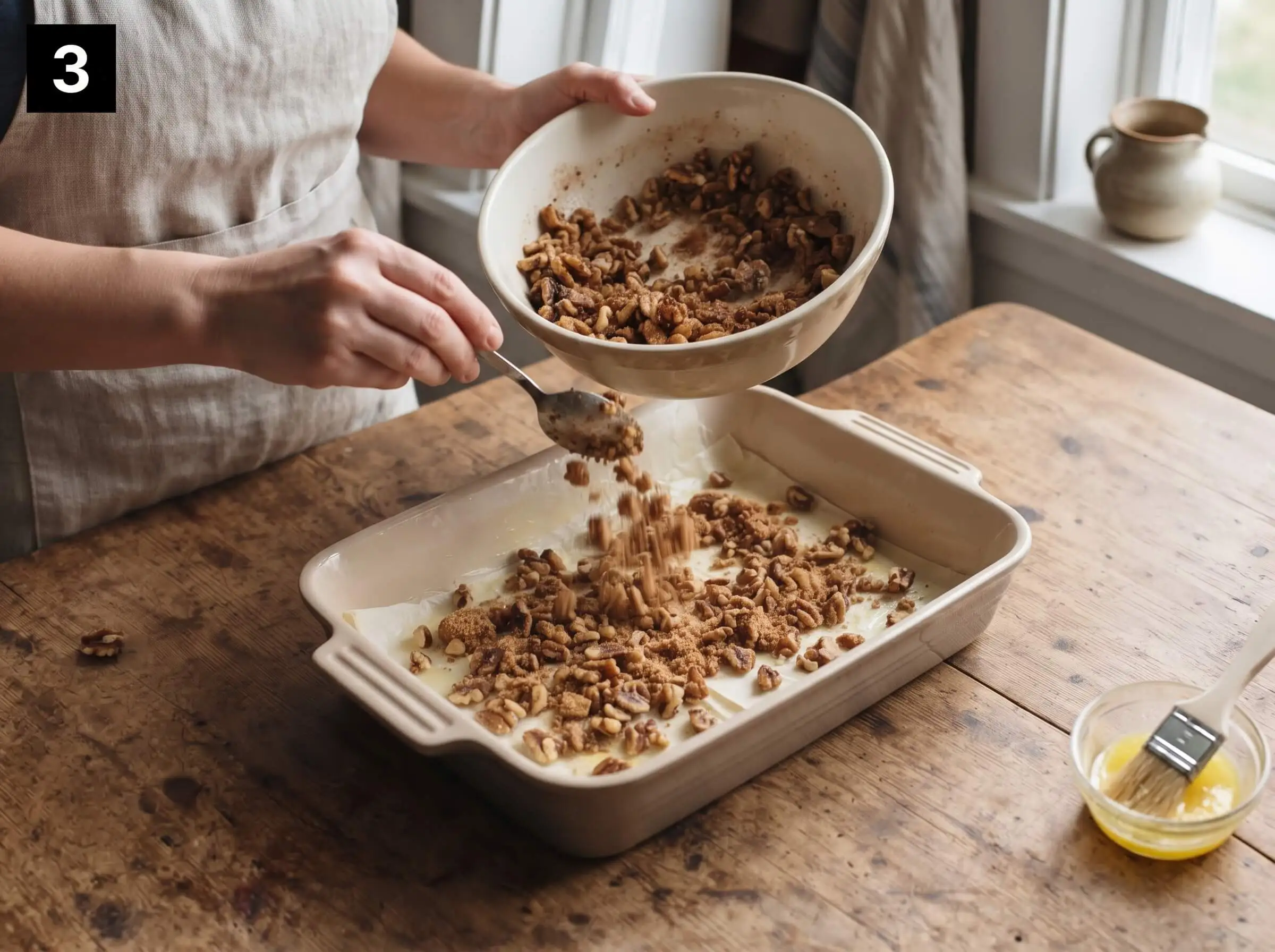
Cut and Bake
- Using a sharp knife, carefully cut the assembled baklava into diamond or square shapes, cutting all the way through to the bottom of the dish before baking.5. Bake at 325°F (165°C) for 45-50 minutes, until the top is golden brown and crisp throughout.
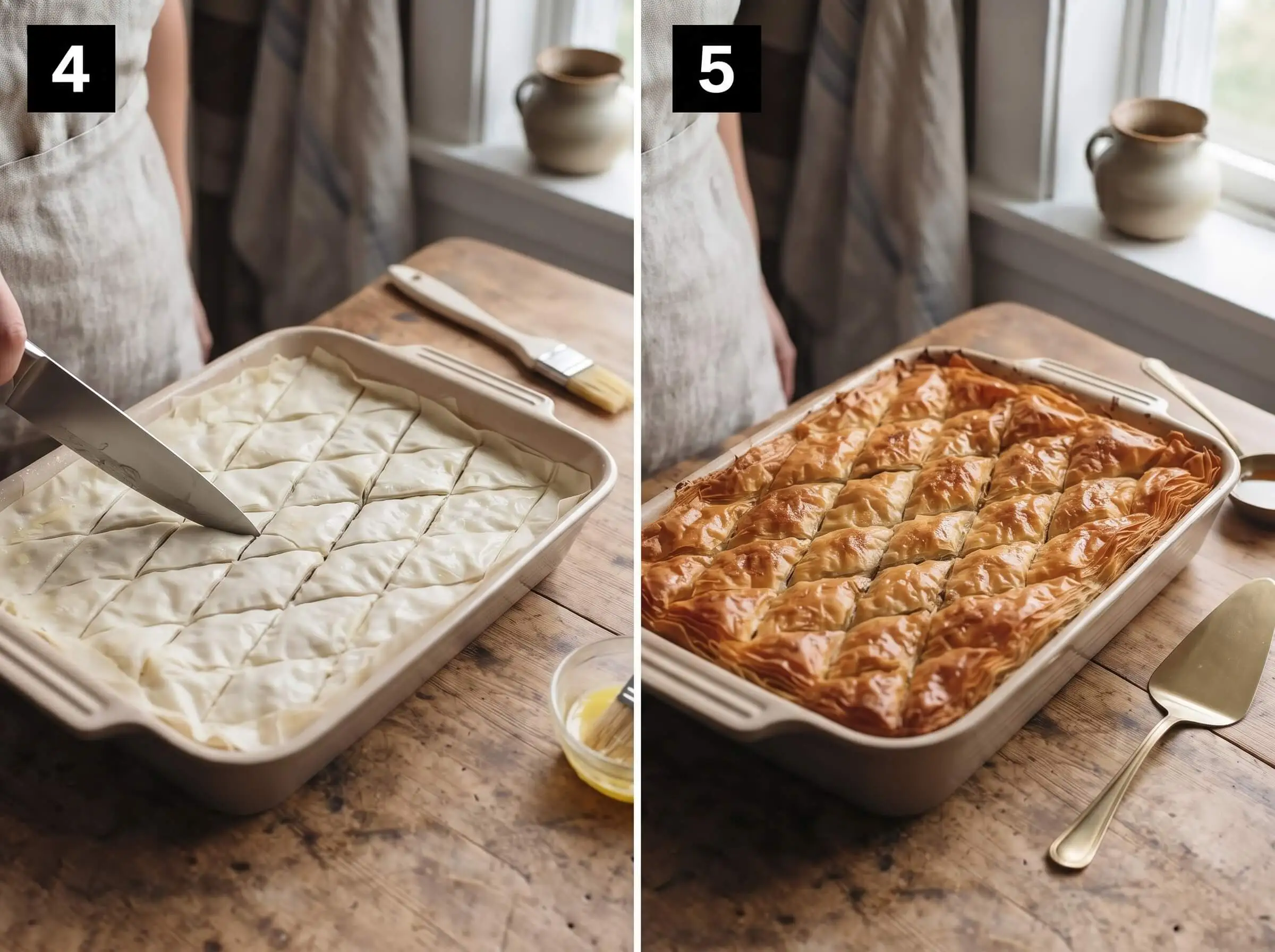
Make and Add the Syrup
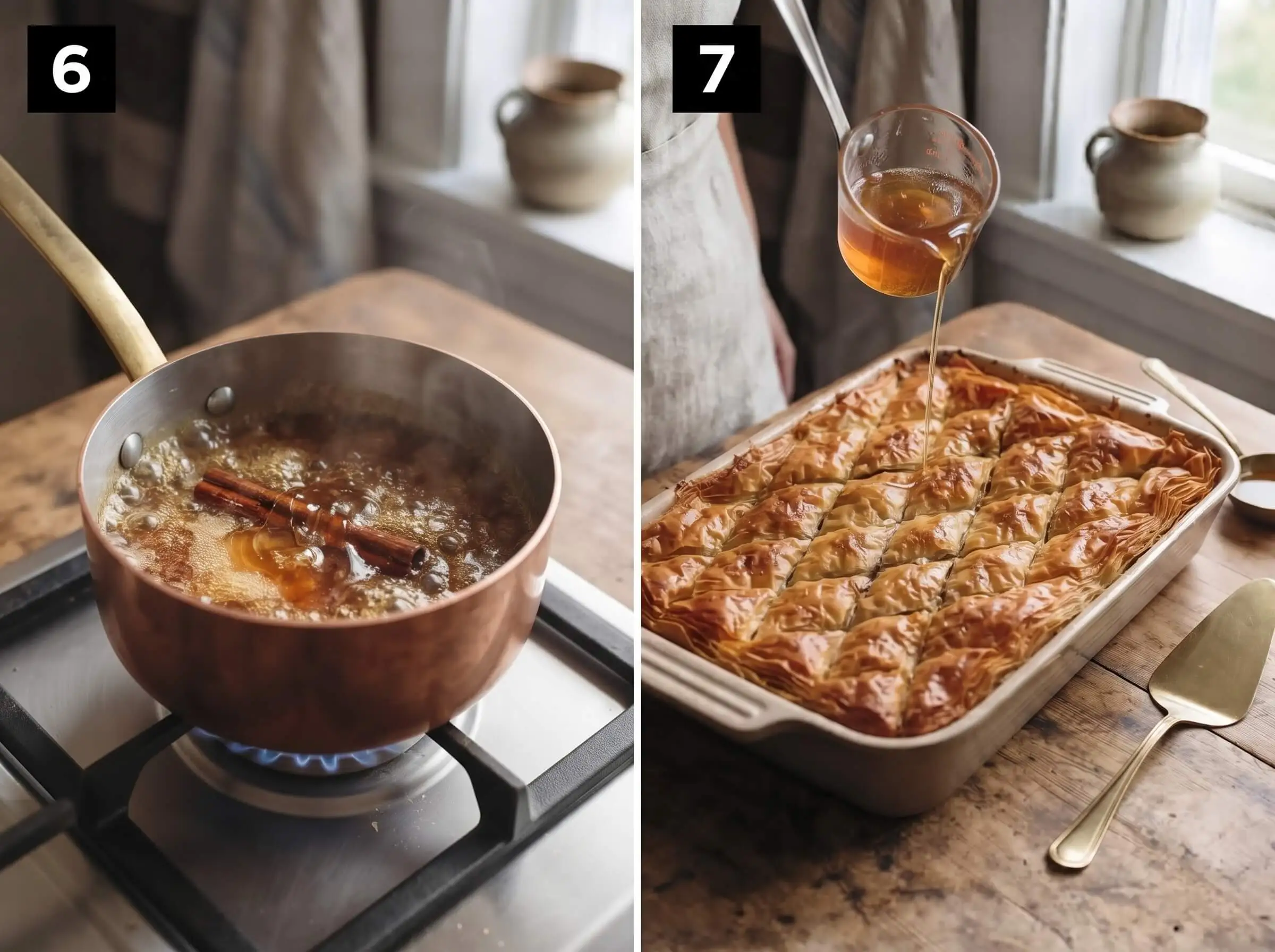
- While the baklava bakes, combine the sugar, water, honey, cinnamon stick, and lemon juice in a small saucepan over medium heat. Bring to a boil, then reduce heat and simmer for 10 minutes, until slightly thickened. Remove the cinnamon stick and let the syrup cool slightly.
- As soon as the baklava comes out of the oven, pour the slightly cooled syrup evenly over the hot pastry, making sure it reaches all the cut edges. Let the baklava sit uncovered for at least 4 hours, or overnight, allowing the syrup to fully absorb before serving.
Notes
- Keeping unused phyllo sheets covered with a damp towel while you work is essential, since phyllo dries out and becomes brittle within just a few minutes of air exposure, making it difficult to layer without tearing.
- Cutting the baklava into shapes before baking, rather than after, is important, since the pastry becomes too crisp and delicate to cut cleanly once baked.
- Pouring the syrup over the baklava while it’s still hot, and having the syrup itself already cooled slightly, creates the temperature contrast needed for even absorption throughout all the layers.
- Resisting the urge to cover the baklava while it sits after adding the syrup helps it stay crisp rather than turning soggy, so leave it uncovered during that resting period.
- This dessert genuinely improves with time, so letting it sit the full recommended time, or even a day, allows the flavors and syrup to fully settle throughout the layers.
Frequently Asked Questions
What makes this a greek baklava recipe specifically, as opposed to other regional versions?
This version uses walnuts and a honey-based syrup with cinnamon, which are hallmarks commonly associated with Greek-style baklava. Other regional variations, particularly Turkish or Middle Eastern versions, might use pistachios instead of walnuts or a syrup built more heavily around sugar rather than honey, giving each regional style its own distinct character.
Can I make this recipe for baklava with a different type of nut?
Yes, pistachios, almonds, or a mixture of different nuts can all replace walnuts, depending on your preference or regional tradition you’re aiming to recreate. Just make sure the nuts are finely chopped so they layer evenly throughout the pastry.
Why did my phyllo dough tear while I was working with it?
Phyllo dries out very quickly once exposed to air, becoming brittle and prone to tearing. Keeping unused sheets covered with a damp towel while working, and working relatively quickly once you start layering, should help prevent this issue, though a few small tears here and there won’t significantly affect the final result once everything is layered and baked.
Why is my baklava soggy instead of crisp?
This usually happens if the syrup was poured onto baklava that wasn’t hot enough, or if the syrup itself wasn’t properly cooked down and cooled slightly first. The temperature contrast between hot pastry and slightly cooled syrup is what helps the syrup absorb properly rather than just sitting on top and making everything mushy.
Is this considered an easy baklava recipe for beginners, given the phyllo dough?
While phyllo does require a bit of care and patience, this recipe breaks the process down clearly, and most of the challenge simply comes from working a little quickly and keeping the sheets covered when not in use. It’s genuinely more approachable than it might seem at first glance.
How long does baklava need to sit before it’s ready to eat?
At minimum, letting it sit uncovered for 4 hours allows the syrup to properly absorb throughout the layers, though letting it sit overnight gives even better results, with more even syrup distribution and improved flavor.
Can I freeze baklava, and how should I store leftovers?
Yes, baklava freezes well for up to 3 months when wrapped tightly and stored in an airtight container. At room temperature, it keeps well for up to 2 weeks in a covered container, since the sugar syrup actually helps preserve it longer than many other baked goods.
What are the essential baklava recipe ingredients I need before starting?
At minimum, you’ll need phyllo dough, butter, nuts, and the ingredients for a syrup, typically sugar, water, and either honey or additional sugar, along with warm spices like cinnamon. Beyond that, the recipe is fairly flexible in terms of exact nut type and syrup flavoring.
Twists & Ideas
You Can Add
A splash of orange blossom water or rosewater added to the syrup gives a subtle floral note common in many Middle Eastern versions of baklava.
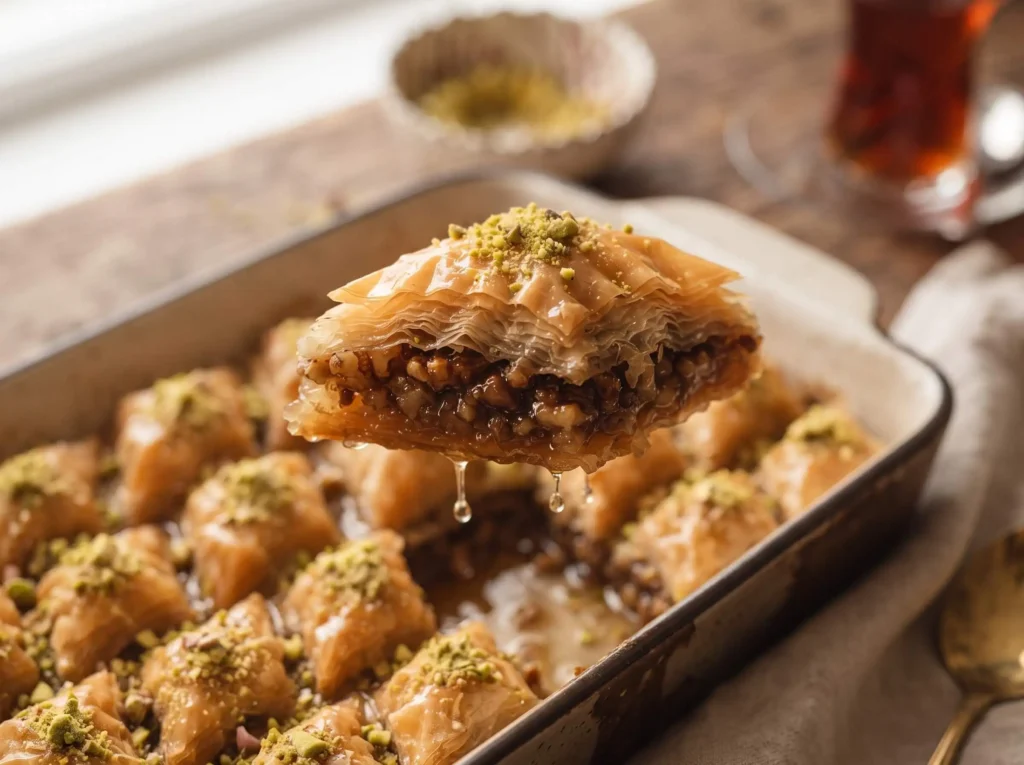
Crushed pistachios sprinkled over the top after the syrup has been added create a colorful, decorative finish beyond just the walnut filling inside.
A pinch of ground cardamom mixed into the nut filling adds a warm, slightly exotic spice note alongside the cinnamon and cloves.
A thin layer of chocolate drizzled over the cooled, syrup-soaked baklava adds a modern twist for anyone who wants extra richness.
You Can Replace
Pistachios or almonds can replace walnuts, as mentioned in the FAQ, for a different regional flavor and texture throughout the filling.
Maple syrup can replace part of the honey in the syrup for a slightly different, less floral sweetness.
Vegetable oil-based margarine can replace butter for a dairy-free version, though the flavor and richness will be noticeably different.
A sugar-based syrup without honey can replace the honey syrup used here for a lighter, less distinctly floral sweetness, closer to some Turkish-style baklava recipes.
Recipes You May Enjoy
- Cannoli Filling Recipe
- Cannoli Recipe
- Japanese Cheesecake Recipe
- Arroz con Leche
- Dulce de Leche Recipe
- Mexican Flan
- Brigadeiro Recipe
A Dessert Worth the Patience It Requires
Baklava rewards patience at every stage, from carefully layering delicate phyllo sheets to waiting for that syrup to fully soak through before the first bite. The end result, crisp buttery layers, warm spiced nuts, and sweet syrup in every piece, makes the process genuinely worth the extra care it demands.
Whether you’re making this baklava recipe for a holiday gathering, chasing an authentic greek baklava recipe experience, or trying an easy baklava recipe for the very first time working with phyllo dough, this version delivers that same rich, layered dessert people have cherished across generations and cultures. Once you’ve gathered the right baklava recipe ingredients and gotten comfortable with the phyllo, this becomes a dessert worth making again for every special occasion that calls for something a little indulgent.
Tried This Recipe? Leave a Review!
There are no reviews yet. Be the first one to write one.