Japanese Cheesecake Recipe
Table of Contents
The Fluffiest Cheesecake You’ll Ever Bake
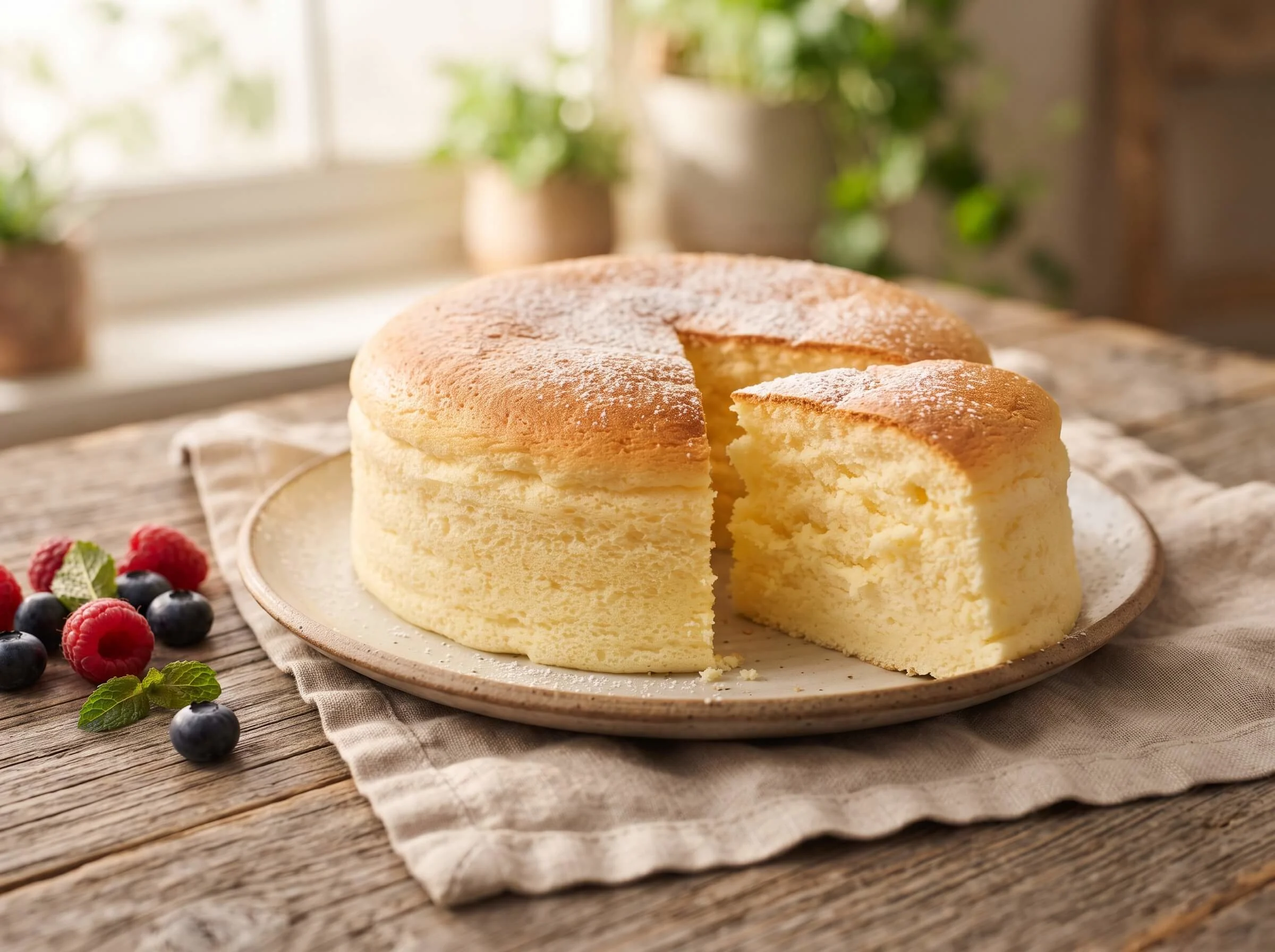
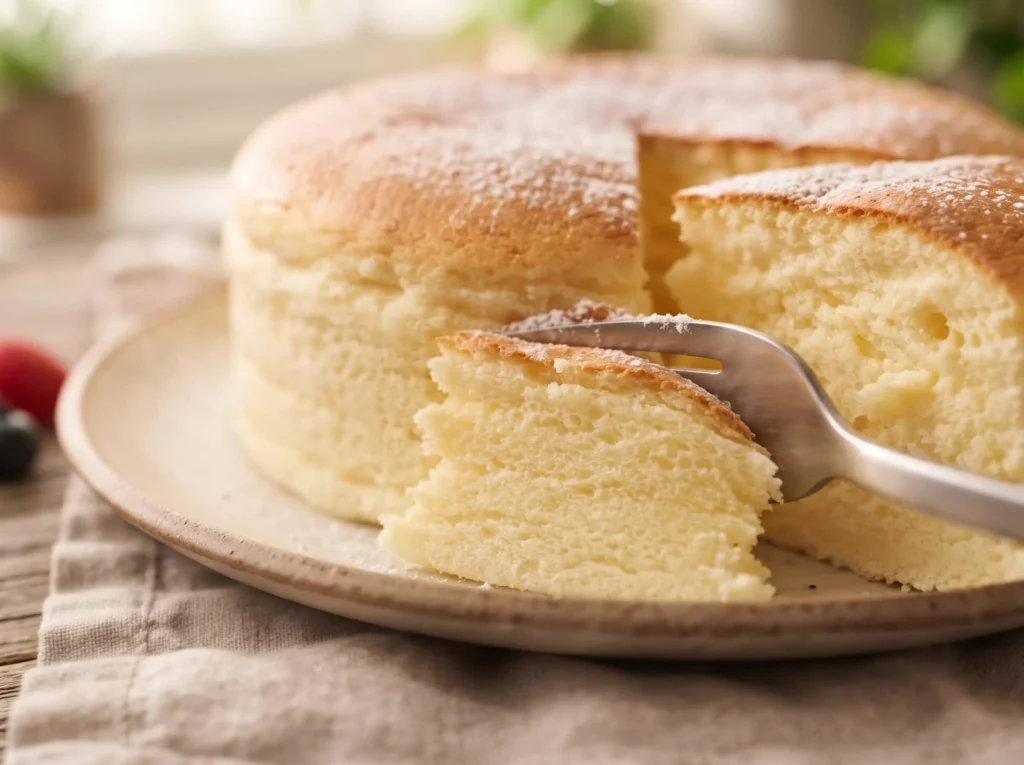
Japanese cheesecake, sometimes called Japanese cotton cheesecake or soufflé cheesecake, is famous for its incredibly light, jiggly, cloud-like texture, a striking contrast to the dense, rich New York-style cheesecakes most people are familiar with. This japanese cheesecake recipe walks through the technique needed to achieve that signature airy texture, delivering a cheesecake that’s genuinely unlike any other.
This style of cheesecake developed in Japan through a blend of Western cheesecake influence and Japanese baking sensibilities that favor lighter, less sweet desserts, something Bon Appétit has written about when covering how Japanese bakers adapted the traditionally dense, rich cheesecake into something far fluffier and more delicate. Its distinctive jiggle and soufflé-like rise have made japanese cheesecake something of an internet sensation in recent years, with countless videos showcasing its wobble.
The airy texture comes down almost entirely to technique, specifically whipping egg whites into a meringue and folding them carefully into the batter. Serious Eats has explained the science behind meringue-based cakes broadly, noting that properly whipped egg whites trap air that expands during baking, which is exactly what gives this cheesecake its dramatic rise and soft, spongy structure, closer to a soufflé than a traditional baked cheesecake.
Baking this cheesecake in a water bath is just as important as the meringue technique. The Kitchn has covered water bath baking for delicate cakes and custards, explaining that the gentle, even heat surrounding the pan prevents the exterior from baking too quickly relative to the center, which helps avoid cracking and keeps the texture consistently soft throughout.
Regarding some of the more unusual variations people search for, this recipe sticks to a genuinely traditional approach rather than attempting a shortcut version, since a true japanese cheesecake relies on several key ingredients working together, and simplifying too far tends to compromise the texture this cake is known for.
Whether you’re after an easy japanese cheesecake recipe for your first attempt or want the full traditional technique for the best japanese cheesecake recipe results, this version walks through everything needed to achieve that signature light, jiggly texture.
Why You’ll Love This Recipe
This japanese cheesecake recipe delivers that famously light, airy, cloud-like texture that’s genuinely unlike any other style of cheesecake.
The technique here, while requiring a bit of care with the meringue, is broken down clearly enough that even a first-time baker can follow along and achieve good results.
This cheesecake is noticeably less sweet and less dense than a traditional cheesecake, making it a lighter dessert option that still feels genuinely indulgent.
What to Serve With Japanese Cheesecake
A light dusting of powdered sugar is often all this cheesecake needs, letting its delicate flavor and texture shine on its own.
Fresh berries served alongside add a touch of natural tartness and color that pairs beautifully with the mild, slightly sweet cake.
A cup of green tea or a light coffee makes a nice pairing, echoing the understated sweetness of this dessert.
How This Japanese Cheesecake Recipe Comes Together
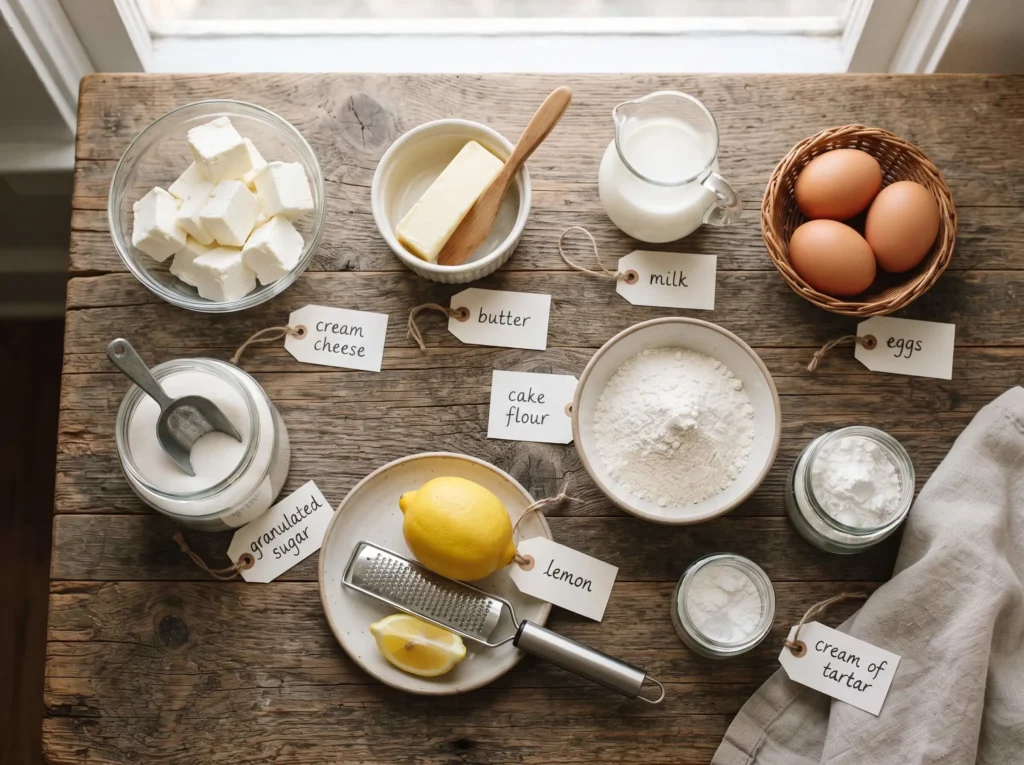
This recipe comes together in three main stages: making a smooth cream cheese batter with egg yolks, whipping egg whites into a stable meringue, then carefully folding the two together before baking gently in a water bath. Here’s everything you’ll need.
Japanese Cheesecake Recipe
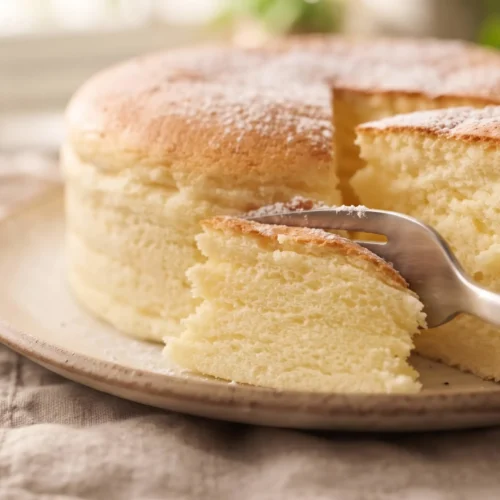
Japanese Cheesecake Recipe

Equipment
- 8-inch round cake pan
- Parchment paper
- Large roasting pan (for water bath)
- stand or hand mixer
- sifter
Ingredients
- 8 oz cream cheese softened
- ¼ cup unsalted butter
- ½ cup whole milk
- 6 large eggs separated
- ½ cup granulated sugar divided
- ⅓ cup cake flour
- 2 tbsp cornstarch
- 1 tbsp lemon juice
- ¼ tsp cream of tartar
Instructions
Make the Cream Cheese Batter
- Preheat the oven to 320°F (160°C). Line an 8-inch round cake pan with parchment paper, making sure the sides are also covered, then wrap the outside of the pan tightly with foil to prevent water from seeping in during the water bath.
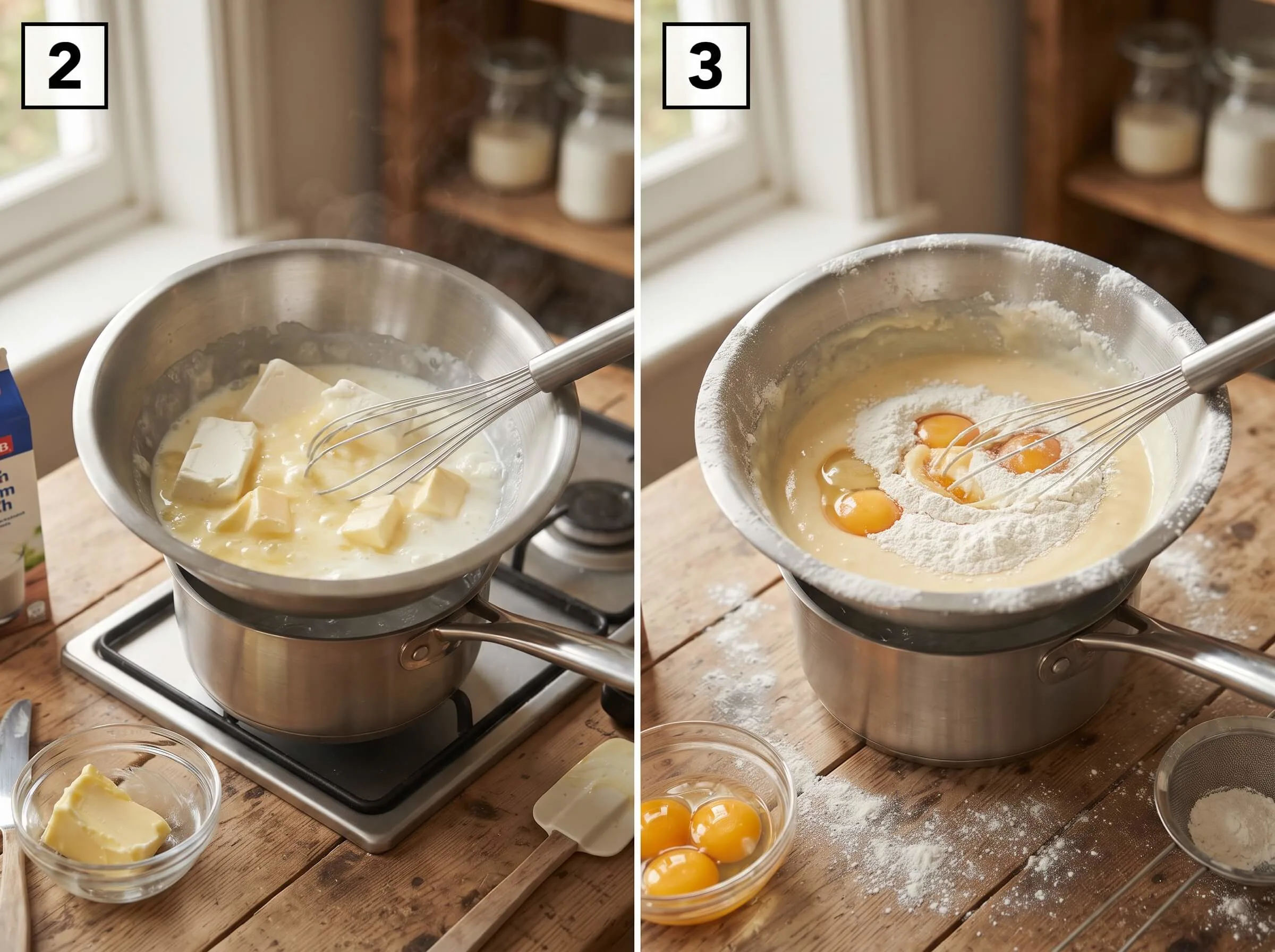
- In a heatproof bowl set over a pot of gently simmering water, combine the cream cheese, butter, and milk, stirring until completely smooth and melted together. Remove from heat and let cool slightly.
- Whisk the egg yolks into the cooled cream cheese mixture one at a time, then sift in the cake flour and cornstarch, whisking until smooth with no lumps. Stir in the lemon juice.
Whip the Meringue
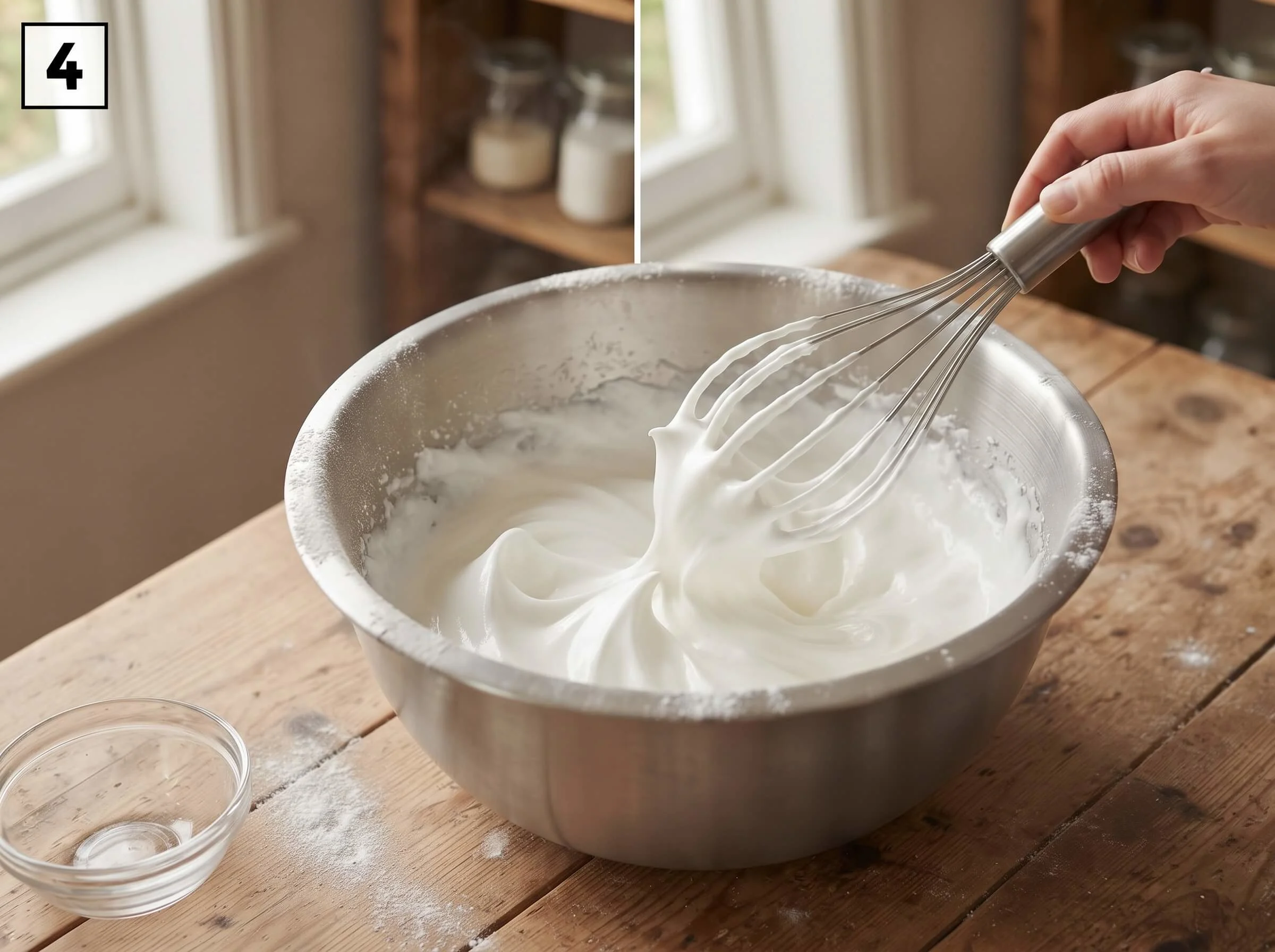
- In a separate clean bowl, beat the egg whites with the cream of tartar until foamy. Gradually add half of the sugar, continuing to beat until soft peaks form, then continue whipping until stiff, glossy peaks form.
Fold and Bake
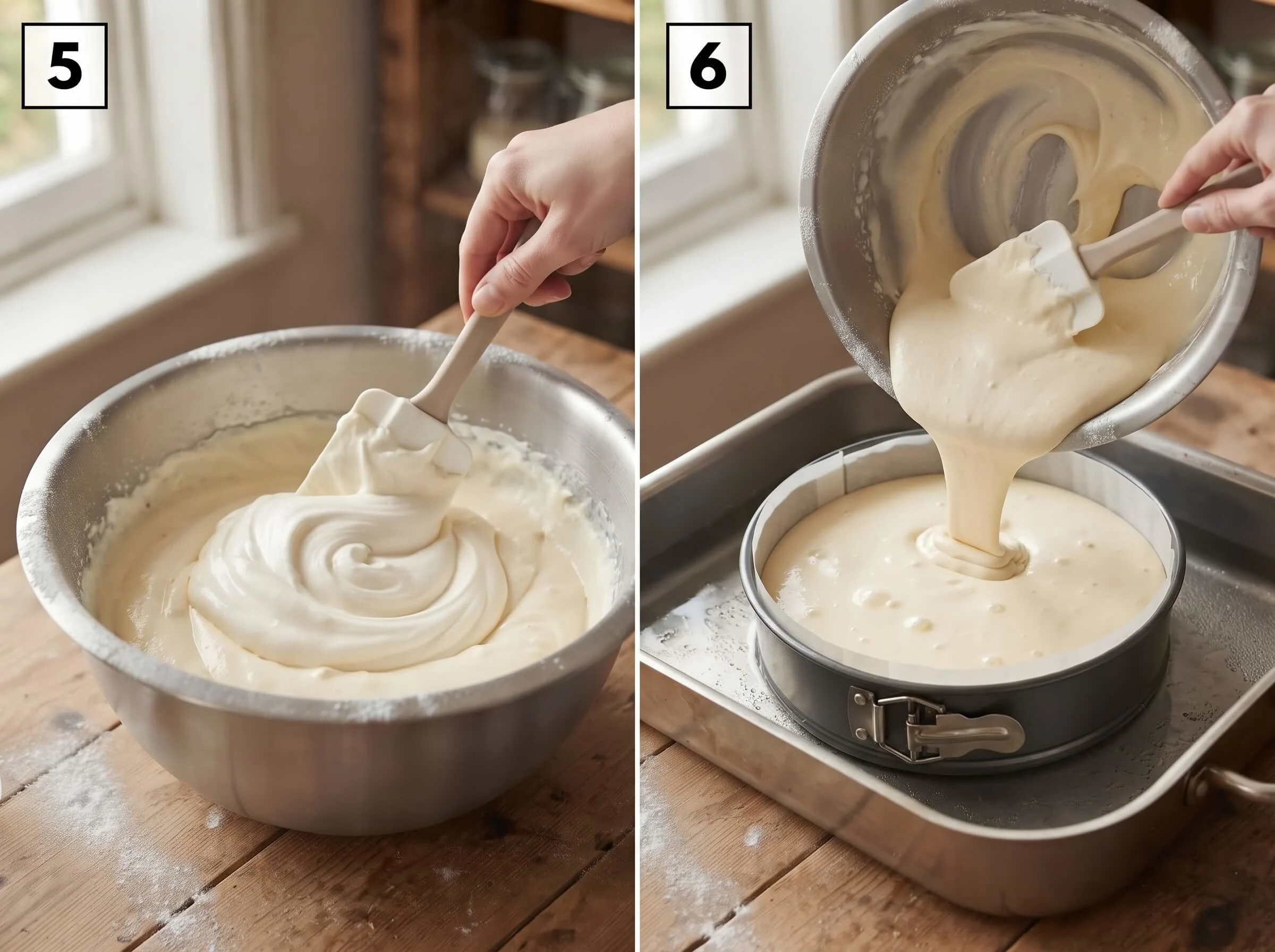
- Gently fold about a third of the meringue into the cream cheese mixture to lighten it, then carefully fold in the remaining meringue in two additions, being careful not to deflate the mixture too much.
- Pour the batter into the prepared pan, smoothing the top. Place the pan into a larger roasting pan and pour hot water into the roasting pan until it reaches about halfway up the sides of the cake pan.
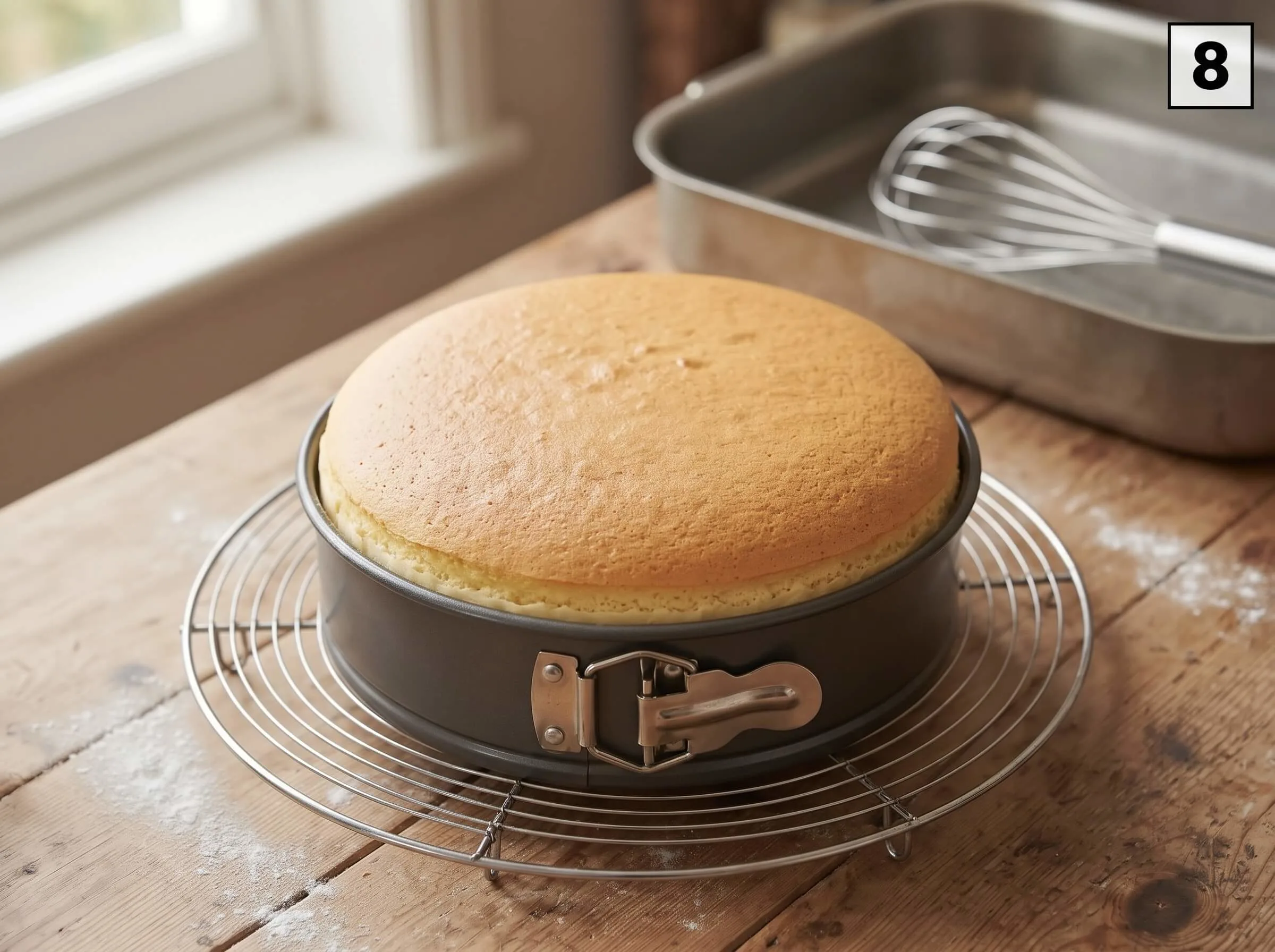
- Bake at 320°F (160°C) for 60-70 minutes, until the top is golden and the cake springs back gently when touched. Turn off the oven and let the cheesecake sit inside with the door slightly ajar for 10-15 minutes to prevent sudden temperature shock, which can cause it to collapse.
Cool and Serve
- Remove the cheesecake from the water bath and let it cool completely at room temperature before removing it from the pan. Refrigerate for at least 2 hours before slicing to achieve the best texture.
Notes
- Whip the egg whites until they form stiff, glossy peaks, being careful not to overbeat them. Overbeaten egg whites can become dry and clumpy, affecting the recipe’s signature light and airy texture.
end of whipping. - Folding the meringue in gently, rather than stirring vigorously, helps preserve as much air as possible, which is what gives this cheesecake its dramatic rise and soft texture.
- The water bath is non-negotiable for this recipe, since baking without one significantly increases the risk of cracking and uneven texture.
- Letting the cheesecake cool gradually in the turned-off oven, rather than removing it immediately, helps prevent the sudden temperature change that can cause it to deflate or crack.
- This cheesecake tends to deflate slightly as it cools, which is completely normal and doesn’t indicate anything went wrong; the final texture should still be light, soft, and jiggly once chilled.
Frequently Asked Questions
Is there a real Japanese cheesecake recipe 2 ingredients version, or is that not accurate?
While some viral shortcut recipes online claim to make a “2 ingredient” version, typically using just eggs and white chocolate, this doesn’t produce the same texture or flavor as a genuine japanese cheesecake, which relies on cream cheese, a properly whipped meringue, and several other key ingredients working together. A true version, like the one in this recipe, requires more than just two ingredients to achieve its signature texture.
Can I make a Japanese cheesecake recipe Greek yogurt version instead of using cream cheese?
Some variations do substitute part of the cream cheese with Greek yogurt for a slightly tangier flavor and marginally lighter result, though this does change the texture somewhat, since Greek yogurt has a different fat and protein content than cream cheese. If you want to experiment, replacing up to a quarter of the cream cheese with Greek yogurt can work reasonably well without dramatically altering the structure.
Why did my Japanese cheesecake crack on top?
Cracking is usually caused by baking without a proper water bath, opening the oven door too early, or a sudden temperature change when removing it from the oven. Following the gradual cooling process described in this recipe, letting it sit in the turned-off oven briefly before fully removing it, helps prevent this issue.
Why did my cheesecake collapse or deflate significantly after baking?
Some deflation is completely normal for this style of cheesecake as it cools, since the airy meringue structure naturally settles somewhat. However, excessive collapsing can result from underbaking, overbeating or underbeating the meringue, or removing the cake from the oven too abruptly.
Is there an easy Japanese cheesecake recipe shortcut that still gives good results?
While the meringue and water bath techniques genuinely can’t be skipped without sacrificing the signature texture, this recipe is written to be as approachable as possible for a first attempt, breaking down each stage clearly so that even less experienced bakers can achieve good results without needing advanced pastry skills.
Can I use a different type of flour instead of cake flour?
Cake flour is recommended because its lower protein content contributes to a more tender, delicate crumb, but if you don’t have cake flour on hand, you can approximate it by removing 2 tablespoons of all-purpose flour per cup and replacing it with cornstarch, though results may vary slightly from using true cake flour.
How do I know when my meringue is properly whipped?
The meringue should form stiff, glossy peaks that hold their shape firmly when the beaters are lifted, without looking dry, clumpy, or separated. Overbeaten meringue tends to look grainy or curdled, while underbeaten meringue will be too soft to properly support the structure of the batter.
Can I make this Japanese cheesecake recipe ahead of time?
Yes, this cheesecake actually benefits from being made a day ahead, since chilling it thoroughly in the refrigerator helps the texture set properly and makes slicing much cleaner. Store it covered in the refrigerator until ready to serve.
Why is my Japanese cheesecake dense instead of light and fluffy?
This typically points to either underwhipped egg whites that couldn’t provide enough structure, or folding technique that deflated too much air out of the meringue before baking. Being gentle but thorough during the folding process, and making sure the meringue reaches proper stiff peaks beforehand, should help resolve this.
Twists & Ideas
You Can Add
A thin layer of fruit jam spread over the bottom of the pan before adding the batter creates a subtle fruity surprise in the finished cheesecake.
A dusting of matcha powder folded into a portion of the batter, layered with the plain batter, creates a beautiful marbled matcha version.
Fresh lemon zest added along with the lemon juice intensifies the citrus flavor throughout the cake.
A light glaze made from apricot jam brushed over the top of the cooled cheesecake adds a subtle shine and extra sweetness.
You Can Replace
Greek yogurt can replace a portion of the cream cheese, as mentioned in the FAQ, for a slightly tangier flavor, keeping in mind this will change the texture somewhat.
Mascarpone can replace part of the cream cheese for an even lighter, less tangy flavor throughout the cake.
Lime juice can replace lemon juice for a subtly different citrus note without changing the overall technique.
A springform pan lined carefully with parchment can replace a standard round cake pan, making it easier to remove the cheesecake cleanly after chilling.
Recipes You May Enjoy
- Mango Sago Recipe
- Mexican Flan
- Majarete Dominicano Recipe
- Tres Leches Cake Recipe
- Arroz con Leche
- Onigiri Recipe
- Japanese Curry Recipe
- Chicken Katsu Recipe
- Teriyaki Chicken Recipe
A Cheesecake Worth the Careful Technique
Japanese cheesecake stands apart from every other cheesecake style because of that signature light, jiggly, soufflé-like texture, a direct result of careful meringue technique and gentle water bath baking. While it requires a bit more attention to detail than a standard baked cheesecake, the result is a genuinely unique dessert that’s hard to replicate any other way.
Whether you’re making this japanese cheesecake recipe easy enough for your first attempt, chasing the best Japanese cheesecake recipe results with the full traditional technique, or simply curious about this cake after seeing its famous jiggle online, this recipe delivers that same light, airy texture every time you follow the steps carefully. Once you’ve mastered the meringue and water bath technique here, this becomes a dessert you’ll want to make again and again, whether for a special occasion or simply because you’re craving something genuinely different from a typical cheesecake.
Tried This Recipe? Leave a Review!
There are no reviews yet. Be the first one to write one.