Paella Recipe
Table of Contents
Spain’s Most Iconic Rice Dish, Done the Seafood Way
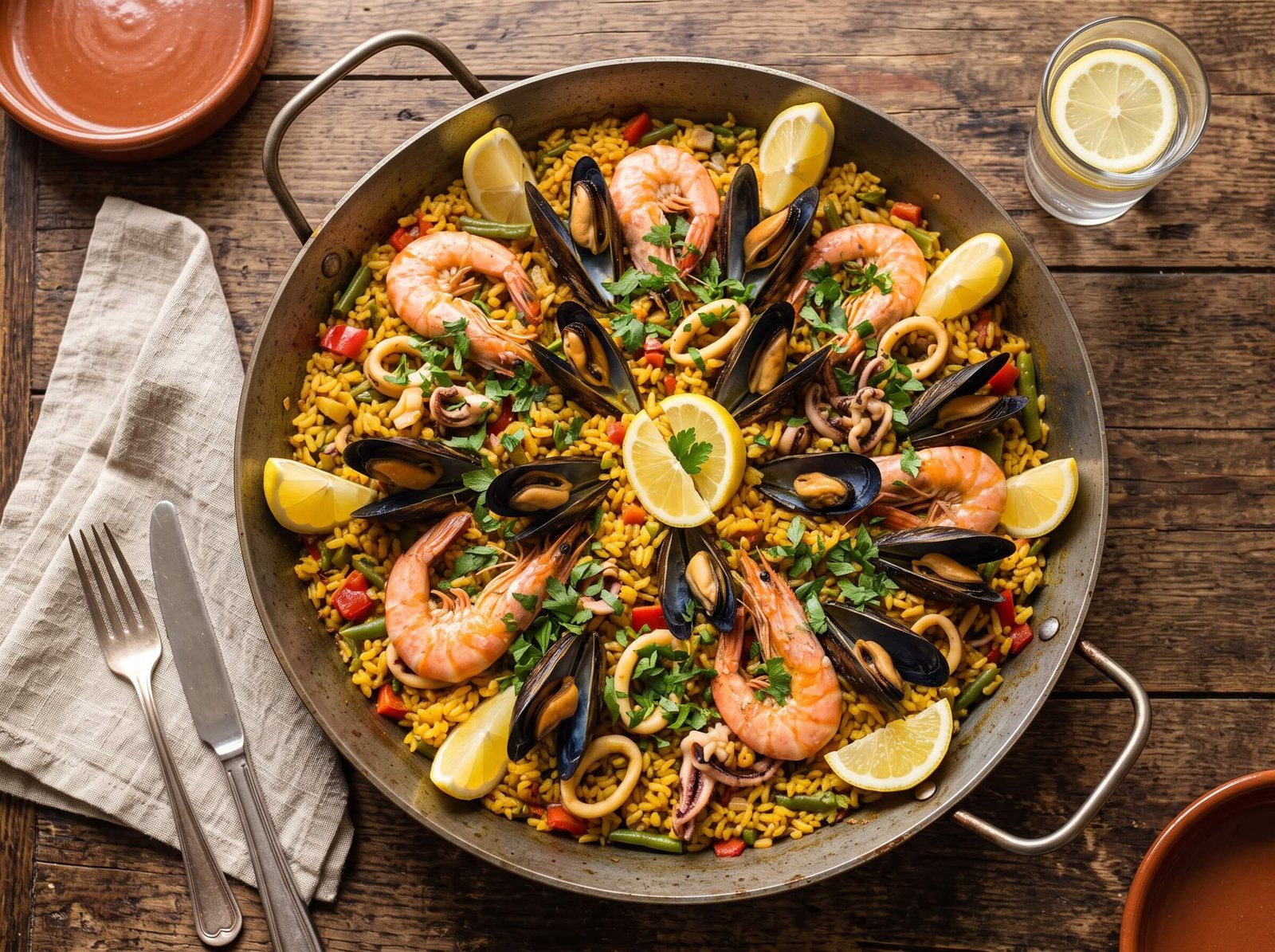
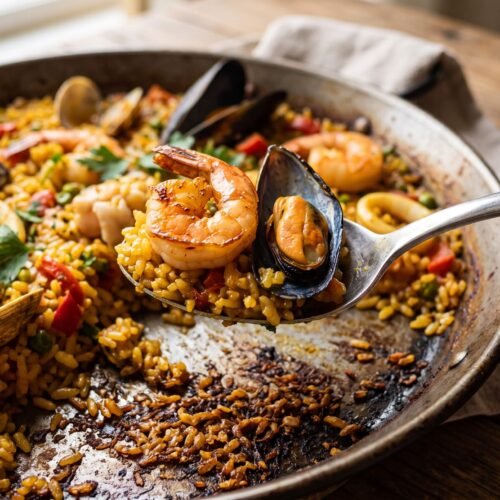
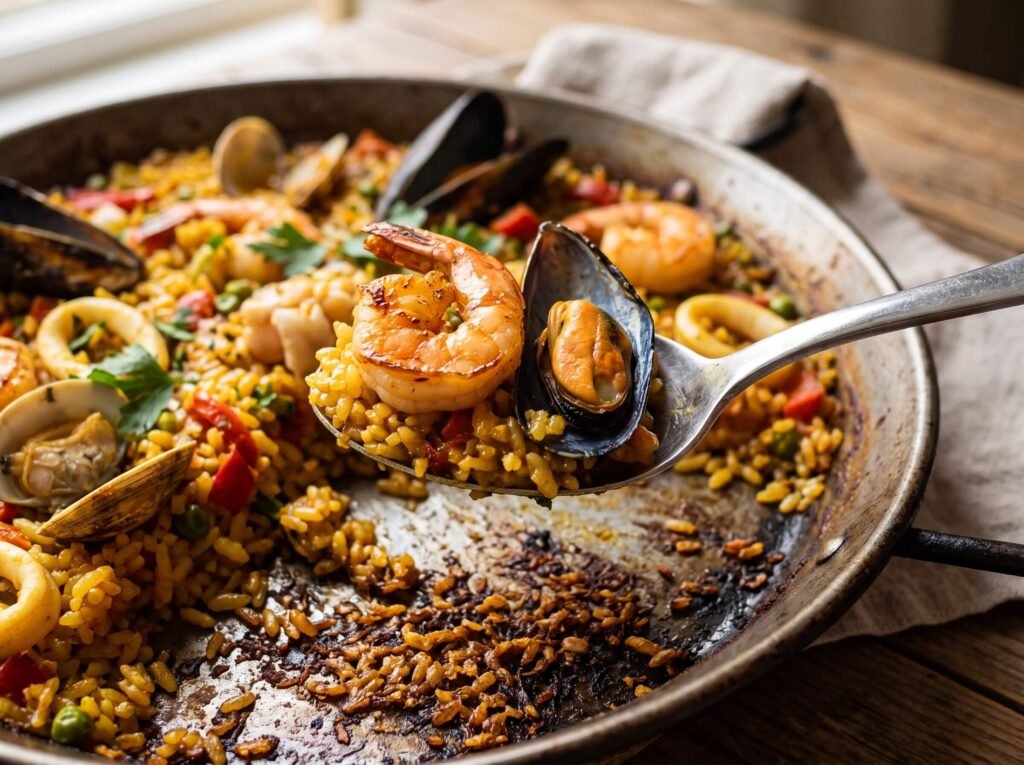
Paella is one of Spain’s most recognizable dishes, and for good reason: it brings together perfectly cooked rice, saffron, and a generous amount of seafood into one stunning, shareable pan. This paella recipe leans into that classic seafood-forward style, giving you tender shrimp, mussels, and squid nestled into golden, saffron-infused rice.
Paella originated in the Valencia region of Spain, and while the most historically traditional versions were actually built around rabbit, chicken, and beans rather than seafood, coastal variations using shrimp, mussels, and other seafood have become just as iconic internationally, something Bon Appétit has explored when covering the regional diversity within Spanish traditions. Seafood recipes in particular have become the version most familiar to people outside Spain, largely thanks to their popularity in coastal restaurants and international Spanish cuisine.
The rice itself is central to getting paella right. Serious Eats has written extensively about the importance of using a short or medium-grain rice variety like Bomba or Calasparra, explaining that these varieties absorb liquid and flavor exceptionally well without turning mushy, unlike long-grain rice, which doesn’t hold up the same way in this style of dish.
Saffron is the other defining ingredient, giving paella its signature golden color and distinct floral, slightly earthy flavor. The Spruce Eats has covered saffron’s role in Spanish cooking broadly, noting that even a small amount goes a long way, and that blooming the threads briefly in warm liquid before adding them helps release their flavor and color more effectively than adding them dry.
So, is this a traditional paella recipe in the strictest historical sense? Not quite, since the most historically traditional versions from inland Valencia were meat-based rather than seafood-based, but this style of seafood paella has become so widely recognized and beloved that it’s often what people picture when they think of paella today, a point Food & Wine has made when discussing how paella has evolved and diversified well beyond its original regional roots.
Getting that coveted crispy bottom layer, known as the socarrat, is considered by many paella experts to be the true mark of a well-made dish. Saveur has written about the socarrat specifically, describing it as the caramelized, slightly crunchy layer of rice that forms at the very bottom of the pan, and explaining that resisting the urge to stir the rice once the liquid is added is essential for allowing it to develop properly.
Whether you’re chasing the best seafood recipe for a dinner party or just want to try one of the many recipes that showcase Spain’s coastal cooking traditions, this version is built to deliver that same golden rice, tender seafood, and prized crispy bottom in your own kitchen.
Why You’ll Love This Recipe
This paella recipe delivers that classic golden, saffron-infused rice loaded with tender shrimp, mussels, and squid, giving you an impressive, restaurant-quality centerpiece dish.
The technique here focuses on getting that coveted crispy socarrat at the bottom of the pan, which is often what separates a truly great seafood recipe from an average one.
Despite looking impressive, this dish doesn’t require obscure ingredients or advanced technique, making it approachable for a special dinner even if you’ve never made paella before.
What to Serve With Paella
A simple green salad with a light vinaigrette pairs nicely here, adding some freshness alongside the rich, savory rice.
Crusty bread is a natural addition, perfect for soaking up any extra broth or juices left in the pan.
Lemon wedges served on the side let everyone brighten up their portion with a bit of fresh acidity right before eating.
How This Paella Recipe Comes Together
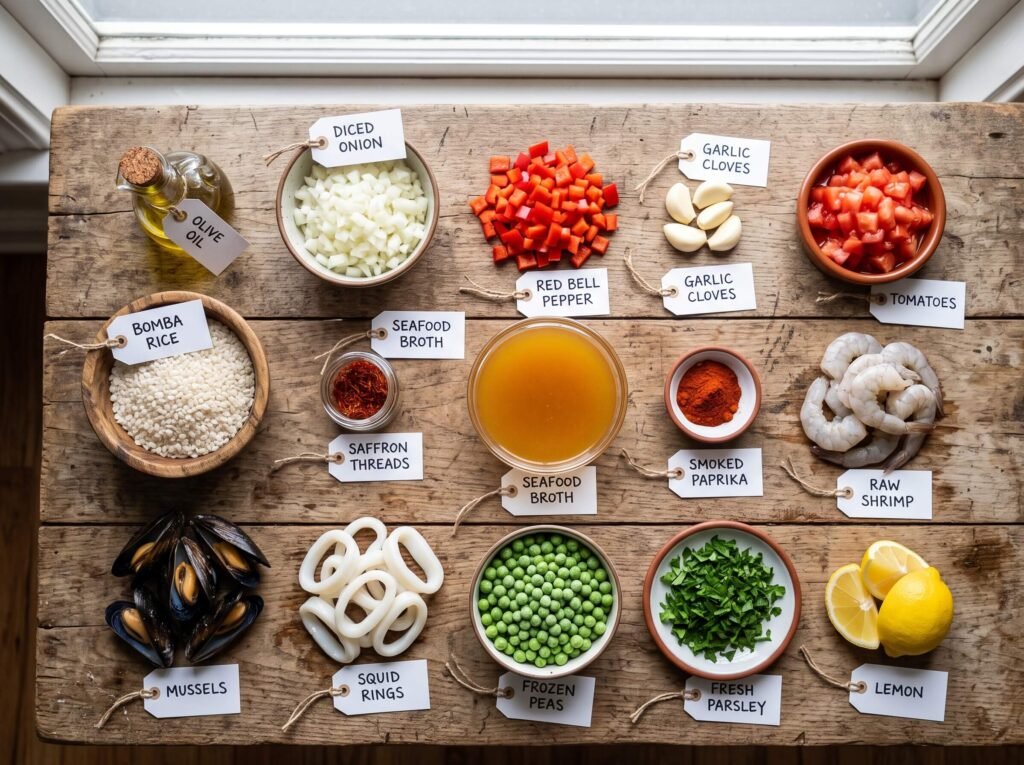
This recipe is built in three main stages: building a flavorful sofrito base with saffron-infused broth, cooking the rice undisturbed so it properly absorbs the liquid and develops a crispy bottom, then finishing everything with tender seafood added at just the right moment. Here’s everything you’ll need.
Paella Recipe
Paella Recipe

Equipment
- Paella pan or large wide skillet
- Small saucepan
Ingredients
- 3 tbsp olive oil
- 1 medium yellow onion finely diced
- 1 red bell pepper diced
- 4 garlic cloves minced
- 2 medium tomatoes grated or finely chopped
- 1½ cups Bomba or short-grain rice
- ½ tsp saffron threads
- 4 cups seafood or fish broth warmed
- 1 tsp smoked paprika
- ½ lb shrimp peeled and deveined
- ½ lb mussels scrubbed
- ½ lb squid cleaned and sliced into rings
- ½ cup frozen peas
- Salt and pepper to taste
- Fresh parsley chopped, for garnish
- Lemon wedges for serving
Instructions
Build the Sofrito and Saffron Broth
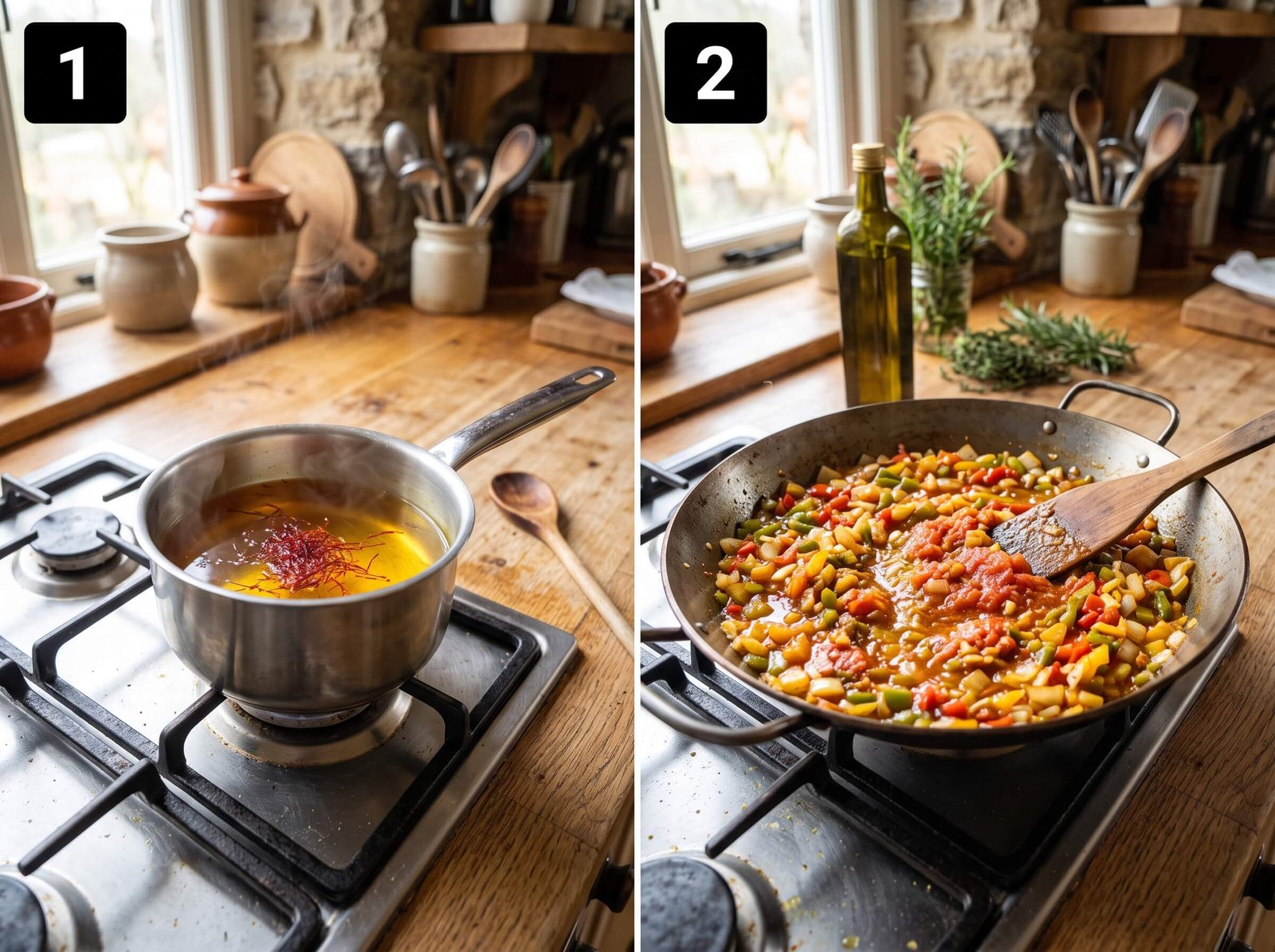
- Warm the seafood broth in a small saucepan over low heat, then add the saffron threads, letting them steep for at least 10 minutes so the broth turns a deep golden color and absorbs the saffron's flavor.
- Heat the olive oil in a paella pan or large wide skillet over medium heat, then add the diced onion and bell pepper, cooking for 5-6 minutes until softened. Add the garlic and cook for another 30 seconds, then stir in the grated tomatoes and smoked paprika, cooking for 3-4 minutes until the mixture thickens slightly into a rich sofrito.
Cook the Rice
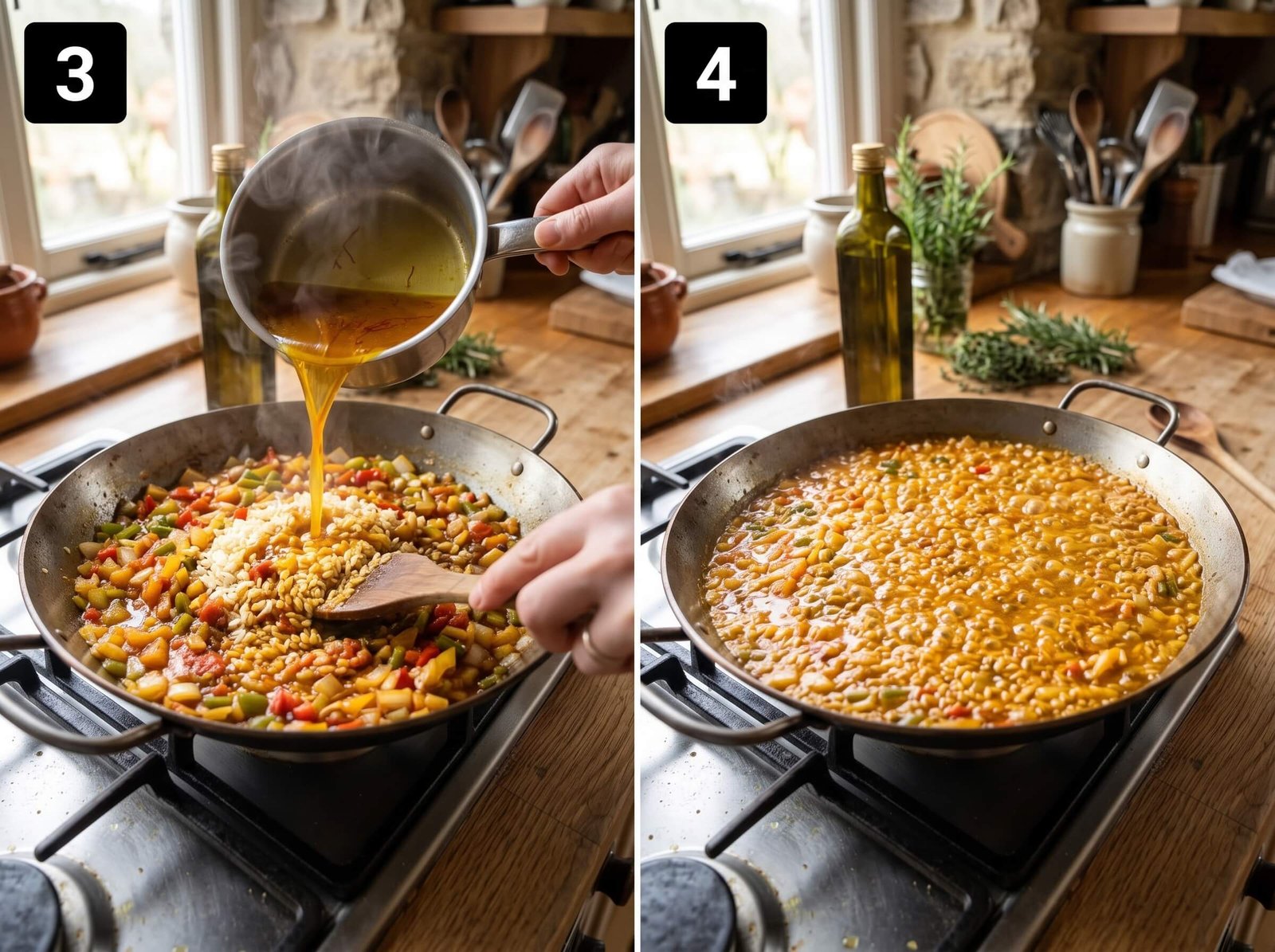
- Add the rice to the pan, stirring briefly to coat it in the sofrito, then pour in the warm saffron broth, spreading the rice into an even layer across the pan. Season with salt and pepper, then bring to a gentle boil.
- Once boiling, reduce the heat to low and let the rice simmer undisturbed for 15-18 minutes, resisting the urge to stir, which allows the rice to properly absorb the liquid and develop that prized crispy layer at the bottom.
Add the Seafood and Finish
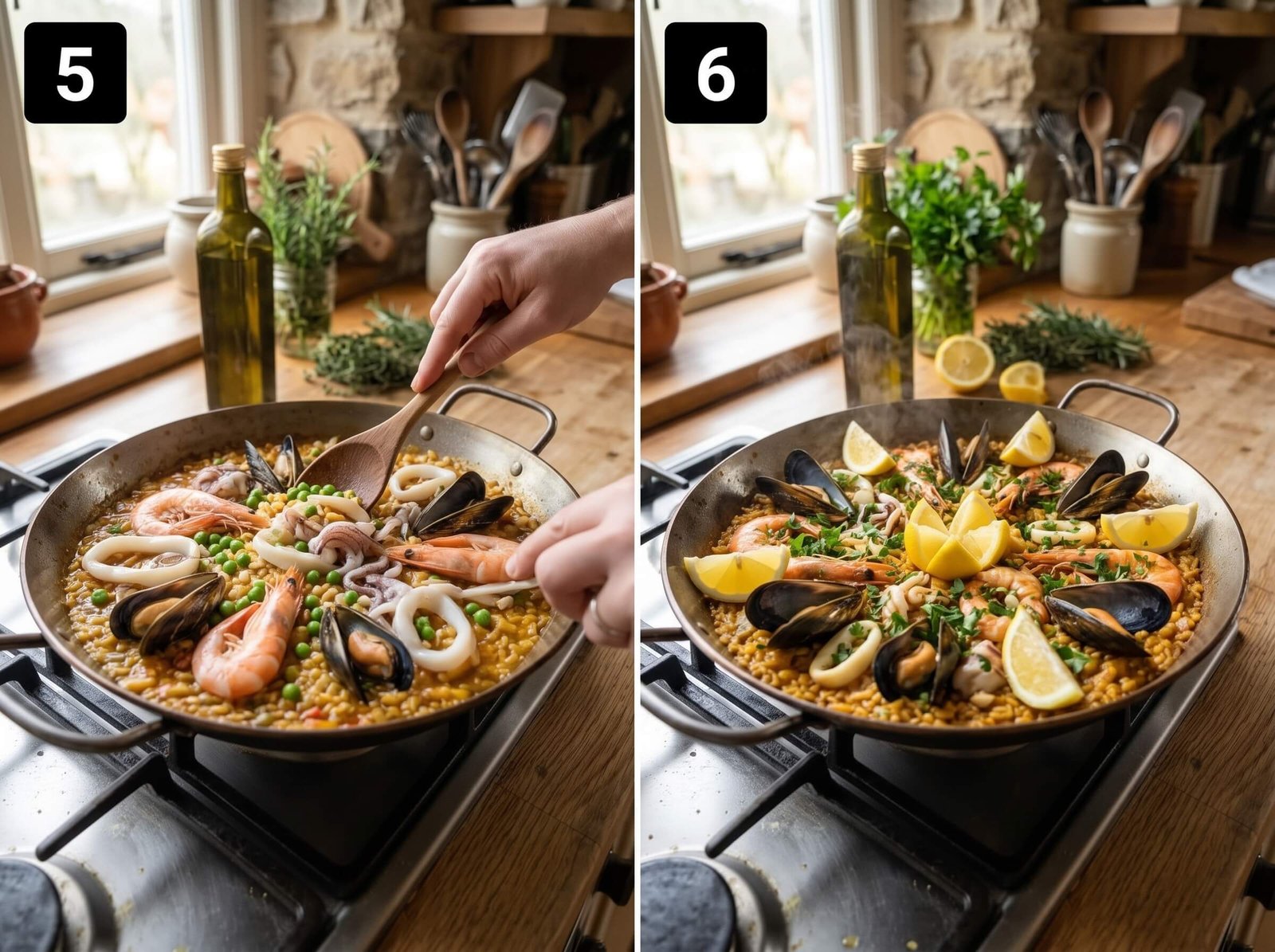
- Nestle the shrimp, mussels, and squid into the rice, along with the frozen peas, without stirring them in too vigorously. Continue cooking uncovered for another 8-10 minutes, until the shrimp are pink and opaque, the mussels have opened, and the squid is tender.
- Remove from heat and let the paella rest for 5 minutes before serving, discarding any mussels that didn't open. Garnish with fresh parsley and serve with lemon wedges on the side.
Notes
- Resisting the urge to stir the rice once the broth is added is genuinely one of the most important steps in this recipe, since constant stirring prevents the socarrat, that prized crispy bottom layer, from forming properly.
- Warming the broth before adding it to the rice helps maintain a consistent cooking temperature and speeds up the overall cooking process slightly.
- Letting the saffron steep in warm broth for the full 10 minutes allows its flavor and color to fully develop, rather than adding it dry directly to the pan.
- Discard any mussels that remain closed after cooking, since this typically means they weren’t fresh to begin with.
- This dish is traditionally served directly from the pan at the table, making for an impressive, communal presentation that’s part of the overall paella experience.
Frequently Asked Questions
Is this a traditional paella recipe in the historical sense?
Not quite in the strictest sense, since the most historically traditional paella from inland Valencia was actually built around rabbit, chicken, and beans rather than seafood. However, seafood paella recipes like this one have become so widely recognized and popular, especially outside of Spain, that they’re often considered a legitimate and beloved variation within the broader paella tradition today.
What’s the best rice to use for this paella recipe?
Short or medium-grain rice varieties like Bomba or Calasparra are considered the best choices, since they absorb liquid and flavor exceptionally well without turning mushy, unlike long-grain rice varieties, which don’t hold their texture the same way in this style of dish.
Why isn’t my paella developing a crispy bottom?
This usually happens from stirring the rice too much once the broth has been added, or from cooking at too low a heat during the final stage. Try increasing the heat slightly during the last few minutes of cooking, and avoid stirring the rice at all once it’s been spread into an even layer.
Can I use a different type of seafood in this seafood paella recipe?
Yes, this recipe is flexible enough to include clams, scallops, or even lobster tail in place of or alongside the shrimp, mussels, and squid, as long as the total amount of seafood stays roughly similar and cook times are adjusted for any particularly delicate seafood.
What can I use if I don’t have saffron for this best seafood paella recipe?
While saffron gives paella its signature flavor and color, turmeric can be used as a color substitute in a pinch, though it won’t replicate saffron’s distinct floral flavor. It’s worth seeking out real saffron if possible, since it’s genuinely central to what makes paella taste like paella.
Can I make this dish ahead of time?
Paella is really best served fresh, since the texture of both the rice and the seafood can suffer upon reheating, with the rice potentially becoming mushy and the seafood turning rubbery. If you do have leftovers, reheating gently in a covered pan on the stovetop works better than the microwave.
How do I know when the dish is done?
The rice should be tender but not mushy, with visible liquid fully absorbed, and the seafood should be fully cooked, meaning shrimp are pink and opaque, mussels have opened, and squid is tender rather than rubbery. A properly cooked paella should also have a slightly crispy, caramelized bottom layer once finished.
Twists & Ideas
You Can Add
Chicken thighs added alongside the seafood, browned before building the sofrito, bring this closer to a mixed paella style that blends both meat and seafood.
A handful of chopped chorizo added early in the cooking process adds a smoky, slightly spicy depth throughout the rice.
Artichoke hearts stirred in with the peas add a slightly earthy, tangy element that’s common in many regional recipes.
A sprinkle of chili flakes right before serving adds a bit of heat for anyone who wants extra spice.
You Can Replace
Chicken broth can replace seafood broth for a lighter, more neutral base flavor if seafood broth isn’t available.
Turmeric can replace saffron, as mentioned in the FAQ, as a color substitute in a pinch, though the flavor will be noticeably different.
Clams or scallops can replace part of the mussels or squid, as covered in the FAQ, for a different combination of seafood.
Arborio rice can replace Bomba rice if that’s what you have on hand, though the texture will be slightly creamier and less distinctly separate than a true Spanish paella rice.
Recipes You May Enjoy
- Easy Shrimp Scampi Recipe
- Chicken Paella
- Cajun Seafood Boil Recipe
- Salmon Patty Recipe
- Cajun Shrimp Pasta
- Sopa de Mariscos
- Seafood Casserole Cheesy & Comforting
A Dish Worth Gathering Around
Paella has earned its place as one of Spain’s most celebrated dishes because it manages to be both visually stunning and genuinely satisfying to eat, especially when that coveted crispy socarrat forms at the bottom of the pan. Between the saffron-infused rice, tender seafood, and rich sofrito base, every element of this dish comes together into something that feels worth gathering around the table for.
Whether you’re making this paella recipe for a special dinner, searching through different recipes to find your favorite version, or specifically chasing the best seafood recipe to impress guests, this dish delivers that same golden, flavorful rice and perfectly cooked seafood every time. Once you’ve nailed the technique of letting the rice cook undisturbed, this becomes a recipe you’ll want to make again for any occasion that calls for something a little more special.
Tried This Recipe? Leave a Review!
There are no reviews yet. Be the first one to write one.