Mango Sticky Rice Recipe
Table of Contents
Thailand’s Most Beloved Dessert, Simple and Sweet
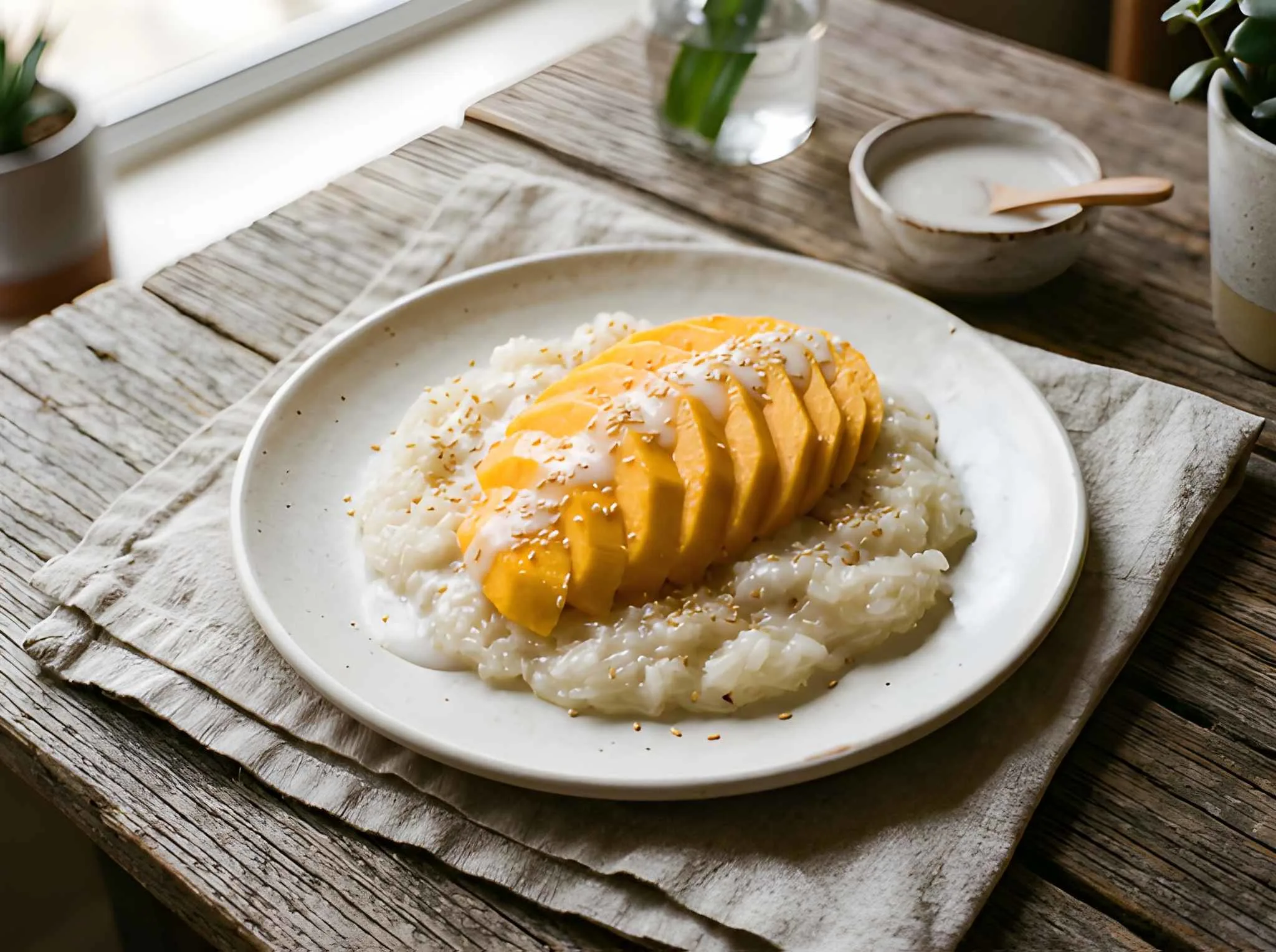
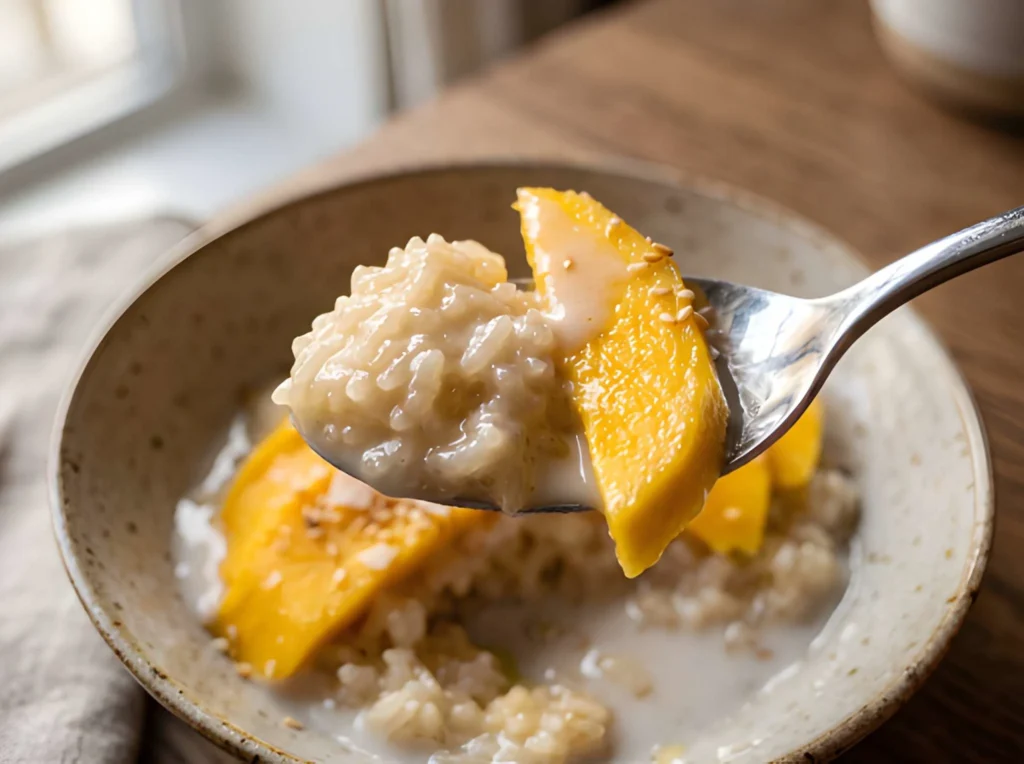
Mango sticky rice is one of the most iconic desserts in Thai cuisine, pairing sweet, ripe mango with warm, coconut-soaked sticky rice. This mango sticky rice recipe walks through exactly how to make mango sticky rice at home, covering the technique needed to get that perfectly creamy, slightly chewy rice texture.
Mango sticky rice history traces back centuries in Thailand, where glutinous rice and mangoes have both been long-standing agricultural staples, with the combination eventually becoming formalized as a specific seasonal dessert enjoyed especially during mango harvest season, something Smithsonian Magazine has written about when covering the deep-rooted relationship between seasonal produce and traditional desserts across Southeast Asia. Today, mango sticky rice Thailand is arguably the country’s most internationally recognized dessert, found everywhere from street food stalls to upscale restaurants.
Getting the rice texture right depends on using the correct type of rice and proper steaming technique, and Serious Eats has explained that glutinous rice, sometimes called sticky rice despite not actually containing gluten, has a unique starch composition that makes it clump together when cooked, a trait that’s essential to this dish and can’t be replicated with regular long-grain rice.
The coconut sauce is just as important as the rice itself, and Bon Appétit has pointed out that soaking the warm, cooked rice in sweetened coconut milk, rather than cooking the rice directly in coconut milk from the start, allows the rice to properly absorb the liquid gradually, resulting in that signature creamy, slightly sweet texture throughout each grain.
This dessert happens to be naturally plant-based in its traditional form, and a mango sticky rice vegan version requires essentially no adjustment at all, since the dish is built entirely from rice, coconut milk, sugar, and fresh mango, something worth knowing if you’re looking for a naturally vegan-friendly dessert without needing substitutions.
Whether you’re making this for the first time or already familiar with how to make mango sticky rice, this recipe delivers that same sweet, creamy, satisfying dessert found throughout Thailand.
Why You’ll Love This Recipe
This mango sticky rice recipe walks through the steaming and soaking process clearly, making it approachable even if you’ve never worked with glutinous rice before.
The combination of warm, coconut-soaked rice and cool, sweet mango creates a genuinely satisfying contrast in both temperature and texture.
This dessert is naturally plant-based, making it an easy mango sticky rice vegan option without needing any ingredient substitutions.
What to Serve With Mango Sticky Rice
A sprinkle of toasted sesame seeds or crushed mung beans over the top adds a bit of crunch, a traditional garnish found throughout Thailand.
A cup of Thai iced tea pairs nicely alongside this dessert, offering a slightly different sweetness and temperature contrast.
Serving this alongside other Thai dishes as part of a larger meal makes for an authentic, well-rounded dining experience.
How This Mango Sticky Rice Recipe Comes Together
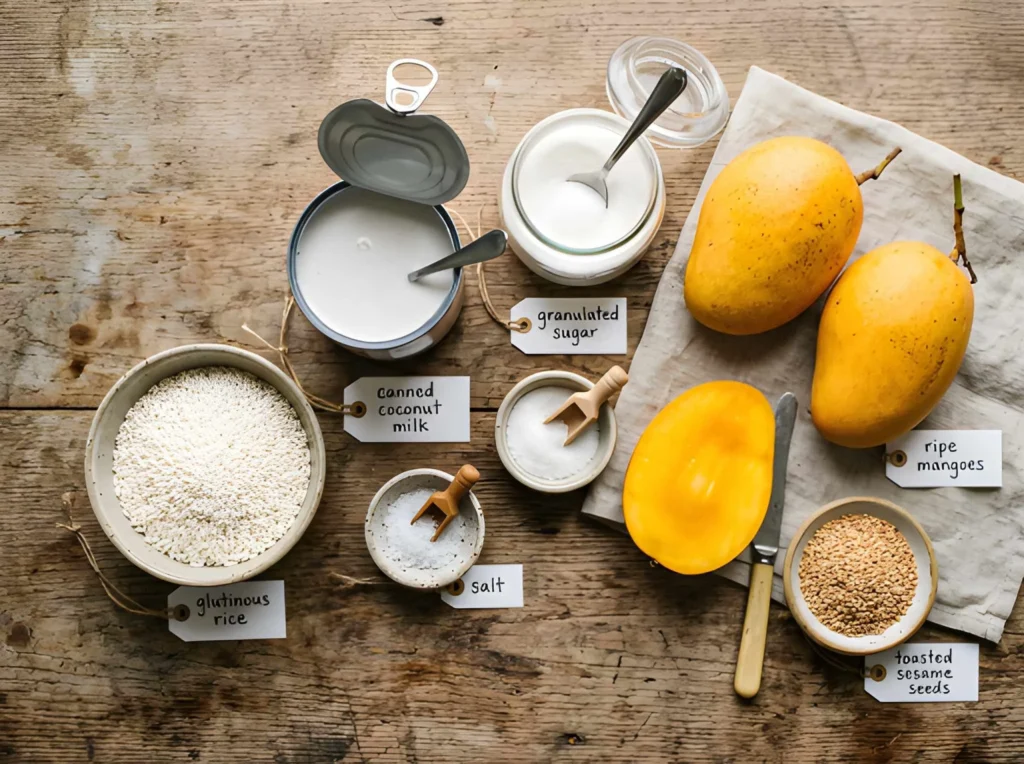
This recipe comes together in two main stages: soaking and steaming glutinous rice until tender, then soaking the warm rice in a sweetened coconut milk mixture before serving alongside fresh, ripe mango. Here’s everything you’ll need.
Mango and Sticky Rice Recipe
Mango Sticky Rice Recipe

Equipment
- Bamboo steamer or steamer basket
- cheesecloth
- Small saucepan
- Mixing bowl
Ingredients
Sticky Rice
- 1½ cups glutinous sticky rice
- Water for soaking
Coconut Sauce
- 1½ cups coconut milk divided
- ⅓ cup granulated sugar
- ¼ tsp salt
For Serving
- 2-3 ripe mangoes peeled and sliced
- 1 tbsp toasted sesame seeds or crushed mung beans for garnish
Instructions
Soak and Steam the Rice
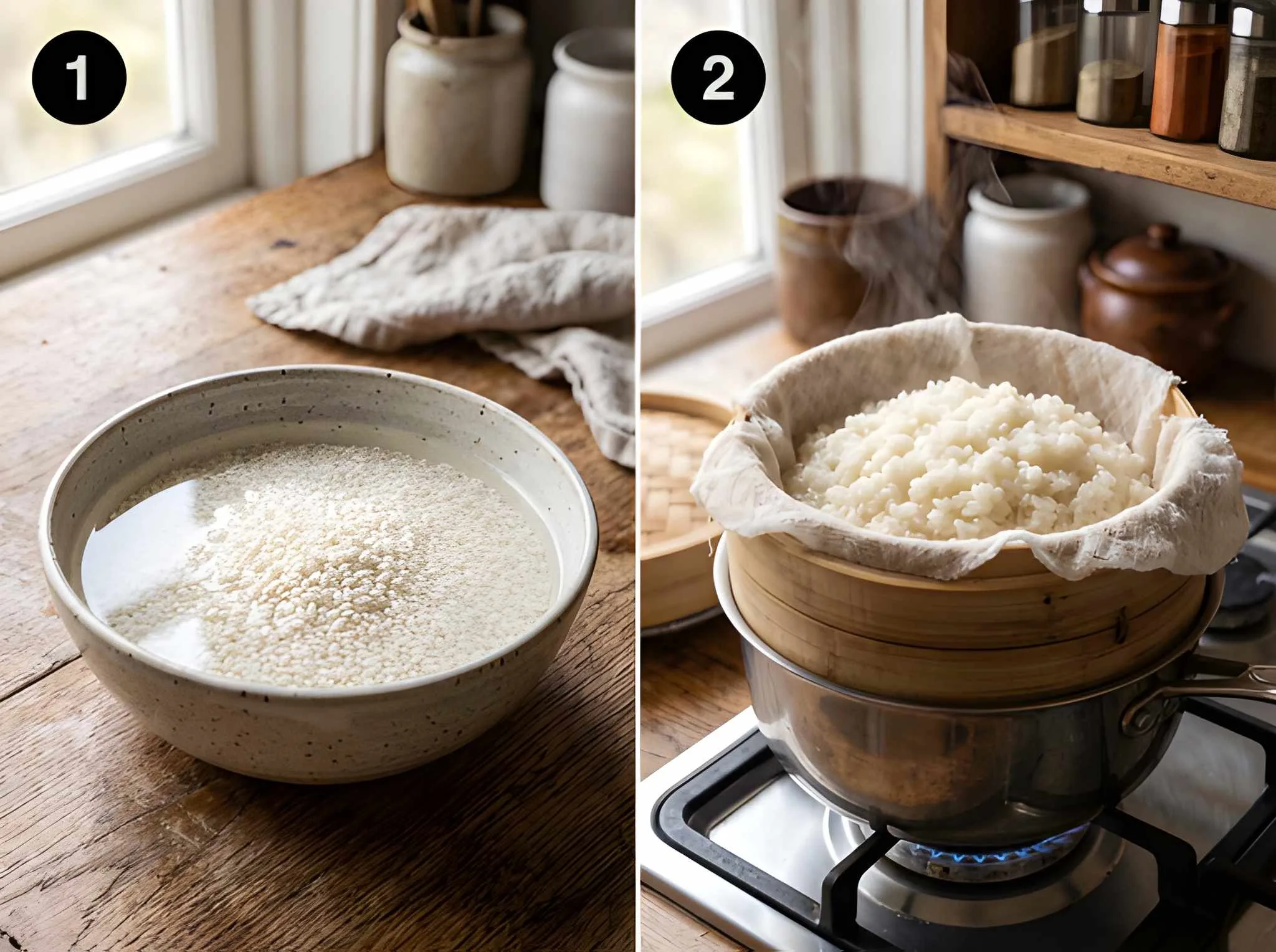
- Rinse the glutinous rice under cold water until it runs mostly clear, then place it in a bowl, cover with water, and soak for at least 4 hours, or overnight for the best texture.
- Drain the soaked rice well, then line a bamboo steamer or steamer basket with cheesecloth and spread the rice out evenly. Steam over boiling water for 20-25 minutes, until the rice is tender and translucent.
Make the Coconut Sauce
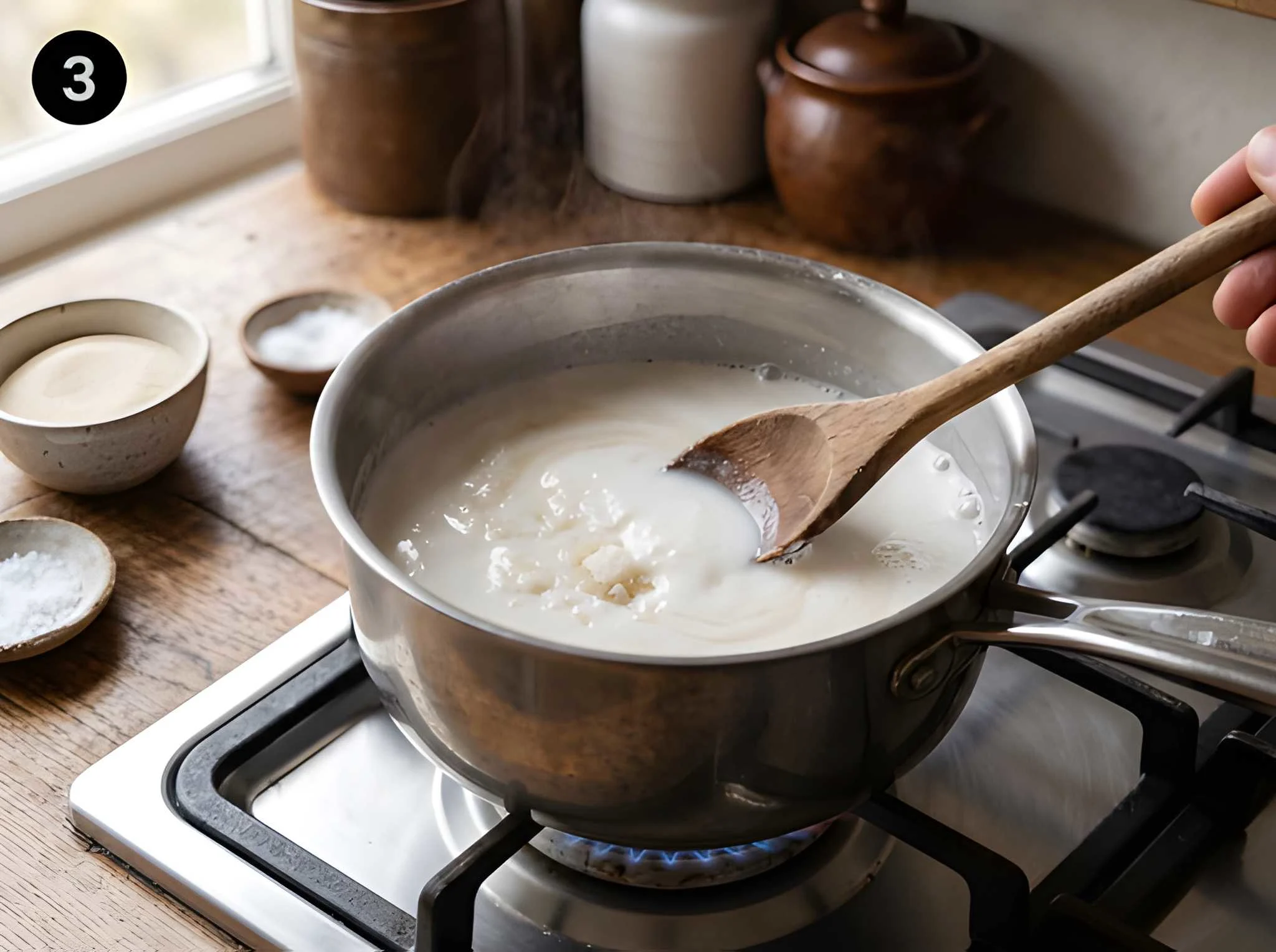
- While the rice steams, combine 1 cup of the coconut milk with the sugar and salt in a small saucepan over medium heat, stirring until the sugar fully dissolves. Remove from heat once warm, without letting it boil.
Soak the Rice in Coconut Sauce
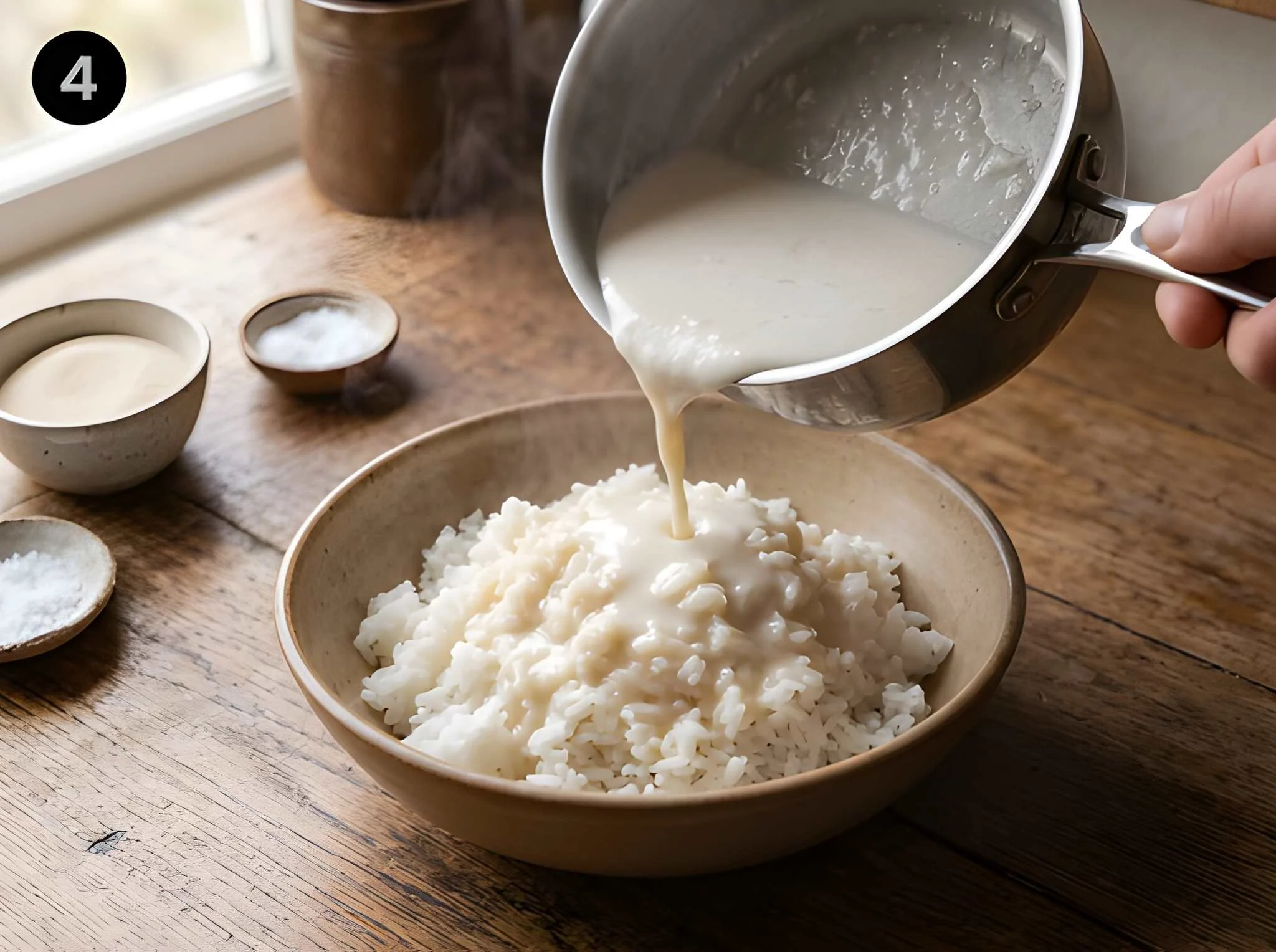
- Transfer the hot steamed rice to a bowl and pour about three-quarters of the warm coconut sauce over it, stirring gently to combine. Let the rice sit and absorb the sauce for 15-20 minutes, which allows the coconut flavor to soak throughout each grain.
Assemble and Serve
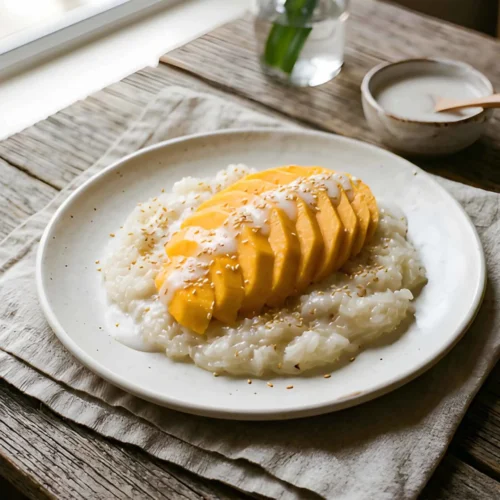
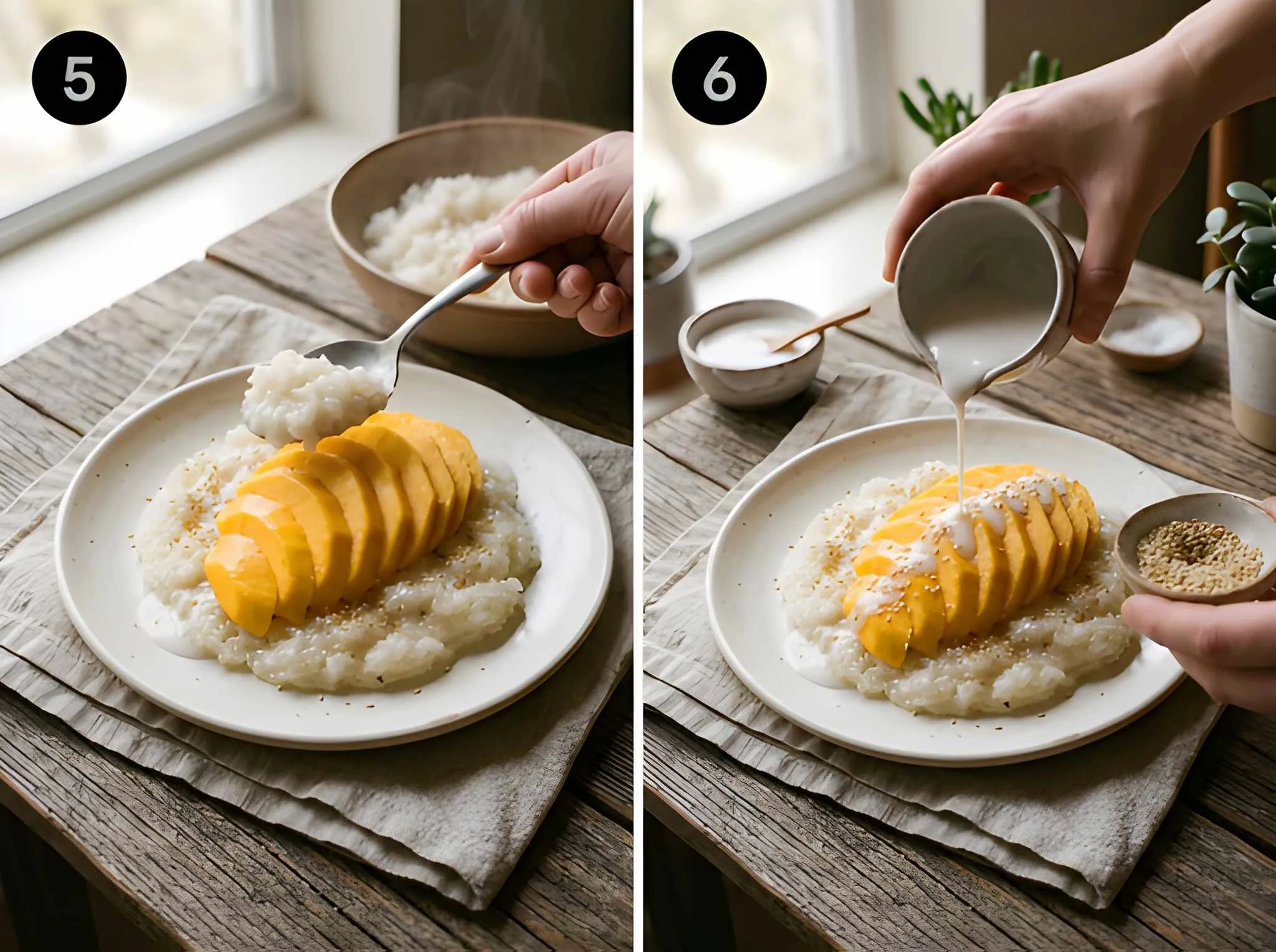
- Divide the coconut-soaked rice among serving plates, arranging fresh mango slices alongside each portion.
- Drizzle the reserved coconut sauce over the top of the rice and mango, then garnish with toasted sesame seeds or crushed mung beans before serving.
Notes
- Using true glutinous rice, sometimes labeled sticky rice or sweet rice at the store, is essential for this recipe, since regular long-grain or even short-grain rice won’t achieve the same clumping, chewy texture.
- Soaking the rice for the full recommended time, ideally overnight, makes a genuine difference in how evenly it cooks and how tender the final texture turns out.
- Letting the warm rice sit and absorb the coconut sauce for the full 15-20 minutes is what gives mango sticky rice its signature creamy texture throughout, so don’t rush through this step.
- Using very ripe, sweet mangoes makes a noticeable difference in the final flavor, since underripe mango can taste overly tart against the sweet coconut rice.
- This dessert is best enjoyed the same day it’s made, since the rice can firm up and lose some of its ideal texture once refrigerated.
Frequently Asked Questions
How to make mango sticky rice without a bamboo steamer?
If you don’t have a bamboo steamer, a regular metal steamer basket lined with cheesecloth works just as well, or you can even use a fine mesh colander set over a pot of simmering water, covered with a lid, as long as the rice doesn’t touch the water directly.
Is mango sticky rice naturally vegan, or does the mango sticky rice vegan version require substitutions?
This dessert is naturally plant-based in its traditional form, since it’s made entirely from rice, coconut milk, sugar, and fresh mango, with no dairy, eggs, or animal products involved. No substitutions are needed to make a mango sticky rice vegan version, since the classic recipe already fits that description.
What is the history behind mango sticky rice in Thailand?
Mango sticky rice history is tied closely to Thailand’s agricultural traditions, with both glutinous rice and mangoes being long-cultivated staples in the region. Over time, the pairing became a formalized dessert, particularly associated with mango harvest season, and has since grown into one of the most recognized Thai desserts internationally.
Can I use regular rice instead of glutinous rice for this recipe?
Regular rice, including short-grain varieties, won’t achieve the same sticky, chewy texture that’s essential to this dish, since glutinous rice has a unique starch structure that causes it to clump together in a way other rice types don’t. True glutinous rice is necessary for an authentic result.
Why is my sticky rice still hard after steaming?
This usually happens from insufficient soaking time before steaming, since glutinous rice needs that extended soak to properly hydrate before cooking. Make sure to soak for at least 4 hours, and ideally overnight, for the most reliable, tender results.
Can I make this mango sticky rice recipe ahead of time?
This dessert is genuinely best enjoyed fresh, since the rice firms up and loses some of its ideal texture once refrigerated. If needed, the rice can be steamed and soaked in the coconut sauce a few hours ahead, kept warm, then assembled with fresh mango right before serving.
What type of mango works best for mango sticky rice Thailand style?
Ripe, sweet mango varieties like Nam Dok Mai or Ataulfo mangoes are traditionally used in Thailand for their smooth texture and pronounced sweetness, though any very ripe, sweet mango variety available in your area will work well for this dish.
Can I use canned mango instead of fresh?
Fresh, ripe mango is strongly recommended for the best flavor and texture, since canned mango tends to be softer and sweeter in a different, less vibrant way. If fresh mango genuinely isn’t available, canned can work in a pinch, though the overall quality of the dish will be noticeably different.
Twists & Ideas
You Can Add
A sprinkle of toasted coconut flakes alongside the sesame seeds adds extra texture and reinforces the coconut flavor throughout the dish.
A pinch of pandan extract added to the coconut sauce gives a subtle, fragrant note commonly found in many Southeast Asian desserts.
A drizzle of extra coconut cream over the top right before serving adds even more richness for a more indulgent presentation.
Fresh mint leaves scattered over the finished dish add a touch of color and a light, refreshing contrast.
You Can Replace
Black glutinous rice can replace white glutinous rice for a different color and slightly nuttier flavor, though cook time may need slight adjustment.
A mix of mango and other tropical fruits like pineapple can replace or join the mango for variety in presentation and flavor.
Light coconut milk can replace full-fat coconut milk for a lighter version, though the sauce will be noticeably less rich and creamy.
Palm sugar can replace granulated sugar in the coconut sauce for a deeper, more traditional sweetness.
Recipes You May Enjoy
- Majarete Dominicano Recipe
- Mango Sago Recipe
- Pad Kra Pao Recipe
- Pad Thai Recipe
- Japanese Cheesecake Recipe
- Baklava Recipe
- Tres Leches Cake Recipe
A Dessert Worth the Soaking Time
Mango sticky rice proves that some of the best desserts come from just a few quality ingredients handled with care. Between the properly soaked and steamed glutinous rice, the rich coconut sauce, and sweet, ripe mango, this dish delivers a genuinely satisfying balance of textures and flavors that’s made it one of Thailand’s most beloved exports.
Whether you’re learning how to make mango sticky rice for the very first time, curious about mango sticky rice history and its deep roots in Thai culture, or simply looking for a naturally mango sticky rice vegan dessert to add to your rotation, this recipe delivers that same sweet, creamy, satisfying result found throughout mango sticky rice Thailand traditions. Once you’ve mastered the soaking and steaming technique here, this becomes a dessert worth making again whenever mangoes are at their ripest and sweetest.
Tried This Recipe? Leave a Review!
There are no reviews yet. Be the first one to write one.