Japanese Curry Recipe
Table of Contents
A Comforting Curry Unlike Any Other
Japanese curry occupies its own distinct category among the world’s curry traditions, known for a thick, mildly sweet, savory sauce that’s noticeably different from Indian or Thai curries. This recipe walks through the classic method, delivering that same rich, comforting sauce found simmering in households and casual restaurants across Japan.
Japanese curry actually has roots tracing back to British influence, introduced to Japan during the Meiji era through British naval officers, who had themselves adapted curry from Indian cuisine during British colonial rule, something Smithsonian Magazine has written about when covering the winding path curry took before becoming one of Japan’s most beloved comfort foods. Over time, Japanese cooks adapted the dish further, developing a thicker, sweeter, milder sauce distinct from its origins, eventually becoming one of the most popular japanese curry dishes in the country.
Most home cooks in Japan rely on a recipe with cubes, referring to pre-made curry roux blocks sold in grocery stores, which Just One Cookbook has explained function similarly to a bouillon cube, containing a blend of flour, fat, and curry spices that dissolve into the cooking liquid, creating that signature thick, glossy sauce without needing to build a roux completely from scratch.
Getting the vegetables properly tender is central to any good curry, and Serious Eats has written about the importance of properly softening aromatics and root vegetables like carrots and potatoes before the roux is added, since the curry itself doesn’t cook long enough afterward to fully soften raw, hard vegetables.
Both beef and chicken are extremely common protein choices, and Bon Appétit has pointed out that a japanese curry recipe beef version typically benefits from a longer simmer time to properly tenderize the meat, while a recipe chicken version cooks noticeably faster, making it a better choice for a quicker weeknight dinner.
Whether you’re making this with beef for a heartier, longer-simmered curry or chicken for something faster, this recipe delivers that same thick, mildly sweet, deeply comforting sauce that’s made Japanese curry such a beloved staple.
Why You’ll Love This Recipe
This japanese curry recipe delivers that distinctly thick, mildly sweet, savory sauce that separates this recipe from other curry traditions, using curry roux cubes for authentic ease and flavor.
This recipe works well with either beef or chicken, giving you the flexibility to choose based on how much time you have and what protein you’re in the mood for.
Japanese curry is genuinely one of those dishes that tastes even better the next day, making it a great make-ahead option for busy weeks.
What to Serve With Japanese Curry
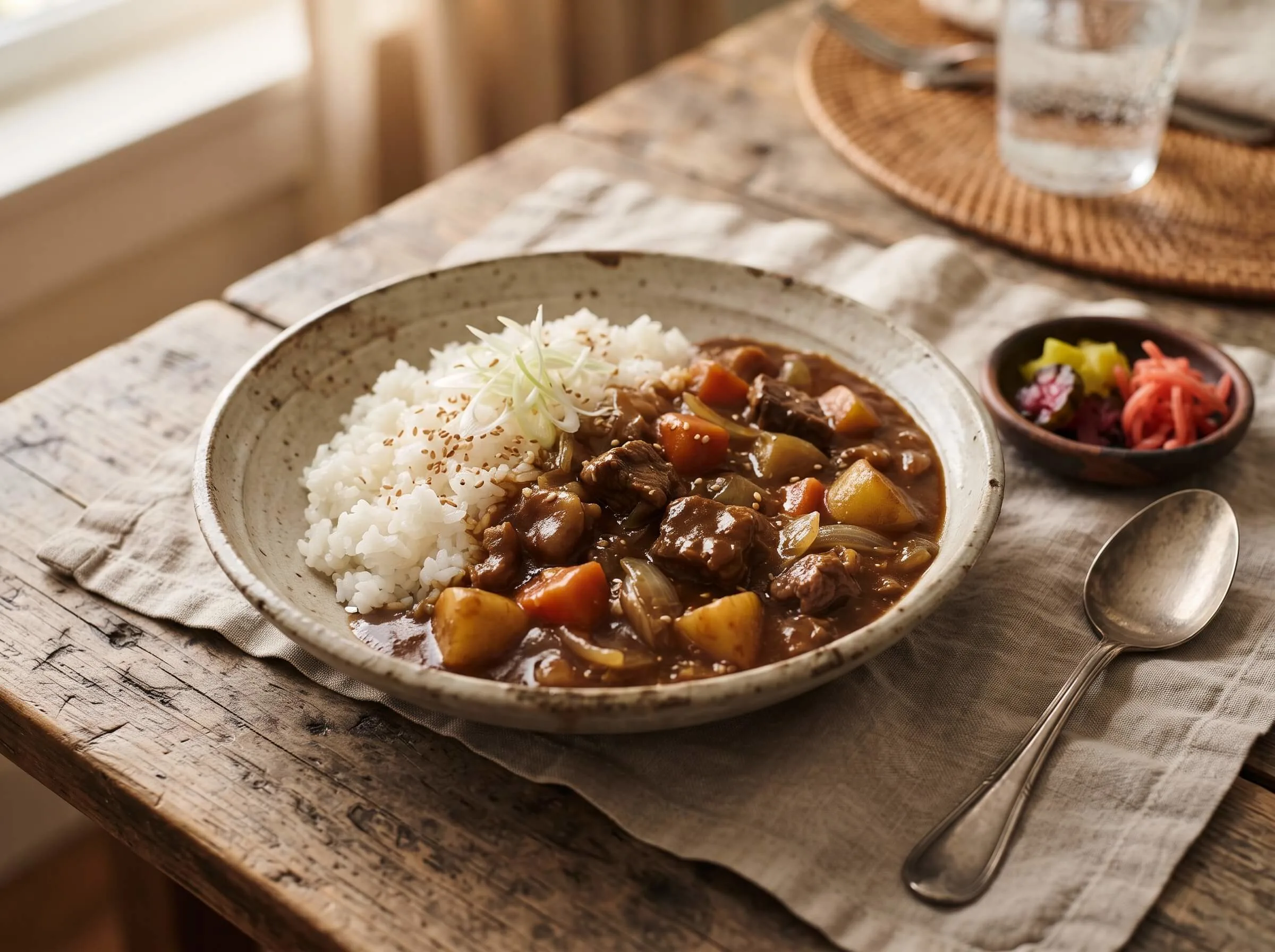
Steamed white rice is the essential pairing here, forming the classic curry rice combination found throughout Japan.
A side of Japanese pickles, known as fukujinzuke, adds a tangy, crunchy contrast that’s traditionally served alongside curry rice.
A simple green salad on the side offers some freshness to balance out the rich, hearty curry.
How This Japanese Curry Recipe Comes Together
This recipe comes together in three main stages: browning the protein and softening aromatics and vegetables, simmering everything in broth until tender, then stirring in curry roux cubes to thicken the sauce into that signature glossy, rich curry. Here’s everything you’ll need.
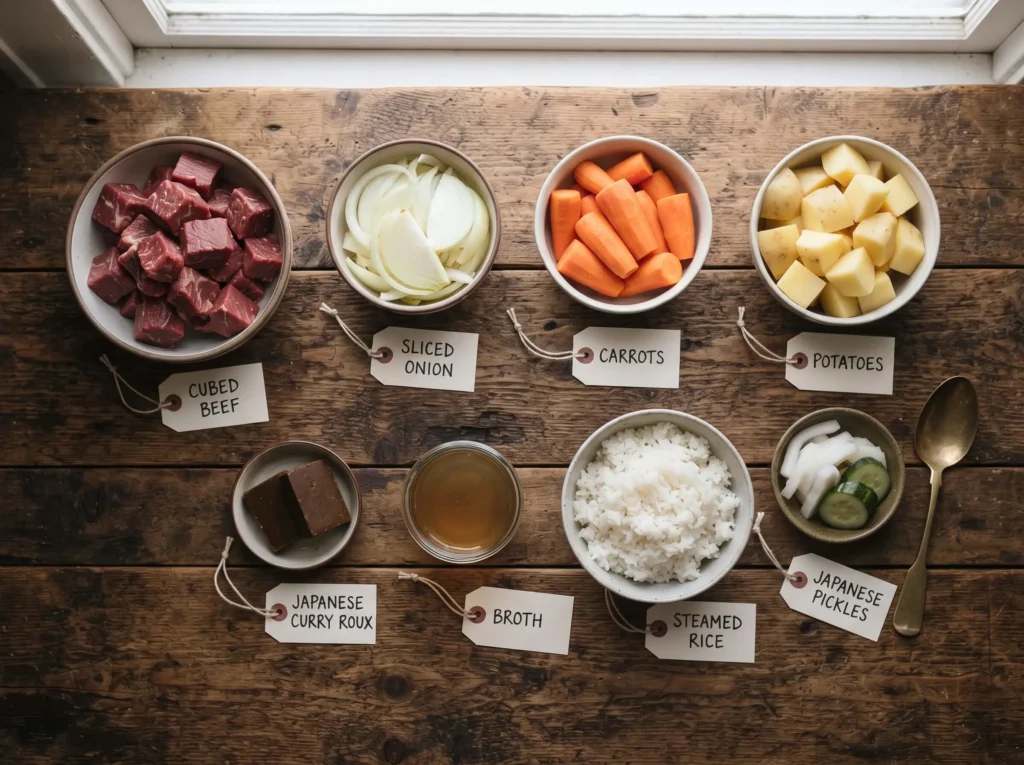
Japanese Curry Recipe
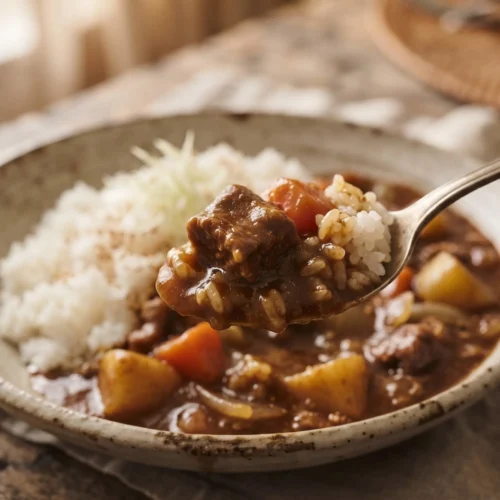
Japanese Curry Recipe

Equipment
- Large pot or Dutch oven
- Wooden spoon
Ingredients
- 2 tbsp vegetable oil
- 1½ lbs beef stew meat or boneless skinless chicken thighs, cut into bite-sized pieces
- 1 large yellow onion sliced
- 2 carrots cut into chunks
- 2 medium potatoes peeled and cut into chunks
- 4 cups water or beef/chicken broth
- 1 box about 8.4 oz Japanese curry roux cubes
- Steamed rice for serving
- Fukujinzuke Japanese pickles, for serving, optional
Instructions
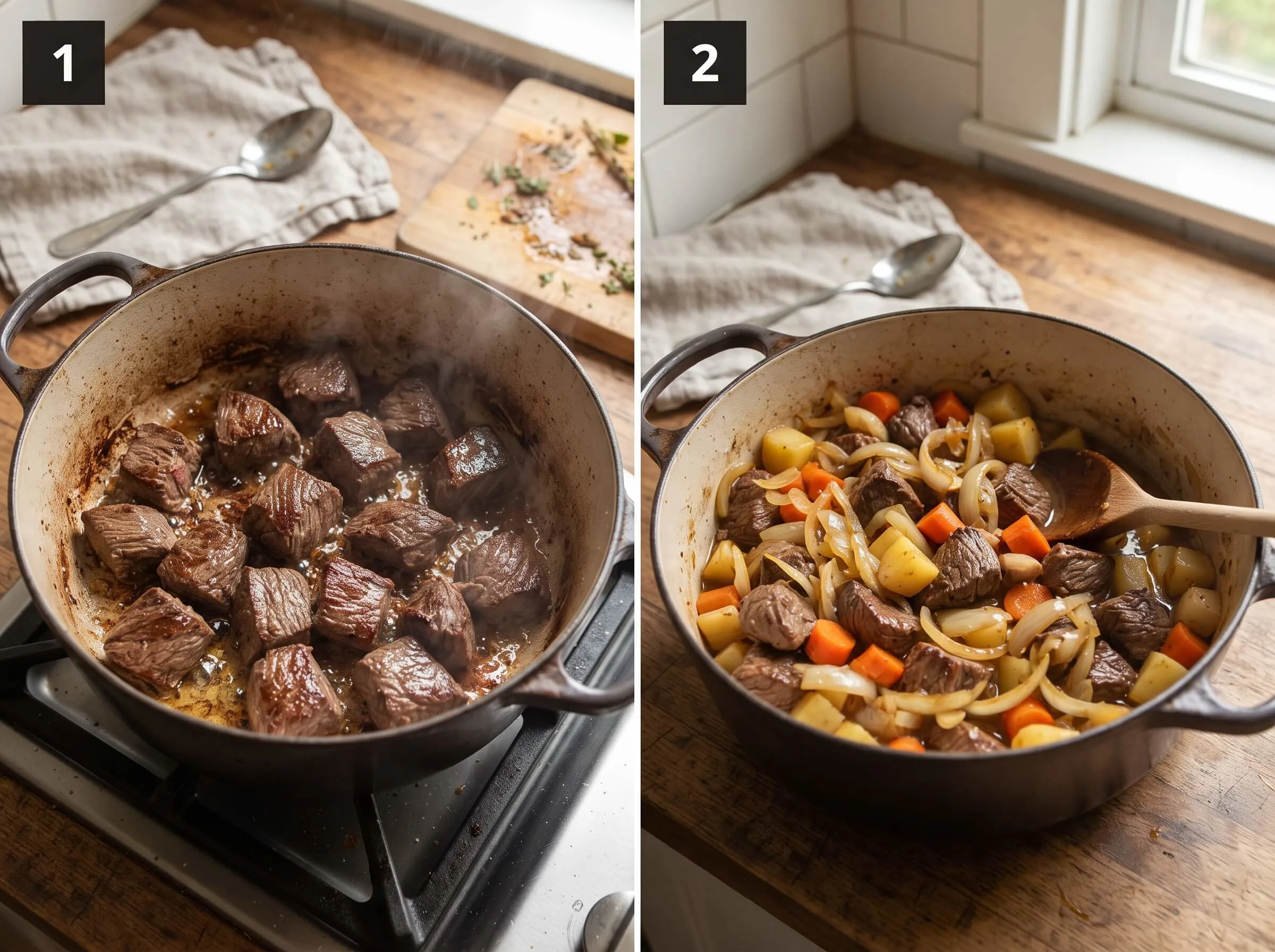
Brown the Protein and Vegetables
- Heat the vegetable oil in a large pot or Dutch oven over medium-high heat. Add the beef or chicken and brown for 4-5 minutes, until browned on the outside, then transfer to a plate and set aside.
- In the same pot, add the sliced onion and cook for 5-6 minutes, until softened and translucent. Add the carrots and potatoes, stirring to combine with the onion.
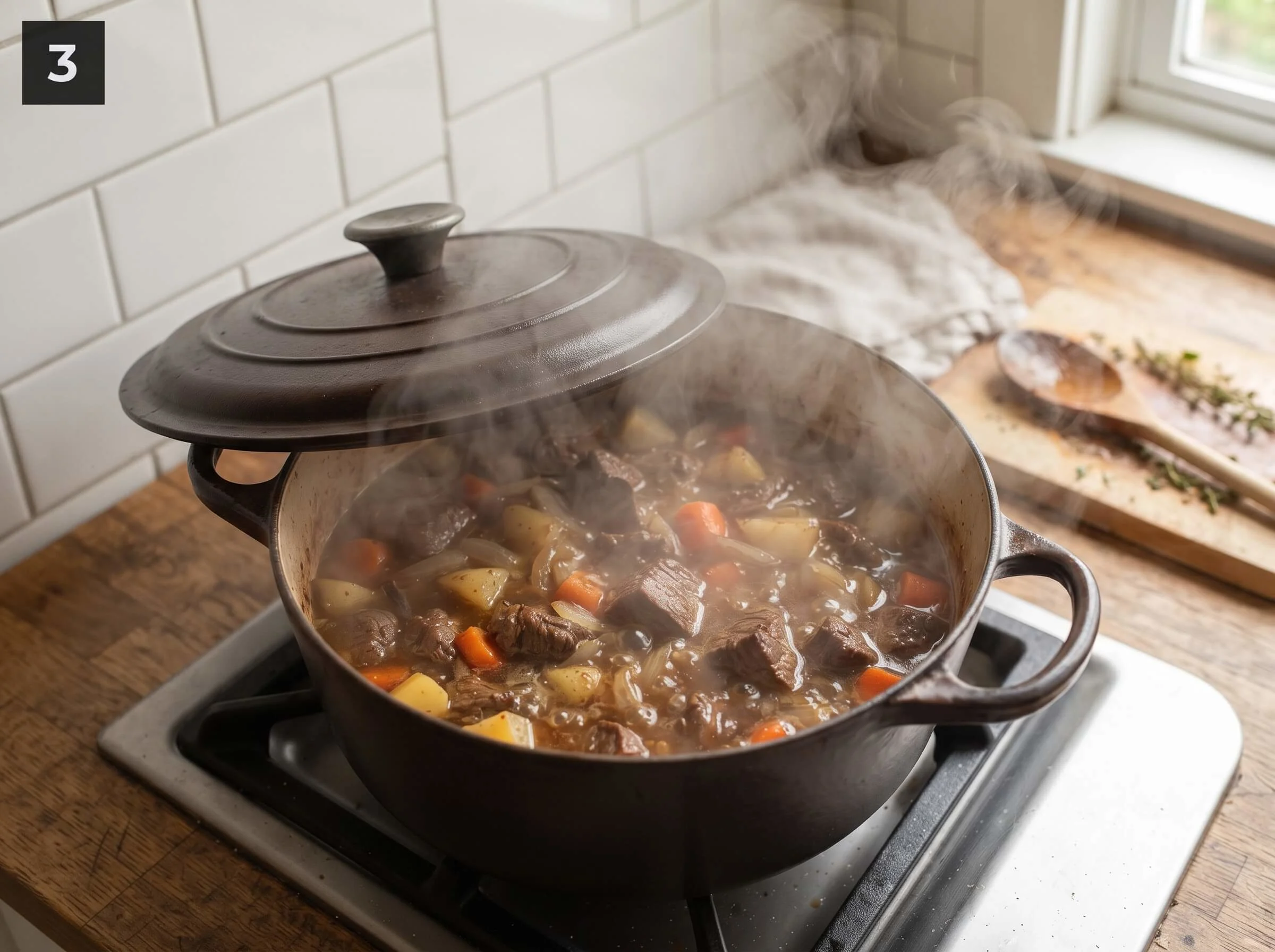
Simmer Until Tender
- Return the browned meat to the pot, then pour in the water or broth, making sure everything is mostly submerged. Bring to a boil, then reduce the heat to a simmer, cover, and cook for 20-25 minutes if using chicken, or 35-40 minutes if using beef, until the meat is tender and the vegetables are fully cooked through.
Add the Curry Roux and Thicken
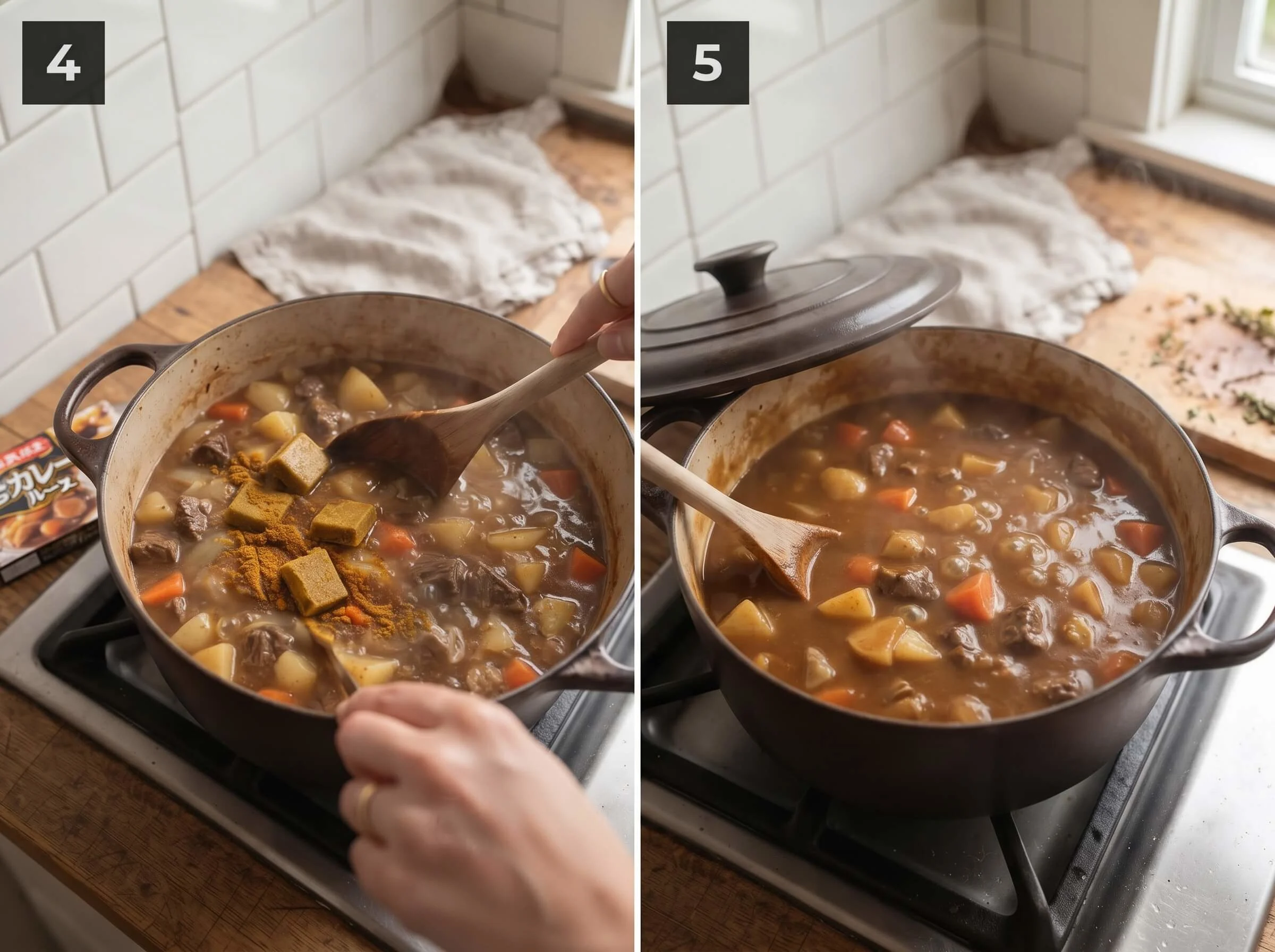
- Remove the pot from heat and break the curry roux cubes into smaller pieces, stirring them into the hot liquid until fully dissolved and no lumps remain.
- Return the pot to low heat and simmer uncovered for 8-10 minutes, stirring occasionally, until the sauce thickens into a glossy, rich curry consistency.
Serve
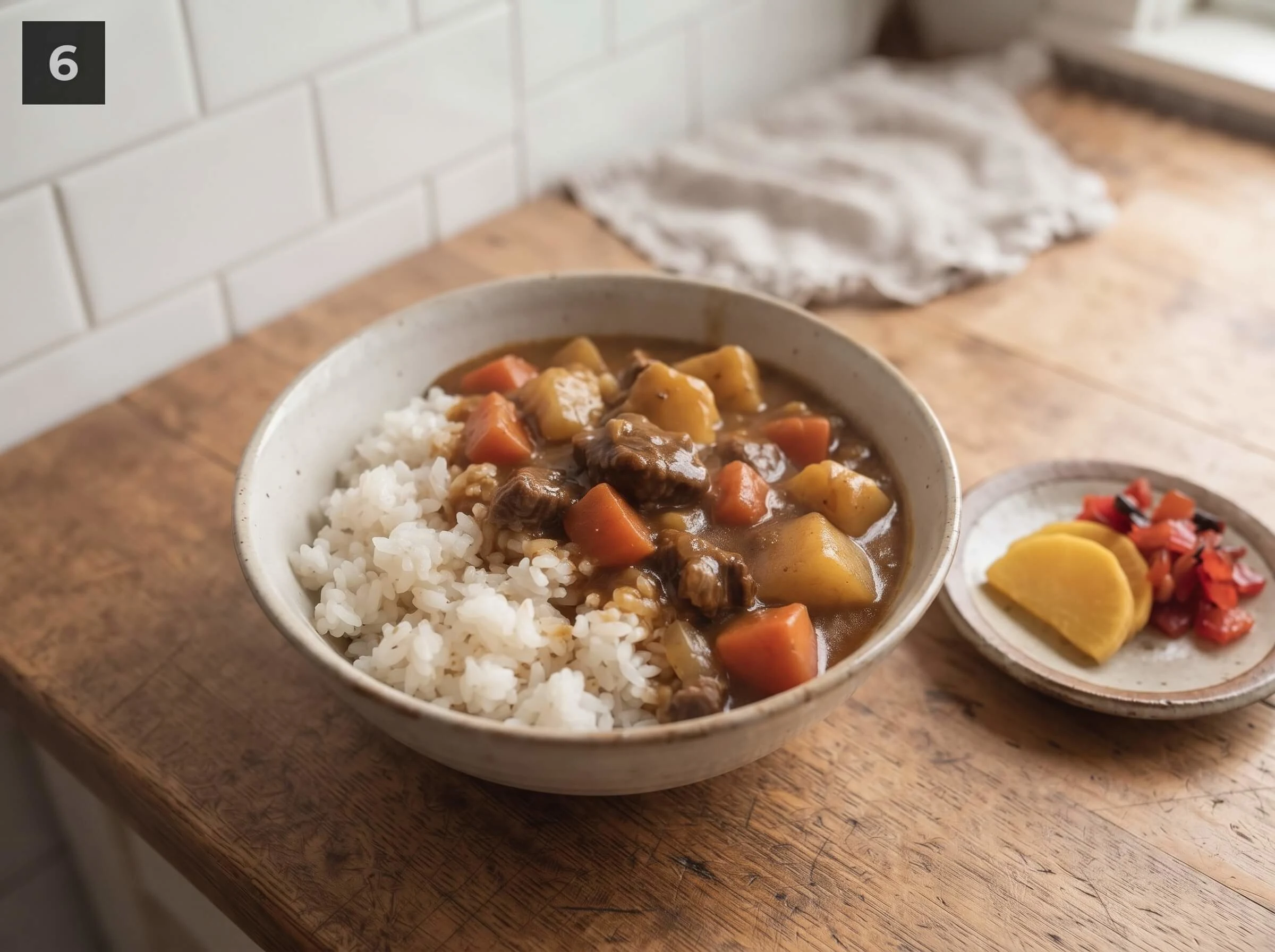
- Ladle the curry over steamed rice, serving with fukujinzuke pickles on the side if desired.
Notes
- Browning the meat before simmering adds a significant amount of depth to the overall flavor of the curry, so don’t skip this step even though the meat will continue cooking through the simmer.
- Removing the pot from heat before adding the curry roux cubes helps them dissolve more evenly without clumping, so make sure to follow that order rather than adding them to actively boiling liquid.
- A japanese curry recipe beef version needs the longer simmer time listed to properly tenderize the meat, while chicken cooks much faster, so adjust your timing based on which protein you’re using.
- This curry genuinely improves in flavor after sitting overnight in the refrigerator, making it a great dish to prepare a day ahead if you have the time.
- Leftover curry keeps well in the refrigerator for up to 4 days and also freezes nicely for up to 2 months.
Frequently Asked Questions
What are curry roux cubes, and where can I find them for this Japanese curry recipe with cubes?
Curry roux cubes are a pre-made block of flour, fat, and blended curry spices, sold in individual segments within a box, designed to dissolve into simmering liquid and thicken it into that signature Japanese curry sauce. They’re available at most Asian grocery stores and increasingly at larger general grocery stores as well.
What’s the difference between a Japanese curry recipe beef version and a chicken version in terms of cooking time?
Beef, especially tougher stew cuts, typically needs a longer simmer time, around 35-40 minutes, to become properly tender, while chicken cooks much faster, generally ready in about 20-25 minutes. This is the main difference in timing between the two protein options in this recipe.
Why is my Japanese curry sauce too thin?
This usually means either not enough curry roux cubes were used relative to the amount of liquid, or the sauce wasn’t simmered long enough after adding the roux to properly thicken. Let it simmer a bit longer uncovered, stirring occasionally, to help it reach the right consistency.
Can I make japanese curry dishes without the pre-made roux cubes?
Yes, though it requires making a roux from scratch using flour, butter, and curry powder, along with additional spices to build a similar flavor profile. This from-scratch method takes more time and ingredients but can be done if roux cubes aren’t available in your area.
Is Japanese curry spicy?
Most standard Japanese curry roux is quite mild compared to many other curry traditions, though roux cubes typically come in mild, medium, and hot varieties, so you can choose based on your personal spice preference when purchasing.
Can I add other vegetables to this japanese curry recipe?
Absolutely, this dish is flexible enough to include additions like mushrooms, bell peppers, or even apples, which some traditional recipes include for a subtle natural sweetness that complements the curry’s flavor.
How long does Japanese curry keep, and can I freeze it?
Stored in an airtight container in the refrigerator, this curry keeps well for up to 4 days, with flavor often improving after the first day. It also freezes well for up to 2 months, though the potatoes may become slightly softer in texture once thawed.
Can I make this Japanese curry recipe in a slow cooker or Instant Pot?
Yes, both appliances work well for this dish. In a slow cooker, brown the meat and sauté the vegetables first, then transfer everything to the slow cooker with the liquid and cook on low for 6-7 hours before stirring in the roux at the end. An Instant Pot can pressure cook the meat and vegetables much faster before finishing with the roux the same way.
Why do some Japanese curry recipes include apple or honey?
Apple and honey are both traditional additions in many Japanese curry recipes, contributing a subtle natural sweetness that balances the savory, spiced sauce, which is part of what gives its distinctly milder, sweeter character compared to other curry traditions.
Can I make a vegetarian version of this japanese curry recipe?
Yes, simply omit the meat and use vegetable broth in place of beef or chicken broth, and consider adding heartier vegetables like mushrooms or extra potatoes to help make the dish feel more substantial without the protein.
What’s the best way to reheat leftover Japanese curry?
Reheating gently on the stovetop over low heat, stirring occasionally, works best for maintaining the sauce’s texture. If the curry has thickened too much after refrigeration, a small splash of water or broth stirred in while reheating helps loosen it back up.
Twists & Ideas
You Can Add
A diced apple added along with the vegetables, as mentioned in the FAQ, adds a subtle natural sweetness that’s common in many traditional Japanese curry recipes.
A spoonful of honey stirred into the finished curry adds another layer of gentle sweetness to balance the savory sauce.
Sliced mushrooms added along with the carrots and potatoes bring an earthy depth throughout the curry.
A soft-boiled egg served on top of the curry rice adds richness and a popular textural contrast found in many casual Japanese curry restaurants.
You Can Replace
Chicken can replace beef, or vice versa, as covered in the recipe itself, adjusting simmer time depending on which protein you choose.
A homemade roux made from flour, butter, and curry powder can replace pre-made curry roux cubes, as mentioned in the FAQ, for a version built entirely from scratch.
Sweet potatoes can replace regular potatoes for a slightly different, naturally sweeter flavor throughout the curry.
Vegetable broth and a plant-based protein or extra vegetables can replace the meat and broth entirely for a vegetarian version, as covered in the FAQ.
Recipes You May Enjoy
- Teriyaki Chicken Recipe
- Tostones Recipe
- Mofongo Recipe
- Pollo Guisado Recipe
- Onigiri Recipe
- Pad Thai Recipe
- Chicken Katsu Recipe
- Wonton Soup Recipe
- Lamb Shank Meat Recipe
- Lamb Curry Recipe
A Comfort Food Worth Making From Scratch
Japanese curry stands apart from other curry traditions in the best way, delivering a thick, mildly sweet, deeply savory sauce that feels genuinely comforting in every bowl. Whether you’re drawn to the richer, longer-simmered beef version or the quicker chicken option, this dish rewards the relatively simple effort with a sauce that tastes far more complex than the short ingredient list suggests.
Whether you’re making this recipe for a cozy dinner, exploring different japanese dishes for the first time, or specifically searching for a japanese curry recipe with cubes to simplify the process, this version delivers that same rich, comforting sauce people have loved across generations in Japan. Once you’ve made a batch, it’s easy to understand why curry rice has become such a beloved, everyday staple throughout Japanese households.
Tried This Recipe? Leave a Review!
There are no reviews yet. Be the first one to write one.