Focaccia Recipe
Table of Contents
The Bread That Makes Simple Ingredients Shine
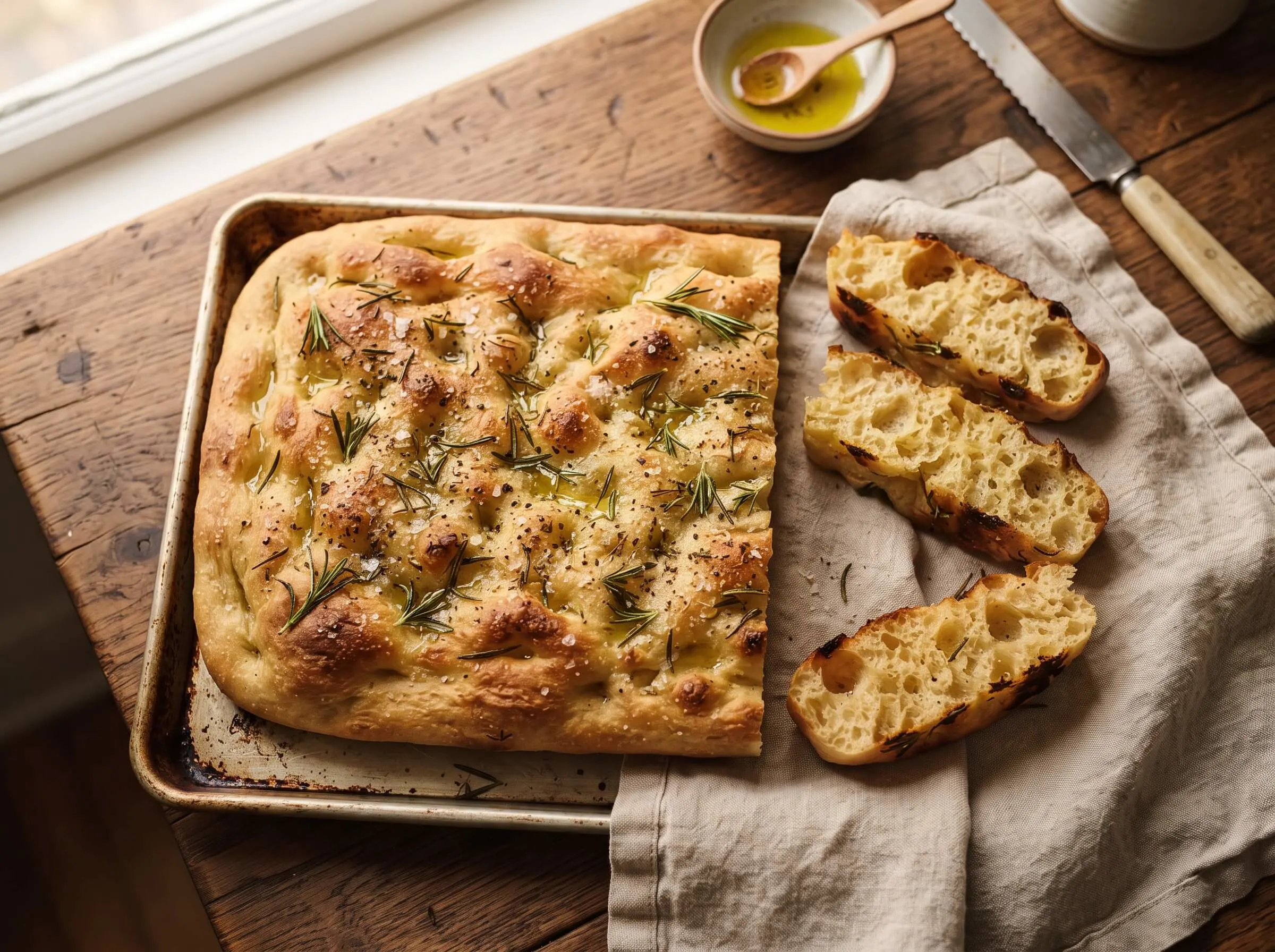
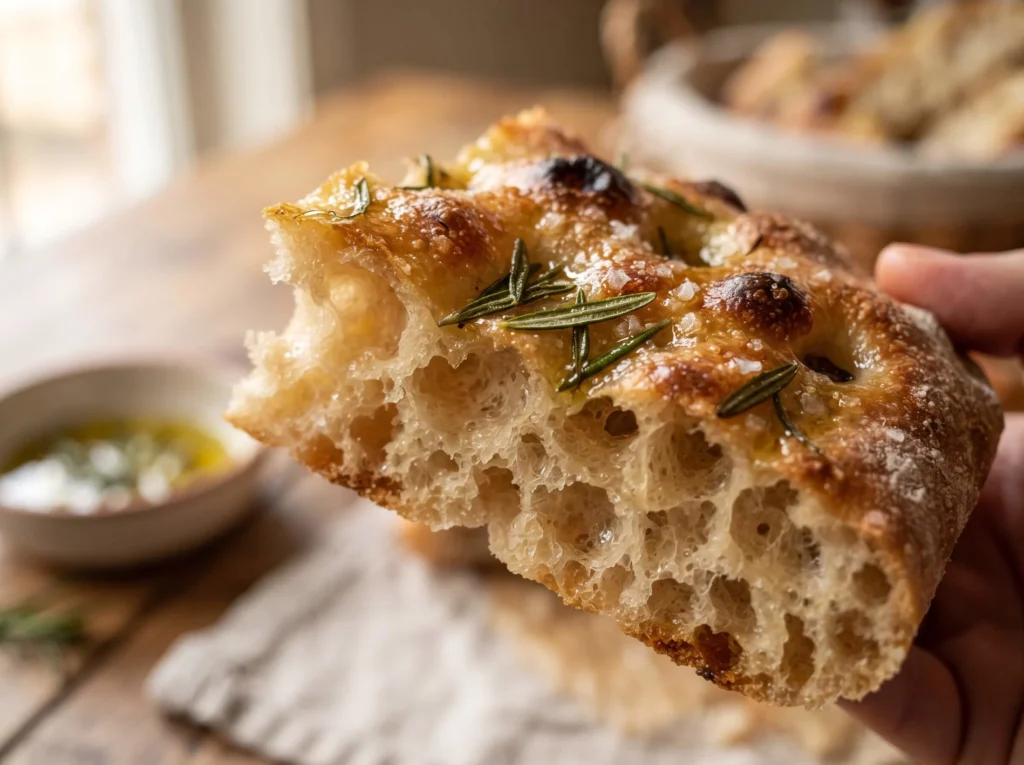
Few breads are as forgiving and rewarding to make at home as focaccia. This focaccia recipe delivers that classic combination of a soft, airy interior and a crisp, olive oil-soaked crust, dimpled across the top and finished with fresh rosemary and flaky salt.
Focaccia has roots tracing back to ancient times, with some food historians linking its origins to even earlier flatbreads baked by the Etruscans and Romans before evolving into the version recognized in Italy today, something Smithsonian Magazine has written about when covering the deep history behind many of Italy’s most beloved breads. Liguria, particularly the city of Genoa, is often credited as the region most closely associated with the focaccia bread recipe style most people recognize now.
What sets a great recipe for focaccia italian bread apart from an average one often comes down to hydration and time. Serious Eats has written extensively about high-hydration doughs, explaining that a wetter dough, combined with a longer, slower rise, produces the large, irregular air pockets that give good focaccia its signature light, airy texture, as opposed to a denser, tighter crumb.
Olive oil plays a defining role here as well, both mixed into the dough and generously poured into the pan before baking. Bon Appétit has pointed out that a generous amount of oil in the pan essentially fries the bottom crust as it bakes, creating that crisp, almost pan-fried texture that’s a hallmark of authentic focaccia.
For anyone wanting to explore a naturally leavened version, a sourdough focaccia recipe swaps commercial yeast for active sourdough starter, which King Arthur Baking has covered when discussing how sourdough fermentation adds a subtle tang and additional depth of flavor, along with a slightly different, often more open crumb structure compared to a standard yeasted version.
Whether you’re making the classic focaccia bread recipe with rosemary or searching for the best Italian focaccia recipe to serve alongside dinner, this version walks through the technique needed to get that perfect balance of crisp crust and pillowy interior.
Why You’ll Love This Recipe
This focaccia recipe delivers that classic crisp, olive oil-soaked bottom crust alongside a soft, airy interior, using a straightforward technique that doesn’t require advanced bread-baking experience.
The dimpling and topping process is genuinely fun and forgiving, giving you room to customize with different herbs, toppings, or salt varieties depending on your mood.
Because this dough is high-hydration and mostly hands-off during the rise, this recipe for focaccia italian bread is far more approachable than it might initially seem for anyone newer to bread baking.
What to Serve With Focaccia
A simple bowl of olive oil and balsamic vinegar for dipping is the classic pairing here, letting the bread’s flavor shine on its own.
Sliced focaccia works beautifully alongside a charcuterie board or antipasto spread, echoing its traditional role in Italian cuisine.
For a heartier meal, focaccia can be split and used as sandwich bread, or served alongside a simple soup or pasta dish.
How This Focaccia Recipe Comes Together
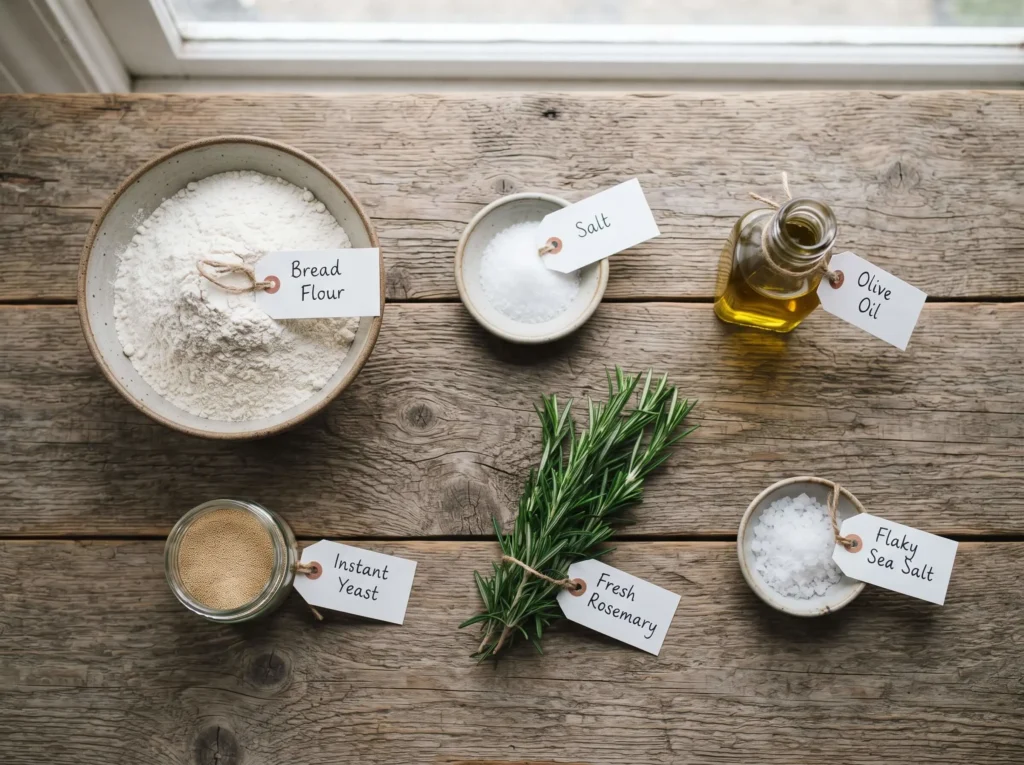
This recipe comes together in three main stages: mixing a high-hydration dough and allowing it a long, slow rise, stretching it into the pan and dimpling the surface, then topping it with olive oil, rosemary, and salt before baking until golden and crisp. Here’s everything you’ll need.
Focaccia Recipe
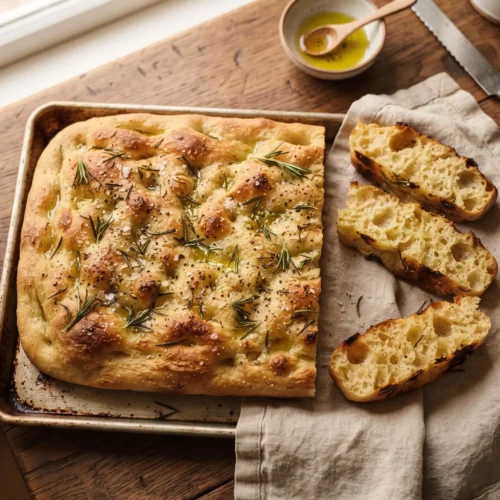
Focaccia Recipe

Equipment
- Large mixing bowl
- 9×13 baking pan
- plastic wrap
Ingredients
- 4 cups bread flour
- 2¼ tsp instant yeast
- 2 tsp salt
- 2 cups warm water
- 6 tbsp olive oil divided, plus more for the pan
- 2 tbsp fresh rosemary chopped
- Flaky sea salt for topping
Instructions
Mix the Dough and First Rise
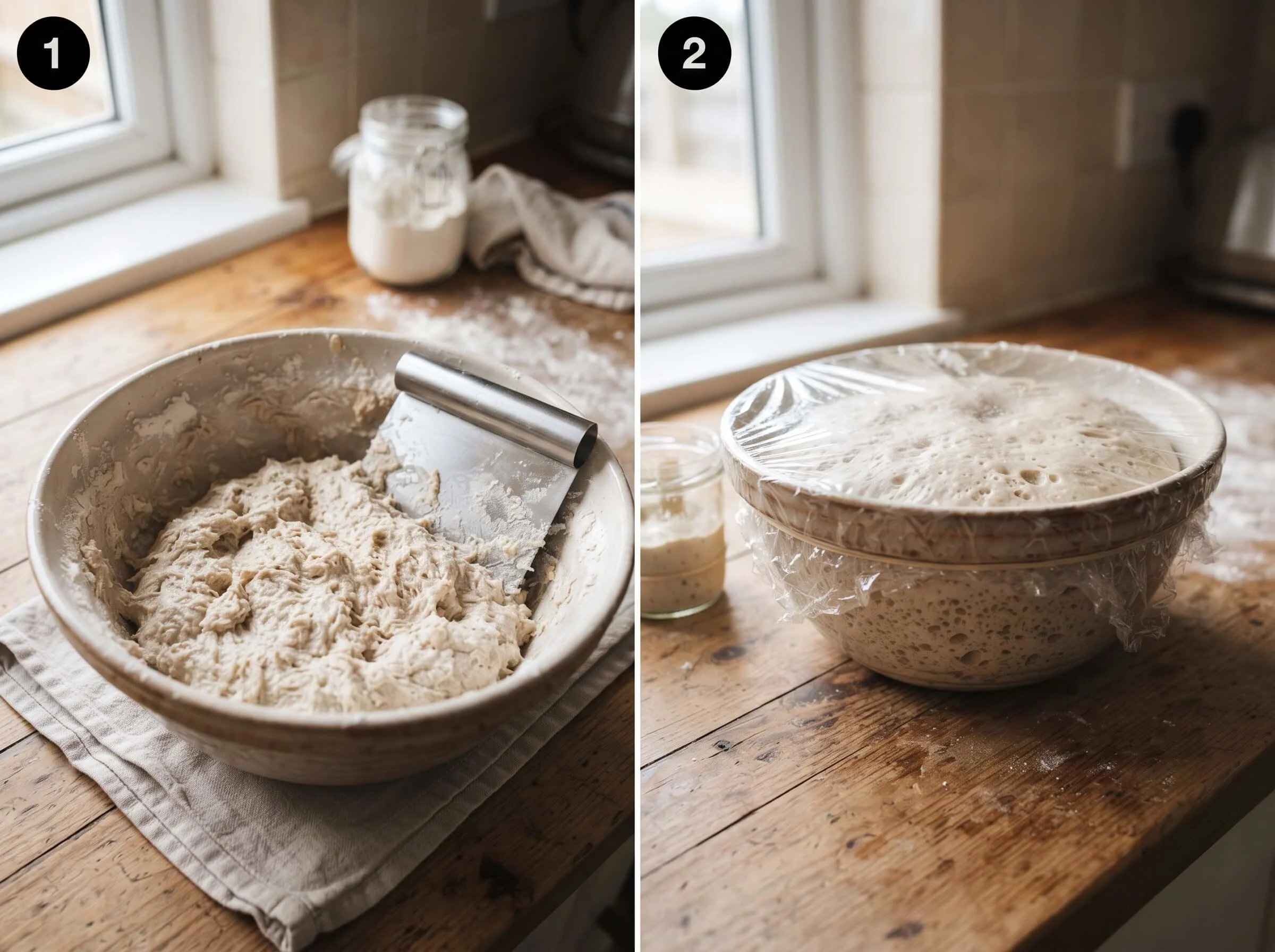
- In a large bowl, whisk together the bread flour, yeast, and salt. Add the warm water and 2 tablespoons of olive oil, mixing with a spatula or your hands until a shaggy, wet dough forms; this dough will be much stickier and wetter than a typical bread dough, which is expected for focaccia.
- Cover the bowl and let the dough rise at room temperature for about 2 hours, until it has roughly doubled in size and looks bubbly on top.
Stretch and Dimple the Dough
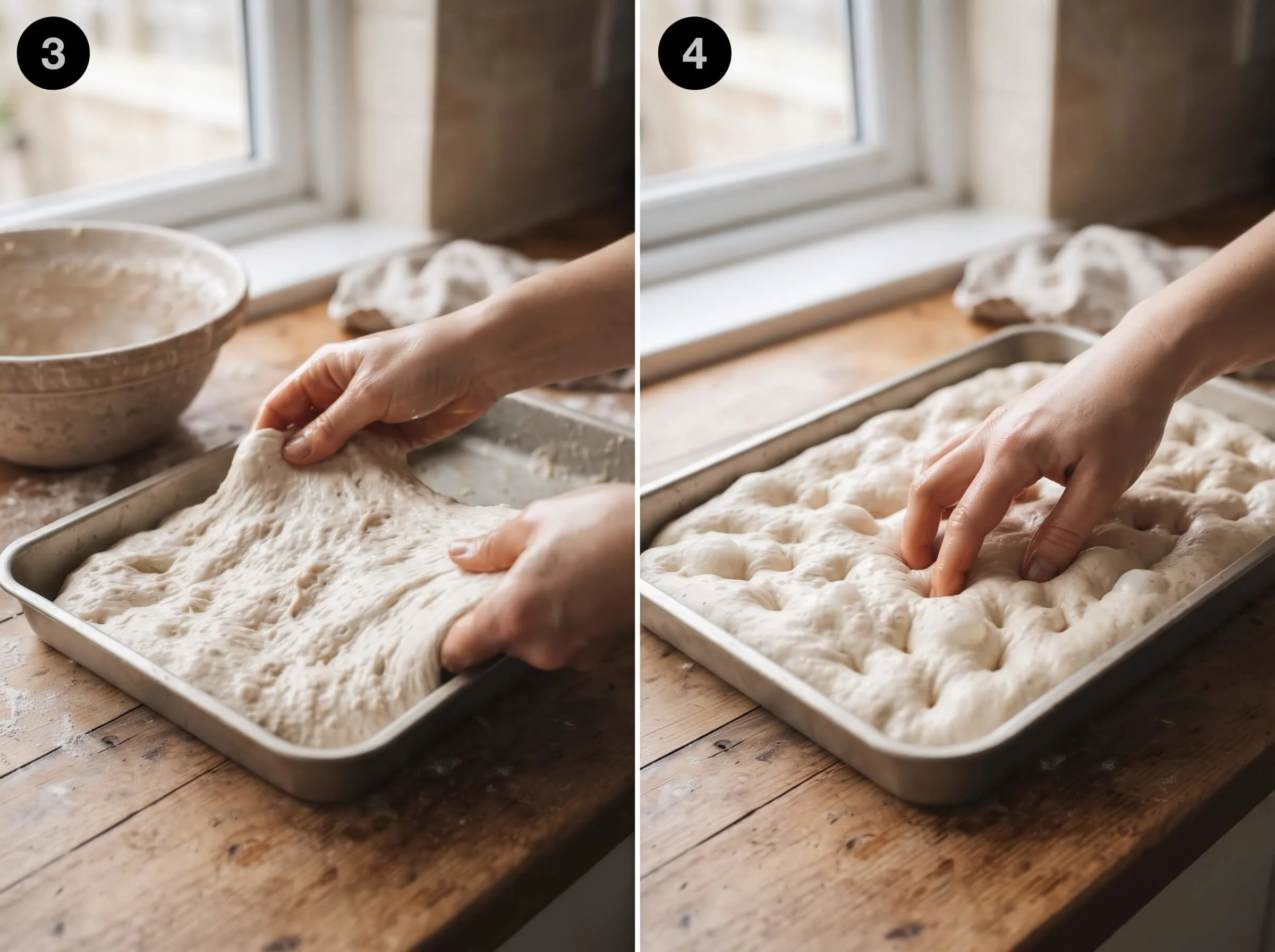
- Generously coat a 9×13 baking pan with olive oil, about 2 tablespoons worth, making sure to coat the bottom and sides well. Transfer the dough into the pan, then gently stretch it toward the edges of the pan with oiled hands, being careful not to deflate it too much.
- Cover the pan and let the dough rest and rise again for about 45 minutes to an hour, until puffy. Using oiled fingertips, press deep dimples all across the surface of the dough, going almost all the way to the bottom of the pan.
Top and Bake
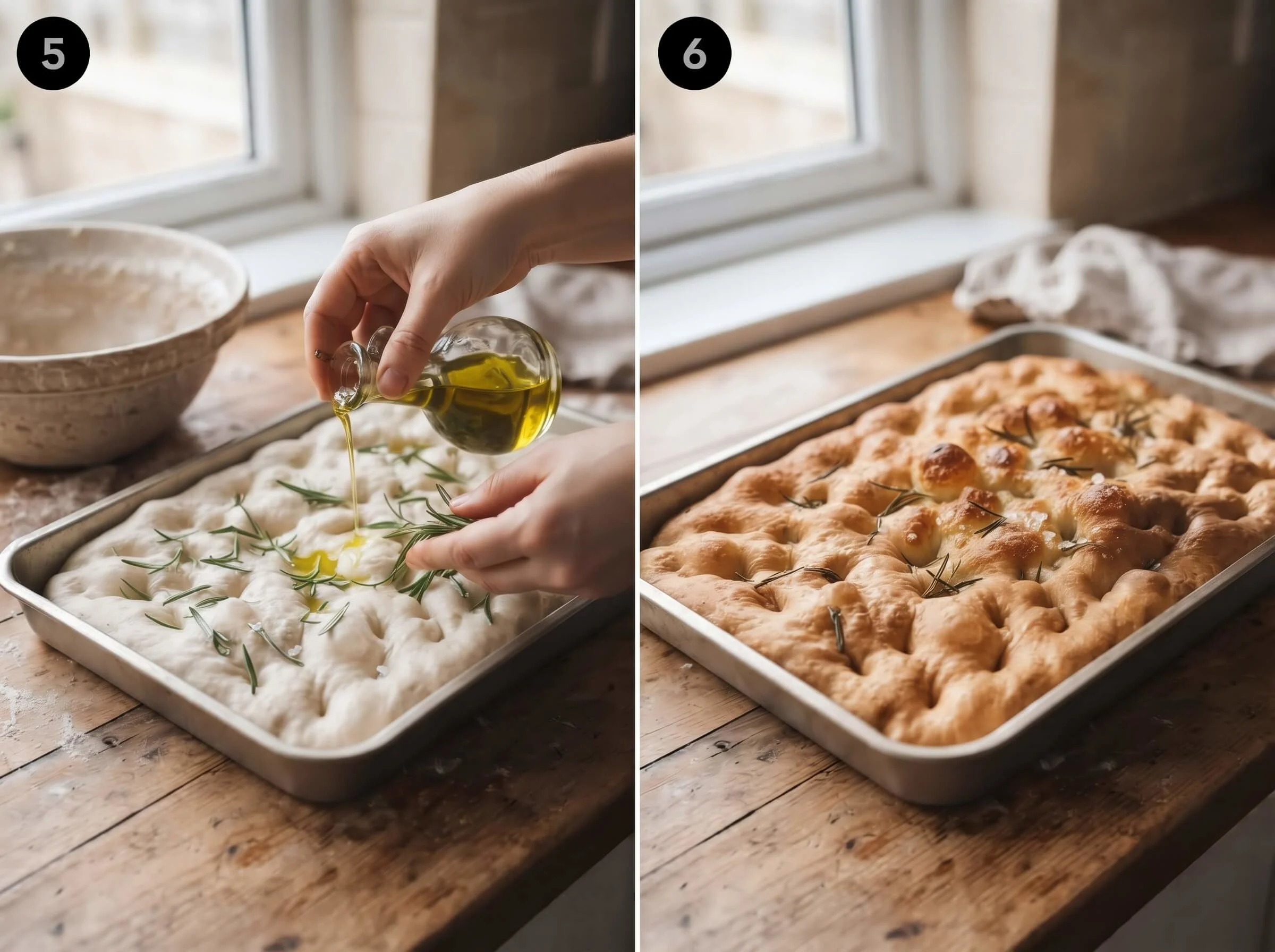
- Drizzle the remaining 2 tablespoons of olive oil evenly over the dimpled dough, letting it pool into the dimples. Sprinkle the chopped rosemary and flaky sea salt evenly across the top.
- Bake at 425°F (220°C) for 22-25 minutes, until the focaccia is deeply golden brown on top and crisp at the edges. Let it cool in the pan for a few minutes before transferring to a wire rack or cutting board to slice.
Notes
- This dough is meant to be wet and sticky, so resist the urge to add extra flour to make it easier to handle, since that extra flour will result in a denser, less airy finished focaccia.
- Using generously oiled hands, rather than flour, to handle the dough throughout the process makes it much easier to work with without sticking.
- Dimpling the dough deeply, almost to the bottom of the pan, is what creates those characteristic little pools of olive oil across the top once baked.
- The generous amount of oil in the pan is intentional and essential, since it essentially fries the bottom crust as the focaccia bakes, giving it that signature crisp texture.
- Leftover focaccia keeps well at room temperature in an airtight container for 2-3 days, or can be frozen for up to a month.
Frequently Asked Questions
Can I make a sourdough focaccia recipe using this same method?
Yes, you can replace the instant yeast with about 1 cup of active, bubbly sourdough starter, adjusting the water slightly to maintain the same wet dough consistency. Keep in mind that a sourdough version will need a longer rise time, since natural fermentation typically works more slowly than commercial yeast.
Why is my focaccia dense instead of light and airy?
This is almost always caused by either not letting the dough rise long enough, or adding too much extra flour during handling out of a desire to make the sticky dough easier to work with. Trust the wet dough process and use oiled hands instead of flour, and give both rises their full recommended time.
Can I use all-purpose flour instead of bread flour for this focaccia recipe?
Yes, all-purpose flour can be used in place of bread flour, though bread flour’s higher protein content helps develop a slightly chewier, more structured crumb. All-purpose flour will still produce good focaccia, just with a marginally softer texture overall.
What toppings work well for a focaccia bread recipe with rosemary beyond just rosemary and salt?
Cherry tomatoes, thinly sliced red onion, olives, or other fresh herbs like thyme can all be pressed into the dimples alongside or instead of rosemary, giving you plenty of room to customize the flavor and appearance of the finished bread.
Why isn’t my focaccia getting that crisp bottom crust?
This usually points to not using enough olive oil in the pan before adding the dough. A generous amount, roughly 2 tablespoons coating the bottom and sides, is what allows the bottom to essentially fry as the bread bakes, so don’t skimp on the oil in the pan.
How do I know when this recipe for focaccia italian bread is fully baked?
The top should be deeply golden brown, and the edges should look crisp and slightly darker than the center. If you’re unsure, an internal temperature of about 200-210°F (93-99°C) checked with a thermometer confirms the bread is fully baked through.
Can I make the dough for the best Italian focaccia recipe ahead of time?
Yes, the dough can be mixed and left to do its first rise slowly in the refrigerator overnight, which can actually deepen the flavor. Bring it to room temperature before stretching it into the pan and continuing with the rest of the recipe.
Twists & Ideas
You Can Add
Halved cherry tomatoes pressed into the dimples alongside the rosemary add bursts of color and juicy sweetness throughout the bread.
Thinly sliced garlic scattered over the top before baking infuses the crust with a savory, aromatic flavor as it bakes.
A sprinkle of grated parmesan over the top during the last few minutes of baking adds a savory, slightly crisp finish.
Pitted kalamata olives pressed into the dough add a briny, salty bite that pairs beautifully with the rosemary and olive oil.
You Can Replace
Active sourdough starter can replace instant yeast, as mentioned in the FAQ, for a naturally leavened sourdough focaccia recipe with a subtly tangy flavor.
All-purpose flour can replace bread flour, as covered in the FAQ, for a slightly softer texture if that’s what you have on hand.
Fresh thyme or oregano can replace rosemary for a different herb flavor throughout the bread.
Flaky sea salt can be swapped for coarse kosher salt if that’s what’s available, without significantly changing the finished result.
Recipes You May Enjoy
- Conchas Recipe
- Pan de Muerto Recipe
- Apple Cinnamon Bread Recipe
- Gluten Free Sourdough Bread
- Cannoli Recipe
- Baked Chicken Parmesan Recipe
A Bread Worth Mastering at Home
Focaccia proves that a handful of simple ingredients, given the right time and technique, can produce something genuinely special. Between the crisp, olive oil-soaked crust and the soft, airy interior dotted with fresh rosemary, this bread delivers restaurant-quality results without requiring advanced baking skills.
Whether you’re making this focaccia recipe for the first time, trying a sourdough focaccia recipe for a naturally leavened variation, or specifically searching for the best Italian focaccia recipe to serve alongside your next dinner, this recipe walks through everything needed to get that perfect balance of crisp crust and pillowy crumb. Once you’ve mastered the technique, this becomes a bread you’ll want to bake again and again, whether as a side dish, a sandwich base, or simply something to tear into on its own.
Tried This Recipe? Leave a Review!
There are no reviews yet. Be the first one to write one.