Gluten Free Sourdough Bread
Table of Contents
A Bread Worth the Wait
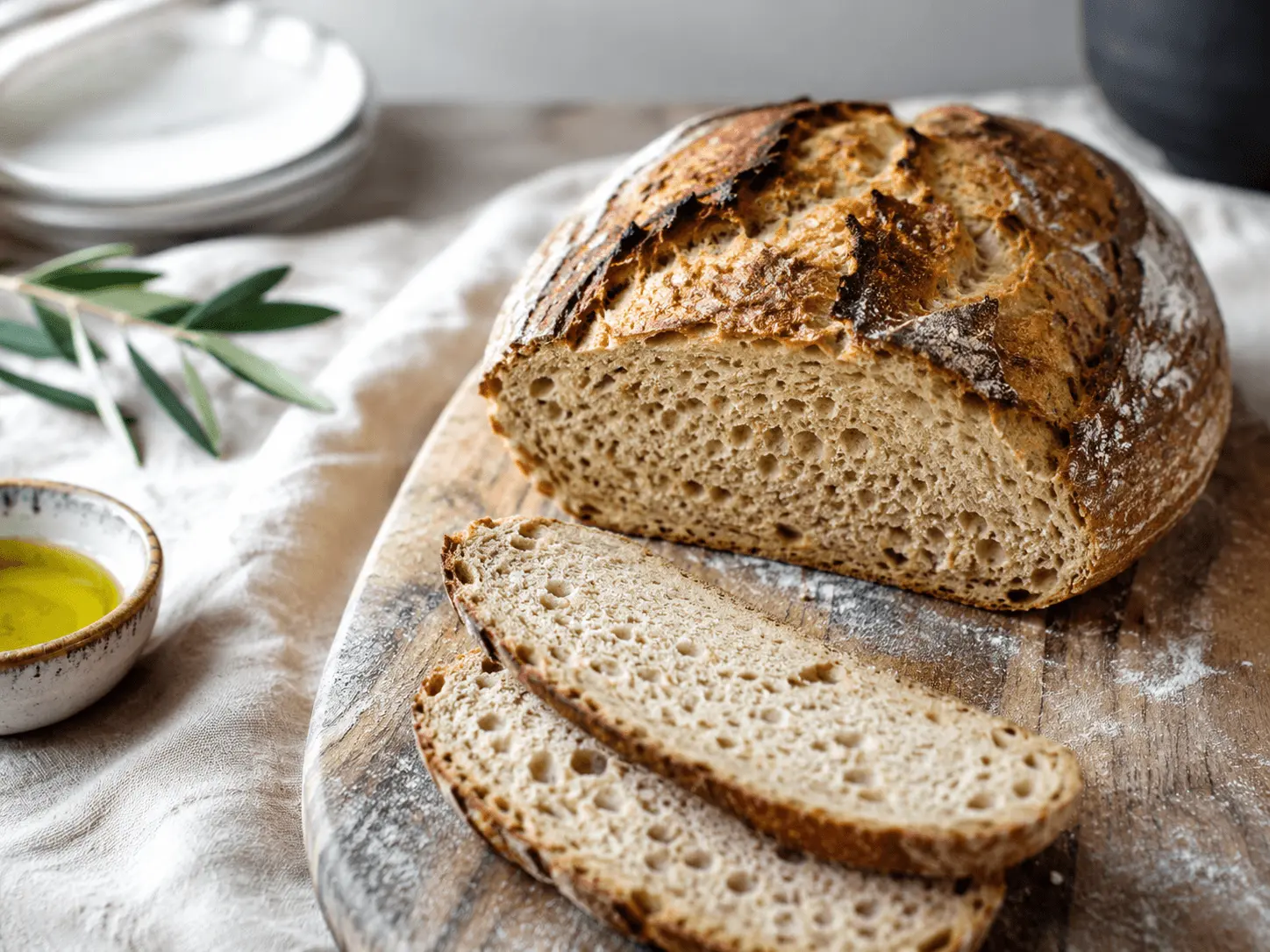
There is something special about pulling a warm, crackling loaf of gluten free sourdough bread out of the oven and hearing that crust crackle as it cools. This recipe proves that going gluten free does not mean giving up the deep flavor, airy crumb, and golden crust that make sourdough so beloved.
Traditional sourdough gets its name and tang from wild fermentation, a process that stretches back thousands of years. Archaeological evidence points to ancient Egyptian bakers discovering the technique by accident, likely when a bowl of flour and water was left out and colonized by wild yeast from the air, producing a lighter loaf than the flatbreads they were used to.
It’s worth clarifying something many people assume, since it’s one of the most common questions about this dish: is sourdough bread gluten free on its own? The answer is no. Traditional sourdough is made with wheat flour, and gluten is a protein found in wheat, barley, and rye that triggers an immune reaction in people with celiac disease, which is exactly why this recipe swaps in a dedicated gluten free flour blend rather than relying on wheat at all.
Psyllium husk is what makes that swap actually work here. Because gluten free flour lacks the elastic protein network that holds regular bread dough together, psyllium husk forms a gel when mixed with water that mimics gluten’s binding and moisture retention properties in gluten free baking, giving this loaf a surprisingly authentic chew and open crumb.
The gluten free flour blend itself relies on another quiet workhorse ingredient. Most 1:1 blends already include xanthan gum, and xanthan gum helps bind ingredients together and lock in moisture in gluten free baked goods, essentially standing in for the structure gluten would normally provide.
Baking the loaf inside a covered Dutch oven is what gives it that shatteringly crisp crust. Trapping steam around the dough as it bakes recreates the humid environment of a professional steam injected oven, which is part of why a home baked sourdough can rival what comes out of a proper bakery. Once the starter is active and the dough has had its two rises, this gluten free sourdough bread recipe really just comes down to patience while the oven does the rest.
Why You Will Love This Recipe
This recipe uses simple, easy to find ingredients and skips the complicated multi day feeding schedules some sourdough recipes demand, while the finished loaf still has a crisp, deeply golden crust and a soft, airy interior that holds up beautifully for sandwiches or toast.
Beyond the flavor, there are real benefits worth mentioning, including a naturally fermented tang and a texture that many people find closer to real sourdough than typical gluten free bread manages.
It also freezes well, so baking one loaf now means having fresh feeling bread on hand for weeks to come, and it’s flexible enough to fold in seeds or herbs whenever you want to change things up.
What to Serve With Gluten Free Sourdough Bread
This bread is versatile enough to fit almost any meal. A drizzle of good olive oil and flaky salt makes a simple dip, while a warm bowl of soup or stew is perfect for dunking.
Toast it with avocado and a fried egg for breakfast, or serve thin slices alongside a cheese board. For a heartier meal, pair a slice with Beef Minestrone Soup, or use it to soak up the gravy from Crockpot Chicken and Gravy.
You can also serve it alongside Beef Stew Instant Pot for a comforting, satisfying dinner.
How to Make Gluten Free Sourdough Bread
This recipe leans on an active gluten-free sourdough bread starter doing most of the real work, giving the dough its rise and tang without any commercial yeast involved.
Once the starter is bubbly and ready, a psyllium gel gets whisked into the dough to provide the structure gluten would normally supply, and the dough goes through two separate rises before it’s shaped into a boule.
Baking inside a covered Dutch oven traps steam for the first half of baking, then the lid comes off to let the crust turn deeply golden and crisp. Here is everything you will need to bring it together.
Gluten Free Sourdough Bread Recipe
Gluten Free Sourdough Bread

Equipment
- Glass jar (for starter)
- Large mixing bowl
- whisk
- Proofing basket
- Dutch oven with lid
- Sharp blade or lame
- Wire cooling rack
Ingredients
For the Starter (build ahead, 5-7 days):
- ½ cup gluten free flour fed daily
- ½ cup warm water fed daily
For the Bread:
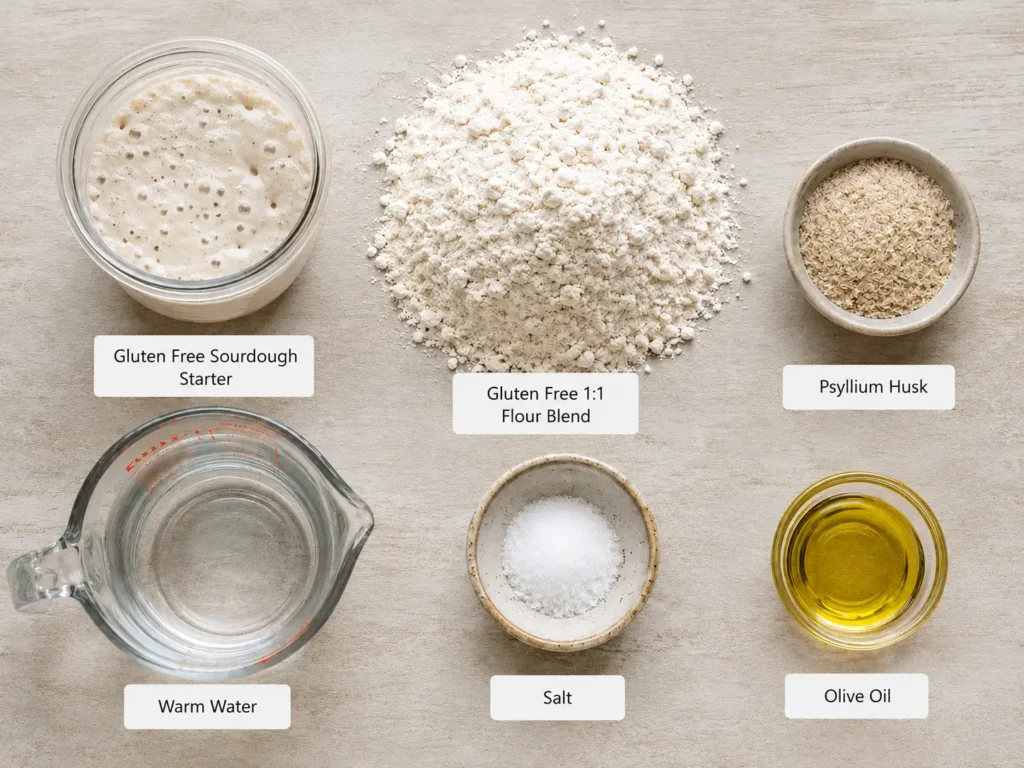
- ¾ cup active bubbly gluten free sourdough starter
- 3 cups gluten free 1:1 flour blend with xanthan gum included
- 2 tbsp psyllium husk
- 1 ¼ cups warm water
- 1 ½ tbsp salt
- 1 tbsp olive oil
Instructions
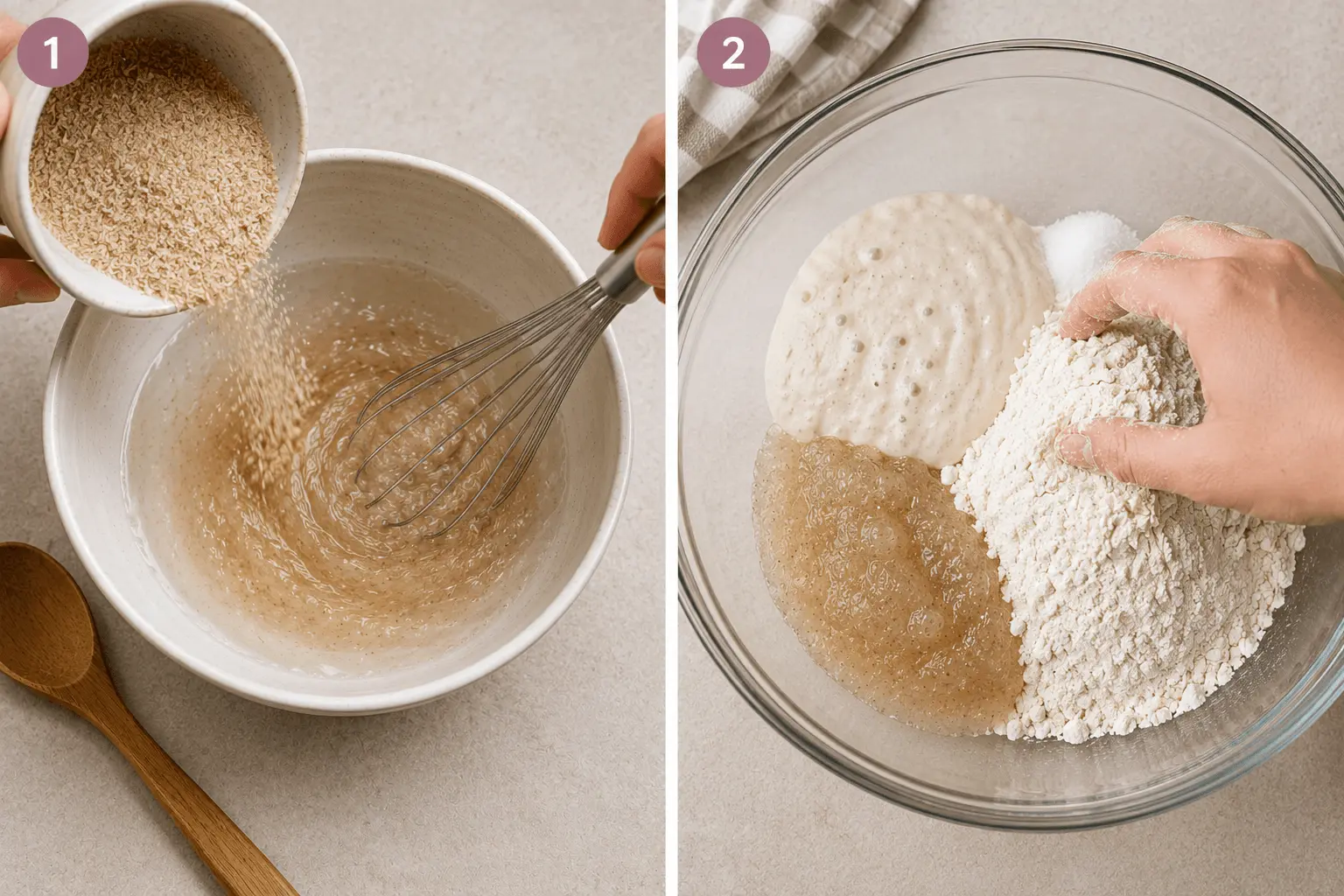
- Make the Psyllium Gel and Start the DoughPour the psyllium husk into the warm water while whisking continuously, letting it thicken into a smooth, gel-like consistency.In a large bowl, combine the flour blend, salt, the active starter, and the psyllium gel.
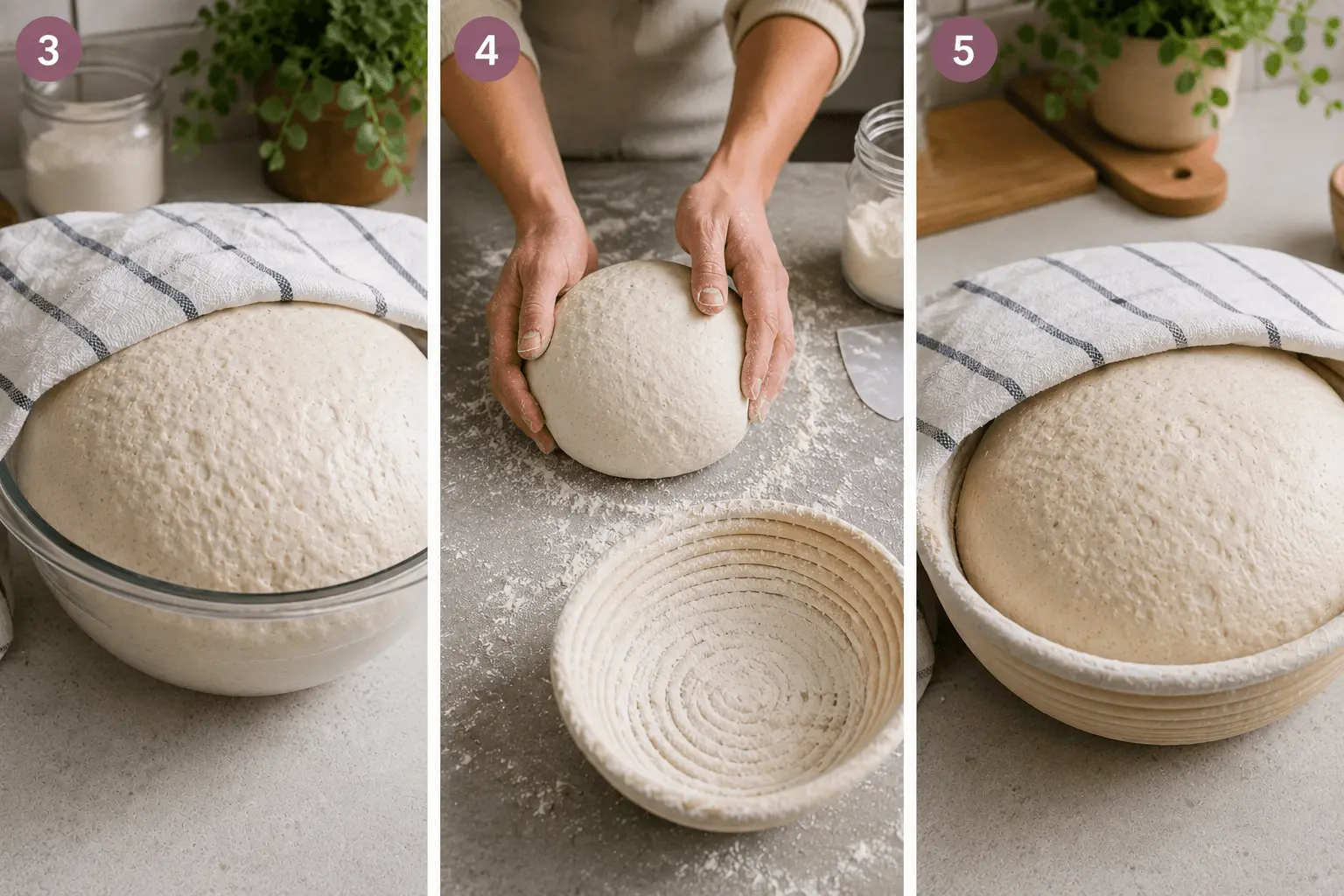
- Mix, Rise, and Shape the DoughKnead the ingredients together by hand until a rough, tacky dough forms, then shape it into a ball, place it in a bowl, cover with a towel, and let it rise until noticeably puffed, about three to four hours.Turn the risen dough out onto a floured surface, shape it into a round boule, then transfer it seam side down into a floured proofing basket and let it rise again until visibly larger, about one to two hours.
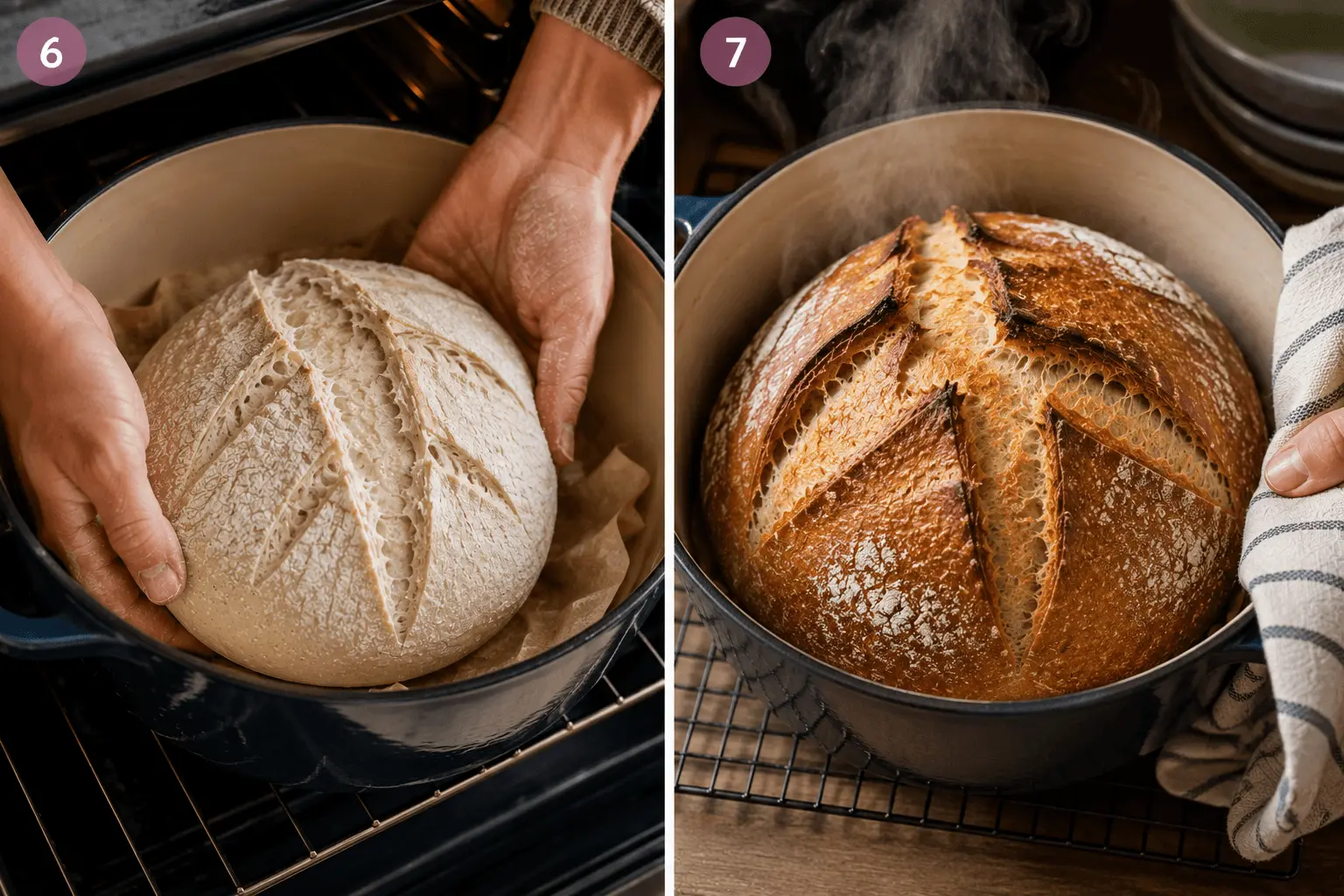
- Score and Bake the LoafPreheat your oven with a covered Dutch oven inside to at least 450 degrees Fahrenheit. Carefully turn the risen dough out onto parchment paper, score the top with a sharp blade, then lower it into the hot Dutch oven.Bake covered for about 30 minutes, then remove the lid and bake for another 20 to 25 minutes, until deeply golden and crackling. Cool completely on a wire rack before slicing.
Notes
- Use a kitchen scale if possible, since gluten free baking is far more sensitive to precise measurements than traditional baking.
- Do not skip the resting time for the psyllium gel, since giving it a minute to thicken fully helps it bind the dough properly.
- Baking inside a covered Dutch oven traps steam, creating a crisp, golden crust.
- Let the bread cool completely on a wire rack before slicing, since cutting into it too early can make the crumb gummy.
- Handle gluten free dough gently while shaping rather than stretching it aggressively, which helps preserve the air bubbles built up during the first rise.
Frequently Asked Questions
Is sourdough bread gluten free?
No, traditional sourdough is made with wheat flour and is not gluten free. This recipe gets around that by replacing the wheat flour entirely with a gluten free 1:1 blend and using psyllium husk to mimic the structure gluten would normally provide.
Do I need a gluten-free sourdough starter before I begin?
Yes. An active, bubbly starter is essential for this recipe, and the section below walks through exactly how to build one from scratch if you don’t already have one going.
Can I buy a gluten free starter instead of making one?
Yes, dehydrated gluten free sourdough starters are available online and can be reactivated in just a few days, which is a helpful shortcut if you’d rather skip the full week of feeding.
Why does my loaf look different from a photo of wheat based sourdough?
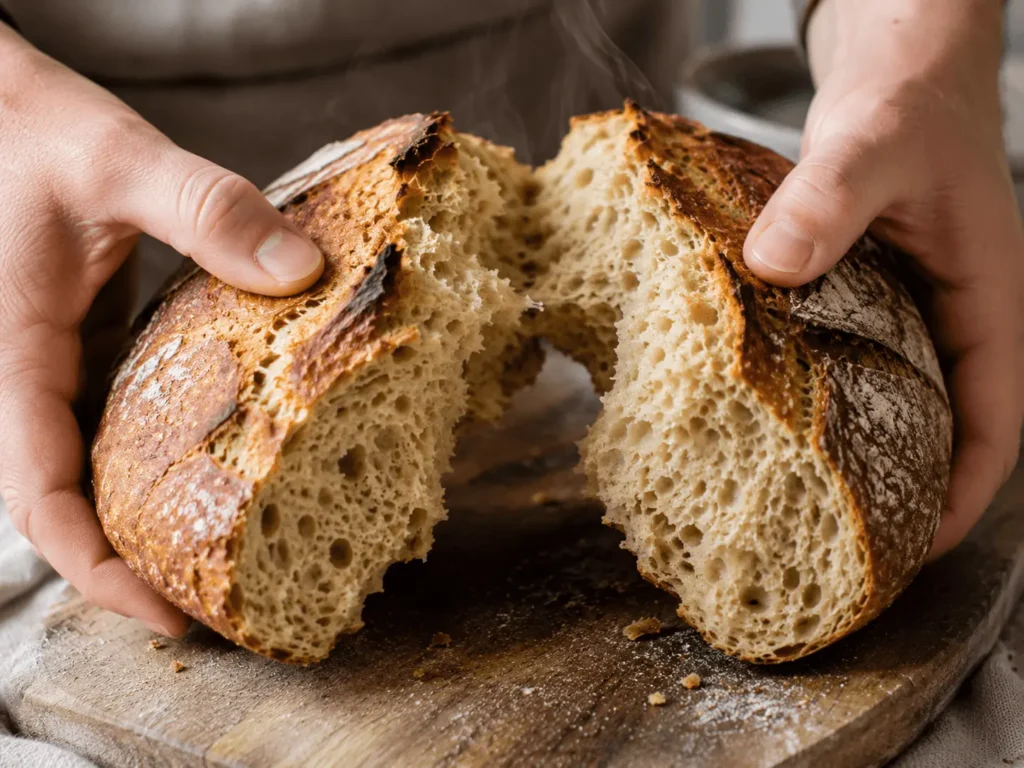
Gluten free dough behaves differently since it lacks the elastic gluten network. The crumb tends to be a bit denser with smaller, more even holes rather than the large, irregular holes seen in wheat sourdough, though the flavor and crust are remarkably close.
What is psyllium husk and why does this recipe need it?
Psyllium husk is a natural fiber that forms a gel when mixed with water. In gluten free baking, that gel mimics the elasticity gluten normally provides, helping the dough hold its shape and rise properly instead of falling apart or turning dense.
Can I use a different gluten free flour blend?
Most 1:1 gluten free blends that already include xanthan gum will work, though results can vary slightly between brands. If your blend doesn’t contain xanthan gum, you may need to add a small amount separately for the best structure.
How long does this bread stay fresh?
Stored in an airtight bag or container at room temperature, it stays fresh for about two to three days. For longer storage, slice and freeze it, then toast individual slices straight from the freezer whenever you need them.
Can I add seeds or herbs?
Absolutely. Folding in a tablespoon of sunflower seeds, rosemary, or everything bagel seasoning before shaping adds extra flavor and texture without changing the basic method.
Why did my loaf turn out dense instead of airy?
This usually means the starter wasn’t active enough when it went into the dough, or the dough didn’t rise long enough during either proof. Make sure your starter doubles in size within a few hours of feeding before using it.
How to Make Your Gluten Free Sourdough Bread Starter
Before baking, you will need an active starter, simply a mix of gluten free flour and water that has fermented until bubbly and alive with natural yeast. Building one from scratch takes about five to seven days.
On the first day, mix half a cup of gluten free flour with half a cup of warm water in a glass jar and cover it loosely at room temperature. Each day after that, discard half of the starter and feed it with the same amounts of fresh flour and water, stirring well each time.
By day five to seven, the starter is ready once it reliably doubles in size within four to six hours of feeding and has a bubbly, pleasantly tangy smell.
Recipes You May Enjoy
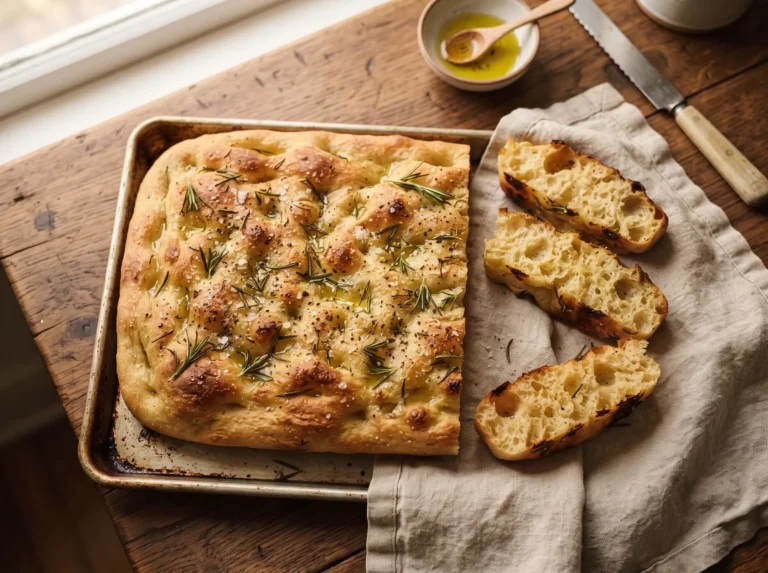
- Focaccia Recipe
- Gluten Free Zucchini Bread
- Pumpkin Chocolate Chip Bread
- Chocolate Chip Pecan Cookies with a Raisin Twist
- Strawberry Scone Recipe
- Almond Flour Banana Bread
- Banana Bread Recipe with Yogurt
A Loaf Worth Every Step
This recipe proves that going gluten free does not mean sacrificing the crackling crust, tangy flavor, or open, airy crumb that makes sourdough so satisfying. Between building the starter and baking the finished loaf, every step comes together into something genuinely worth the effort.
Whether you slice it for sandwiches, toast it for breakfast, or simply tear into it warm with a bit of olive oil, this loaf is flexible enough to earn a permanent place in your baking rotation. Once you see how well the psyllium husk mimics that classic sourdough texture, it’s easy to see why this recipe is worth baking again and again.
Tried This Recipe? Leave a Review!
There are no reviews yet. Be the first one to write one.