Dulce de Leche Recipe
Table of Contents
A Rich, Caramel Treasure From Latin America
Dulce de leche is one of the most beloved treats across Latin America, a thick, rich caramel made simply by slowly cooking milk and sugar until they transform into something deeply flavorful and spreadable. This dulce de leche recipe walks through the traditional stovetop method, showing you exactly how patience and low heat turn a few basic ingredients into something genuinely special.
Dulce de leche translates literally to “sweet of milk,” and its origins are widely credited to Argentina, though similar milk-based caramel preparations exist across several Latin American countries, each with their own regional name and slight variations, something Smithsonian Magazine has written about when covering the deep cultural roots of dulce de leche throughout the region. It’s used in an enormous range of desserts, from alfajores to cakes to simply being spread on bread, making it one of the most versatile sweet ingredients in Latin American cooking.
Making an authentic dulce de leche recipe from scratch relies on slowly caramelizing the natural sugars and proteins in milk through a process called the Maillard reaction, something Serious Eats has explained in detail when discussing how heat transforms milk’s proteins and sugars into that deep amber color and rich, toasty flavor over an extended cooking time. This is a slow process by nature, and rushing it with higher heat tends to result in scorched, bitter results rather than a smooth, evenly caramelized finish.
There are a few different approaches to making a dulce de leche recipe with milk directly, as opposed to the more common shortcut of simmering a can of sweetened condensed milk. Bon Appétit has covered both methods, noting that starting from scratch with whole milk and sugar, as this recipe does, gives you more control over the final flavor and texture, though it does take considerably longer than the condensed milk shortcut.
Constant attention and stirring become increasingly important as the mixture thickens and approaches doneness. The Kitchn has pointed out that sugar-based mixtures like this one can go from perfectly caramelized to burnt within a very short window once they reach a certain temperature and thickness, which is exactly why staying close to the stove during the final stretch of cooking really matters.
Whether you’re looking for a dulce de leche recipe easy enough for a first attempt or you want the full authentic dulce de leche recipe experience made entirely from milk, this recipe walks through the process step by step to help you get that rich, deeply caramelized result every time.
Why You’ll Love This Recipe
This dulce de leche recipe uses simple, easy-to-find ingredients, relying on time and technique rather than anything hard to find or expensive.
The slow cooking process develops deep, complex caramel flavor that’s noticeably richer than shortcuts using canned condensed milk alone.
Once made, this dulce de leche keeps well in the refrigerator, giving you a versatile sweet ingredient ready to use across all kinds of desserts and treats.
What to Serve With Dulce de Leche
A warm slice of toast or a fresh croissant makes an easy, comforting pairing, letting the rich caramel act as a simple spread.
Vanilla ice cream drizzled with dulce de leche turns a simple dessert into something noticeably more indulgent.
For a more elaborate treat, layering dulce de leche between cookies or spreading it inside a cake adds richness to almost any baked good.
How This Dulce de Leche Recipe Comes Together
This recipe comes together in essentially one long, slow stage: combining milk, sugar, and a bit of baking soda in a pot, then cooking everything low and slow while stirring occasionally, until the mixture thickens and deepens into a rich, caramel-colored dulce de leche. Here’s everything you’ll need.
Dulce de Leche Recipe
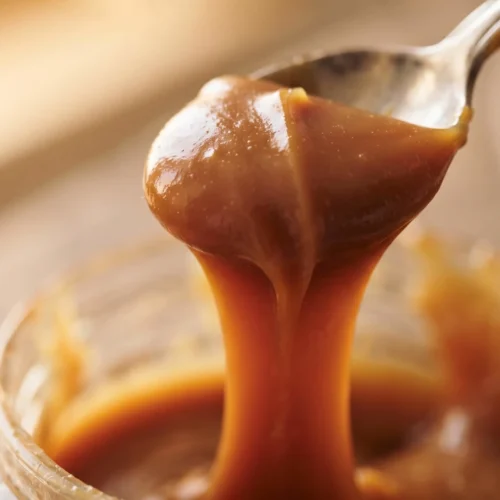
Dulce de Leche Recipe

Equipment
- Large heavy-bottomed pot
- Wooden spoon
- fine mesh strainer
Ingredients
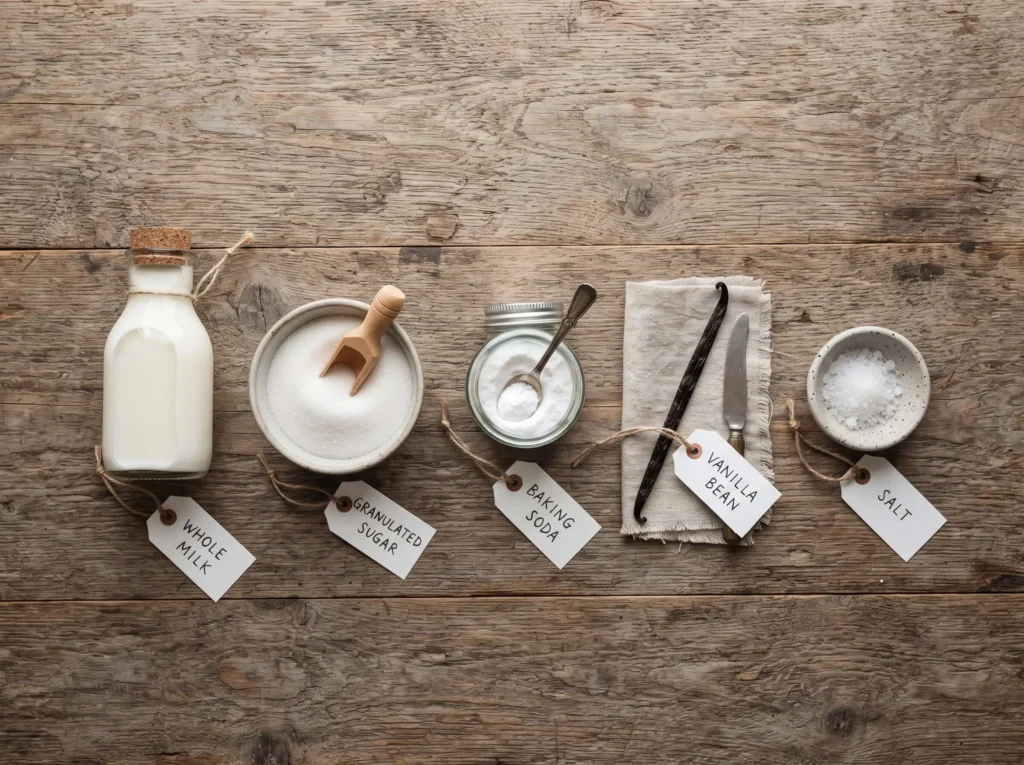
- 8 cups whole milk
- 2 cups granulated sugar
- 1 tsp baking soda
- 1 vanilla bean split, or 1 tbsp vanilla extract
- Pinch of salt
Instructions
Combine and Begin Cooking
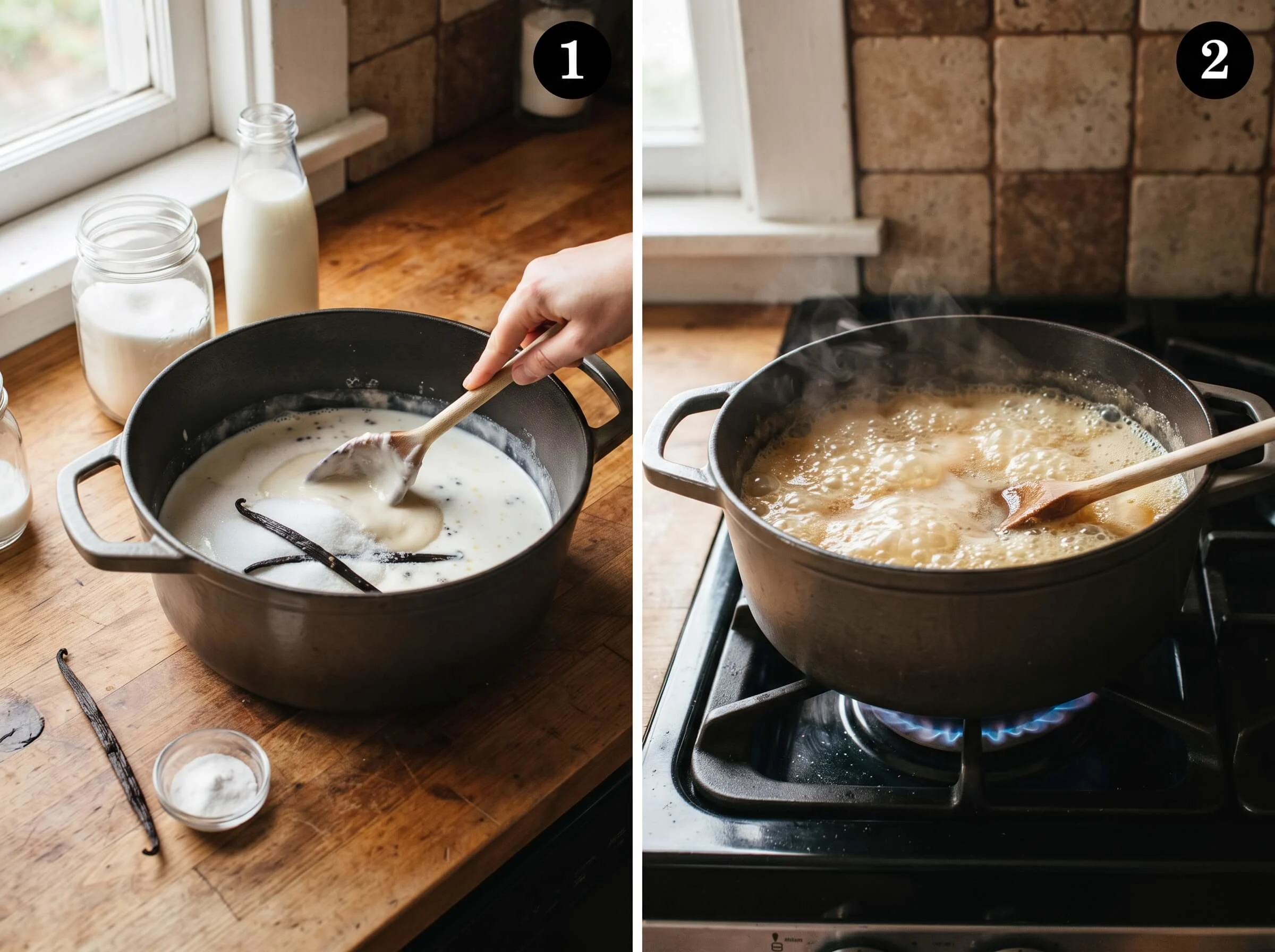
- In a large, heavy-bottomed pot, combine the milk, sugar, baking soda, vanilla bean or extract, and salt, stirring well to dissolve the sugar and baking soda completely.
- Place the pot over medium heat and bring the mixture to a gentle boil, stirring occasionally to prevent it from scorching on the bottom.
Simmer and Reduce Slowly
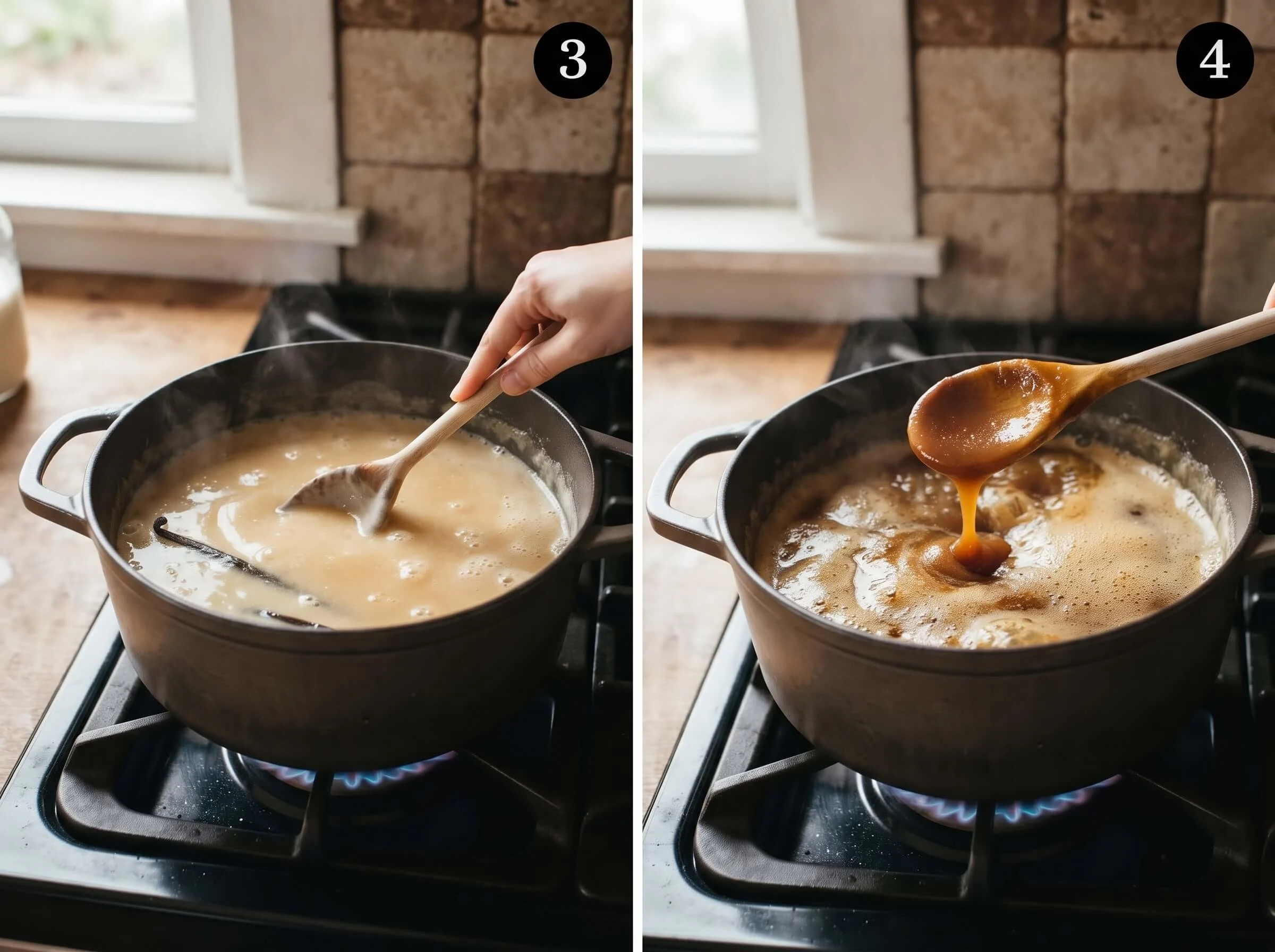
- Once boiling, reduce the heat to low, letting the mixture simmer gently. Continue cooking for about 1.5 to 2 hours, stirring every 10-15 minutes at first, and more frequently as the mixture thickens and reduces, to prevent it from sticking or burning on the bottom of the pot.
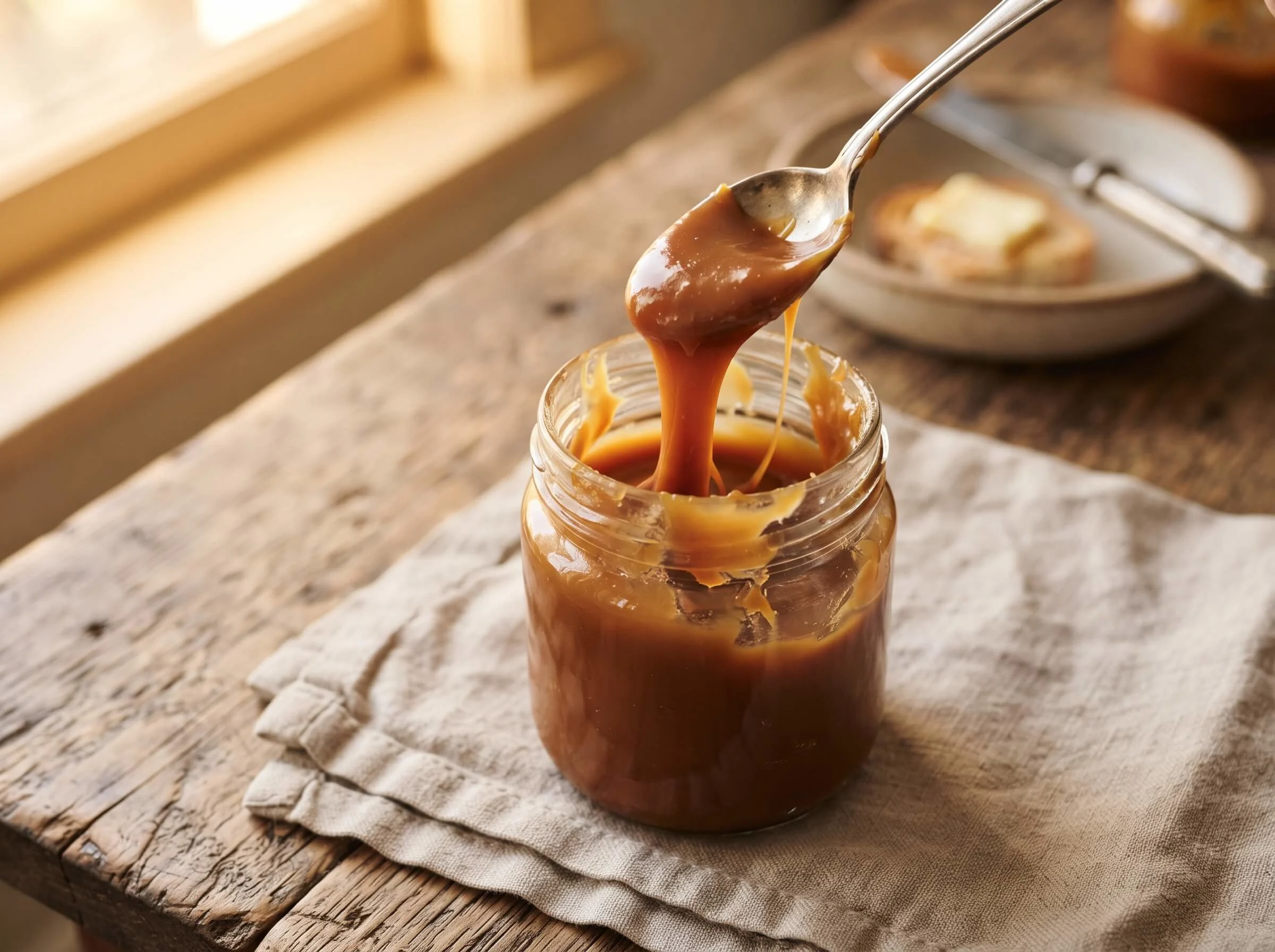
- As the mixture reduces, it will gradually deepen in color from pale white to a golden tan, and eventually to a rich caramel brown, thickening noticeably as the water content cooks off.
Finish and Strain
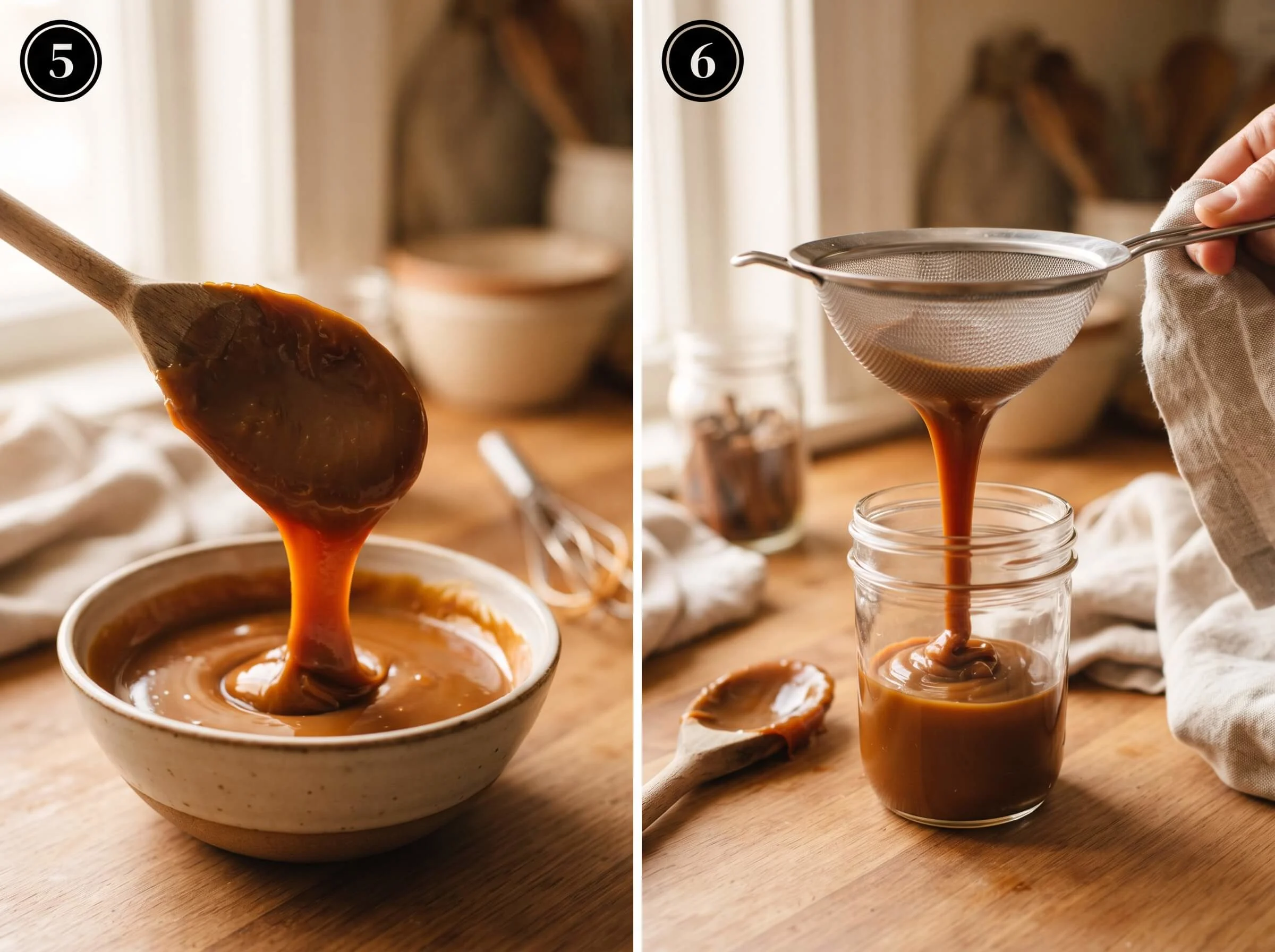
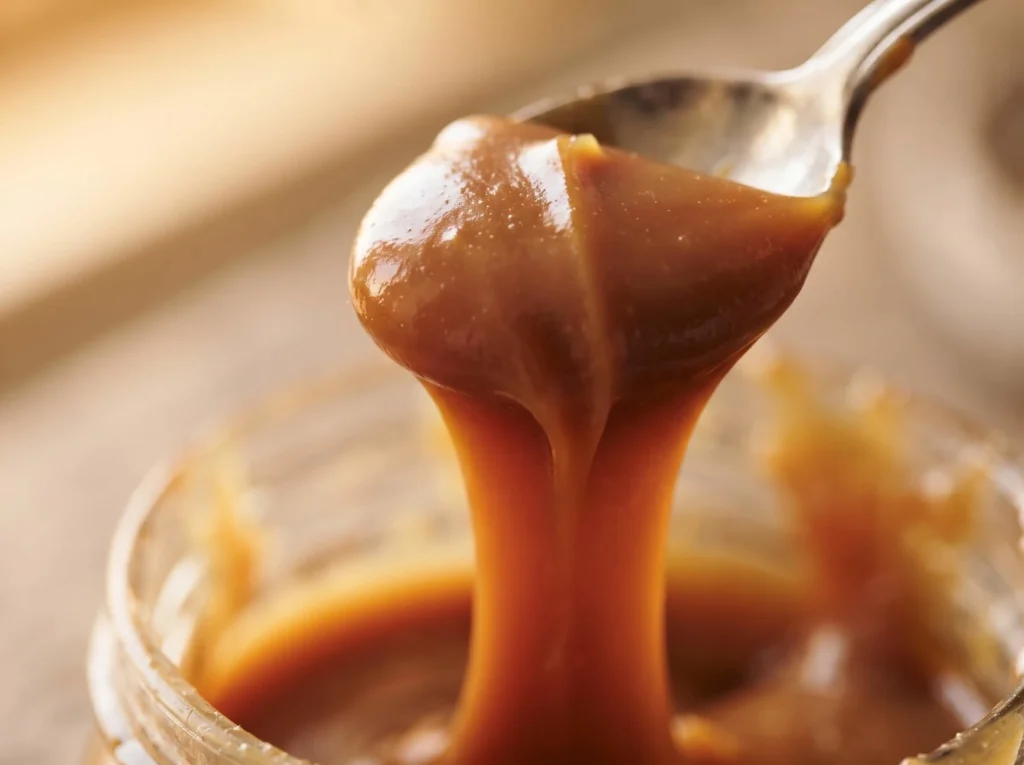
- The dulce de leche is ready once it coats the back of a spoon thickly and has reached a deep caramel color, which typically takes the full 1.5 to 2 hours depending on your stove and pot. Remove the vanilla bean if used, then strain the mixture through a fine mesh strainer to remove any small lumps or bits of skin that may have formed during cooking.
- Let the dulce de leche cool to room temperature before transferring it to a jar or airtight container, where it will continue to thicken slightly as it cools.
Notes
- Using a heavy-bottomed pot is genuinely important for this recipe, since a thinner pot is much more likely to develop hot spots that cause scorching during the long cooking time.
- Stirring more frequently as the mixture thickens toward the end of cooking is essential, since this is the stage where it’s most likely to stick and burn on the bottom of the pot.
- The baking soda helps with browning and also slightly thickens the mixture through a chemical reaction with the milk proteins, so don’t skip it even though the amount seems small.
- This dulce de leche recipe requires real patience, since rushing the process with higher heat will result in a scorched, bitter flavor rather than a smooth, evenly caramelized result.
- Once made, dulce de leche keeps well in the refrigerator for up to 3 weeks in an airtight container, and can also be frozen for longer storage.
Frequently Asked Questions
Is there a dulce de leche recipe easy enough to make without watching the pot for two hours straight?
While this from-scratch method does require attention, especially toward the end, a common shortcut is simmering an unopened can of sweetened condensed milk in water for a few hours, which requires far less active stirring, though it doesn’t offer quite the same depth of flavor control as making it directly with milk and sugar.
What’s the difference between this dulce de leche recipe with milk and the canned condensed milk method?
Making this recipe from scratch with whole milk and sugar, as this recipe does, gives you more control over sweetness, thickness, and flavor throughout the cooking process, while the condensed milk shortcut is faster and more hands-off, but produces a more one-note sweetness since the sugar ratio is already fixed in the can.
Why is my dulce de leche grainy instead of smooth?
This can happen if the sugar wasn’t fully dissolved before the mixture came to a boil, or if the mixture was cooked at too high a temperature, causing the milk proteins to separate unevenly. Straining the finished dulce de leche through a fine mesh strainer, as this recipe recommends, helps remove any small graininess that does develop.
Why did my dulce de leche curdle or separate during cooking?
This is usually caused by cooking at too high a heat, which can cause the milk proteins to break down unevenly. Keeping the heat low and steady throughout the simmering stage, rather than trying to speed up the process, helps prevent this issue.
How do I know when my authentic dulce de leche recipe is fully done?
The mixture should coat the back of a spoon in a thick layer and have a deep caramel-brown color, similar to a thick caramel sauce. If it still looks thin or pale, it needs more time on the stove, even if it’s already taken over an hour to get there.
Can I substitute low-fat milk for whole milk in this recipe?
Whole milk is best for this recipe because its higher fat content helps create the rich flavor and smooth, creamy texture of homemade dulce de leche. Lower-fat milk can be used, but the result will likely be thinner and less rich in flavor.
What’s the best storage method for dulce de leche, and how long does it stay fresh?
Stored in an airtight container in the refrigerator, homemade dulce de leche keeps well for up to 3 weeks. For longer storage, it can be frozen for several months, then thawed in the refrigerator before use.
Can I speed up this dulce de leche recipe?
Increasing the heat to speed up cooking isn’t recommended, since it significantly increases the risk of scorching and results in a bitter, uneven flavor rather than a properly developed caramel. The long cooking time really is necessary for both the flavor and texture to develop correctly.
Twists & Ideas
You Can Add
A pinch of cinnamon or a small piece of orange peel added while the mixture simmers infuses a subtle background flavor into the finished dulce de leche.
A tablespoon of espresso powder stirred in near the end of cooking creates a mocha-flavored variation that pairs well with coffee-based desserts.
A splash of coconut milk mixed in alongside the whole milk gives a slightly different, tropical twist to the classic recipe.
Flaky sea salt sprinkled over the finished dulce de leche once cooled and jarred creates a salted caramel variation.
You Can Replace
Coconut milk can replace part of the whole milk for a dairy-forward but slightly different flavored version of this dulce de leche recipe.
Brown sugar can replace part of the granulated sugar for a deeper, more molasses-forward flavor throughout the finished caramel.
A vanilla pod alone can replace vanilla extract, as listed as an option in this recipe, for a more pronounced, natural vanilla flavor.
The canned condensed milk method, as mentioned in the FAQ, can replace this from-scratch approach for a quicker, more hands-off version when time is limited.
Recipes You May Enjoy
- Pan de Muerto Recipe
- Japanese Cheesecake Recipe
- Mango Sago Recipe
- Milk Bread Recipe
- Conchas Recipe
- Dulce de Leche Recipe
- Arroz con Leche
- Mexican Flan
- Oatmeal Chocolate Chip Banana Muffins
- Slutty Brownies
A Slow-Cooked Reward Worth the Wait
this recipe is proof that some of the best flavors come from patience rather than complicated techniques. With just milk, sugar, and enough time on the stove, this recipe transforms simple pantry staples into a rich, deeply flavorful caramel that’s worth having on hand for spreading, drizzling, or baking into all kinds of desserts.
Whether you’re searching for a recipe easy enough for your first attempt, specifically want a dulce de leche recipe with milk made entirely from scratch, or you’re chasing that truly authentic dulce de leche recipe experience passed down through generations of Latin American home cooks, this method delivers a genuinely rich, well-developed caramel every time. Once you’ve made a batch, it’s easy to see why this recipe has remained such a treasured ingredient across so many Latin American kitchens.
Triad This Recipe! Leave a Review?
There are no reviews yet. Be the first one to write one.