Kung Pao Chicken Recipe
Table of Contents
A Sichuan Classic Built on Bold, Balanced Heat
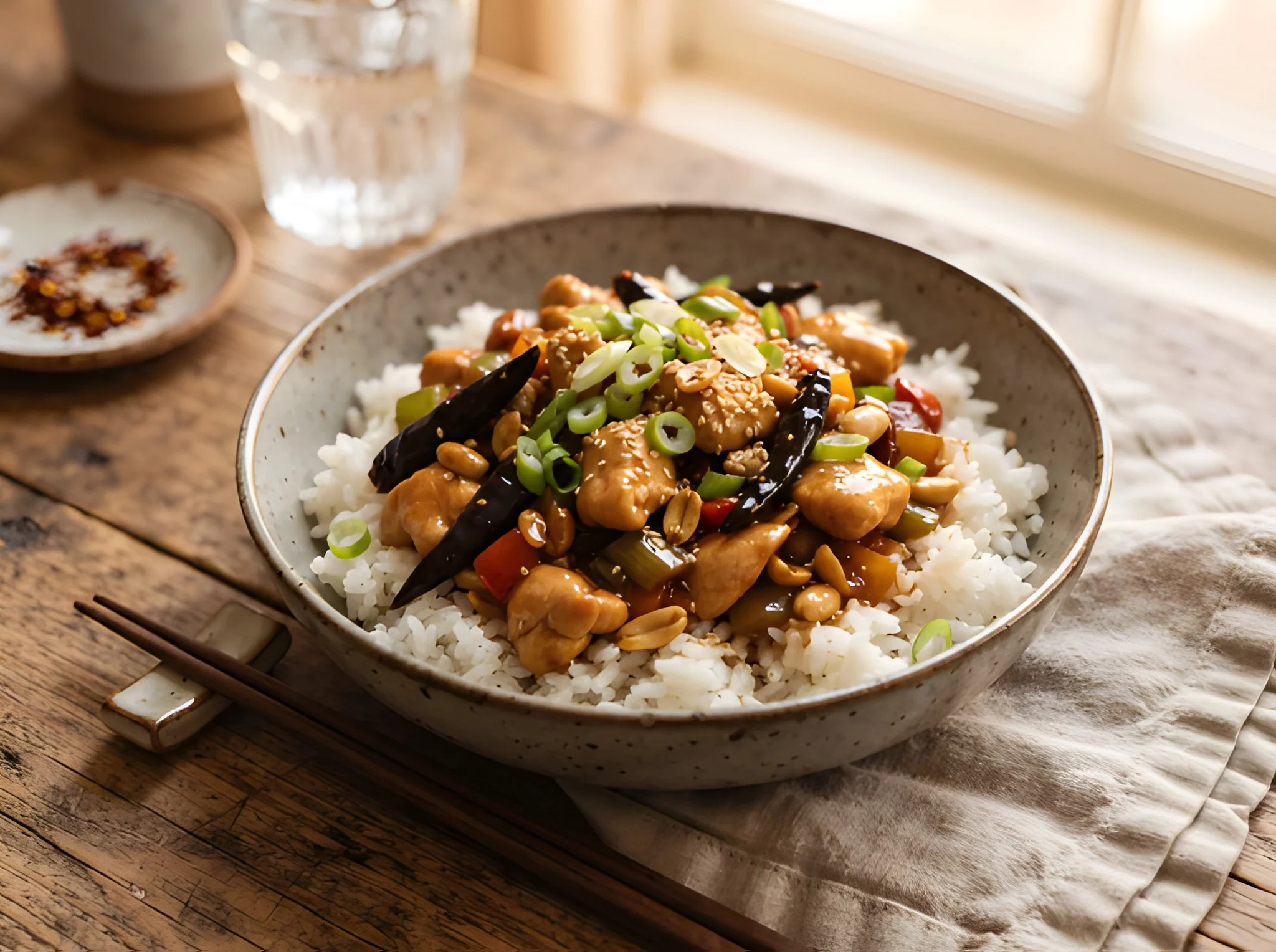
Kung pao chicken is one of the most beloved dishes in Sichuan cuisine, known for its bold combination of spicy, savory, sweet, and tangy flavors, all built around tender chicken, crunchy peanuts, and dried chilies. This kung pao chicken recipe walks through that authentic balance of flavors, delivering a dish that’s genuinely representative of its Sichuan roots rather than a watered-down Americanized version.
Kung pao chicken traces its origins to Sichuan province in China, with the dish’s name believed to reference a historical Qing dynasty official’s title, something Smithsonian Magazine has written about when covering the history behind several iconic Chinese regional dishes. As the dish spread internationally, particularly to the United States, many versions became significantly milder and sweeter than the original, which is why a kung pao chicken recipe authentic to Sichuan tradition often surprises people with its more pronounced heat and numbing spice compared to what’s commonly served at many American Chinese restaurants.
A defining characteristic of authentic Sichuan cooking, including kung pao chicken, is the use of Sichuan peppercorns, which Serious Eats has explained produce a distinctive tingling, numbing sensation on the tongue known as “ma la” when combined with chili heat, a sensation entirely unique to this specific peppercorn and central to what makes authentic Sichuan dishes taste the way they do.
Getting genuinely crispy kung pao chicken recipe results relies on a quick velveting technique, where chicken is briefly marinated in a mixture typically containing cornstarch and sometimes egg white, which Bon Appétit has explained helps protect the chicken’s surface during high-heat stir-frying, keeping it tender and moist inside while still developing good color and slight crispness on the outside.
The sauce itself relies on a careful balance of soy sauce, vinegar, sugar, and a bit of heat, and The Woks of Life has pointed out that achieving the signature sweet-savory-tangy balance found in the best kung pao chicken recipe versions really comes down to tasting and adjusting as you go, since brands of soy sauce and vinegar can vary quite a bit in intensity.
Whether you’re chasing an authentic kung pao chicken recipe experience with real Sichuan peppercorns or just want a genuinely flavorful stir-fry dinner, this recipe delivers that same bold, balanced heat and crunch that’s made this dish a lasting favorite.
Why You’ll Love This Recipe
This kung pao chicken recipe delivers that authentic balance of spicy, savory, sweet, and tangy flavors, giving you a dish that’s genuinely representative of its Sichuan roots.
The quick velveting technique keeps the chicken tender and slightly crispy, avoiding the dry, overcooked texture that can sometimes happen with a fast stir-fry.
This dish comes together in about 30 minutes, making it a genuinely fast, flavorful dinner option that doesn’t require ordering takeout to satisfy a craving for bold, Sichuan-style flavor.
What to Serve With Kung Pao Chicken
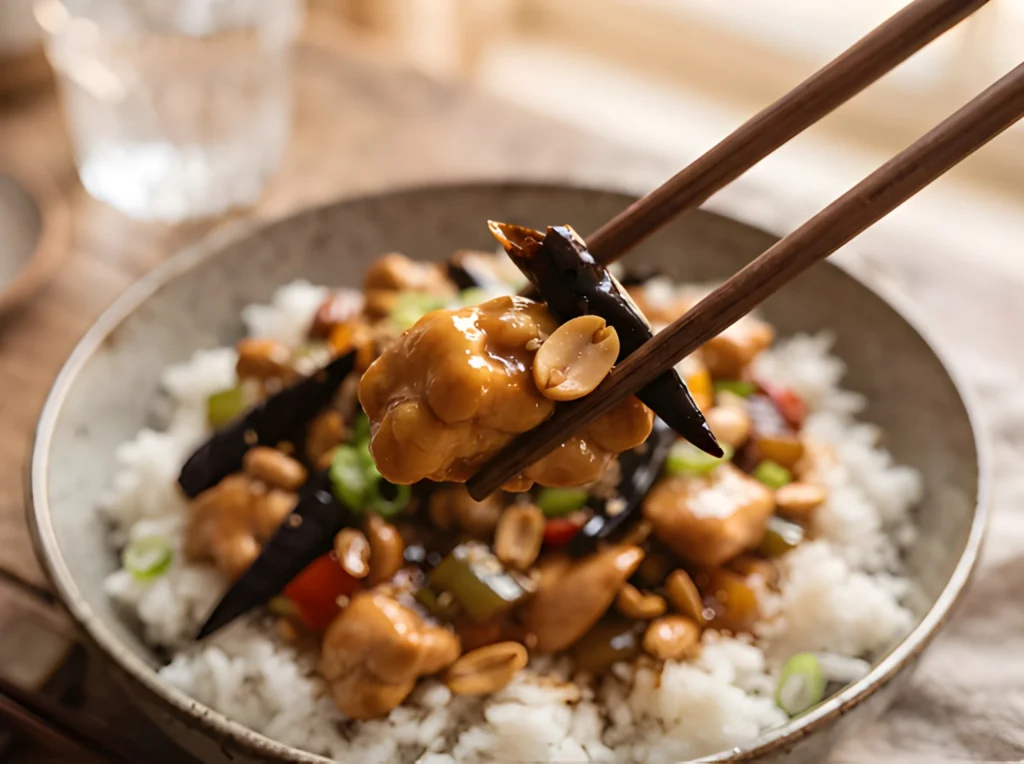
Steamed white or jasmine rice is the classic pairing here, helping balance out the spice and soaking up the flavorful sauce.
Simple steamed vegetables like bok choy or broccoli round out the meal nicely without competing with the bold flavors of the dish itself.
A light cucumber salad on the side offers a cooling contrast to the heat, which can be especially welcome if you’ve made the dish on the spicier side.
How This Kung Pao Chicken Recipe Comes Together
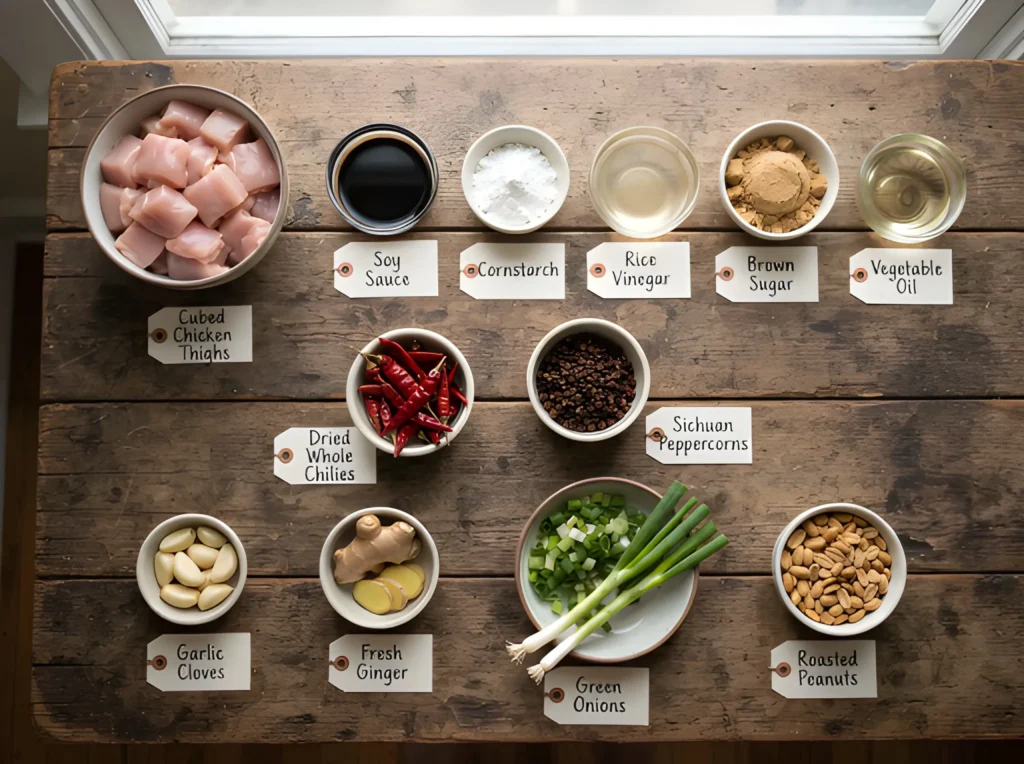
This recipe comes together in three main stages: velveting the chicken briefly to keep it tender, stir-frying the chicken with dried chilies and Sichuan peppercorns over high heat, then tossing everything in a quick, well-balanced sauce along with peanuts right before serving. Here’s everything you’ll need.
Kung Pao Chicken Recipe
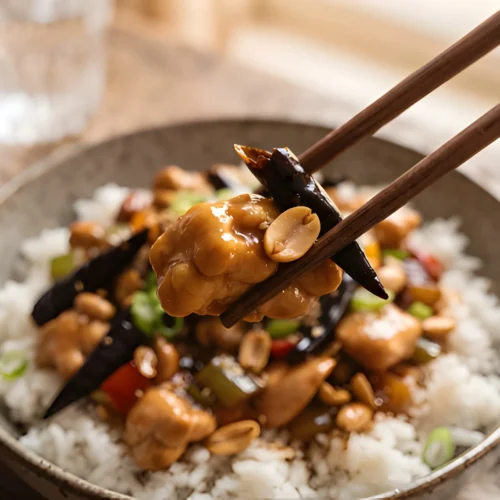
Kung Pao Chicken Recipe

Equipment
- small bowl for sauce
- Mixing bowls
- Wok or large skillet
Ingredients
Chicken and Velveting Marinade
- 1½ lbs boneless skinless chicken thighs, cut into bite-sized pieces
- 1 tbsp soy sauce
- 1 tbsp cornstarch
- 1 tsp Shaoxing wine substitute rice vinegar or water
Sauce
- 3 tbsp soy sauce
- 2 tbsp rice vinegar
- 2 tbsp brown sugar
- 1 tsp cornstarch
- 2 tbsp water
Stir-Fry
- 3 tbsp vegetable oil
- 8-10 dried whole chilies
- 1 tsp Sichuan peppercorns
- 3 garlic cloves minced
- 1 tbsp grated fresh ginger
- 3 green onions cut into 1-inch pieces
- ½ cup roasted peanuts
Instructions
Velvet the Chicken
- In a bowl, combine the chicken pieces with soy sauce, cornstarch, and rice vinegar (or water), tossing to coat evenly. Let it sit for 15-20 minutes at room temperature while you prep the remaining ingredients.
- In a small bowl, whisk together the soy sauce, rice vinegar, brown sugar, cornstarch, and water until smooth. Set aside.
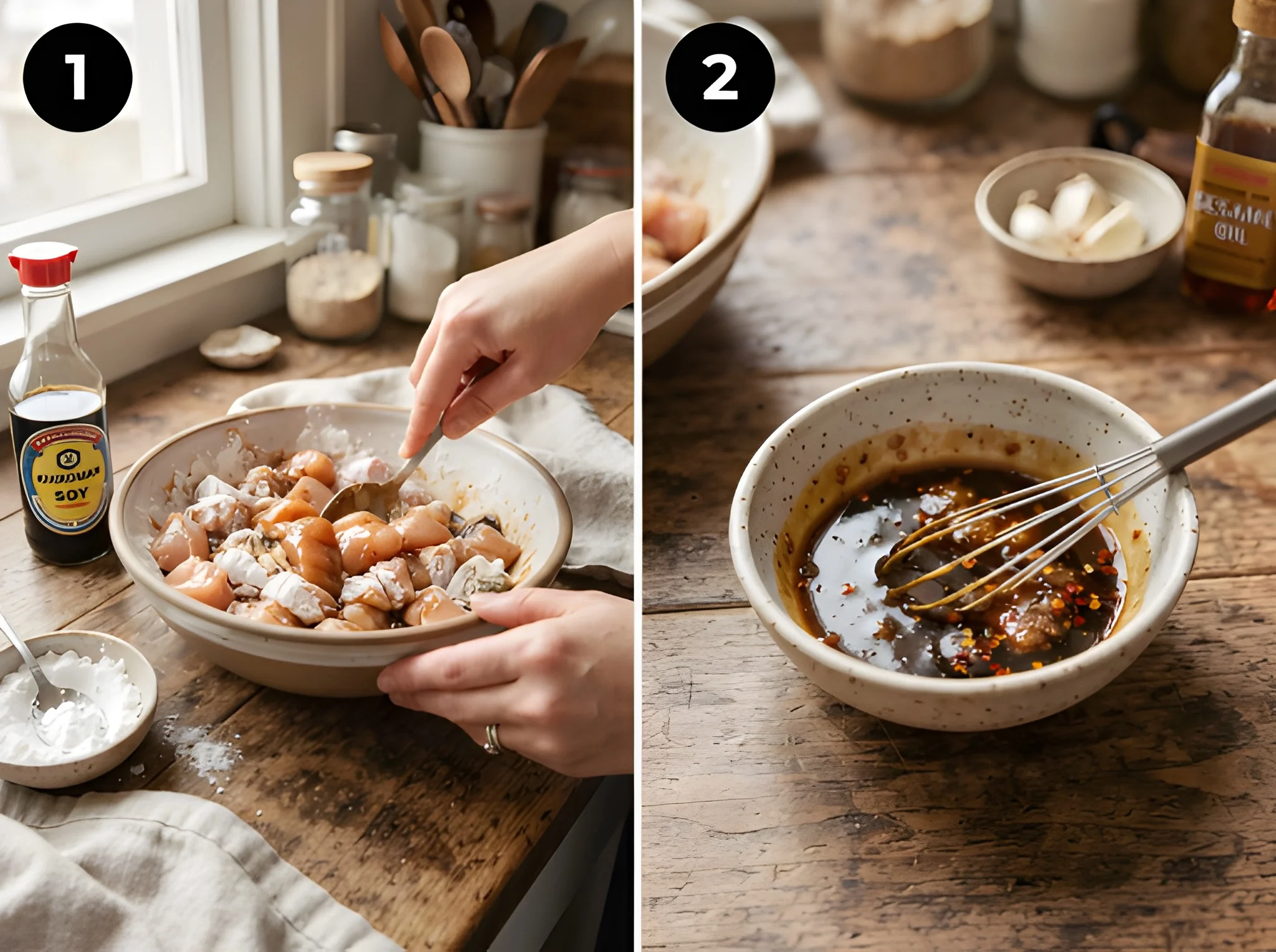
Stir-Fry the Chicken and Aromatics
- Heat the vegetable oil in a wok or large skillet over high heat. Add the dried chilies and Sichuan peppercorns, stirring for about 30 seconds until fragrant, being careful not to let them burn.
- Add the marinated chicken to the wok in a single layer, letting it sear undisturbed for about 1-2 minutes before stirring, then continue cooking for another 3-4 minutes, until the chicken is cooked through and lightly golden.
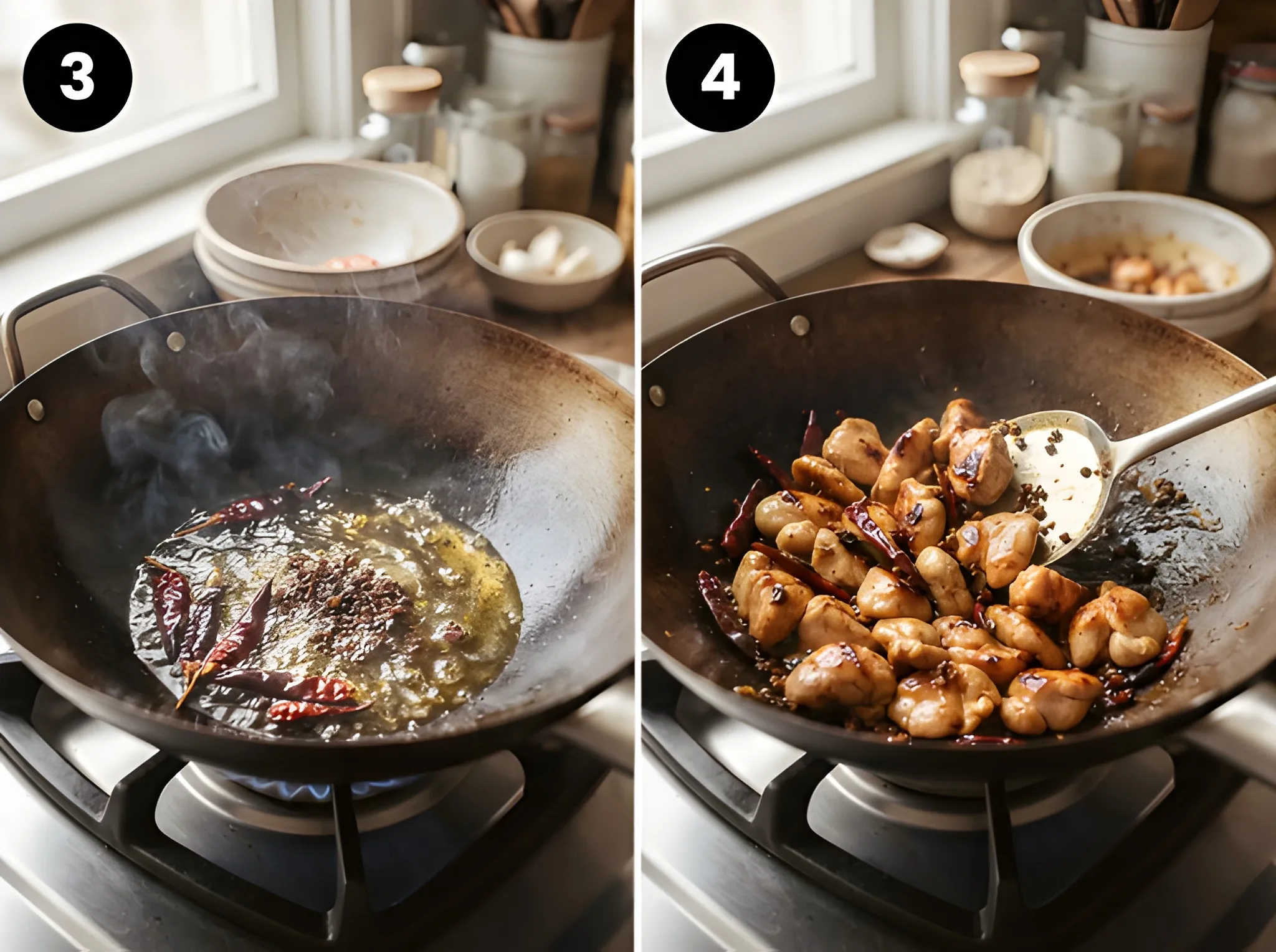
Add Aromatics and Sauce
- Add the garlic and ginger, stir-frying for 30 seconds until fragrant. Give the sauce a quick stir to recombine, then pour it into the wok, tossing everything together and letting it simmer for 1-2 minutes, until the sauce thickens and coats the chicken evenly.
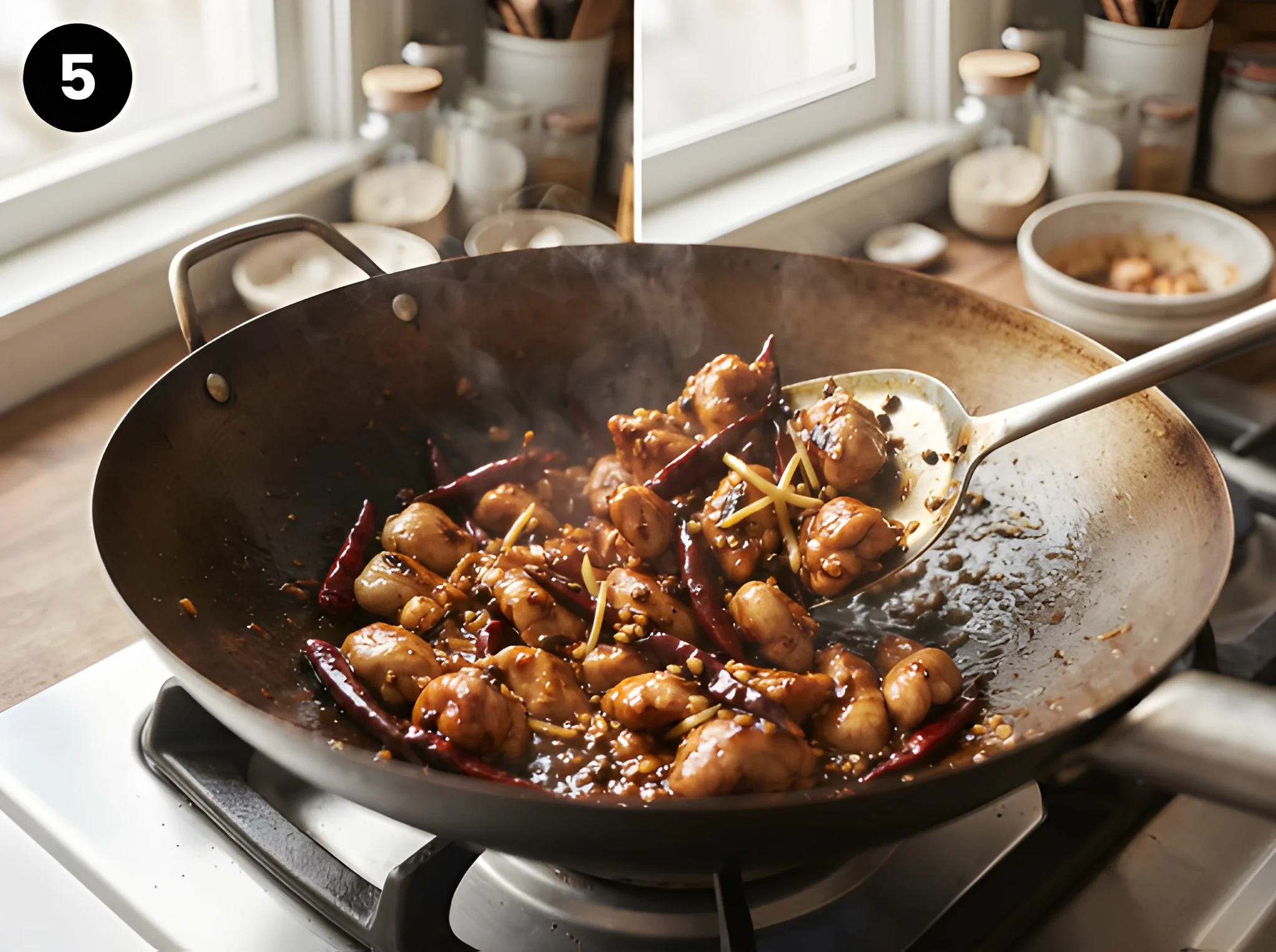
Finish and Serve
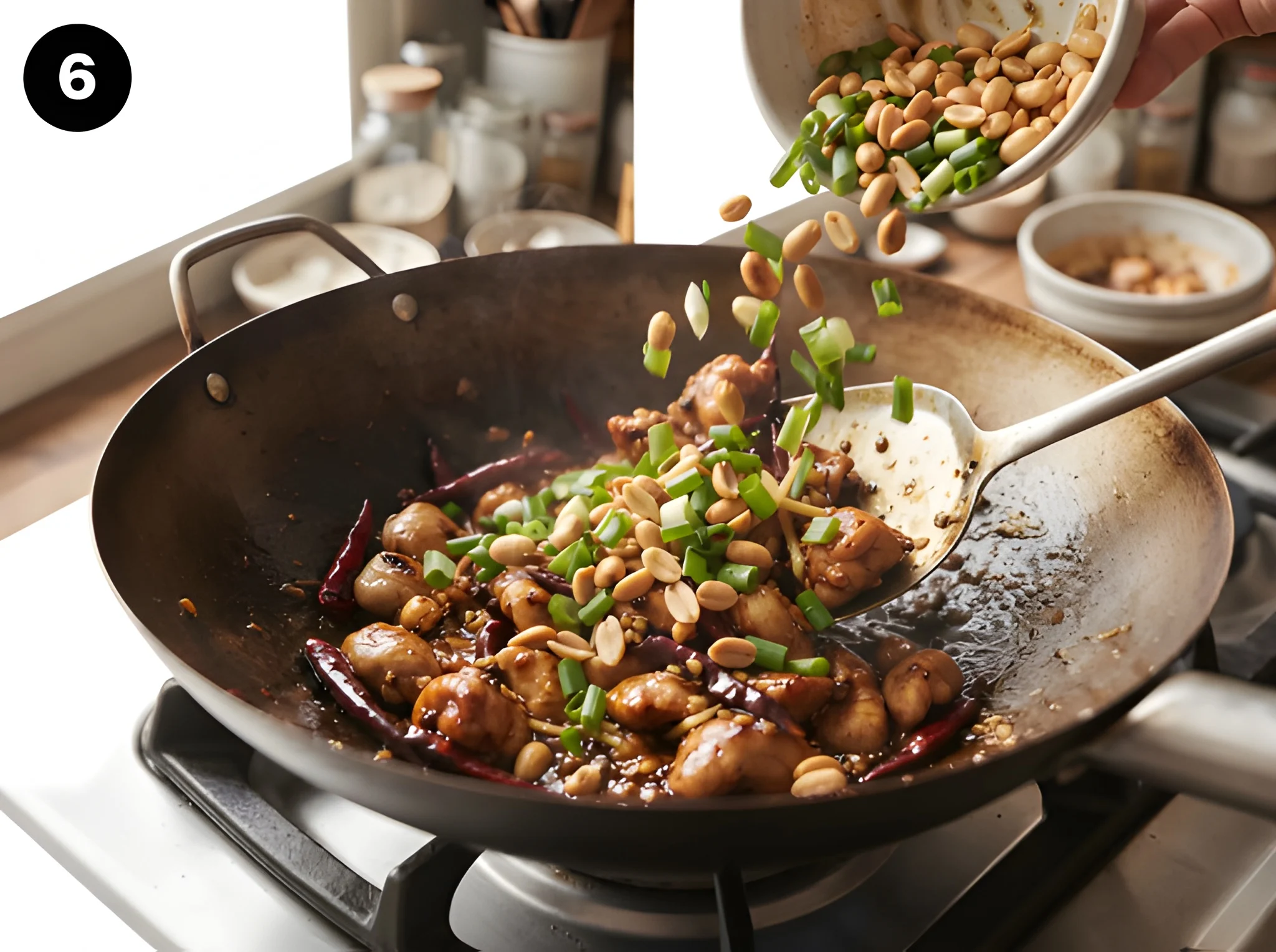
- Add the green onions and roasted peanuts, tossing everything together for another 30 seconds to combine and warm through. Serve immediately over steamed rice.
Notes
- Velveting the chicken briefly in the cornstarch and soy sauce mixture makes a genuine difference in the final texture, helping it stay tender rather than drying out during the quick, high-heat cooking process.
- Toasting the dried chilies and Sichuan peppercorns briefly in oil before adding the chicken releases their essential oils and builds the foundational flavor for the entire dish, so don’t skip this step even though it only takes a moment.
- The dried chilies used in this recipe are meant more for flavor infusion than for direct eating, though some people do enjoy eating them; adjust the quantity up or down based on your personal heat tolerance.
- Adding the peanuts at the very end keeps them crunchy rather than letting them soften in the sauce for too long.
- Leftover kung pao chicken keeps well in the refrigerator for up to 3 days and reheats nicely in a skillet over medium heat.
Frequently Asked Questions
What makes this a kung pao chicken recipe authentic to Sichuan cuisine specifically?
This recipe uses Sichuan peppercorns and dried whole chilies, both defining ingredients of authentic Sichuan cooking that create that signature numbing, spicy sensation known as “ma la.” Many Americanized versions of kung pao chicken skip these specific ingredients in favor of a milder, sweeter sauce, which is why this version tastes noticeably different and more true to its regional roots.
Can I make this Kung Pao chicken recipe less spicy?
Yes, simply reduce the number of dried chilies used, or remove the seeds from the chilies before adding them to the wok, since much of the heat is concentrated there. You can also reduce the Sichuan peppercorns slightly if you’d prefer less of that numbing sensation.
What’s the point of velveting the chicken for this best Kung Pao chicken recipe?
Velveting, which involves briefly marinating the chicken in a cornstarch-based mixture, helps protect the meat during the intense heat of stir-frying, keeping it tender and juicy inside while still developing good color outside. Skipping this step often results in drier, tougher chicken.
Where can I find Sichuan peppercorns for this crispy Kung Pao chicken recipe?
Sichuan peppercorns are typically available at Asian grocery stores or online, and they’re worth seeking out specifically for this dish, since their unique numbing quality can’t be replicated by black pepper or other pepper varieties.
Can I use chicken breast instead of thighs for kung pao chicken?
Yes, chicken breast can be used instead of thighs, though thighs tend to stay juicier through the high-heat cooking process. If using breast meat, keep a close eye on cook time to avoid drying it out.
Why isn’t my sauce thickening properly?
This usually means the cornstarch settled at the bottom of the bowl and wasn’t fully recombined before adding it to the wok. Give the sauce a good stir immediately before pouring it in, and make sure the wok is hot enough to properly activate the cornstarch’s thickening properties.
Is this dish traditionally served with rice or noodles?
Steamed rice is the more traditional pairing for kung pao chicken, allowing the rice to soak up the flavorful sauce, though serving it over noodles has become a popular variation in some households and restaurants outside of the dish’s traditional Sichuan context.
Twists & Ideas
You Can Add
Diced bell peppers or zucchini stir-fried along with the chicken add extra vegetables and color without disrupting the dish’s core flavor profile.
A drizzle of chili oil over the finished dish intensifies the heat even further for anyone who wants an extra spicy kick.
Cashews can be added alongside or instead of peanuts for a slightly different, buttery crunch throughout the dish.
A pinch of sugar added directly to the chili oil while toasting can help balance the heat with a touch of sweetness right from the start.
You Can Replace
Chicken breast can replace chicken thighs, as mentioned in the FAQ, though thighs tend to stay juicier throughout the stir-frying process.
Cashews can replace peanuts for a different type of crunch and flavor throughout the dish.
Tofu can replace chicken entirely for a vegetarian version, using the same velveting technique adapted for pressed, cubed tofu.
Regular black pepper mixed with a small amount of chili flakes can replace Sichuan peppercorns in a pinch, though it won’t replicate the same distinctive numbing sensation.
Recipes You May Enjoy
- Chicken Katsu Recipe
- Japanese Curry Recipe
- Teriyaki Chicken Recipe
- Mongolian Ground Beef Recipe
- Crispy Baked Sesame Tofu Recipe
- Pad Kra Pao Recipe
- Air Fry Chicken Breast
- Chicken Piccata Recipe
- Greek Orzo Salad Recipe
- Chicken Souvlaki Recipe
A Bold Dish Worth the Extra Ingredients
Kung pao chicken stands out among Chinese stir-fry dishes because of its genuinely bold, complex flavor profile, balancing heat, numbing spice, sweetness, and tang all in one dish. Seeking out ingredients like dried chilies and Sichuan peppercorns is well worth the extra effort, since they’re truly what separate an authentic version from a milder, Americanized approximation.
Whether you’re making this kung pao chicken recipe for a flavorful weeknight dinner, specifically chasing a kung pao chicken recipe authentic to its Sichuan roots, or searching for the best Kung Pao chicken recipe to satisfy a craving without ordering takeout, this dish delivers that same bold, balanced heat every time. Once you’ve tried the real thing with proper Sichuan peppercorns, it’s easy to understand why this dish has remained such a beloved staple of Sichuan cuisine.
Tried This Recipe? Leave a Review!
There are no reviews yet. Be the first one to write one.