Mofongo Recipe
Table of Contents
Mashed Plantains With Garlic, Rooted in Caribbean and West African Tradition
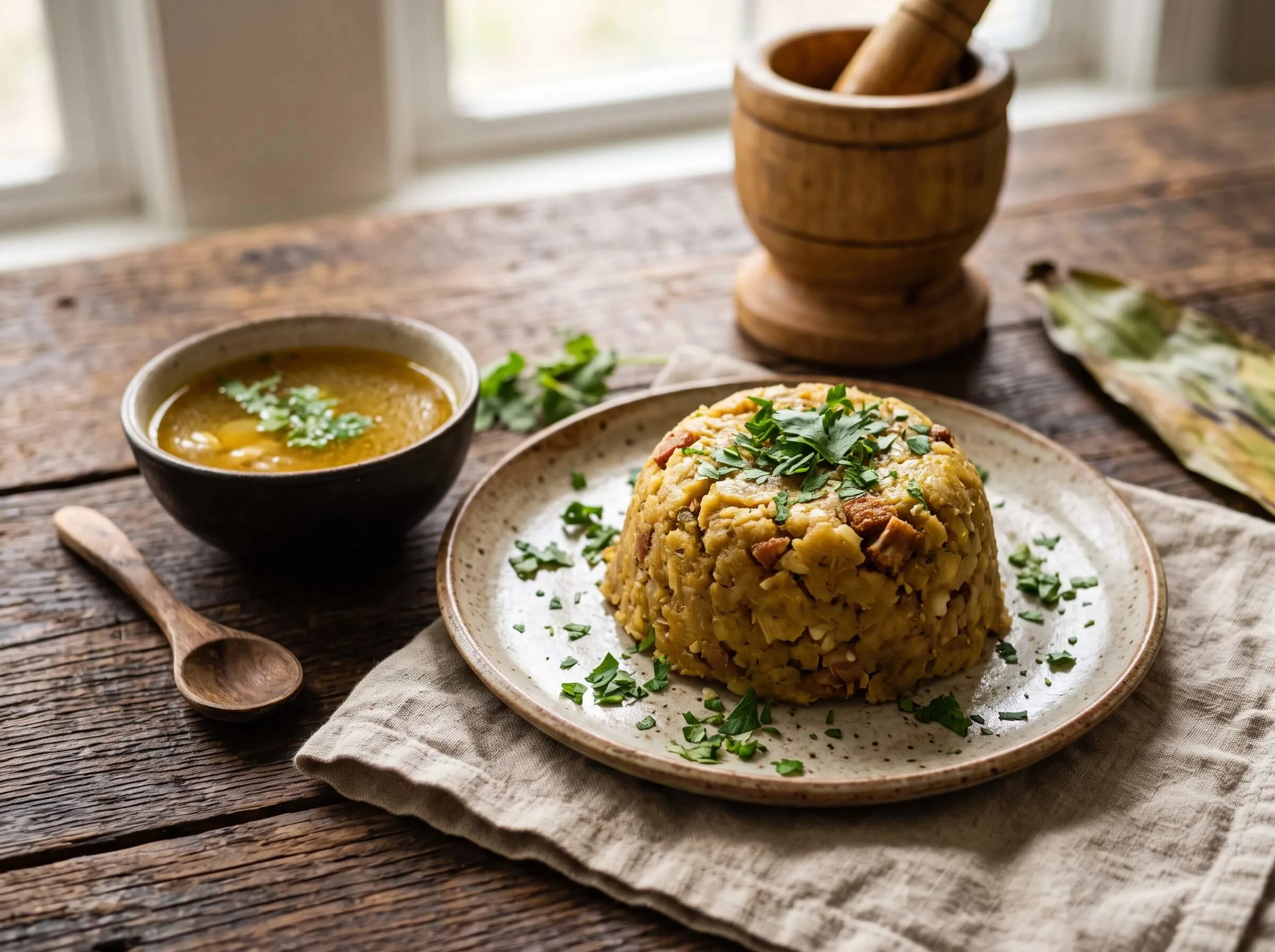
Mofongo is one of the most iconic dishes in Caribbean cooking: fried green plantains mashed with garlic and olive oil into a dense, savory mound that gets served with broth or a saucy main. This mofongo recipe is made halal-friendly from start to finish. It skips the pork cracklings found in many versions and builds the flavor from garlic, olive oil, and warm broth instead.
The dish is closely tied to Puerto Rico, though a Dominican version has its own loyal following, and the technique traces back to West African fufu traditions, where starchy vegetables are pounded into a dense mash. Smithsonian Magazine has written about how enslaved West Africans carried these pounding and mashing techniques to the Caribbean, where plantains became the local starchy staple. That history explains why this recipe tastes both familiar and distinct from other plantain dishes.
Like tostones, mofongo depends on green, unripe plantains. Serious Eats has explained that unripe plantains are high in starch and low in sugar, so they fry up firm and savory instead of caramelizing the way ripe plantains do. That starchiness is also what lets the mash hold together into a mound once garlic and oil are worked in.
Traditional mofongo recipe versions usually include chicharrón, or fried pork rinds, mashed in for salty crunch, and that is the one ingredient this recipe leaves out. Bon Appétit has covered how this recipe varies from cook to cook, with some versions leaning on bacon or pork, others on shrimp or chicken, and some on nothing more than garlic and oil. The dish holds up just fine without pork, especially when the garlic and broth are handled well.
The garlic is where the flavor comes from. The Kitchn has written about mashing garlic with salt into a paste, which releases far more flavor than chopping it, and that same principle is why traditional mofongo relies on a pilón, a wooden mortar and pestle, to crush garlic together with the plantains. If you don’t own a pilón, a sturdy bowl and a potato masher get you close.
Mofongo dominicano is often served with a small bowl of warm broth on the side for moistening each bite, and Food & Wine has noted that this broth is what keeps the dense mash from feeling dry. It also pairs naturally with braised or saucy dishes, which is why it shows up so often next to stews like pollo guisado.
Plantains are also a nutritious base, and Healthline has covered their fiber, potassium, and vitamin content, which makes it a more nutrient-dense side than many other fried dishes.
Whether you’re after a mofongo recipe with ingredients that fit a halal diet, or you simply want to understand how this dish works, this version walks through every step of frying, mashing, and shaping.
Why You’ll Love This Recipe
This mofongo recipe is halal-friendly from the start, relying on garlic, olive oil, and broth for flavor instead of pork, while keeping the dense, savory character the dish is known for.
It uses only a handful of ingredients, and the recipe ingredients list is short enough that most of it may already be in your kitchen, apart from the green plantains.
It also works as either a side dish or a main. Serve it next to a saucy stew, or top it with chicken or shrimp for a full meal.
What to Serve With Mofongo
A small bowl of warm chicken broth for spooning over the mound keeps each bite moist and adds extra flavor.
Pollo Guisado is a natural partner, since the rich stewed sauce soaks beautifully into the mashed plantains.
Tostones on the side make for a fun plantain-on-plantain plate, giving you both crispy and mashed textures at the same meal.
Grilled shrimp or sautéed chicken with garlic works well if you want to turn this into a full main dish.
How This Mofongo Recipe Comes Together
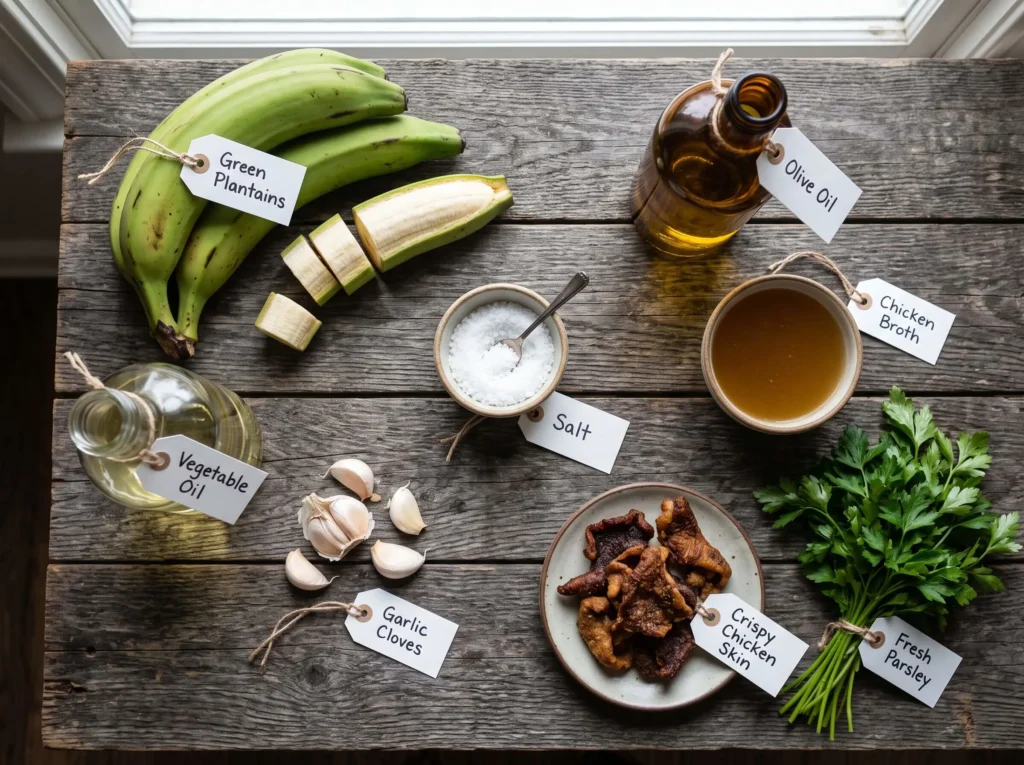
This recipe comes together in three main stages: frying green plantain pieces until golden and tender, crushing garlic and salt into a paste with olive oil, then mashing everything together with warm broth and shaping it into a mound while still hot. Here’s everything you’ll need.
Mofongo Recipe
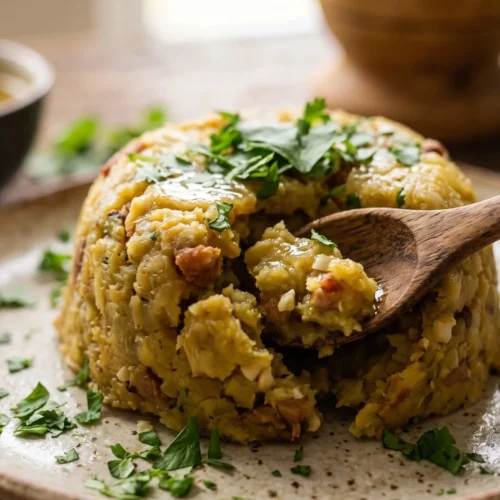
Mofongo Recipe

Equipment
- Deep skillet or pot for frying
- pilón (wooden mortar and pestle) or sturdy bowl with a potato masher
- Tongs
- small bowl for shaping
Ingredients
- 3 green plantains
- Vegetable oil for frying
- 6 garlic cloves peeled
- 1 tsp salt
- 3 tbsp olive oil
- ½ cup warm chicken or vegetable broth plus extra for serving
- ¼ cup crispy fried chicken skin cracklings crushed (optional, from halal chicken)
- Fresh parsley or cilantro chopped, for garnish
Instructions
Prepare the Plantains
- Cut both ends off each plantain, score the skin lengthwise, and pry the peel away in sections, since green plantain skin is much tougher than a banana peel.
- Cut the peeled plantains into pieces about 1 inch thick.
- Heat about 1.5 inches of vegetable oil in a deep skillet or pot to 325°F (165°C). Fry the plantain pieces in batches for 5-6 minutes, turning occasionally, until they are golden on the outside and tender enough to pierce easily with a fork.
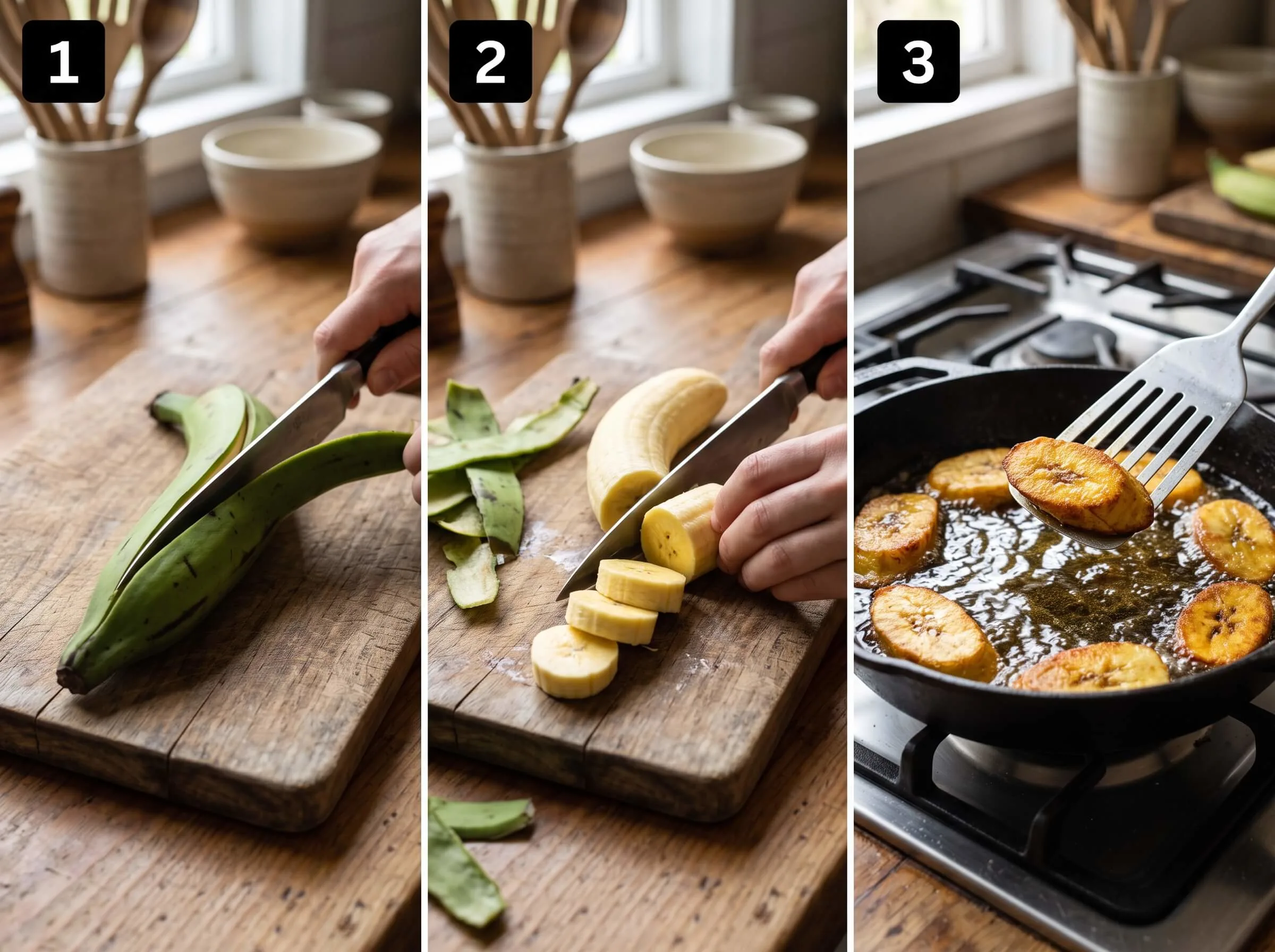
Fry the Plantains
- Remove with tongs and drain briefly on a paper towel-lined plate. Keep them warm, since the mash works much better while the plantains are still hot.
- In a pilón or a sturdy bowl, crush the garlic cloves with the salt until they form a rough paste. Stir in the olive oil until the mixture is well combined.
- Add the crushed chicken cracklings to the garlic paste if you’re using them, and mix briefly.
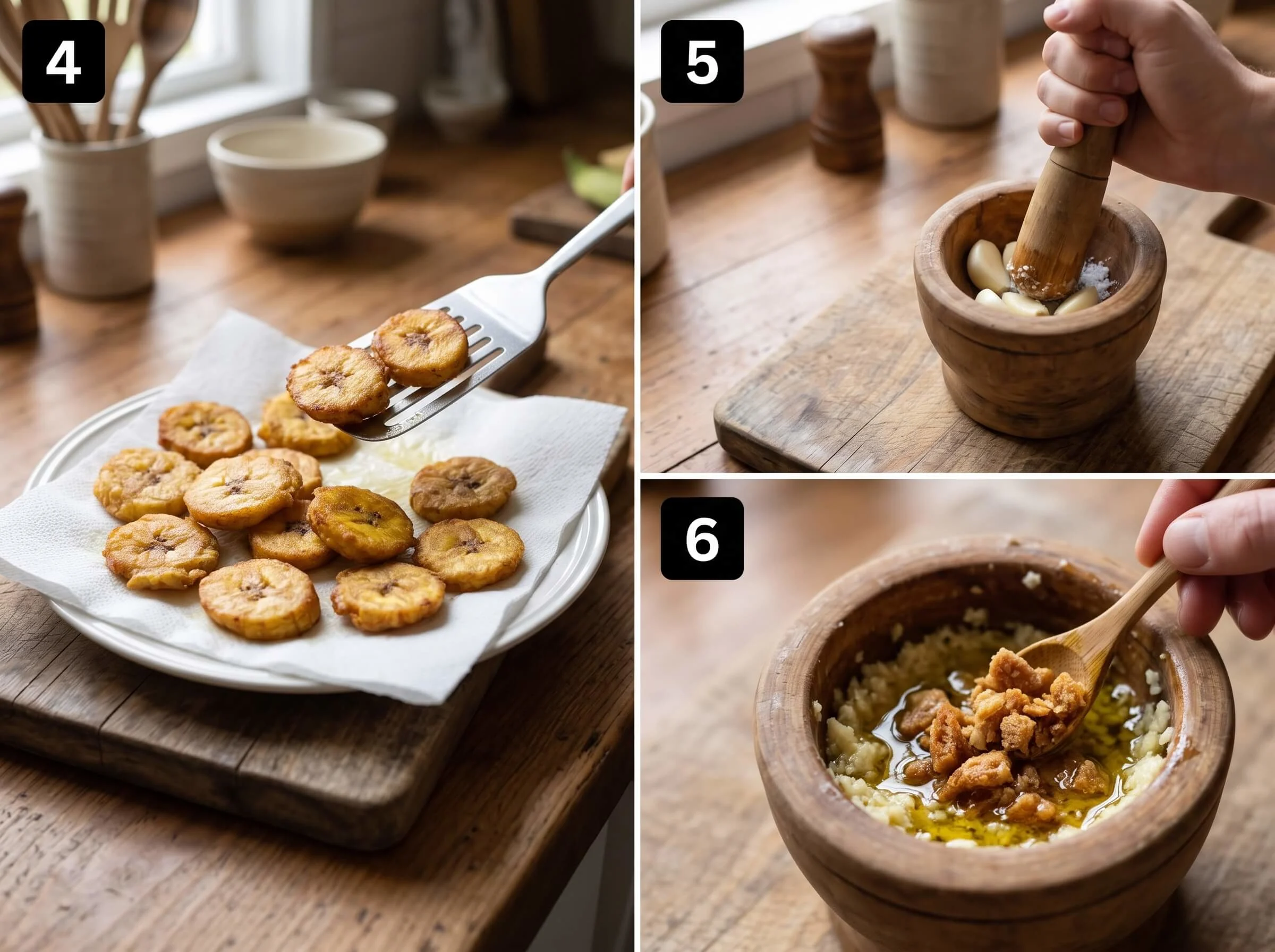
Mash the Mofongo
- Add a few pieces of hot fried plantain to the garlic paste and mash firmly with the pestle or a potato masher until mostly broken down, drizzling in a splash of warm broth to help the mash come together. Continue adding plantain pieces in batches, mashing between each addition, until everything is combined into a dense, slightly chunky mixture.
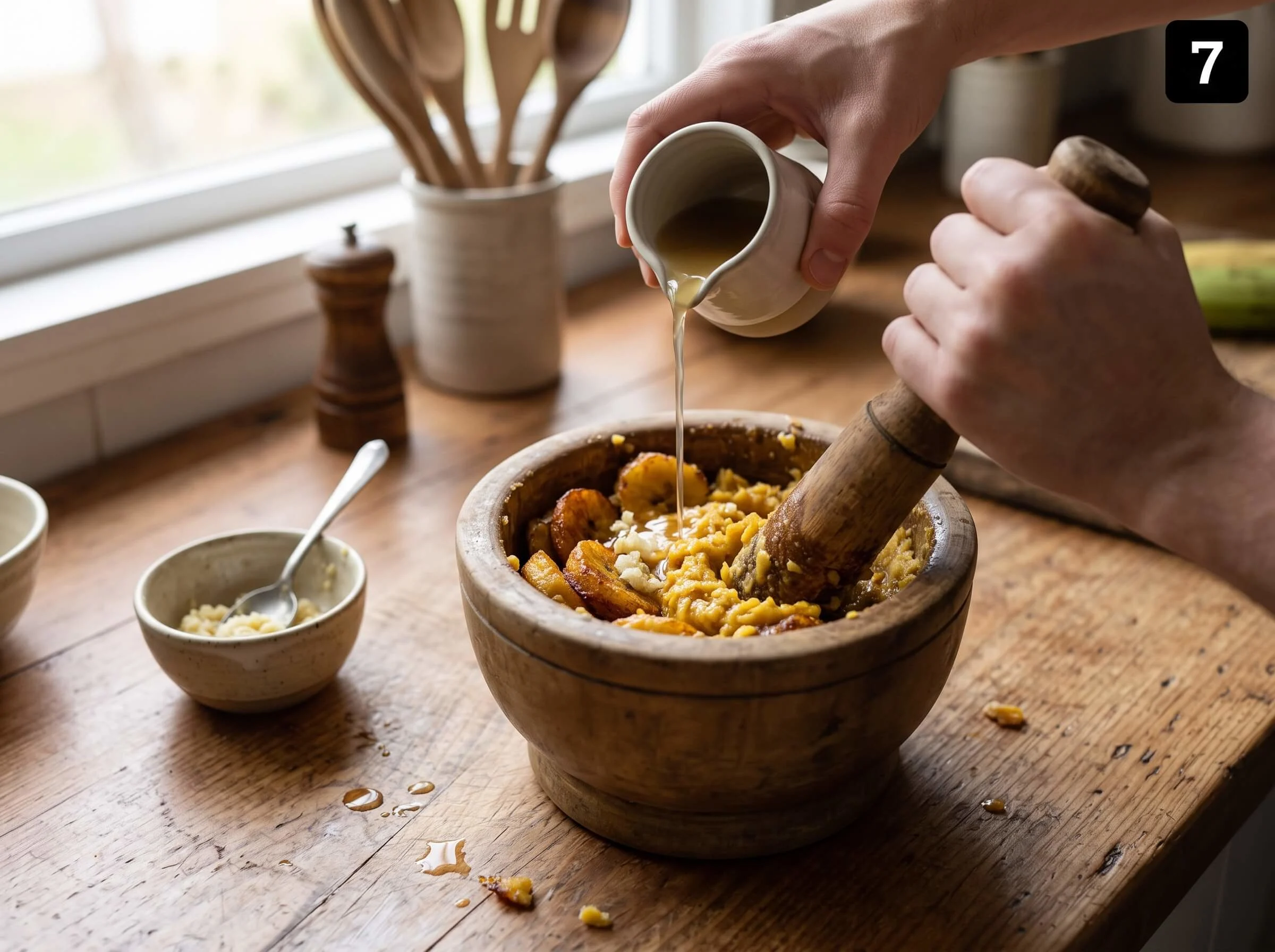
Shape and Serve
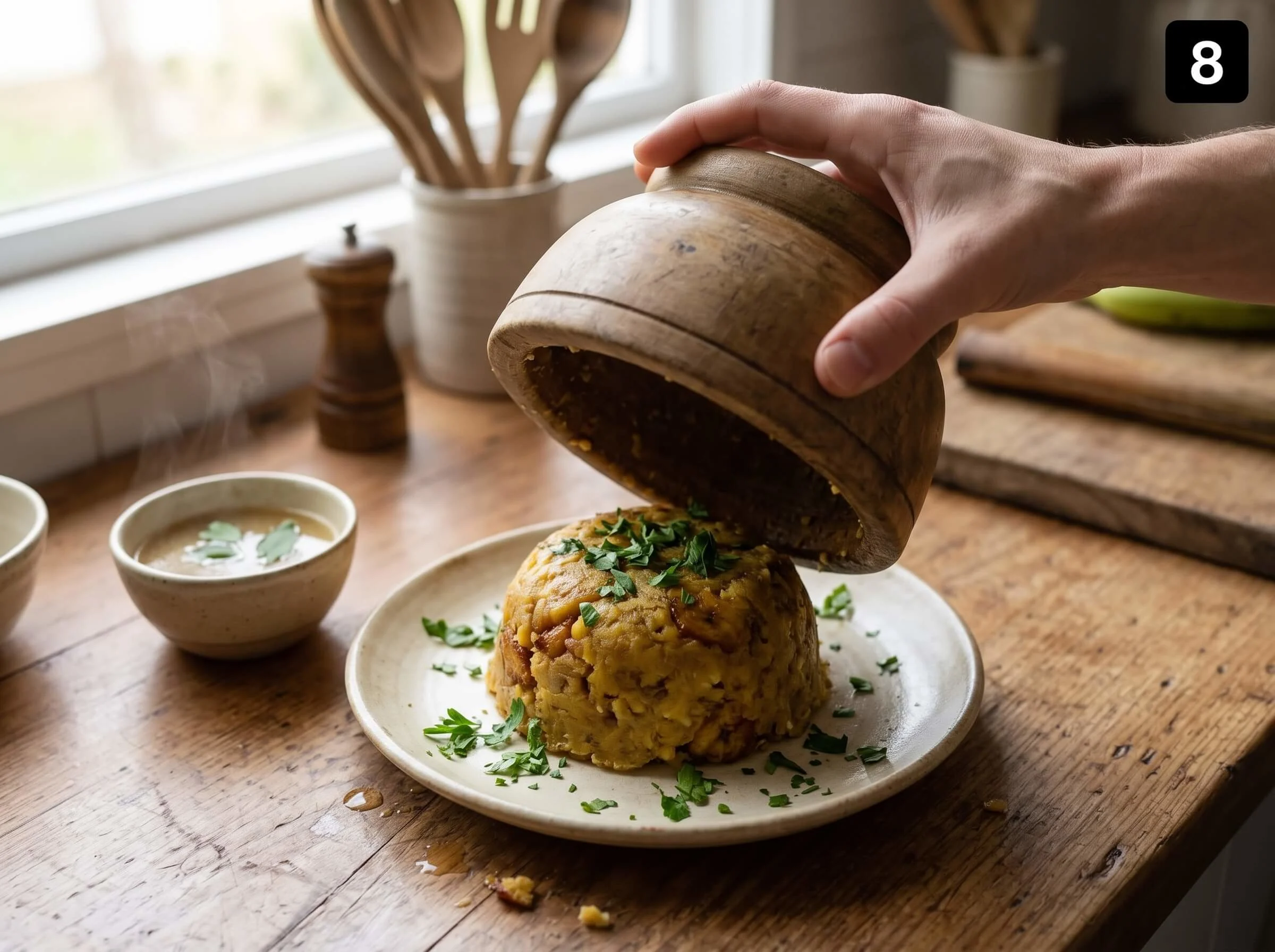
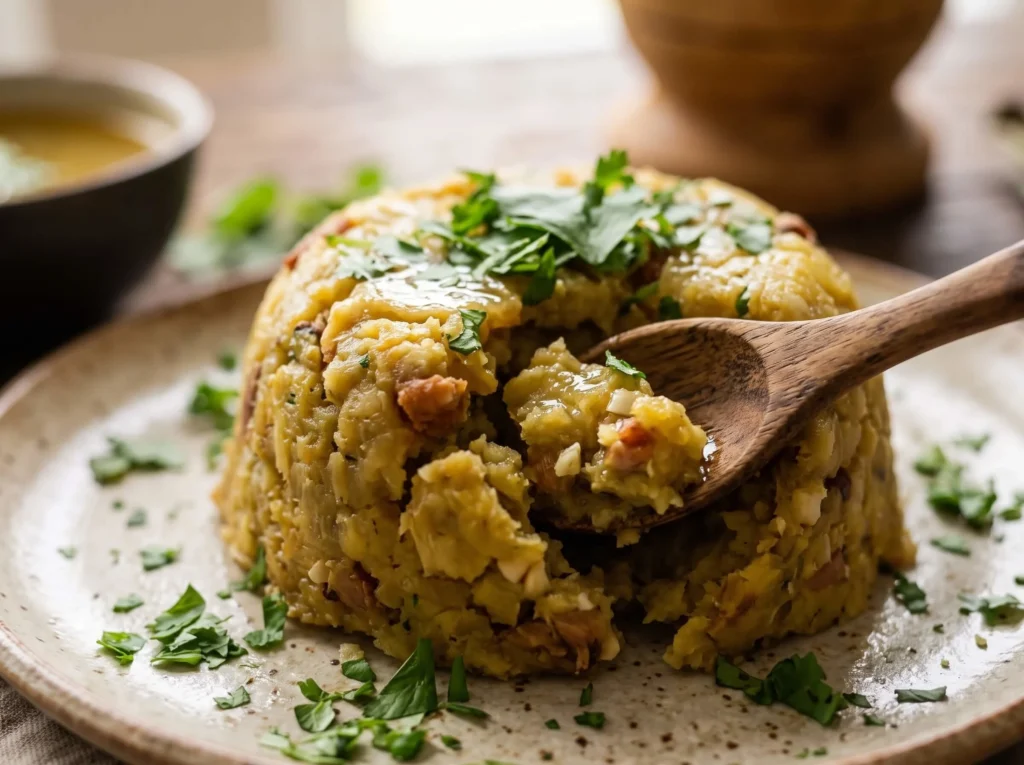
- Pack the warm mash into a small, lightly oiled bowl or cup, pressing firmly, then flip it onto a plate to form a rounded mound. Garnish with fresh parsley or cilantro and serve immediately with extra warm broth on the side.
Notes
- Green, unripe plantains are essential for this recipe, since ripe plantains are too sweet and won’t hold together as a savory mash.
- Mashing the plantains while they’re still hot is genuinely important, because they become much harder to work with as they cool and turn stiff and dry.
- Crushing the garlic with salt first, instead of just mincing it, releases far more flavor and helps the garlic distribute evenly through the mash.
- Add the warm broth a little at a time, since too much makes the mofongo mushy while too little leaves it dry and crumbly.
- This recipe leaves out pork entirely, and if you want the salty crunch that chicharrón usually adds, crispy cracklings made from halal chicken skin are a good substitute.
- Mofongo is best eaten right after shaping, since it firms up and dries out as it sits.
Frequently Asked Questions
What are the essential mofongo recipe ingredients?
At its core, it’s needs just green plantains, garlic, salt, olive oil, and something to fry the plantains in, plus a little warm broth to bring the mash together. Optional additions like crushed cracklings or fresh herbs add flavor and texture, but the dish works with the basics alone.
Is this a traditional mofongo recipe?
It follows the traditional technique of frying green plantains and mashing them with garlic and oil, but it leaves out the pork cracklings (chicharrón) that many traditional versions include. That makes it a halal-friendly adaptation of the classic. The method and the texture stay true to the original.
How is this different from a mofongo recipe Dominican style?
Dominican mofongo is commonly made with fried green plantains, garlic, and chicharrón, and often served with a side of broth, which is very close to what this recipe does aside from the pork. Puerto Rican versions tend to be more heavily seasoned with garlic and are sometimes stuffed or topped with seafood or meat.
How do I make mofongo halal?
The main thing to skip is the chicharrón, which is fried pork skin. This recipe replaces it with an optional crispy chicken skin crackling, made from halal chicken, or leaves it out entirely. It’s also worth checking that any broth you use is halal-certified or made from halal ingredients.
Do I need a pilón to make mofongo?
A pilón, the traditional wooden mortar and pestle, is helpful but not required. A sturdy bowl with a potato masher or the back of a heavy spoon works well enough, though you may need to mash a little longer to get the same dense texture.
Why is my mofongo dry and crumbly?
This usually means it needs a bit more warm broth, or the plantains cooled down too much before mashing. Mash while the plantains are still hot, and add broth a spoonful at a time until the mixture holds together when pressed.
Why is my mofongo too mushy?
Too much broth or plantains that were fried too soft are the usual causes. Add the broth gradually, and fry the plantain pieces just until golden and tender rather than letting them become very soft.
Can I use ripe plantains for mofongo?
Ripe plantains won’t work well, since they’re much sweeter and softer and won’t hold together as a savory mash. Green, firm plantains are essential to this dish, and they’re what separate mofongo from sweeter plantain dishes like maduros.
Can I make mofongo ahead of time?
Mofongo is best made and served right away, since it firms up and dries out as it cools. If you need to prep ahead, you can fry the plantains and make the garlic paste in advance, then reheat the plantains slightly and mash everything together right before serving.
Can I bake or air fry the plantains instead of frying them?
Yes, you can air fry the plantain pieces with a light coating of oil at 380°F (195°C) for about 12-15 minutes, until tender and golden, though the flavor and texture will be a bit lighter than the traditional fried version.
What can I serve on top of mofongo?
Mofongo is very versatile as a base. Garlic shrimp, stewed chicken, or braised beef all work well spooned over the top, or you can serve it plain alongside a saucy main for the plantains to soak up the sauce.
Twists & Ideas
You Can Add
Crispy fried onions mixed into the mash add a savory sweetness and a little extra crunch without any pork.
A squeeze of fresh lime juice stirred into the garlic paste brightens the flavor and cuts through the richness of the plantains.
Garlic shrimp piled on top turns this side dish into a full seafood main, a very popular way to serve mofongo.
Finely chopped fresh cilantro folded into the mash adds a herby freshness throughout.
You Can Replace
Crispy chicken skin cracklings can replace traditional chicharrón for a halal-friendly version that still adds salty crunch, as covered in the FAQ.
Vegetable broth can replace chicken broth for a fully vegetarian version of this mofongo recipe.
An air fryer can replace deep frying for the plantains, as mentioned in the FAQ, for a lighter result.
Extra virgin olive oil can replace regular olive oil in the garlic paste for a more pronounced, fruity flavor.
Recipes You May Enjoy
- Tostones Recipe
- Pad Thai Recipe
- Pollo Guisado Recipe
- Japanese Cheesecake Recipe
- Greek Rice Recipe
- Tofu Tacos Recipe
- Marry Me Chickpeas Recipe
- Crispy Baked Sesame Tofu Recipe
A Plantain Classic That Doesn’t Need Pork
Mofongo proves that a dish can hold onto its roots while adapting to different dietary needs, and this version stays faithful to the dense, garlicky character that defines it. The fried green plantains, the crushed garlic and olive oil, and the warm broth do all of the work, and nothing about the finished mound feels like something is missing.
Whether you’re making this mofongo recipe for a family dinner, checking the mofongo recipe ingredients before a trip to the Latin grocery store, or comparing it to a traditional mofongo recipe you’ve had at a Dominican restaurant, the technique stays the same: hot plantains, plenty of garlic, and a firm hand with the pestle. Once you’ve made it once, it becomes an easy side dish to reach for whenever a saucy stew needs something to soak it up.
Tried This Recipe? Leave a Review!
There are no reviews yet. Be the first one to write one.