Moussaka Recipe
Table of Contents
Greece’s Most Iconic Layered Casserole
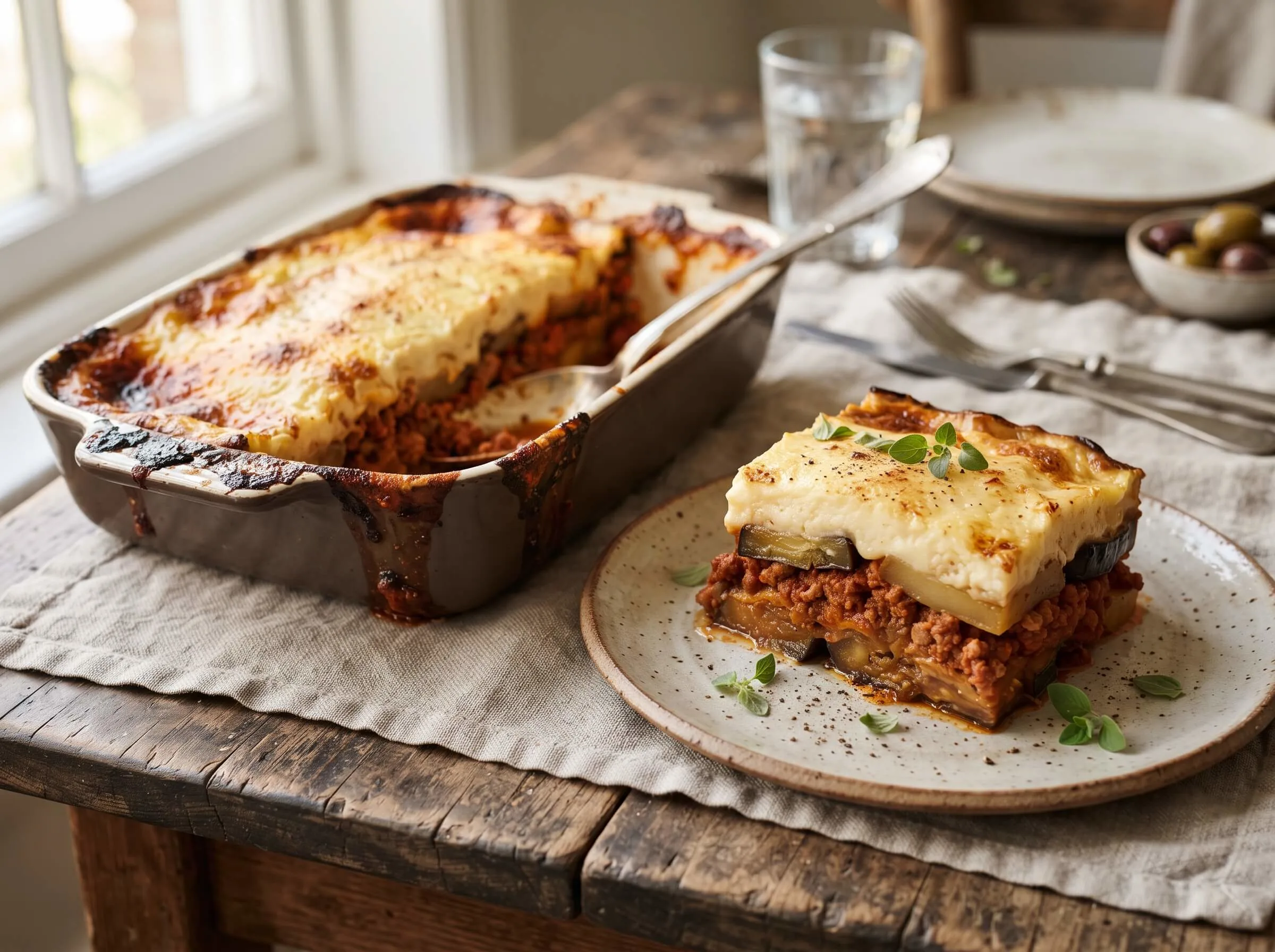
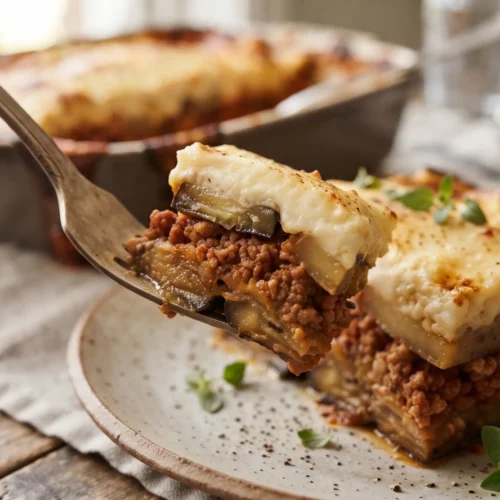
Moussaka stands as one of the most recognizable dishes in Greek cuisine, a rich, layered casserole built from tender eggplant, a well-seasoned meat sauce, and a thick, golden béchamel topping. This moussaka recipe walks through every layer in detail, since getting each component right is genuinely what separates a great moussaka from an average one.
Moussaka’s history is more complicated than many people realize. While it’s most closely associated with Greece today, the dish actually has roots that trace back to the Ottoman Empire and broader Middle Eastern cooking traditions, with layered eggplant and meat dishes appearing across several countries in the region, something Smithsonian Magazine has explored when covering the shared culinary history across the former Ottoman territories. The version most people recognize today as authentic greek moussaka recipe style, complete with a béchamel topping, is actually credited to a specific 20th-century Greek chef named Nikolaos Tselementes, who adapted the dish by incorporating French culinary techniques he’d studied abroad.
Getting the eggplant right is one of the trickier parts of any moussaka recipe. Serious Eats has written extensively about eggplant’s tendency to absorb large amounts of oil during cooking, explaining that salting eggplant slices beforehand draws out excess moisture and bitterness, which also helps the slices hold their shape and absorb less oil once they hit the pan.
The meat sauce, typically made with beef moussaka recipe ground beef or lamb, relies on the same kind of long, slow simmering that builds depth in many Mediterranean sauces. Bon Appétit has pointed out that warm spices like cinnamon and allspice, though perhaps unexpected in a savory dish to some, are actually traditional additions in Greek and broader Eastern Mediterranean meat sauces, contributing warmth and complexity rather than making the dish taste sweet.
The béchamel topping is what truly defines this dish visually and texturally, and The Kitchn has covered béchamel technique in detail, explaining that the key to a smooth, lump-free sauce comes down to whisking the milk into the roux gradually, rather than all at once, and cooking it long enough afterward that the raw flour taste fully cooks out.
Since this is a genuinely more involved dish, with several distinct components that each need proper attention on their own, this simple moussaka recipe breaks everything down into clear, manageable stages, so nothing gets rushed or shortchanged along the way.
Why You’ll Love This Recipe
This moussaka recipe walks through each component clearly and in enough detail that even a genuinely more advanced Greek dish like this one becomes manageable to tackle at home.
The combination of tender, well-seasoned eggplant, a rich meat sauce, and a golden, creamy béchamel topping delivers that same deeply satisfying, restaurant-quality experience people love about authentic greek moussaka recipe versions.
While this dish takes real time and attention, most of that time is spent on separate, straightforward stages rather than anything technically difficult, making it a rewarding project even for less experienced home cooks.
What to Serve With Moussaka
A simple Greek salad with cucumbers, tomatoes, olives, and feta pairs beautifully here, echoing the same Mediterranean flavors found in the dish itself.
Crusty bread on the side is a natural addition, perfect for soaking up any extra sauce on the plate.
A glass of something crisp and citrusy alongside the meal helps balance out the richness of the béchamel and meat sauce.
How This Moussaka Recipe Comes Together
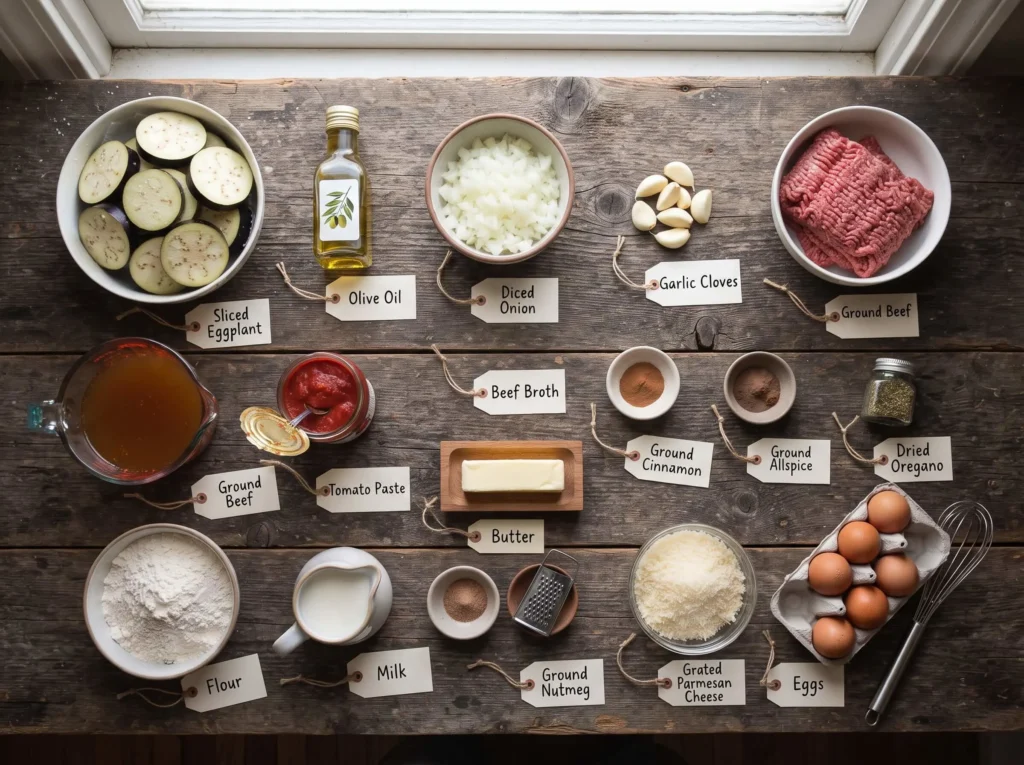
Because this dish has several distinct components, it’s built in four main stages: salting and roasting the eggplant to remove excess moisture, building a rich, spiced meat sauce, making a smooth béchamel from scratch, then layering and baking everything together until golden and set. Here’s everything you’ll need.
Moussaka Recipe
Moussaka Recipe

Equipment
- 9×13 baking dish
- Large skillet
- Saucepan
- whisk
- Baking sheets
Ingredients
Eggplant
- 3 large eggplants sliced into ¼-inch rounds
- Salt for drawing out moisture
- ¼ cup olive oil
Meat Sauce
- 2 tbsp olive oil
- 1 medium yellow onion finely diced
- 3 garlic cloves minced
- 1½ lbs ground beef
- 1 can 14 oz crushed tomatoes
- 2 tbsp tomato paste
- ½ cup beef broth
- 1 tsp ground cinnamon
- ½ tsp ground allspice
- 1 tsp dried oregano
- Salt and pepper to taste
Béchamel
- 6 tbsp unsalted butter
- 6 tbsp all-purpose flour
- 4 cups whole milk warmed
- ½ tsp ground nutmeg
- 1 cup grated parmesan cheese
- 2 large eggs beaten
- Salt and pepper to taste
Instructions
Salt and Roast the Eggplant
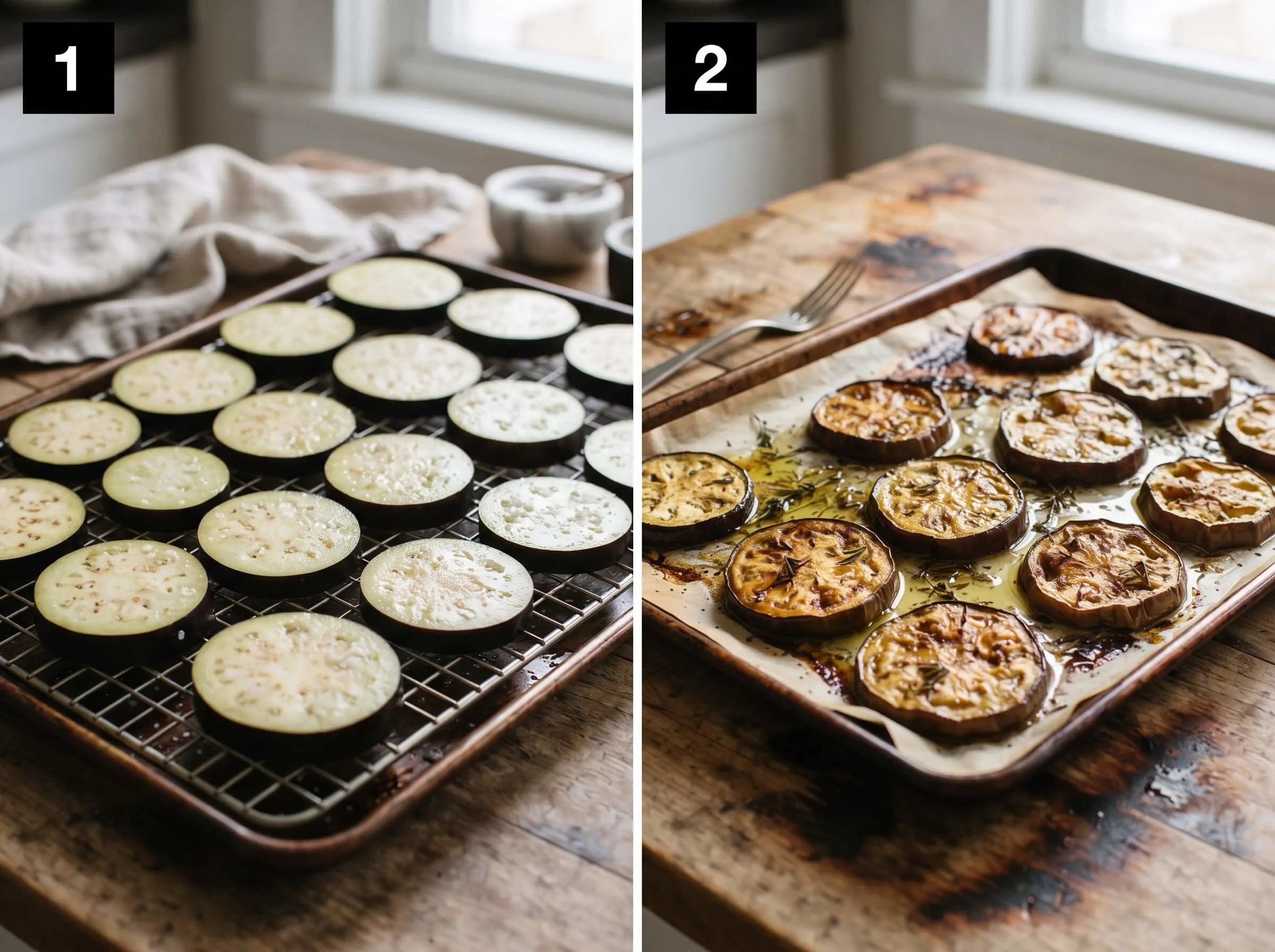
- Lay the eggplant slices out on a wire rack or paper towels and sprinkle both sides generously with salt. Let them sit for 30-45 minutes, allowing excess moisture and bitterness to draw out, then pat them dry thoroughly with paper towels.
- Arrange the eggplant slices on baking sheets, brush both sides lightly with olive oil, and roast at 425°F (220°C) for 20-25 minutes, flipping halfway through, until tender and lightly golden. Set aside.
Build the Meat Sauce
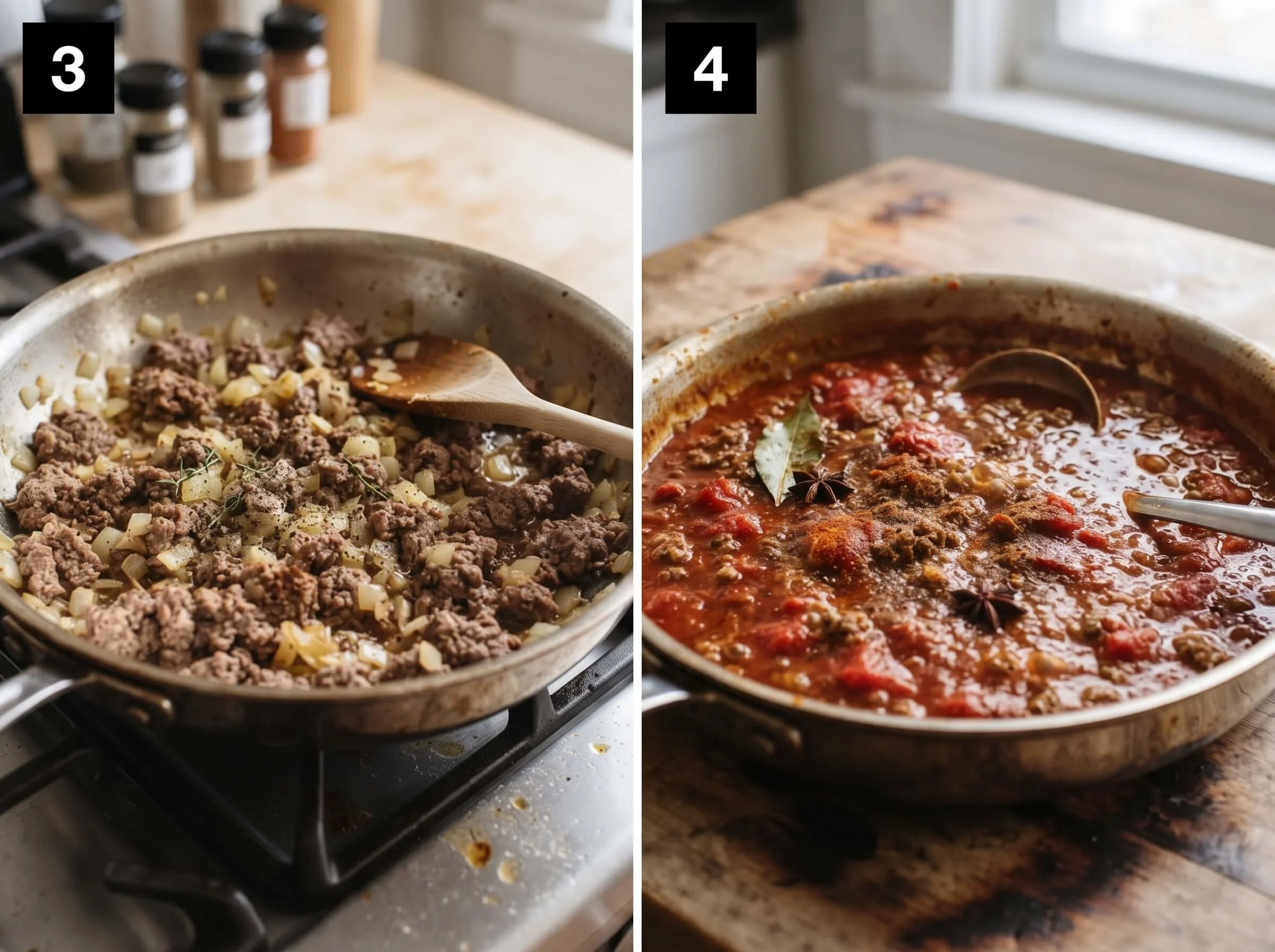
- Heat the olive oil in a large skillet over medium heat, add the diced onion, and cook for 5-6 minutes until softened. Add the garlic and cook for another 30 seconds, then add the ground beef, breaking it apart as it browns, for about 6-7 minutes.
- Stir in the crushed tomatoes, tomato paste, beef broth, cinnamon, allspice, and oregano, mixing well. Reduce the heat to low and simmer uncovered for 20-25 minutes, stirring occasionally, until the sauce has thickened and the flavors have melded together. Season with salt and pepper to taste, then set aside.
Make the Béchamel
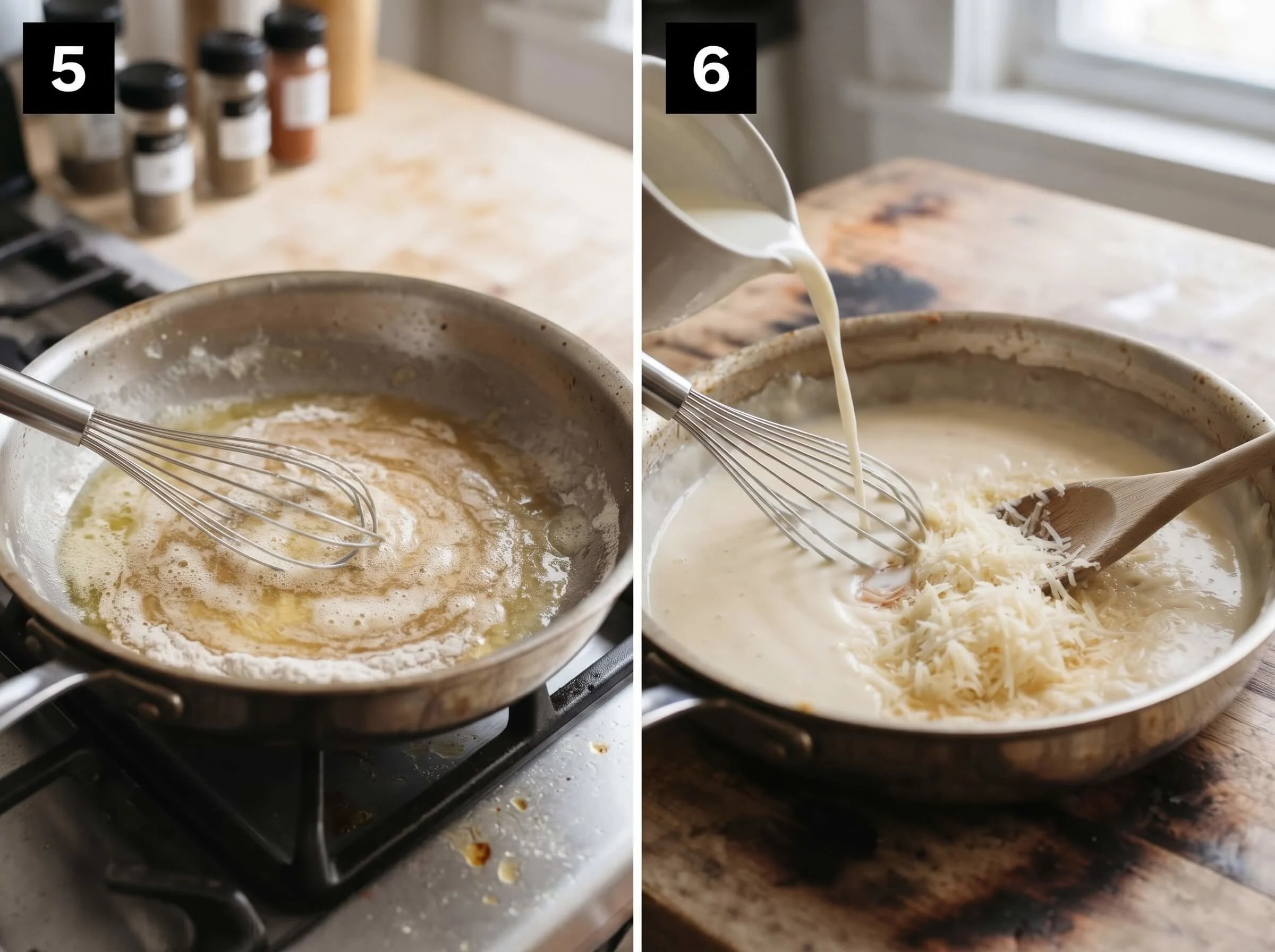
- In a saucepan, melt the butter over medium heat, then whisk in the flour, cooking for 1-2 minutes to form a roux without letting it brown too much.
- Gradually whisk in the warmed milk, a little at a time, whisking continuously to prevent lumps, until the sauce is smooth. Continue cooking, stirring frequently, for 5-7 minutes, until the sauce has thickened enough to coat the back of a spoon. Stir in the nutmeg and parmesan cheese, then remove from heat and let cool slightly before whisking in the beaten eggs, which adds richness and helps the béchamel set properly once baked.
Layer and Bake
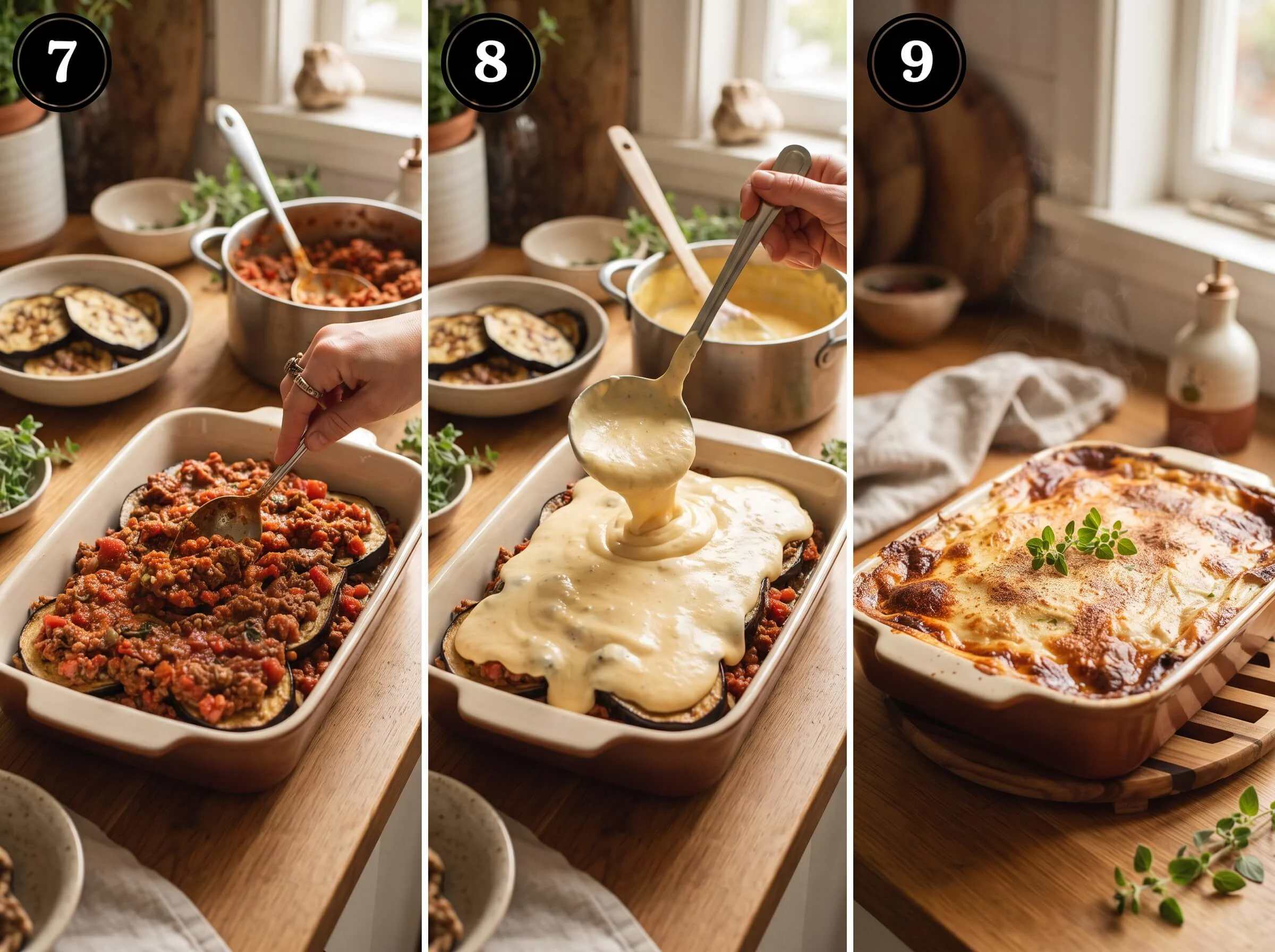
- In a greased 9×13 baking dish, arrange half of the roasted eggplant slices in an even layer. Spread the meat sauce evenly over the eggplant, then top with the remaining eggplant slices in another even layer.
- Pour the béchamel evenly over the top layer of eggplant, spreading it out to cover completely. Bake at 350°F (175°C) for 45-50 minutes, until the top is deeply golden and set, with the moussaka bubbling slightly at the edges.
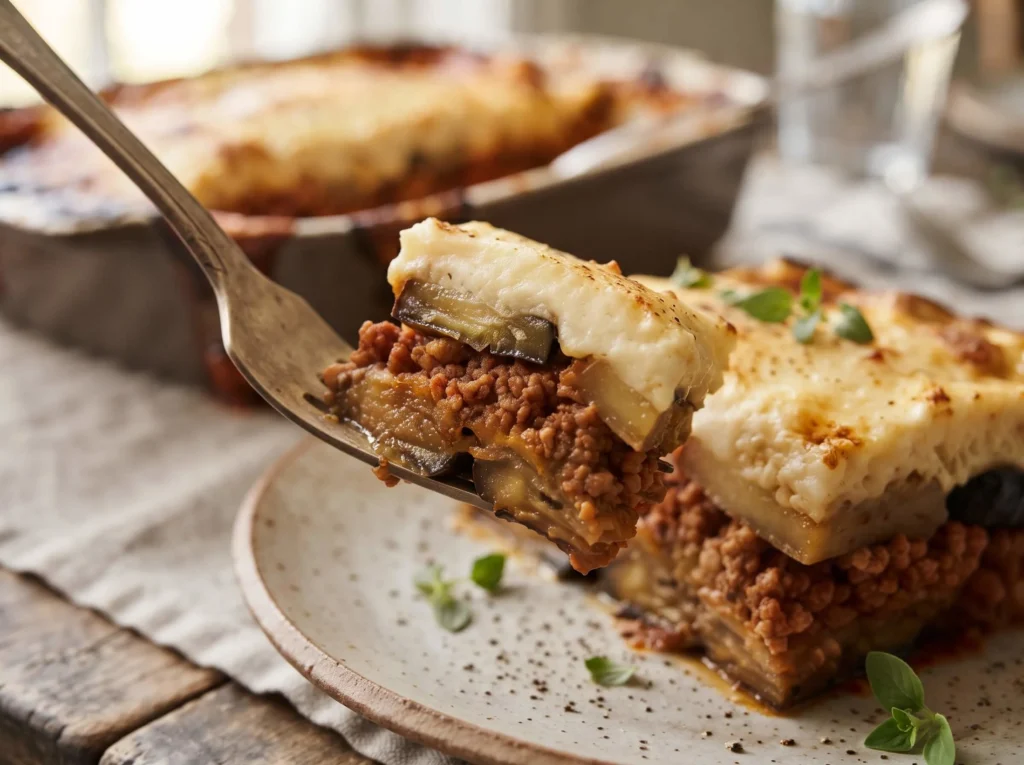
- Let the moussaka rest for at least 20-30 minutes before slicing, which is essential for clean, well-defined layers when serving.
Notes
- Salting the eggplant and letting it sit for the full 30-45 minutes makes a genuine difference, both in reducing bitterness and preventing the slices from absorbing excessive oil during roasting, so don’t skip this step even though it adds time upfront.
- Roasting the eggplant instead of frying it, as some traditional recipes call for, is a lighter approach that still delivers well-cooked, flavorful slices without needing excessive oil.
- Whisking the eggs into the béchamel only after it has cooled slightly prevents them from scrambling in the hot sauce, so make sure to let the béchamel cool for a few minutes before this step.
- Letting the fully baked moussaka rest for the full 20-30 minutes is one of the most important steps in the entire recipe, since cutting into it too early will cause the layers to slide apart instead of holding their shape.
- This dish reheats well and some people find the flavor even improves the next day, making it a great make-ahead option for entertaining.
Frequently Asked Questions
What’s the difference between this and an authentic Greek moussaka recipe made with lamb?
This particular recipe uses ground beef, reflecting one of the common beef moussaka recipe variations found in many households, while other authentic versions, particularly older or more traditional ones, often use ground lamb instead. Both are considered legitimate, and the choice largely comes down to regional and personal preference, without requiring any change to the rest of the recipe’s technique.
Why is my moussaka watery instead of holding its layers together?
This usually happens for one of a few reasons: not salting and draining the eggplant properly beforehand, not letting the meat sauce reduce and thicken enough before assembling, or cutting into the finished dish before it’s had time to rest. Address each of these steps carefully, and be sure to let the baked moussaka rest for the full recommended time before serving.
Can I make this simple moussaka recipe ahead of time?
Yes, moussaka is actually a great make-ahead dish. You can assemble the entire casserole a day in advance, refrigerate it unbaked, then bake it fresh when ready, adding a bit of extra time since it will start out cold. It also reheats well as leftovers for several days after baking.
Why does this greek moussaka recipe include cinnamon and allspice in a savory dish?
These warm spices are a traditional part of Greek and broader Eastern Mediterranean meat sauces, adding depth and warmth rather than making the dish taste sweet. This flavor combination is a defining characteristic of authentic moussaka and shouldn’t be skipped or substantially reduced if you’re aiming for that traditional flavor profile.
Can I use zucchini or potatoes instead of, or alongside, eggplant?
Yes, some regional and personal variations of moussaka include layers of potato or zucchini alongside or instead of eggplant. If adding potatoes, they should be par-cooked before layering, similar to how the eggplant is roasted here, to ensure everything cooks through evenly.
Why is my béchamel lumpy?
This typically happens when the milk is added too quickly to the roux, rather than gradually while whisking continuously. Warming the milk beforehand, as this recipe suggests, also helps it incorporate more smoothly into the hot roux without seizing or clumping.
How long does moussaka last, and how should I store leftovers?
Stored in an airtight container in the refrigerator, moussaka keeps well for up to 4 days, and many people find the flavor deepens after a day or two. It also freezes well for up to 3 months, either whole or in individual portions.
Can I make a vegetarian version of this moussaka recipe?
Yes, lentils or a plant-based ground meat substitute can replace the beef in the meat sauce layer, using the same seasoning and simmering technique, while the eggplant and béchamel layers remain unchanged, making for a genuinely satisfying vegetarian variation.
Twists & Ideas
You Can Add
A layer of thinly sliced potatoes added beneath the eggplant, par-cooked first, adds extra heartiness and is a common variation in many Greek households.
A handful of crumbled feta stirred into the meat sauce before layering adds a tangy, salty depth throughout the dish.
A pinch of red pepper flakes added to the meat sauce gives a subtle background heat for anyone who wants a bit of spice.
A light dusting of extra parmesan or breadcrumbs over the béchamel before baking adds a slightly crisp, golden crust on top.
You Can Replace
Ground lamb can replace ground beef, as mentioned in the FAQ, for a more traditional flavor found in many authentic Greek moussaka recipe versions.
Zucchini can replace or join eggplant for a different, lighter layer, par-cooked in the same way before assembling.
Lentils or a plant-based ground meat alternative can replace the beef entirely for a vegetarian version, as covered in the FAQ.
Greek yogurt whisked into the béchamel can replace part of the milk for a tangier, slightly lighter finished sauce.
Recipes You May Enjoy
- Lasagna Recipe
- Baklava Recipe
- Pollo Guisado Recipe
- Greek Rice Recipe
- Bolognese Recipe
- Greek Orzo Salad Recipe
- Chicken Souvlaki Recipe
- Focaccia Recipe
- Cannoli Filling Recipe
- Chicken Fajita Recipe
- Chicken Piccata Recipe
A Dish Worth Every Layer of Effort
Moussaka rewards patience and attention to detail more than almost any other dish in Greek cuisine, but the payoff is genuinely worth it. Between the tender roasted eggplant, the rich, warmly spiced meat sauce, and that golden, creamy béchamel topping, every component contributes something essential to the final dish, and skipping shortcuts along the way makes a real, noticeable difference in the result.
Whether you’re making this moussaka recipe for a special dinner, following this simple recipe breakdown to tackle the dish for the first time, or specifically chasing that authentic Greek touch recipe experience passed down through generations, this version walks through every layer needed to get it right. Once you’ve made it through all four stages, it becomes clear why moussaka has remained one of Greece’s most cherished and celebrated dishes.
Tried This Recipe? Leave a Review!
There are no reviews yet. Be the first one to write one.