Pan de Muerto Recipe
Table of Contents
The Bread That Honors the Departed
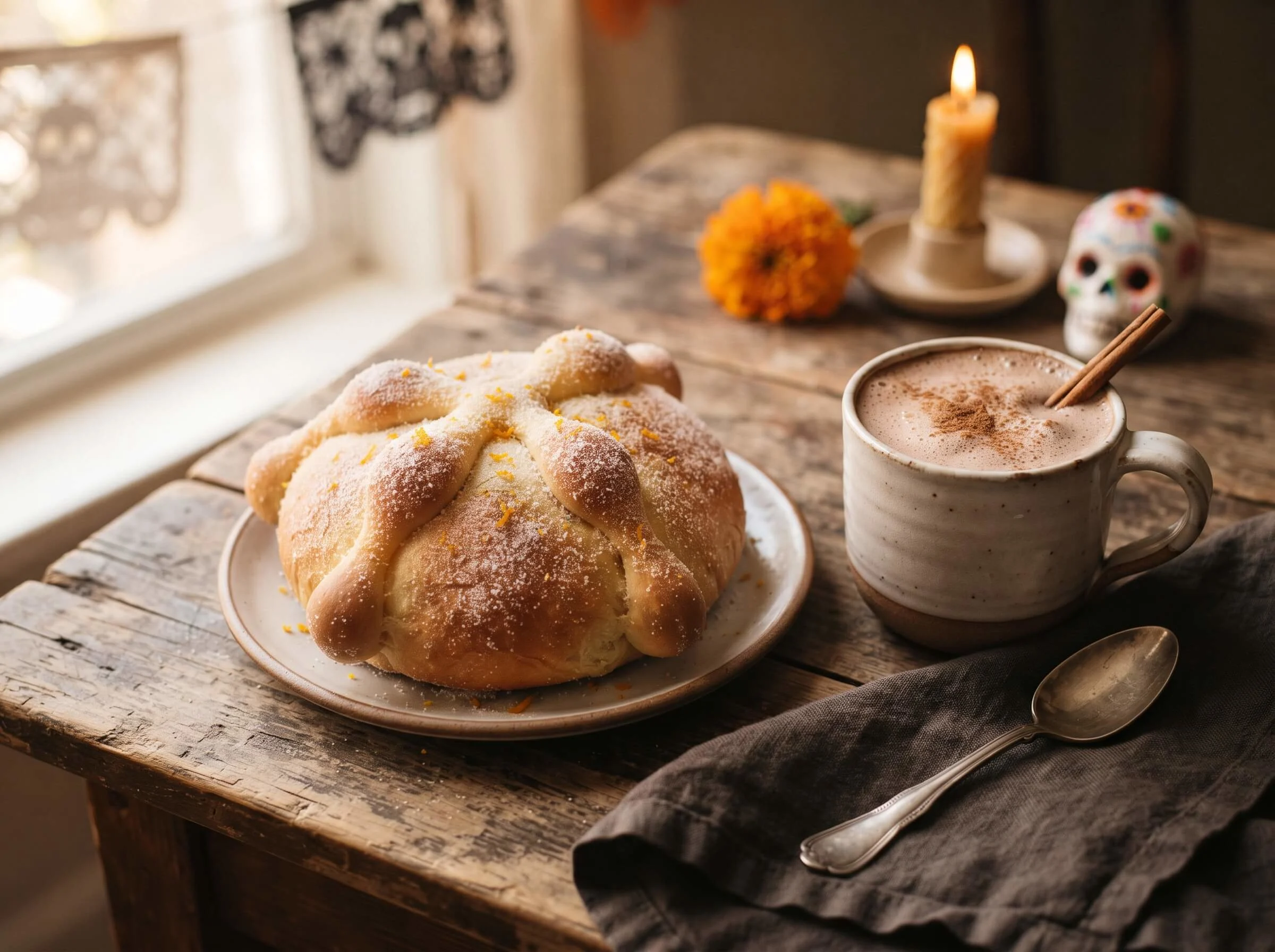
Few breads carry as much cultural meaning as pan de muerto, a soft, orange-scented sweet bread baked specifically for Día de los Muertos celebrations across Mexico. This pan de muerto recipe walks through making this beautiful, symbolic bread from scratch, complete with its signature bone-shaped decorations and sugar-dusted top.
Pan de muerto history stretches back centuries, with roots tied to both pre-Hispanic Indigenous traditions and Spanish colonial influence, blending together into the distinctive bread recognized today, something Smithsonian Magazine has written about when covering the broader traditions and symbolism surrounding Día de los Muertos. The bread is traditionally placed on ofrendas, or altars, built to honor and welcome back the spirits of deceased loved ones during the celebration each year.
The round shape of pan de muerto, along with the bone-shaped strips of dough arranged across the top, carries deep symbolism. Bon Appétit has explained that the round base is often said to represent the circle of life, while the crossed bone shapes on top are meant to symbolize the bones of the departed, with a small ball of dough placed at the center representing either a skull or a heart, depending on regional interpretation.
Orange blossom water or orange zest is a defining flavor in most pan de muertos recipes, giving the bread its distinctive citrusy, slightly floral aroma. Saveur has covered how orange flavoring became such a central part of this bread’s identity, noting that it’s one of the flavor elements that most clearly distinguishes pan de muerto from other enriched Mexican sweet breads like conchas.
Getting the texture right relies on similar enriched dough techniques found in other rich breads, and King Arthur Baking has written about how butter and eggs in a dough like this slow gluten development, resulting in the soft, slightly cake-like crumb that makes pan de muerto so distinct from a leaner, crustier bread.
Whether you’re making this recipe for pan de los muertos to honor a loved one during Día de los Muertos or simply want to try this beautiful, symbolic bread for the first time, this recipe walks through every step needed to recreate that same soft texture, citrusy flavor, and iconic bone-shaped design at home.
Why You’ll Love This Recipe
This pan de muerto recipe delivers that same soft, orange-scented bread with the iconic bone-shaped decorative top, made entirely from scratch using accessible ingredients.
The dough comes together using familiar enriched bread techniques, so even if you haven’t made a lot of yeasted bread before, the steps here are approachable and clearly laid out.
Beyond being delicious, this bread carries real cultural and symbolic meaning, making it a meaningful addition to a Día de los Muertos celebration or ofrenda.
What to Serve With Pan de Muerto
A cup of Mexican hot chocolate is the most traditional pairing, echoing how this bread is commonly enjoyed during Día de los Muertos gatherings.
Coffee or a simple cafe de olla pairs nicely as well, especially for an afternoon snack alongside a slice of the bread.
For a slightly indulgent touch, a bit of butter or honey spread over a warm slice enhances the citrusy sweetness of the bread.
How This Pan de Muerto Recipe Comes Together
This recipe is built in three main stages: making and proofing an enriched, orange-scented dough, shaping the dough into its traditional round form with decorative bone shapes on top, then baking and finishing with a butter and sugar coating for that classic sweet, slightly crisp exterior. Here’s everything you’ll need.
Pan de Muerto Recipe
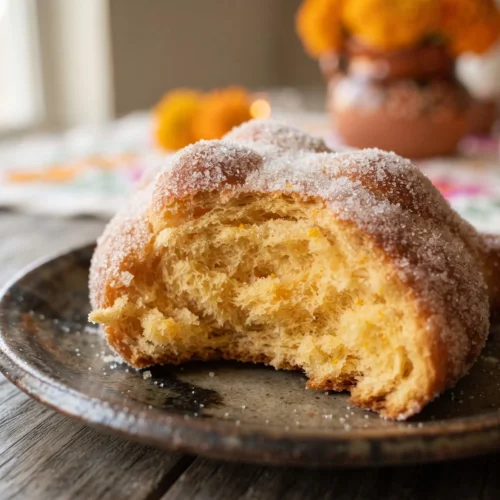
Pan de Muerto Recipe

Equipment
- Stand mixer or large bowl
- baking sheet
- Pastry brush
Ingredients
Dough
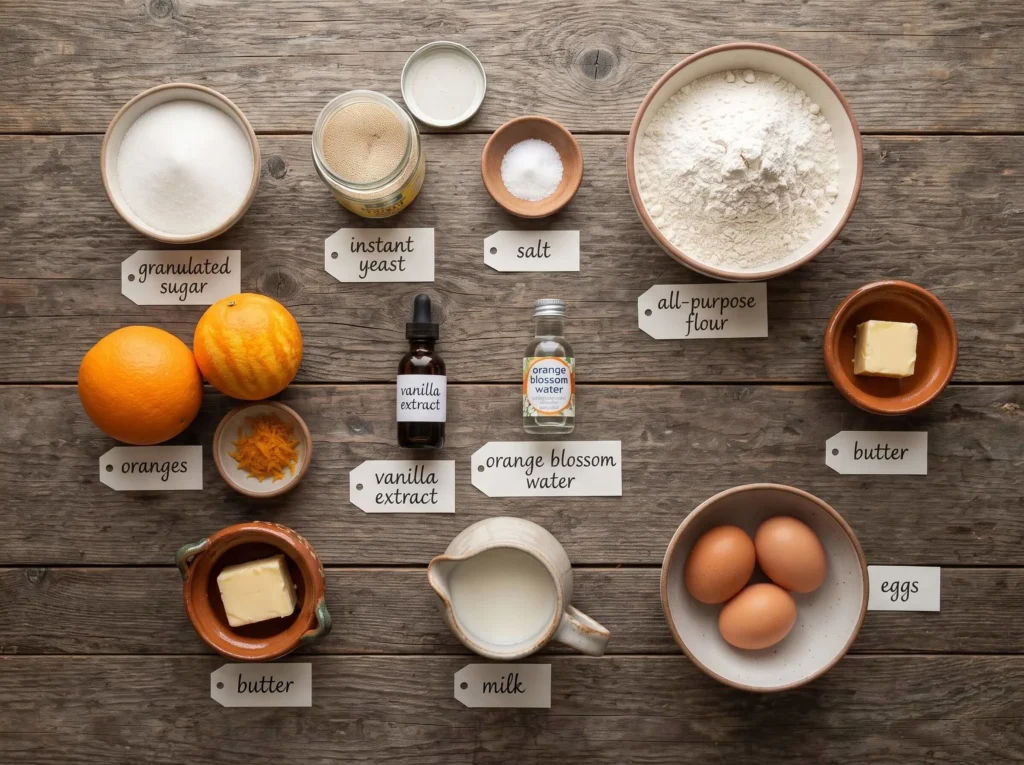
- 4 cups all-purpose flour
- ⅓ cup granulated sugar
- 2¼ tsp instant yeast
- 1 tsp salt
- Zest of 2 oranges
- ½ cup warm milk
- ½ cup unsalted butter softened
- 3 large eggs
- 1 tsp vanilla extract
- 1 tbsp orange blossom water optional
Topping
- 3 tbsp unsalted butter melted
- ½ cup granulated sugar
Instructions
Make and Proof the Dough
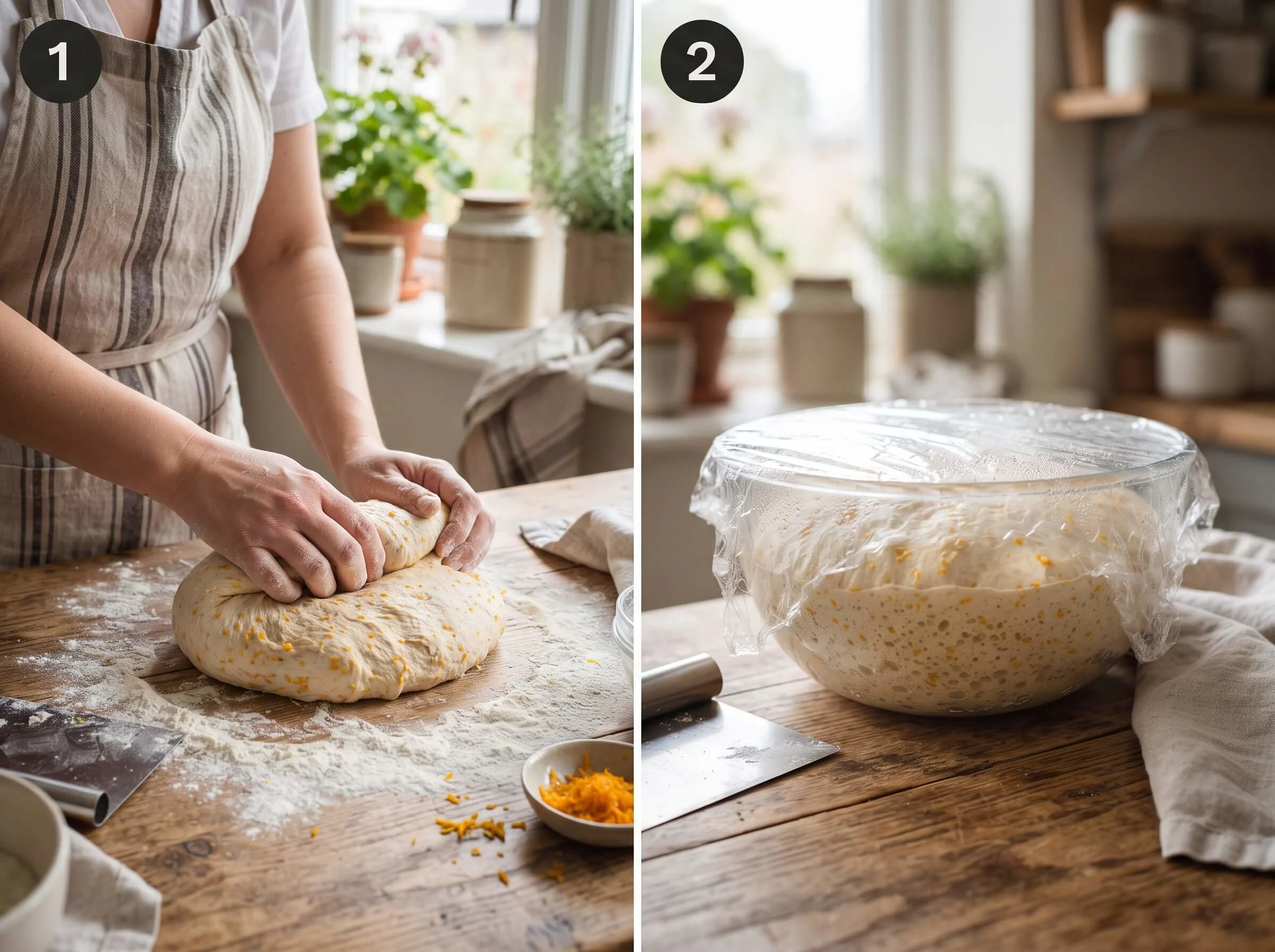
- In a stand mixer or large bowl, combine the flour, sugar, yeast, salt, and orange zest. Add the warm milk, softened butter, eggs, vanilla extract, and orange blossom water if using, mixing until a soft dough forms.
- Knead the dough for 8-10 minutes, either by hand or with a stand mixer, until it becomes smooth and elastic. Place it in a lightly greased bowl, cover, and let it rise in a warm spot for about 1.5 to 2 hours, until roughly doubled in size.
Shape the Bread and Bone Decorations
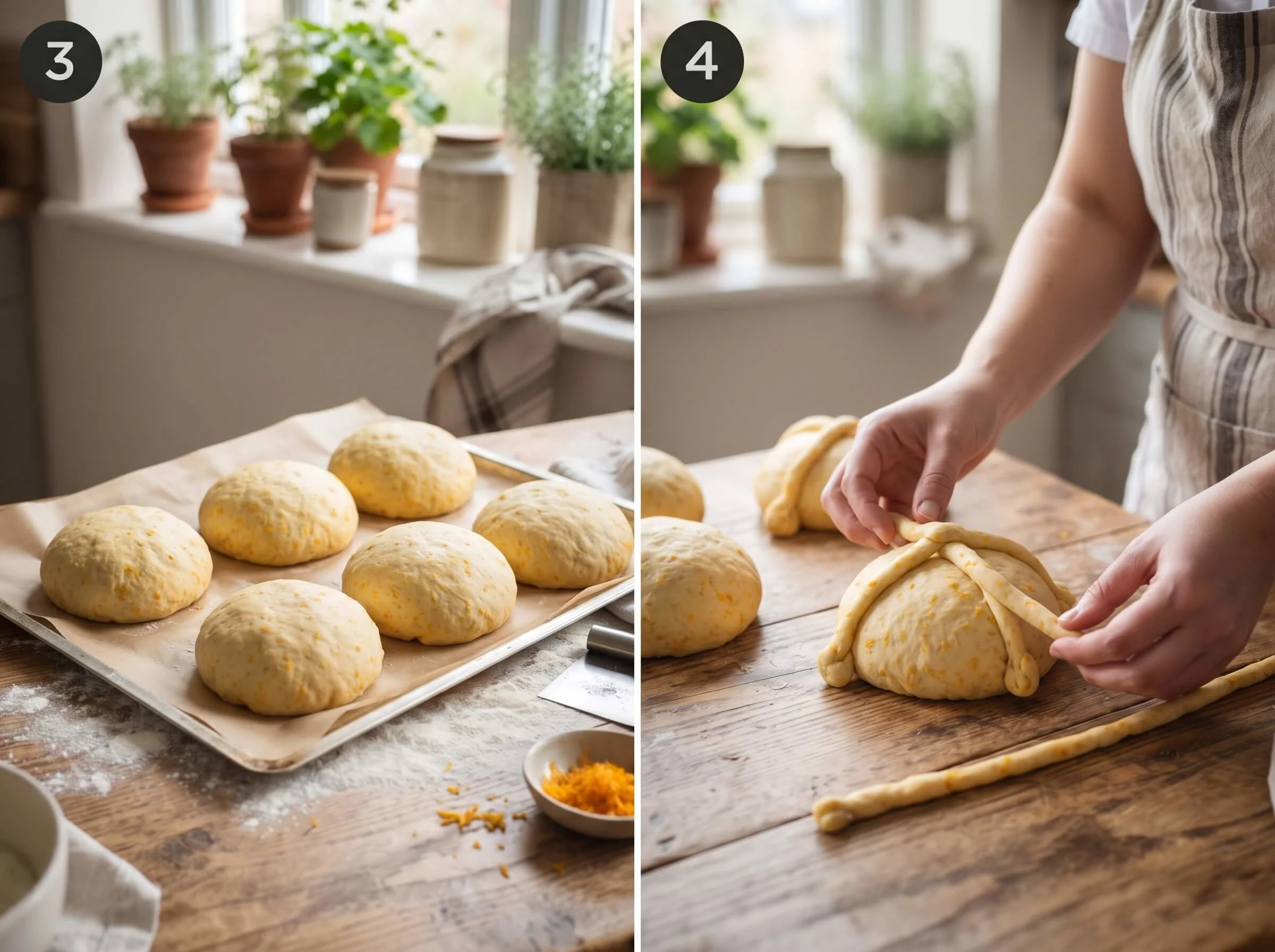
- Punch down the risen dough and set aside about a quarter of it to make the decorative bone shapes and small ball for the top. Divide the remaining dough into two equal portions, shaping each into a smooth, round loaf.
- From the reserved dough, roll small pieces into long, thin strips, then use your fingers to pinch and shape bumps along each strip to resemble bones. Arrange four bone shapes in a crisscross pattern on top of each loaf, then roll a small ball of dough for the center of each loaf, representing a skull or heart.
Rise Again and Bake
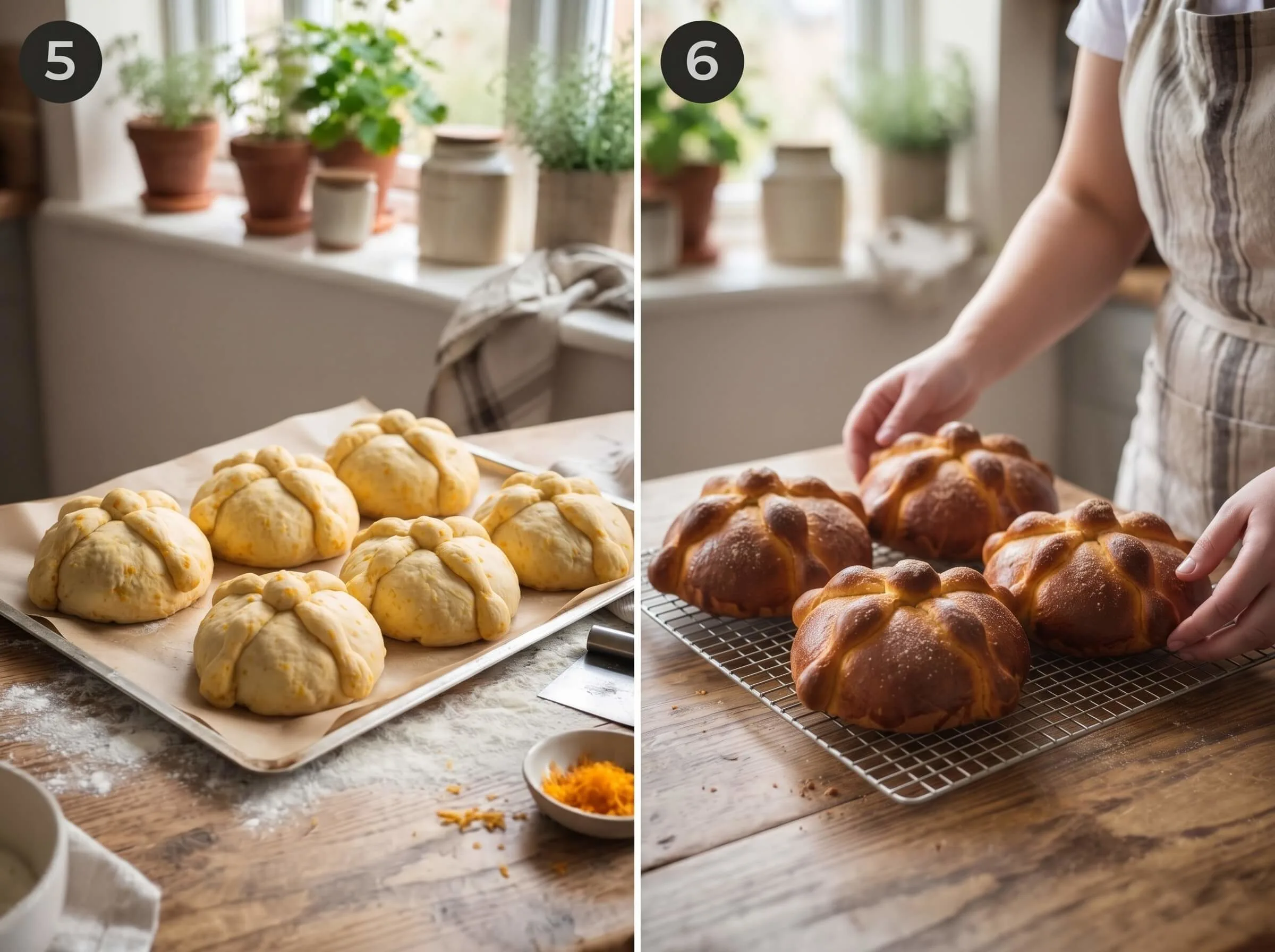
- Place the shaped loaves on parchment-lined baking sheets and let them rise again, uncovered, for about 45 minutes to an hour, until puffy.
- Bake at 350°F (175°C) for 22-25 minutes, until the loaves are golden brown and sound hollow when tapped on the bottom.
Finish With Butter and Sugar
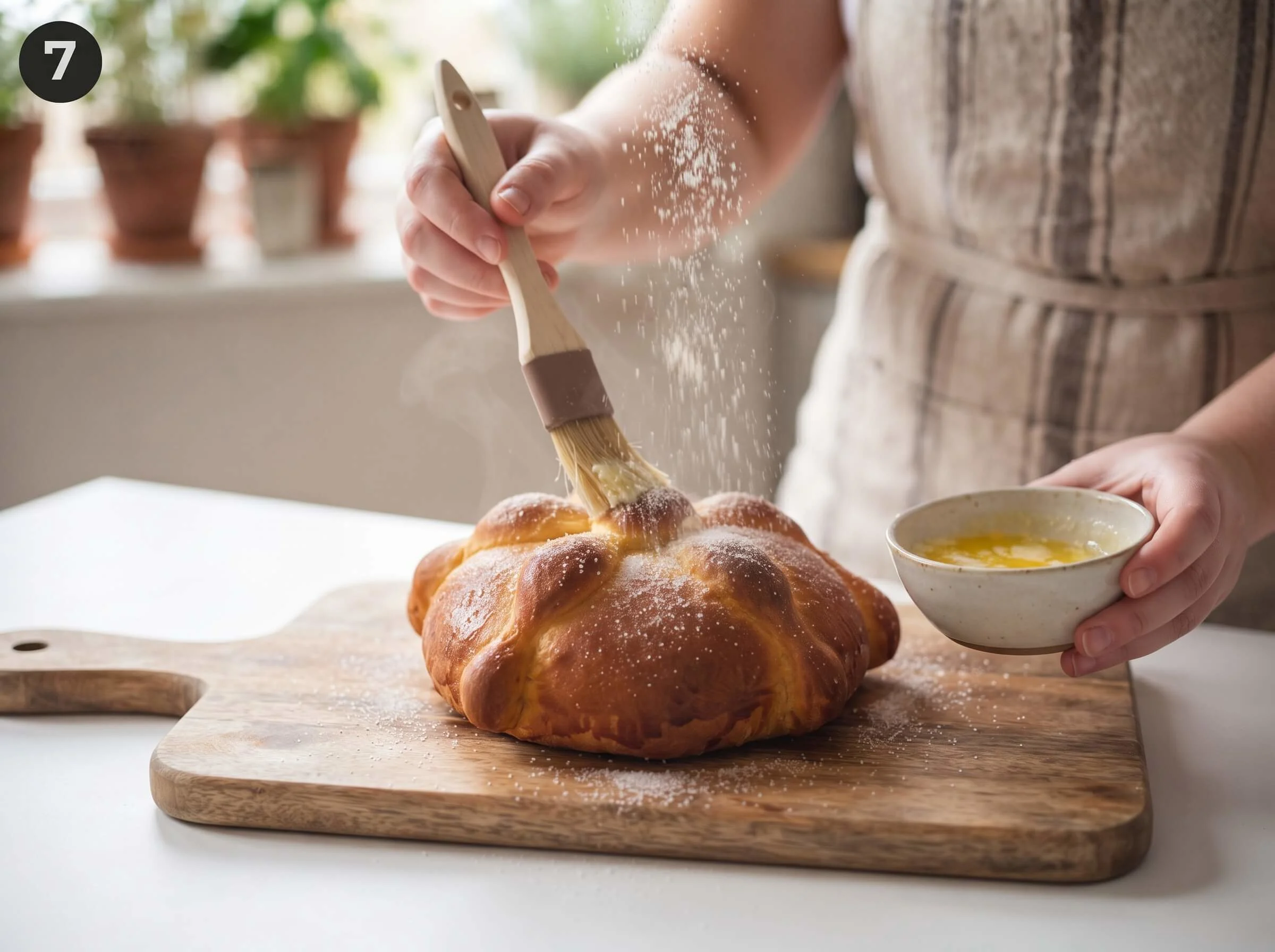
- While the loaves are still warm, brush them generously all over with the melted butter, then sprinkle or roll them in the granulated sugar until fully coated. Let cool slightly before serving.
Notes
- Using fresh orange zest, rather than relying solely on orange blossom water, gives the dough a more pronounced citrus flavor throughout the bread, so don’t skip this even if you’re including the orange blossom water as well.
- Reserving enough dough for the bone decorations before dividing the rest into loaves is important, since it’s easy to accidentally use too much dough for the base loaves and come up short for the decorative pieces.
- Brushing the bread with butter while it’s still warm helps the sugar coating adhere much better than if you wait until the loaves have fully cooled.
- The bone shapes and center ball are meant to be a bit rustic and handmade looking, so don’t worry about making them perfectly uniform, since that imperfection is part of the traditional charm of this bread.
- Leftover pan de muerto keeps well at room temperature in an airtight container for 2-3 days, or can be frozen for up to a month.
Frequently Asked Questions
What does the shape of pan de muerto symbolize?
The round base of the bread is often said to represent the circle of life, while the crossed bone-shaped strips arranged on top symbolize the bones of departed loved ones. The small ball of dough at the center represents either a skull or a heart, depending on regional tradition, tying the bread’s shape directly into the themes of Día de los Muertos.
What’s the history behind pan de muerto?
Pan de muerto history blends pre-Hispanic Indigenous traditions with Spanish colonial influence, evolving over centuries into the bread recognized today. It’s traditionally baked specifically for Día de los Muertos and placed on ofrendas, or altars, as an offering meant to welcome back the spirits of deceased loved ones during the celebration.
Can I make pan de muertos without orange blossom water?
Yes, while orange blossom water adds a distinct floral note, it’s optional in this recipe. Using a generous amount of fresh orange zest alone will still give the bread a noticeably citrusy flavor, even without the orange blossom water.
Why didn’t my bone decorations hold their shape during baking?
This can happen if the bone pieces are attached too loosely to the base loaf, or if the dough was overproofed before baking, causing the decorations to spread or lose definition. Pressing the bone shapes firmly onto the loaf before the final rise helps them adhere and hold their shape better in the oven.
Can I prepare this recipe for pan de los muertos ahead of time?
Yes, the dough can be made a day in advance and left to do its first rise slowly in the refrigerator overnight. Bring it to room temperature before shaping into loaves and continuing with the rest of the recipe as written.
Why is my pan de muerto dense rather than light and fluffy?
This usually comes down to under-proofing at one of the rising stages, or using yeast that’s no longer fully active. Make sure your yeast is fresh, and allow both rises the full recommended time rather than rushing through them.
Can I freeze pan de muerto after baking?
Yes, this bread freezes well for up to a month when stored in an airtight, freezer-safe container or bag. Thaw at room temperature and warm briefly in the oven to help refresh the texture before serving.
Is pan de muerto meant to be eaten, or is it just decorative for the ofrenda?
It’s absolutely meant to be eaten. While a loaf is often placed on the ofrenda as an offering, pan de muerto is also enjoyed by families during Día de los Muertos celebrations, typically alongside coffee or Mexican hot chocolate.
How long does pan de muerto keep after baking?
Stored at room temperature in an airtight container, this bread stays fresh for about 2-3 days. For longer storage, freezing is the better option, since the bread tends to dry out faster at room temperature than most other baked goods.
Twists & Ideas
You Can Add
A sprinkle of ground cinnamon or anise seed mixed into the dough adds a subtle warm spice that complements the citrus flavor throughout the bread.
A light glaze made from powdered sugar and orange juice, brushed over the loaves instead of the butter and sugar coating, adds a slightly different, glossier finish.
Colored sugar sprinkled over the finished loaves adds a festive, decorative touch appropriate for Día de los Muertos celebrations.
A small amount of anise extract added to the dough alongside the vanilla gives the bread a more traditional, slightly licorice-like flavor found in some regional versions.
You Can Replace
Orange extract can replace orange blossom water in a pinch, giving a more straightforward citrus flavor without the floral notes.
Whole wheat flour can replace part of the all-purpose flour for a heartier, slightly denser version of this pan de muerto recipe.
A cinnamon-sugar coating can replace the plain sugar coating for a warmer, spiced finish on the outside of the bread.
Individual smaller loaves can replace the two larger loaves called for here, adjusting the bake time down slightly to account for the smaller size.
Recipes You May Enjoy
- Focaccia Recipe
- Mango Sago Recipe
- Milk Bread Recipe
- Apple Cinnamon Bread Recipe
- Arroz con Leche
- Conchas Recipe
- Dulce de Leche Recipe
- Mexican Flan
- Gluten Free Sourdough Bread
- Cinnamon Roll Cookies
- Chocolate Chip Pecan Cookies with a Raisin Twist
A Tradition Worth Preserving in Your Own Kitchen
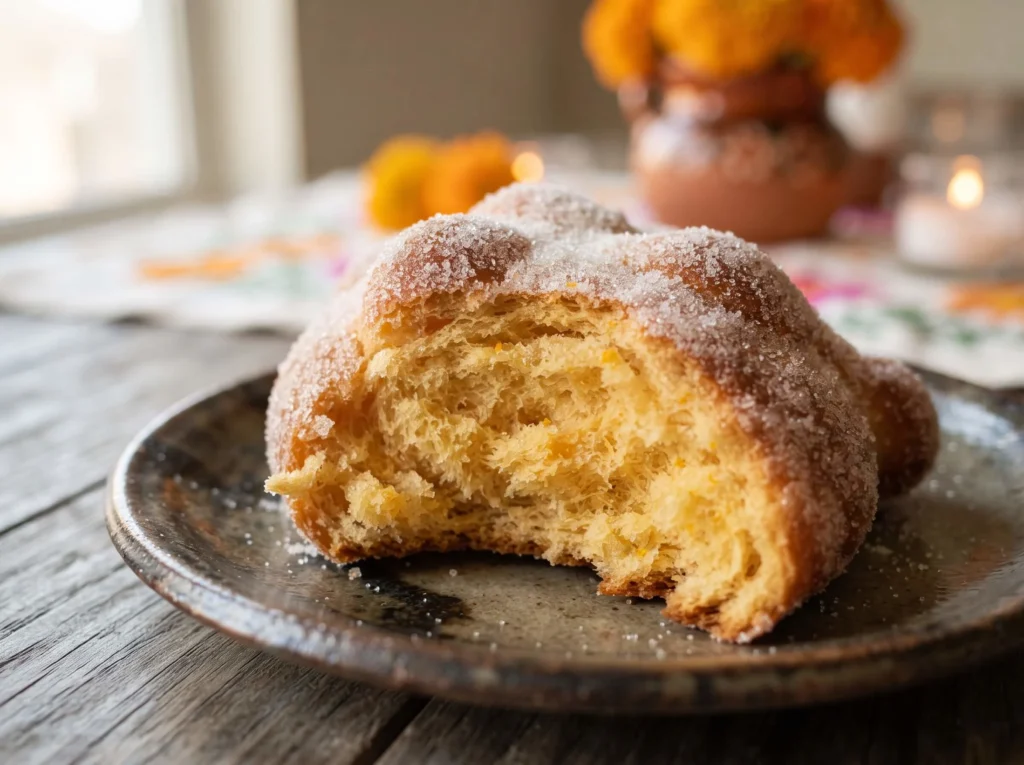
Pan de muerto is more than just a bread, it’s a meaningful part of Día de los Muertos traditions, carrying centuries of history and symbolism in every loaf. Between the soft, orange-scented crumb and the carefully shaped bone decorations on top, this bread manages to be both a beautiful tribute and a genuinely delicious treat at the same time.
Whether you’re making this pan de muerto recipe to honor a loved one during Día de los Muertos, exploring this recipe for pan de los muertos for the first time out of curiosity, or simply want to understand more about pan de muerto history while baking something meaningful, this recipe walks through every step needed to recreate that same soft texture and iconic design at home. Once you’ve made a batch, it’s easy to understand why this bread has remained such a cherished part of Mexican culture for generations.
Tried This Recipe! Leave a Review?
There are no reviews yet. Be the first one to write one.