Bolognese Recipe
Table of Contents
What Slow Simmering Does to a Humble Meat Sauce
A good bolognese is a lesson in patience. It starts with a finely diced vegetable base and ground beef, and over a couple of hours of gentle simmering it turns into a thick, deeply savory sauce that clings to every strand of pasta. This bolognese recipe walks through the full process, from building the base to finishing the sauce, so the result tastes like it came from a kitchen in Bologna and not from a jar.
Bologna sits in Emilia-Romagna, a region of northern Italy famous for its rich food traditions, and the sauce that carries the city’s name has been refined there over generations. Smithsonian Magazine has covered how many dishes people think of as simply “Italian” are really regional specialties with very specific local rules. Bolognese is a perfect example, since the classic version is quite different from the tomato-heavy meat sauces served in many restaurants abroad.
If you’ve ever wondered what bolognese actually is, the answer is a slow-cooked ragù, which is a meat-based sauce, where the meat is the star and the tomato plays a supporting role. Food & Wine has written about how the official version registered by Bologna’s culinary institutions in the early 1980s includes beef, a soffritto of onion, carrot, and celery, tomato, and milk, with the sauce traditionally served over fresh tagliatelle rather than spaghetti.
The soffritto is where the flavor starts. Serious Eats has explained that cooking finely diced aromatics slowly in fat, without letting them brown hard, coaxes out their sweetness and builds a base that the rest of the sauce leans on. Rushing this step is one of the most common reasons homemade sauces taste flat.
Milk is the ingredient that surprises most people, and Bon Appétit has noted that adding it to the meat before the tomato goes in helps tenderize the beef and softens the acidity of the tomatoes, giving the finished sauce a rounder, more mellow flavor.
Time does the rest of the work. The Kitchn has written about how long, low simmering breaks down the connective tissue in ground meat and lets the flavors meld, which is why a sauce that simmers for two hours tastes dramatically better than one that’s ready in thirty minutes.
Browning matters too. America’s Test Kitchen has talked at length about how properly browning meat and cooking tomato paste until it darkens adds layers of savory depth that you can’t get from simply stirring ingredients into a pot, which is why this recipe treats those two steps seriously.
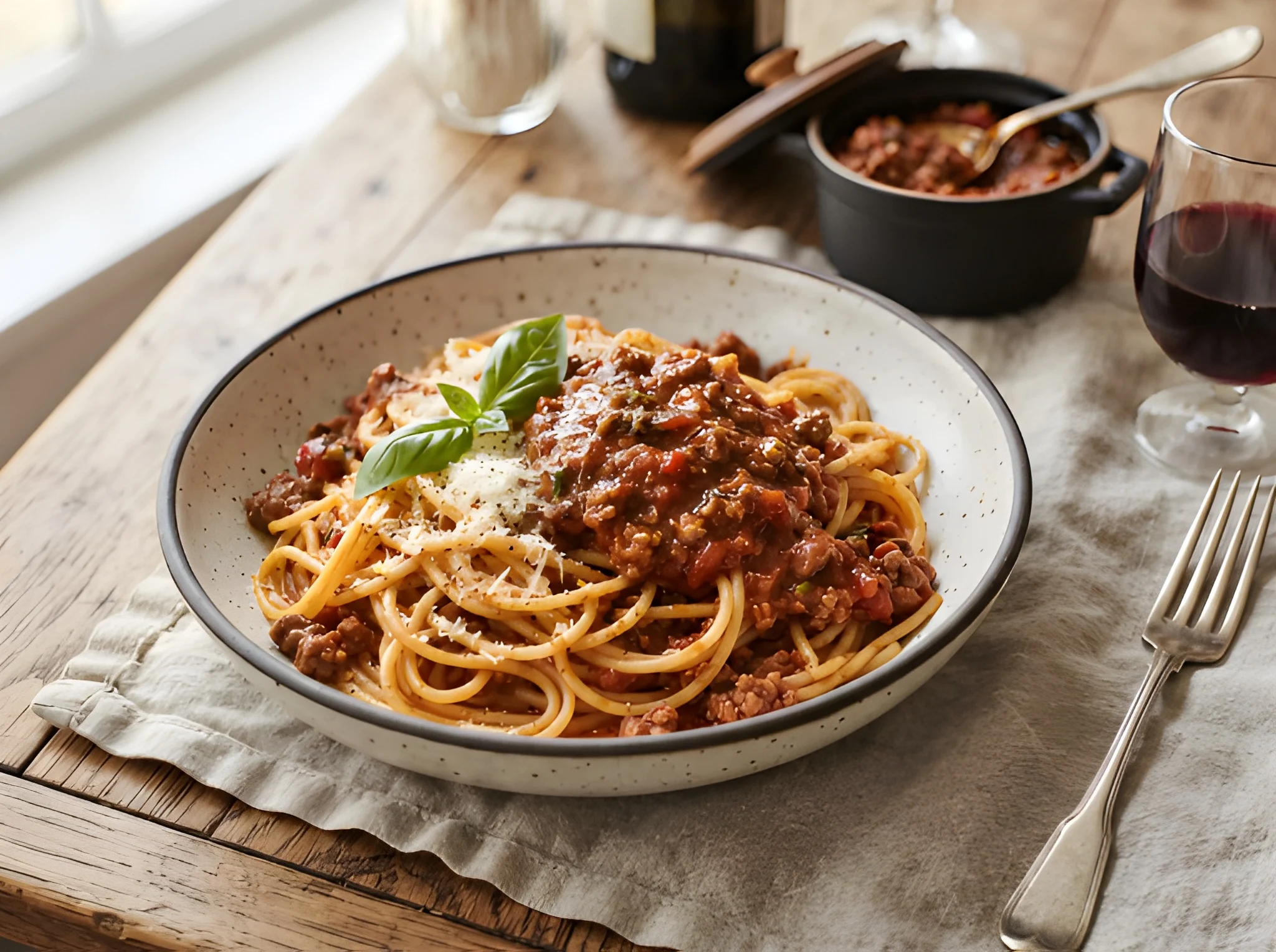
About that spaghetti: tagliatelle is the traditional pairing, because the wide, rough ribbons hold a thick sauce better than thin strands, but spaghetti bolognese has become a worldwide favorite in its own right. The Spruce Eats has covered how the dish traveled abroad and adapted, and honestly, spaghetti works well as long as you toss it with the sauce rather than just spooning sauce on top.
On the nutrition side, cooked tomatoes are a good source of lycopene, and Healthline has written about how cooking tomatoes makes that compound easier for the body to absorb, one small bonus of a long-simmered sauce built around them.
This version skips pancetta and wine, which many traditional recipes include, and builds flavor from the soffritto, browned beef, tomato paste, and beef broth instead. Whether you’re looking for how to make bolognese sauce for the first time or a traditional spaghetti Bolognese recipe to make your own, the steps below cover everything you need.
Why You’ll Love This Recipe
This bolognese recipe focuses on technique, so the sauce ends up deeply savory and well balanced, with real depth of flavor rather than a flat tomato taste.
The sauce is almost entirely hands-off once it’s simmering, which makes it a great project for a slow Sunday and a rewarding one, since a single batch makes enough for several meals.
It freezes beautifully and tastes even better the next day, so cooking a big pot once gives you easy dinners for days.
What to Serve With Bolognese
Tagliatelle is the classic pairing, and fresh or dried egg tagliatelle holds the thick sauce better than almost any other shape.
Spaghetti bolognese is the version most people know, and it works well as long as you toss the pasta directly in the sauce before plating.
Freshly grated parmesan and a simple green salad with a sharp vinaigrette cut through the richness of the sauce, and warm crusty bread is perfect for mopping up what’s left on the plate.
How This Bolognese Recipe Comes Together
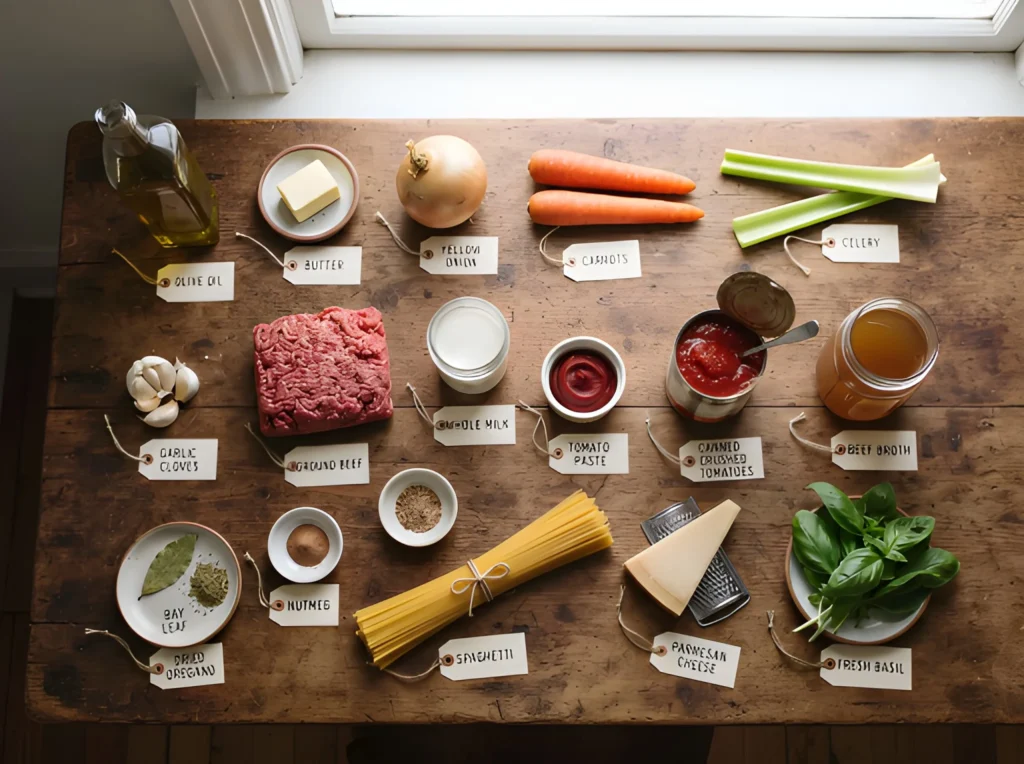
This recipe is built in four stages: slowly cooking a finely diced soffritto, browning the beef and adding milk, building the sauce with tomato, broth, and seasonings, then simmering it low and slow until thick and glossy before tossing it with pasta. Here’s everything you’ll need.
Bolognese Recipe
Bolognese Recipe

Equipment
- Large heavy-bottomed pot or Dutch oven
- Wooden spoon
- large pot for pasta
- cheese grater
Ingredients
Soffritto
- 2 tbsp olive oil
- 2 tbsp unsalted butter
- 1 large yellow onion very finely diced
- 2 medium carrots very finely diced
- 2 celery stalks very finely diced
- 3 garlic cloves minced
Meat Sauce
- 1½ lbs ground beef 80/20
- 1 cup whole milk
- 3 tbsp tomato paste
- 1 can 28 oz crushed tomatoes
- 1 cup beef broth
- 1 bay leaf
- 1 tsp dried oregano
- ½ tsp ground nutmeg
- 1 tsp salt plus more to taste
- ½ tsp black pepper
For Serving
- 1 lb spaghetti or tagliatelle
- Freshly grated parmesan cheese
- Fresh basil or parsley for garnish
Instructions
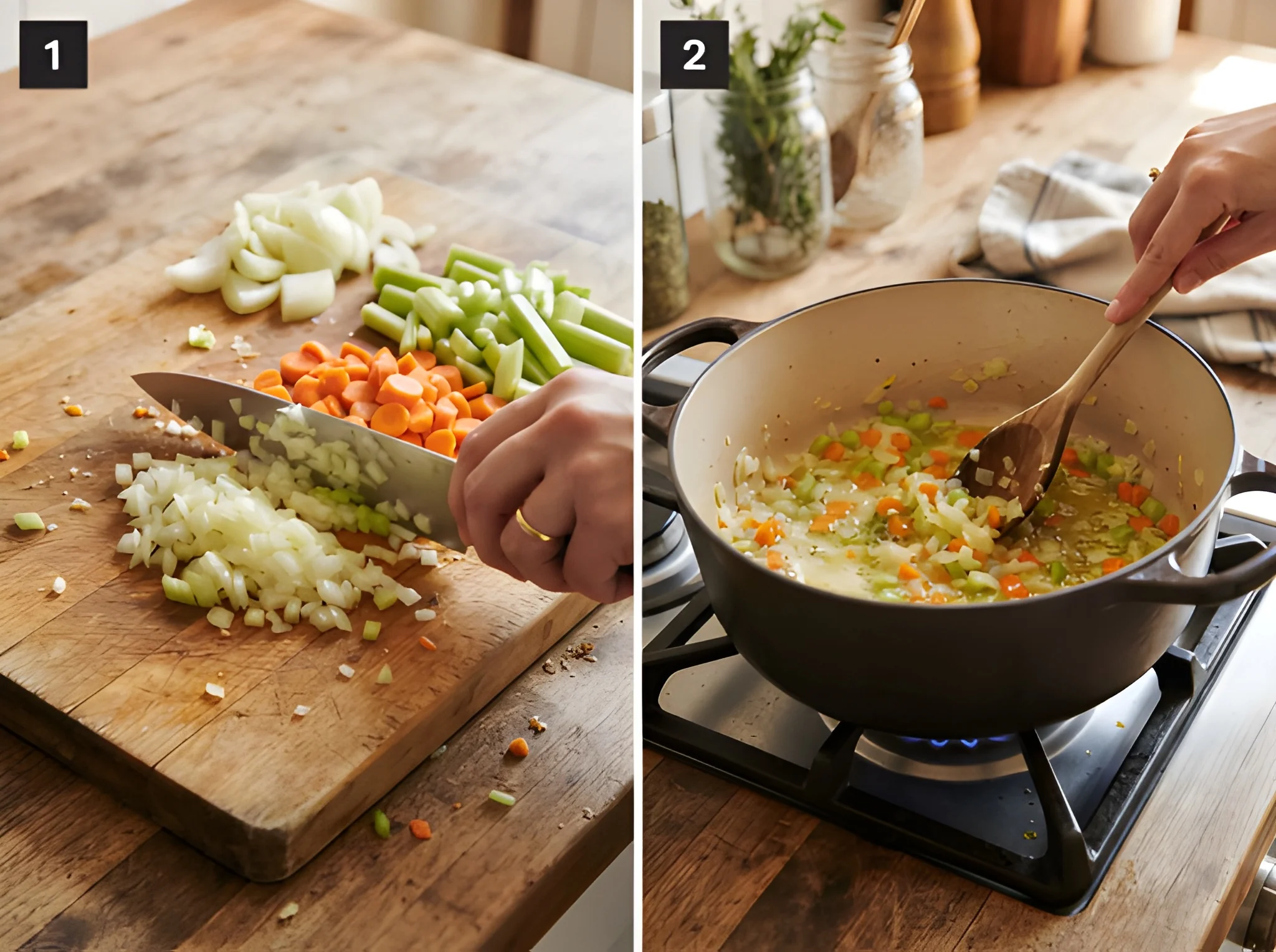
Build the Soffritto
- Finely dice the onion, carrots, and celery into pieces no larger than a pea, using a food processor if you like to speed this up, since smaller pieces melt into the sauce instead of leaving chunky bits.
- Heat the olive oil and butter in a large heavy-bottomed pot over medium-low heat. Add the diced vegetables and a pinch of salt, then cook, stirring occasionally, for 10-12 minutes, until they’re soft, sweet, and translucent but not browned. Add the garlic and cook for another minute until fragrant.
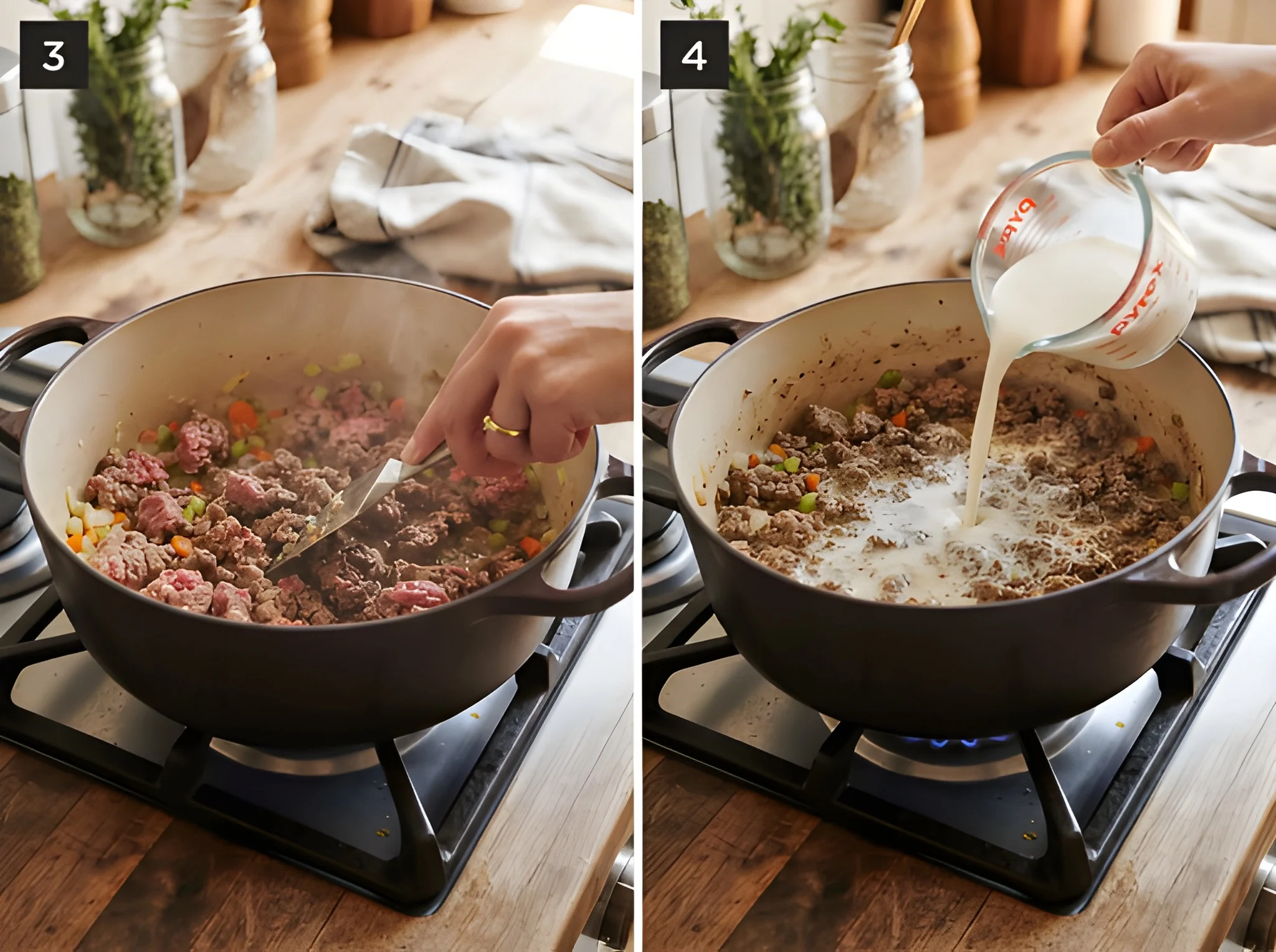
Brown the Beef and Add the Milk
- Raise the heat to medium-high and add the ground beef, breaking it up into small pieces with a wooden spoon. Cook for 8-10 minutes, stirring now and then, until the meat has lost its pink color and any liquid has cooked off, letting it pick up a little brown color on the bottom of the pot.
- Pour in the milk and let it simmer, stirring occasionally, for 8-10 minutes, until it has almost completely evaporated and the meat looks creamy and tender. This step softens the beef and mellows the acidity of the tomato that comes next.
Build the Sauce
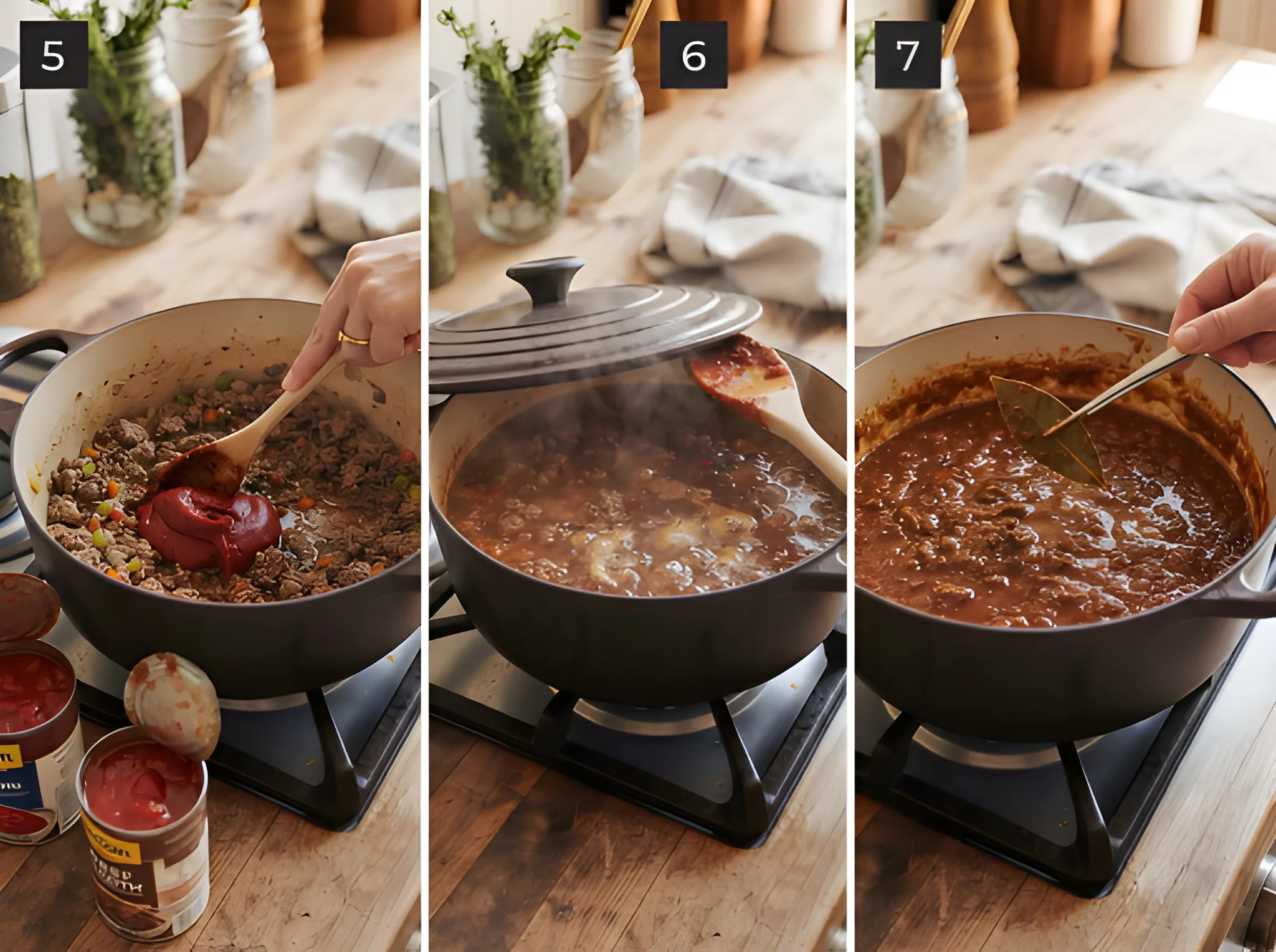
- Stir in the tomato paste and cook for 2-3 minutes, stirring constantly, until it darkens slightly in color and smells sweet and concentrated. Add the crushed tomatoes, beef broth, bay leaf, oregano, nutmeg, salt, and pepper, stirring well to combine and scraping up any browned bits from the bottom of the pot.
Simmer Low and Slow
- Bring the sauce to a gentle bubble, then reduce the heat to the lowest setting, cover the pot partly with a lid, and simmer for 1½ to 2 hours, stirring every 15-20 minutes. Add a splash of water or broth if the sauce looks like it’s drying out. The sauce is done when it’s thick, glossy, and deep brownish-red, with a thin layer of fat rising to the surface.
- Remove the bay leaf, then taste and adjust the seasoning with more salt or pepper as needed.
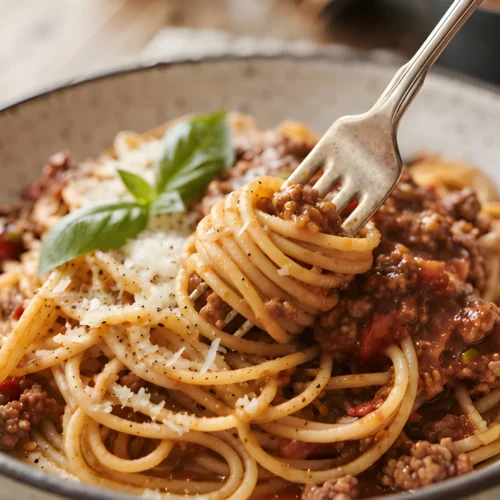
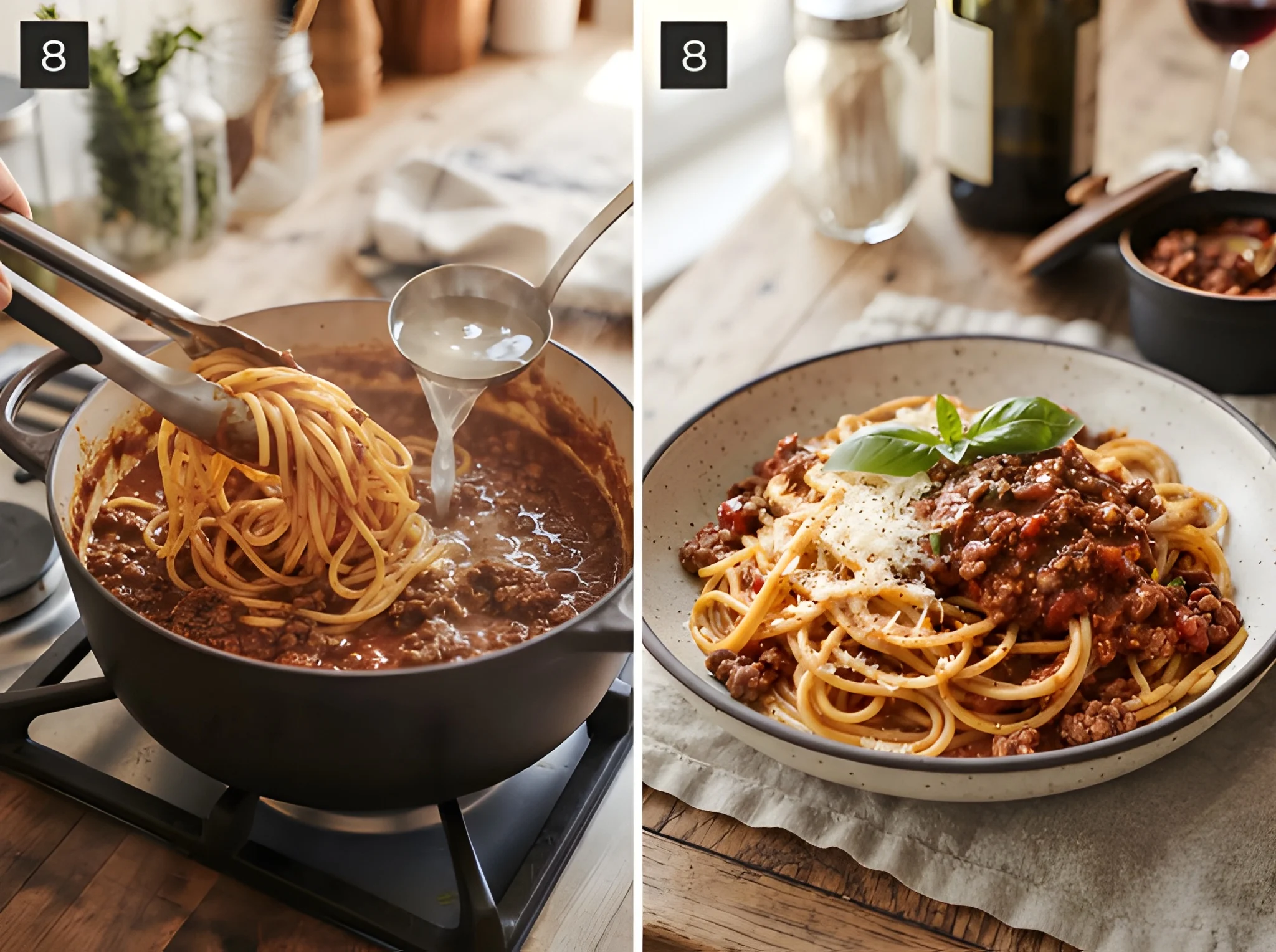
- Cook the pasta in a large pot of well-salted boiling water until just al dente, reserving about ½ cup of the pasta water before draining. Add the drained pasta directly to the pot of sauce along with a splash of pasta water, tossing over low heat for a minute until every strand is coated. Serve immediately, topped with freshly grated parmesan and fresh basil or parsley.
Notes
- Finely dicing the soffritto vegetables is one of the most important prep steps, since larger pieces stay distinct in the sauce while very small ones dissolve and give it body.
- Cooking the soffritto slowly over medium-low heat, rather than browning it, keeps the flavor sweet and mellow. Adding the milk before the tomato is a traditional technique that helps tenderize the beef and softens the acidity, so don’t skip it even though it feels unusual.
- Cooking the tomato paste until it darkens deepens the savory flavor of the whole sauce.
- Simmer the sauce as gently as possible, with just an occasional bubble breaking the surface, and don’t let it boil hard or scorch on the bottom.
- Tossing the cooked pasta in the sauce for a minute before serving helps the sauce cling to every strand instead of sliding off.
- The sauce can be stored in the refrigerator for up to 5 days or frozen for up to 3 months.
Frequently Asked Questions
What is bolognese?
Bolognese is a slow-cooked meat sauce, called ragù alla bolognese in Italian, that originated in the city of Bologna in northern Italy. It’s built from a base of finely diced onion, carrot, and celery, with ground meat, a little tomato, and milk, all simmered for a long time until thick and rich. It’s very different from a quick tomato sauce with some meat added.
What’s in bolognese sauce?
A classic bolognese includes ground beef, a soffritto of onion, carrot, and celery, tomato paste or crushed tomatoes, milk, and a cooking liquid. Many traditional versions also add pancetta and white or red wine. This recipe leaves out both and uses beef broth in place of wine, which still gives the sauce a savory depth and keeps the ingredient list simple.
Is spaghetti bolognese authentic Italian?
Not exactly. In Bologna, the sauce is traditionally served with fresh egg tagliatelle, since wide ribbons hold a thick sauce better, and it’s also used in lasagna. Spaghetti bolognese is a popular adaptation that developed abroad, and it’s perfectly tasty as long as you toss the pasta in the sauce.
Why does traditional bolognese have milk in it?
Milk helps tenderize the beef as it cooks and softens the sharp acidity of the tomato, giving the sauce a rounder, creamier, more balanced flavor. It’s cooked into the meat until it nearly evaporates, so the finished sauce doesn’t taste dairy-heavy.
How long should I simmer bolognese sauce?
At least 1½ hours, and up to 3 hours if you have the time. Shorter simmering will still give you a decent sauce, but the long, slow cook is what breaks down the meat and melds the flavors into something deeply rich.
Why is my bolognese watery?
It usually just needs more time. Simmer it uncovered for the last 20-30 minutes so the extra liquid can evaporate, and make sure the heat is high enough to keep a gentle bubble going. Using a heavy-bottomed pot also helps the sauce reduce evenly.
Why does my bolognese taste too acidic?
Cooking the tomato paste until it darkens, adding the milk, and simmering for the full time all reduce acidity. If it still tastes sharp, a small pinch of sugar or a knob of butter stirred in at the end can balance it.
Can I make bolognese sauce ahead of time?
Yes, and it’s even better the next day, since the flavors keep melding as it rests. Make it up to 3-4 days ahead, store it in the refrigerator, and reheat it gently with a splash of water or broth.
Can I freeze bolognese sauce?
Yes, it freezes beautifully and can be stored in the freezer for up to 3 months. Cool it completely, portion it into airtight containers, and thaw it overnight in the refrigerator before reheating gently on the stove.
Can I use a different type of ground meat?
Yes, a mix of ground beef and ground veal is common in Italy, and ground turkey or lamb can work too, though the flavor will change. Using ground beef with around 20% fat gives the best flavor and texture.
Can I make this in a slow cooker?
Yes. Do the soffritto, beef browning, milk, and tomato paste steps on the stovetop, then transfer everything to a slow cooker and cook on low for 6-8 hours, which gives you the same deep flavor with less supervision.
Twists & Ideas
You Can Add
Finely chopped mushrooms cooked down with the soffritto add an earthy depth and a bit of extra umami without changing the character of the sauce.
A parmesan rind dropped into the pot while the sauce simmers adds a savory, slightly nutty richness, and you can fish it out before serving.
A small spoonful of chopped chicken livers, browned with the beef, is a traditional addition in some Italian homes that adds a subtle richness.
A pinch of red pepper flakes stirred in with the oregano gives the sauce a gentle background heat.
You Can Replace
Ground veal can replace part of the ground beef for a more delicate, tender sauce, which is common in traditional Italian versions.
Tagliatelle, pappardelle, or rigatoni can replace spaghetti, and the wide, rough shapes catch the thick sauce especially well.
Fresh tomatoes, peeled and chopped, can replace canned crushed tomatoes in summer, though you’ll want to simmer the sauce a bit longer to cook off the extra water.
Heavy cream can replace whole milk for a slightly richer, silkier finish to the sauce.
Recipes You May Enjoy
- Lasagna Recipe
- Pad Thai Recipe
- Easy Shrimp Scampi Recipe
- Chicken Piccata Recipe
- Jerk Chicken Pasta
- Cajun Shrimp Pasta
- Mongolian Ground Beef Recipe
A Sauce Worth Making a Big Batch Of
Bolognese rewards the cook who’s willing to slow down. Nothing in the process is hard, but each step, from the gentle soffritto to the patient simmer, adds a layer of flavor that shortcuts simply can’t reproduce. The finished sauce is rich, glossy, and deeply savory, and it turns a simple bowl of pasta into a real meal.
Whether you’re following this recipe to learn how to make bolognese sauce for the first time, answering the question of what bolognese really is, or looking for a traditional spaghetti Bolognese recipe to cook for family, the technique stays the same: dice finely, cook slowly, and give it time. Make a double batch, freeze half, and you’ll have a head start on weeknight dinners for weeks.
Tried This Recipe? Leave a Review!
There are no reviews yet. Be the first one to write one.