Pad Kra Pao Recipe
Table of Contents
Thailand’s Everyday Stir-Fry, Built for Speed and Bold Flavor
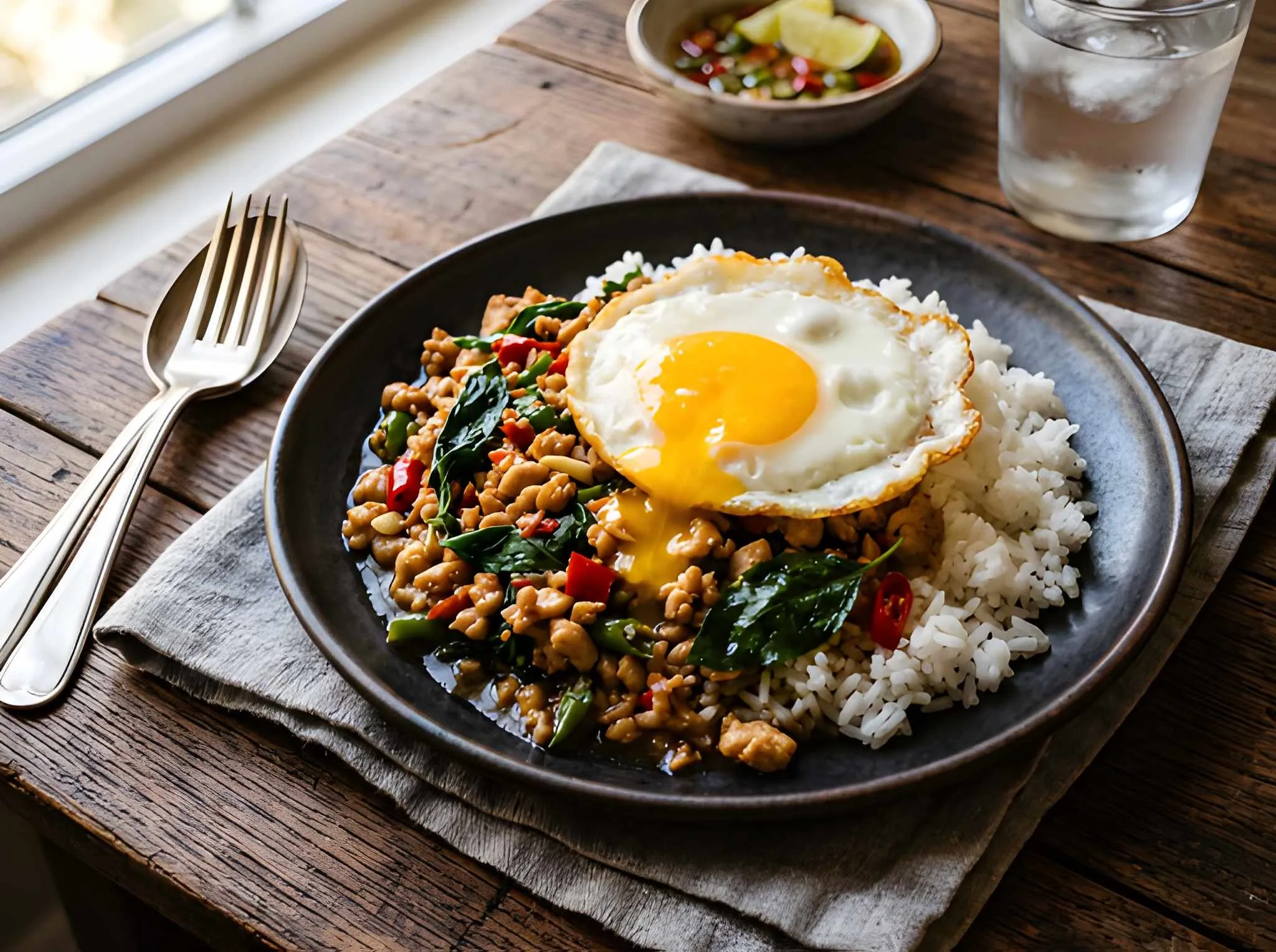
Pad kra pao is one of the most commonly eaten dishes across Thailand, a quick, intensely flavorful stir-fry built around ground meat, Thai holy basil, garlic, and chilies, typically served over rice with a fried egg on top. This pad kra pao recipe walks through that classic technique, delivering a dish that comes together in well under 20 minutes.
Unlike more elaborate or internationally famous Thai dishes, is considered genuine everyday street food, something Thai people eat regularly rather than reserving for special occasions, and Bon Appétit has written about how dishes like this one reflect the fast-paced, wok-based cooking found at street food stalls throughout Thailand, where speed and bold flavor matter more than elaborate presentation.
The name itself reveals the dish’s main ingredient: “kra pao” means Thai holy basil, a variety that differs significantly from the sweet basil typically found in Western grocery stores. Serious Eats has explained that Thai holy basil has a spicier, more peppery, almost clove-like flavor compared to sweet basil, and substituting one for the other does change the final flavor of the dish, even though sweet basil or Thai basil can work in a pinch when holy basil isn’t available.
Getting the proper savory depth in pad kra pao relies on a sauce built from a combination of soy sauce, oyster sauce, and fish sauce, and The Kitchn has pointed out that layering these three sauces together, rather than relying on just one, creates a more complex umami backbone than any single sauce could achieve on its own.
This dish is also notably versatile in terms of protein, and both a pad kra pao chicken version using ground or finely chopped chicken, and a beef version using ground beef, are extremely common throughout Thailand, something The Spruce Eats has covered when discussing how adaptable this stir-fry base is across different proteins, including a shrimp variation that swaps in quickly cooked shrimp for an equally fast seafood option.
Whether you’re making this with chicken, beef, or shrimp, this recipe delivers that same spicy, garlicky, intensely savory flavor that’s made pad kra pao a daily staple across Thailand.
Why You’ll Love This Recipe
This pad kra pao recipe comes together in under 20 minutes, making it a genuinely fast weeknight dinner that still delivers bold, restaurant-quality flavor.
The combination of garlic, chilies, and Thai basil creates an intensely savory, aromatic stir-fry that’s hard to replicate with a milder dish.
This recipe is easily adapted across proteins, whether you prefer the classic pad kra pao chicken, a heartier pad kra pao beef, or a quick-cooking pad kra pao shrimp version.
What to Serve With Pad Kra Pao
Steamed jasmine rice is the essential pairing here, soaking up the savory sauce and balancing out the dish’s spice.
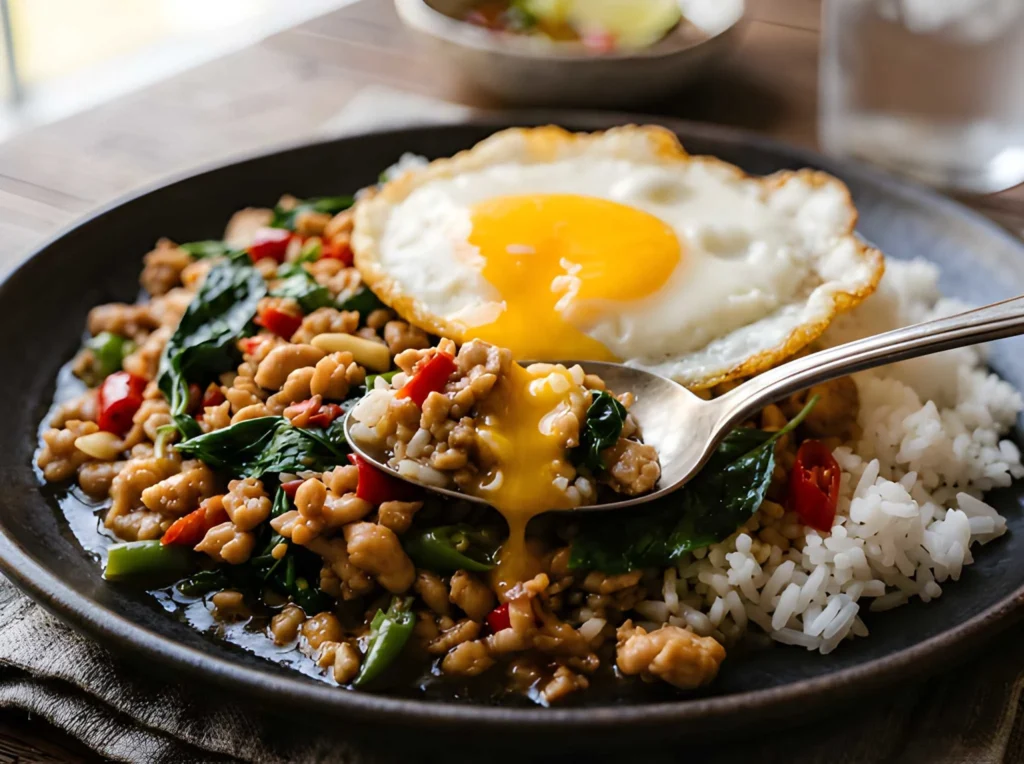
A crispy fried egg served on top, with a runny yolk, is the traditional finishing touch that many people consider essential to this dish.
A side of sliced cucumber offers a cool, refreshing contrast to the spicy, savory stir-fry.
How This Pad Kra Pao Recipe Comes Together
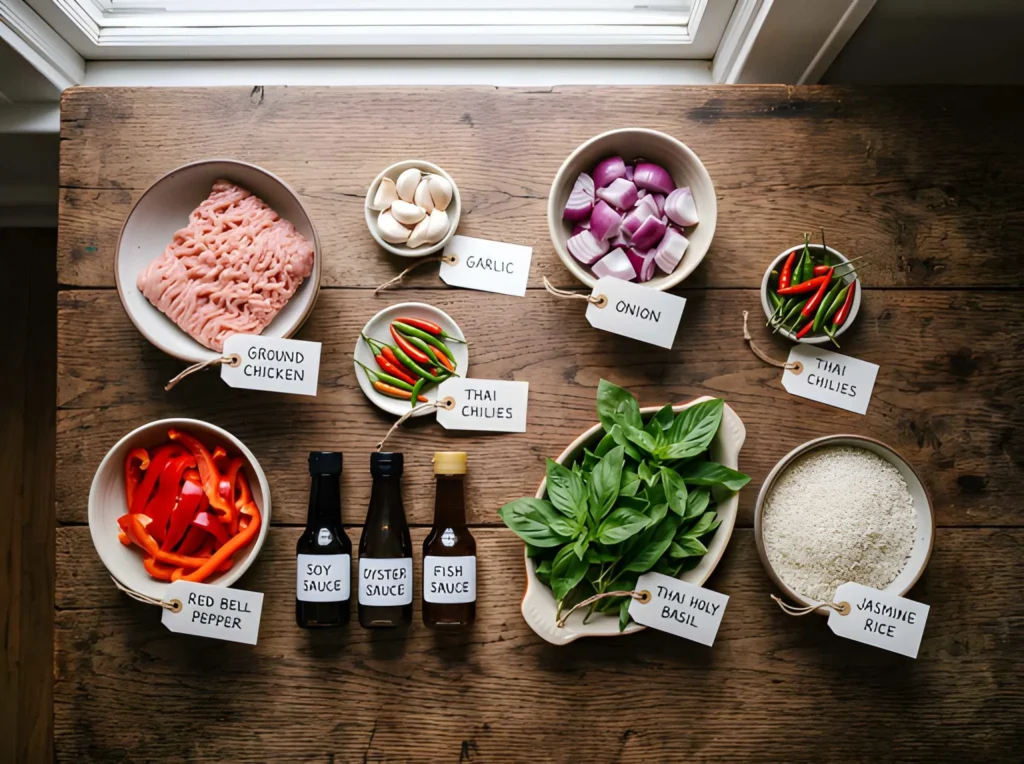
This recipe comes together in one pan, starting with pounding or finely chopping garlic and chilies together, stir-frying the protein over high heat, then tossing everything with the sauce and fresh basil right at the end so the basil stays vibrant rather than wilting completely. Here’s everything you’ll need.
Pad Kra Pao Recipe
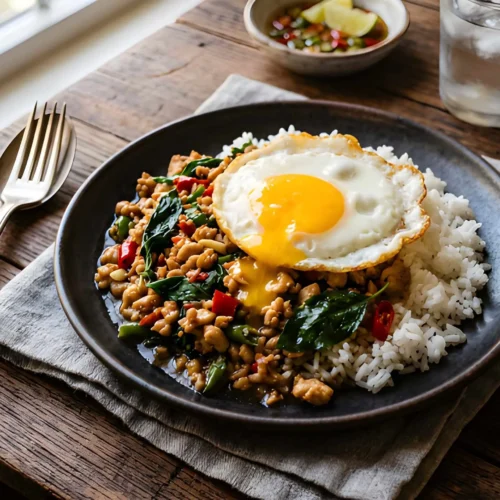
Pad Kra Pao Recipe

Equipment
- Mortar and pestle (or knife)
- Large wok or skillet
- small bowl
Ingredients
- 4-6 Thai bird’s eye chilies to taste
- 4 garlic cloves
- 2 tbsp vegetable oil
- 1 lb ground chicken ground beef, or peeled shrimp
- 1 small onion sliced
- 1 red bell pepper sliced (optional)
- 2 tbsp soy sauce
- 1 tbsp oyster sauce
- 1 tbsp fish sauce
- 1 tsp sugar
- 1 cup Thai holy basil leaves packed
- Steamed jasmine rice for serving
- Fried eggs for serving, optional
Instructions
Prepare the Garlic and Chilies
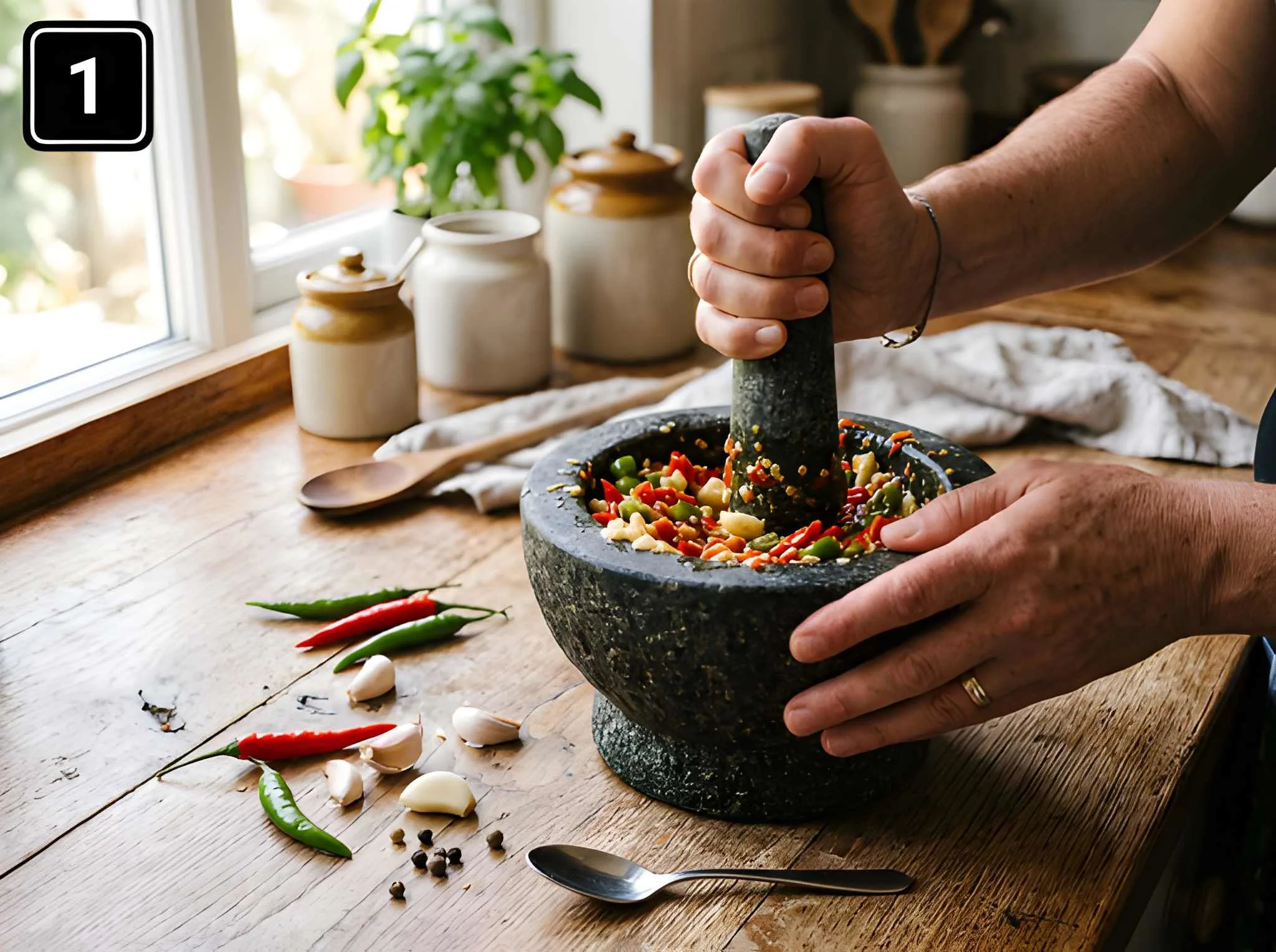
- Using a mortar and pestle, pound the garlic and chilies together into a coarse paste, or finely mince them together with a knife if you don’t have a mortar and pestle.
Stir-Fry the Protein
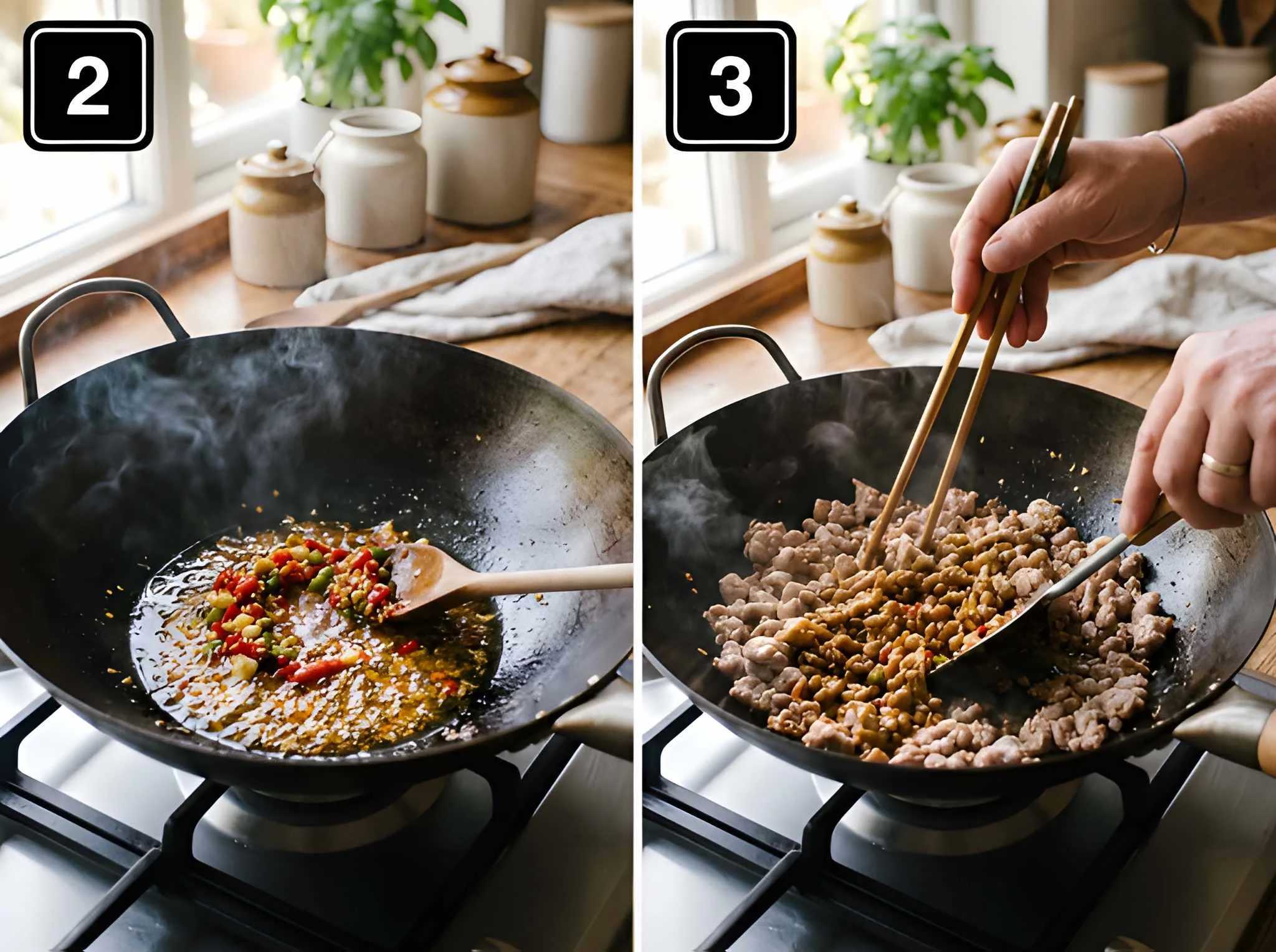
- Warm the vegetable oil in a large wok or skillet over high heat. Add the garlic and chili paste, stirring for about 30 seconds until fragrant.
- Add the ground meat or shrimp, breaking it apart if using ground meat, and stir-fry for 4-5 minutes, until mostly cooked through.
Add Vegetables and Sauce
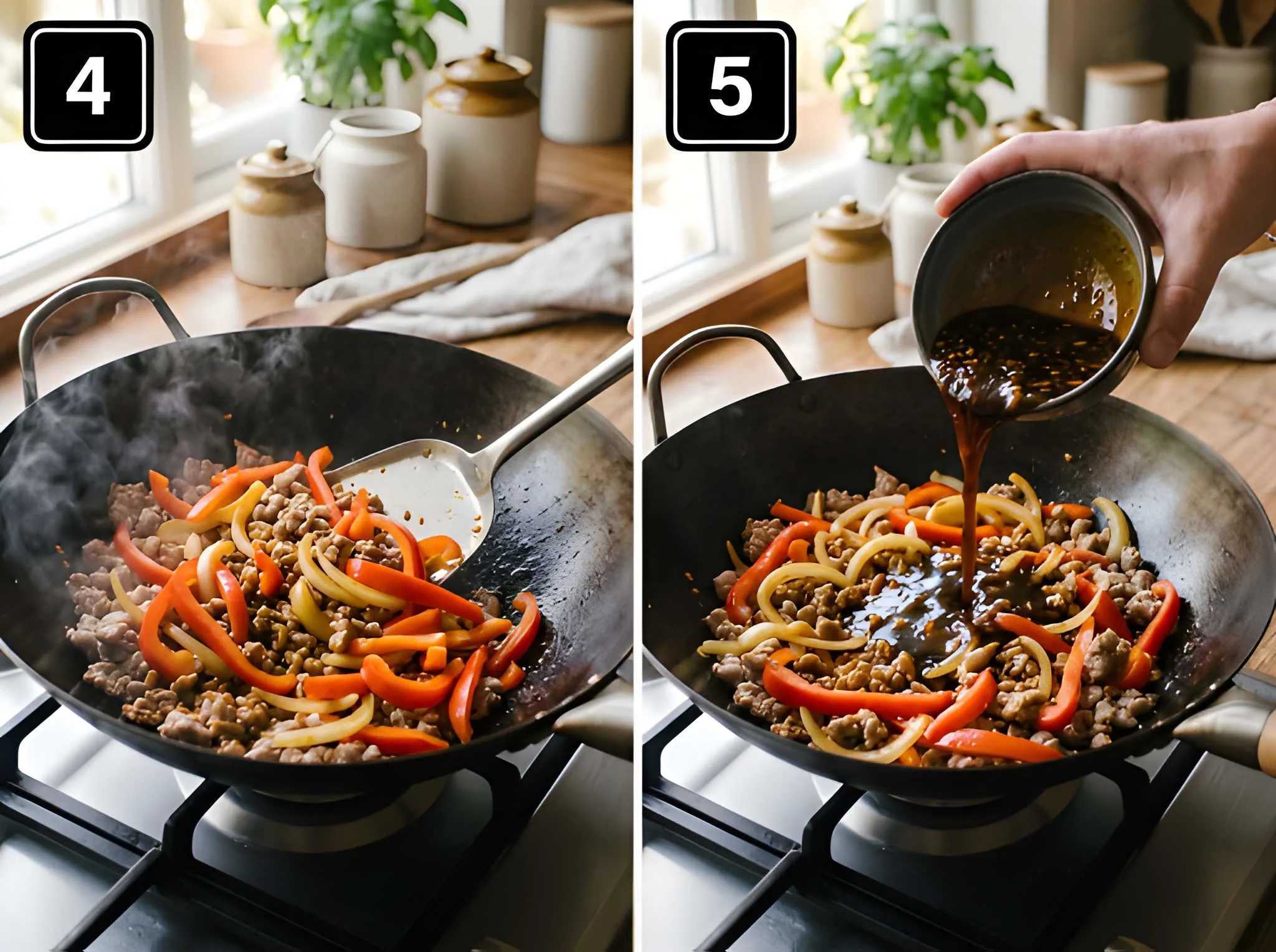
- Add the sliced onion and bell pepper if using, stir-frying for another 2 minutes until just softened.
- In a small bowl, combine the soy sauce, oyster sauce, fish sauce, and sugar, then pour it into the pan, tossing everything together and cooking for another 1-2 minutes.
Add the Basil and Serve
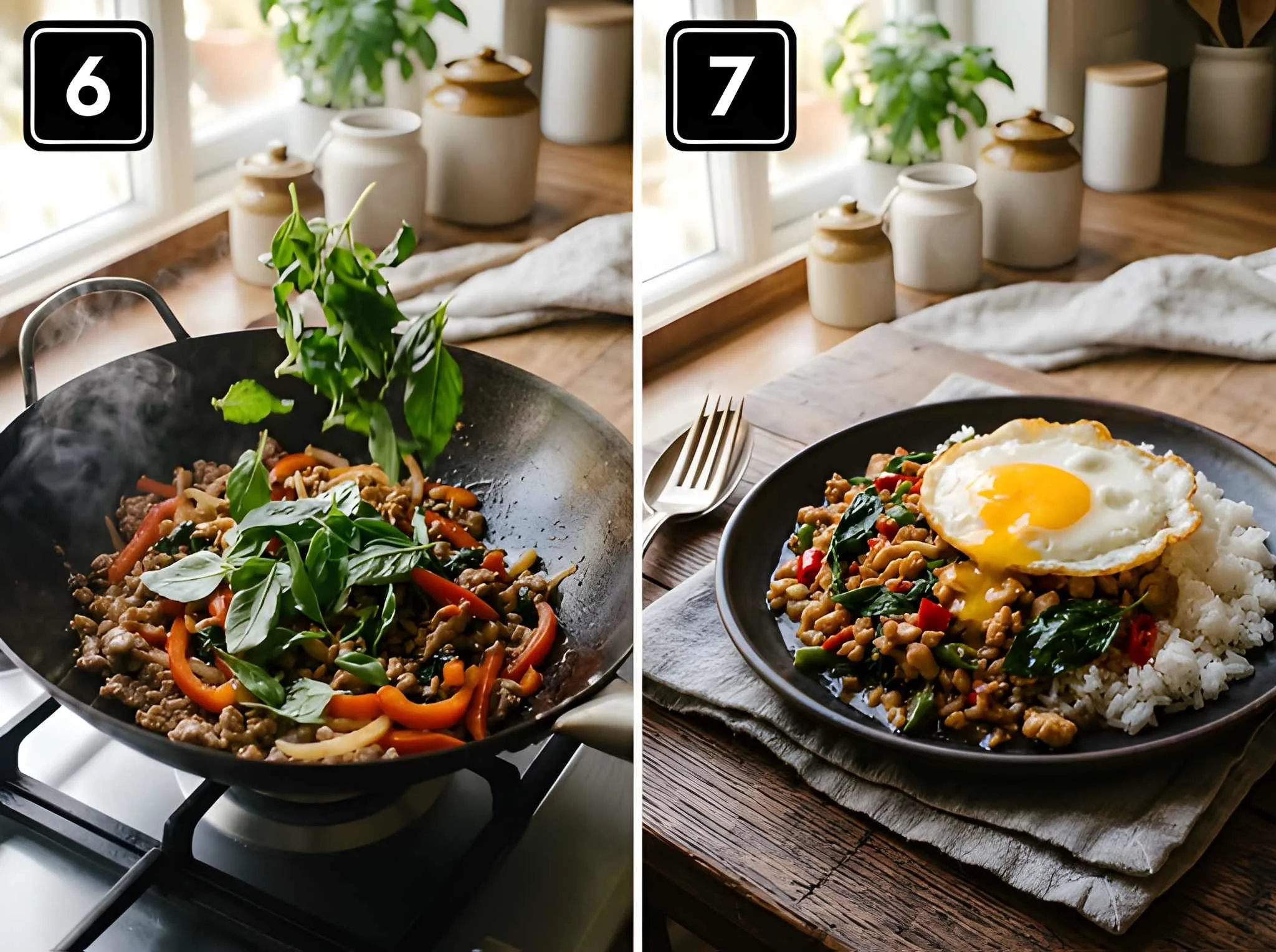
- Remove the pan from heat and stir in the Thai holy basil leaves, tossing just until they wilt slightly from the residual heat, which keeps them vibrant rather than fully cooked down.
- Serve immediately over steamed jasmine rice, topped with a fried egg if desired.
Notes
- Adjusting the number of chilies up or down based on your personal spice tolerance is easy, since this dish is traditionally quite spicy but can be toned down significantly without losing its core flavor.
- Pounding the garlic and chilies together with a mortar and pestle releases more flavor than simply mincing them, though finely chopping with a knife still works reasonably well if that’s not something you have on hand.
- Adding the basil off the heat, rather than cooking it for an extended time, helps preserve its bright color and more pronounced flavor, since overcooked basil tends to turn dark and lose some of its aromatic punch.
- If you can’t find Thai holy basil, Thai basil or even regular sweet basil can be used in a pinch, though the flavor will be noticeably milder and less peppery than the traditional variety.
- This dish is best served immediately while hot, since the basil and overall texture are at their best right after cooking.
Frequently Asked Questions
What are the essential pad kra pao ingredients I need before starting?
At minimum, you’ll need ground meat or shrimp, garlic, Thai bird’s eye chilies, Thai holy basil, and a combination of soy sauce, oyster sauce, and fish sauce for the sauce base. Beyond that, onion and bell pepper are common additions, though not strictly necessary for an authentic version of this dish.
What’s the difference between pad kra pao chicken and pad kra pao beef in terms of preparation?
The technique and sauce remain exactly the same regardless of which protein you choose; the only real difference is cook time, since ground chicken and beef cook at slightly different rates. Both are extremely common throughout Thailand, and the choice largely comes down to personal preference.
Can I make a pad kra pao shrimp version using this same recipe?
Yes, simply substitute peeled, deveined shrimp for the ground meat, reducing the cook time since shrimp cooks much faster, typically just 2-3 minutes total, until pink and opaque throughout.
Where can I find Thai holy basil for this pad kra pao recipe?
Thai holy basil is typically available at Asian grocery stores, particularly those specializing in Southeast Asian ingredients. If it’s not available, Thai basil or regular sweet basil can be substituted, though the flavor will be noticeably milder and less distinctly peppery.
How spicy is pad kra pao, and can I adjust the heat?
Traditional versions of this dish are quite spicy, relying on a generous amount of Thai bird’s eye chilies, but the heat level is easy to adjust by reducing the number of chilies used, without needing to change anything else about the recipe.
Why is my pad kra pao watery instead of having a nice glossy sauce?
This usually happens from either using too much sauce relative to the amount of protein and vegetables, or not cooking it long enough over high heat to reduce slightly. Keeping the heat high throughout cooking helps any excess liquid evaporate quickly rather than pooling in the pan.
Is pad kra pao traditionally served with a fried egg?
Yes, a crispy fried egg with a runny yolk is a very common and often expected addition to this dish throughout Thailand, with the yolk adding extra richness that complements the spicy, savory stir-fry when mixed into the rice.
Can I make this dish vegetarian?
Yes, crumbled firm tofu or a plant-based ground meat substitute can replace the meat, and a vegetarian oyster sauce alternative along with a soy-based fish sauce substitute can replace the traditional sauces for a fully vegetarian version.
Twists & Ideas
You Can Add
Thinly sliced long beans or green beans added along with the onion bring extra texture and a classic vegetable addition found in many traditional versions.
A pinch of white pepper added to the sauce mixture deepens the overall savory flavor beyond just the chilies and garlic.
Extra sliced chilies scattered over the top right before serving add more heat and visual appeal for anyone who wants it spicier.
A side of cucumber slices, as mentioned in the serving suggestions, helps balance the heat for those sensitive to spice.
You Can Replace
Ground beef or shrimp can replace ground chicken, as covered in the recipe and FAQ, using the exact same technique and sauce.
Tofu and a vegetarian oyster sauce alternative can replace the meat and traditional sauces, as mentioned in the FAQ, for a vegetarian version.
Thai basil or regular sweet basil can replace Thai holy basil, as covered in the FAQ, if holy basil isn’t available.
Green bell pepper can replace red bell pepper for a slightly different, more bitter flavor note in the stir-fry.
Recipes You May Enjoy
- Pad Thai Recipe
- Mango Sticky Rice Recipe
- Lasagna Recipe
- Mofongo Recipe
- Teriyaki Chicken Recipe
- Chicken Katsu Recipe
- Japanese Curry Recipe
- Pollo Guisado Recipe
- Tostones Recipe
A Fast, Fiery Stir-Fry Worth Making Often
Pad kra pao captures everything great about Thai street food cooking: bold, intense flavor delivered fast, with no need for elaborate technique or hard-to-find equipment. Between the pounded garlic and chilies, the layered savory sauce, and that burst of peppery Thai basil at the end, this dish delivers genuine depth of flavor in a fraction of the time most stir-fries require.
Whether you’re making this pad kra pao recipe with chicken, trying a pad kra pao beef version for something heartier, or opting for a quick pad kra pao shrimp variation, this dish delivers consistently bold, spicy, savory results every time. Once you’ve gathered the right pad kra pao ingredients and tried this a couple of times, it’s easy to understand why this stir-fry has remained such a beloved everyday staple throughout Thailand.
Tried This Recipe? Leave a Review!
There are no reviews yet. Be the first one to write one.