Pad Thai Recipe
Table of Contents
Thailand’s Most Famous Noodle Dish, Done Right
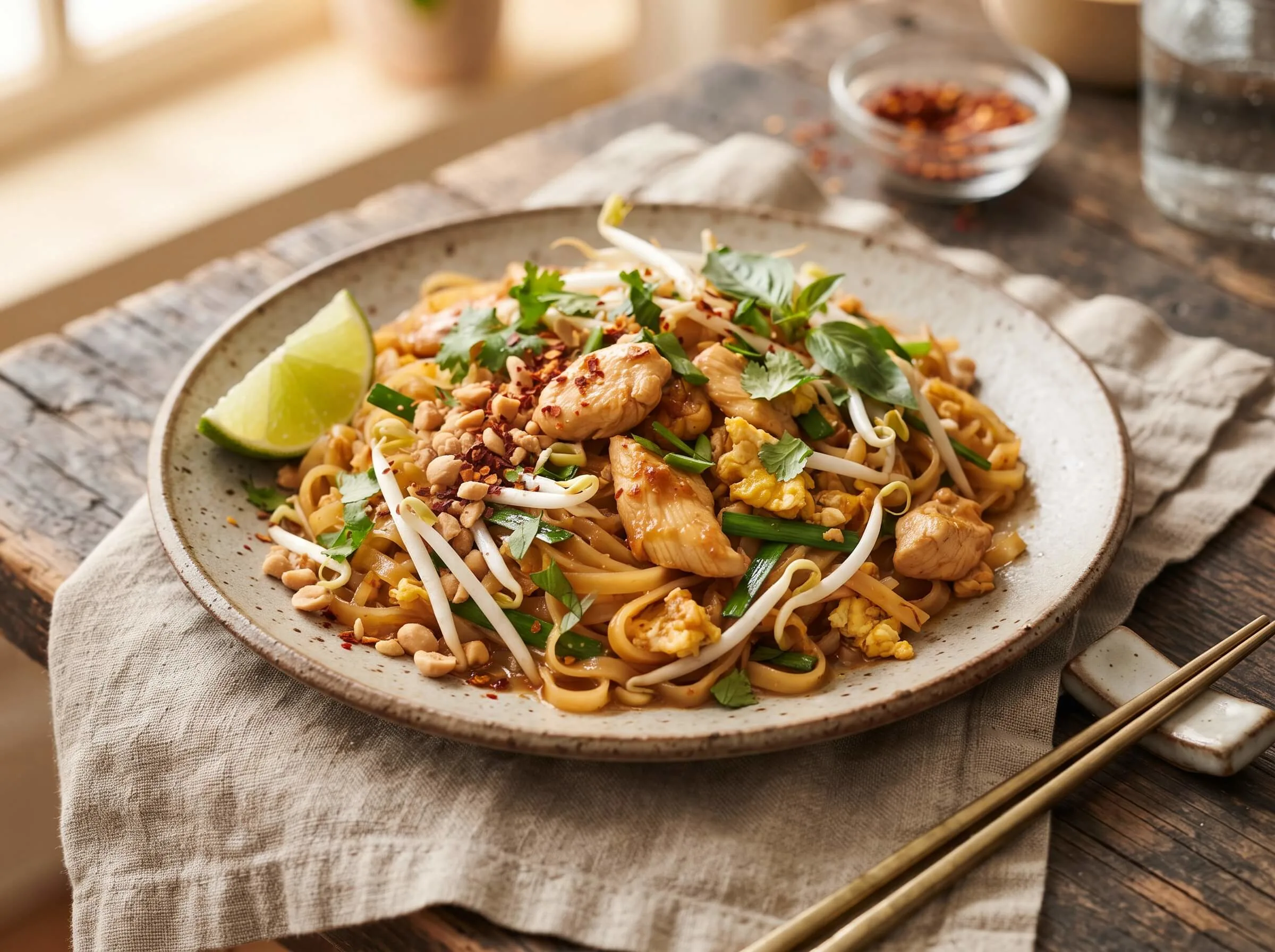
Pad Thai is arguably the most internationally recognized dish in Thai cuisine, a stir-fried rice noodle dish built on a careful balance of sweet, sour, salty, and savory flavors. This pad thai recipe walks through the technique needed to recreate that same balance at home, along with a classic chicken recipe variation.
Pad Thai is actually a relatively modern dish by Thai culinary standards, developed and popularized in the 1930s and 1940s as part of a national campaign under Prime Minister Plaek Phibunsongkhram to promote rice noodles and strengthen a sense of national identity, something Smithsonian Magazine has written about when covering the surprisingly political origins behind one of the world’s most beloved noodle dishes. Despite its relatively recent creation, it has since become deeply woven into Thai food culture both domestically and abroad.
Getting an authentic Pad Thai recipe right depends heavily on the sauce, typically built from tamarind paste, fish sauce, palm sugar, and lime, and Serious Eats has explained that tamarind specifically is what gives its distinctive tangy backbone, a flavor that’s difficult to replicate using more common pantry substitutes like lime juice or vinegar alone.
High heat and quick cooking are essential to this dish, and Bon Appétit has pointed out that pad thai is traditionally cooked in a wok over very high heat, which allows the noodles and other ingredients to develop a slight char and smoky flavor sometimes referred to as “wok hei,” something that’s difficult to achieve on a standard home stovetop but can still be approximated with a well-heated skillet.
Rice noodles themselves require specific preparation, and The Kitchn has written about soaking rather than boiling dried rice noodles for stir-fries, explaining that soaking in warm water until just pliable, rather than fully cooking them, prevents the noodles from turning mushy once they hit the hot pan and finish cooking there.
Whether you’re after a simple recipe for a fast weeknight dinner or chasing the best Pad Thai recipe with all the traditional components, this version delivers that same balanced, craveable flavor found at Thai restaurants.
Why You’ll Love This Recipe
This pad thai recipe captures that essential sweet, sour, salty balance that makes the dish so craveable, built from a proper tamarind-based sauce rather than a shortcut substitute.
The technique here, including how to properly prepare the rice noodles, helps avoid the mushy or clumped texture that can happen when making it at home for the first time.
This chicken pad thai recipe comes together in about 30 minutes, making it a genuinely realistic option for a flavorful weeknight dinner.
What to Serve With Pad Thai
Lime wedges served on the side let everyone adjust the tanginess of their own plate right before eating.
A side of fresh bean sprouts and crushed peanuts allows for extra crunch and texture to be added at the table.
Thai iced tea or a light lager pairs nicely alongside the dish, both helping balance out the bold, tangy flavors.
How This Pad Thai Recipe Comes Together
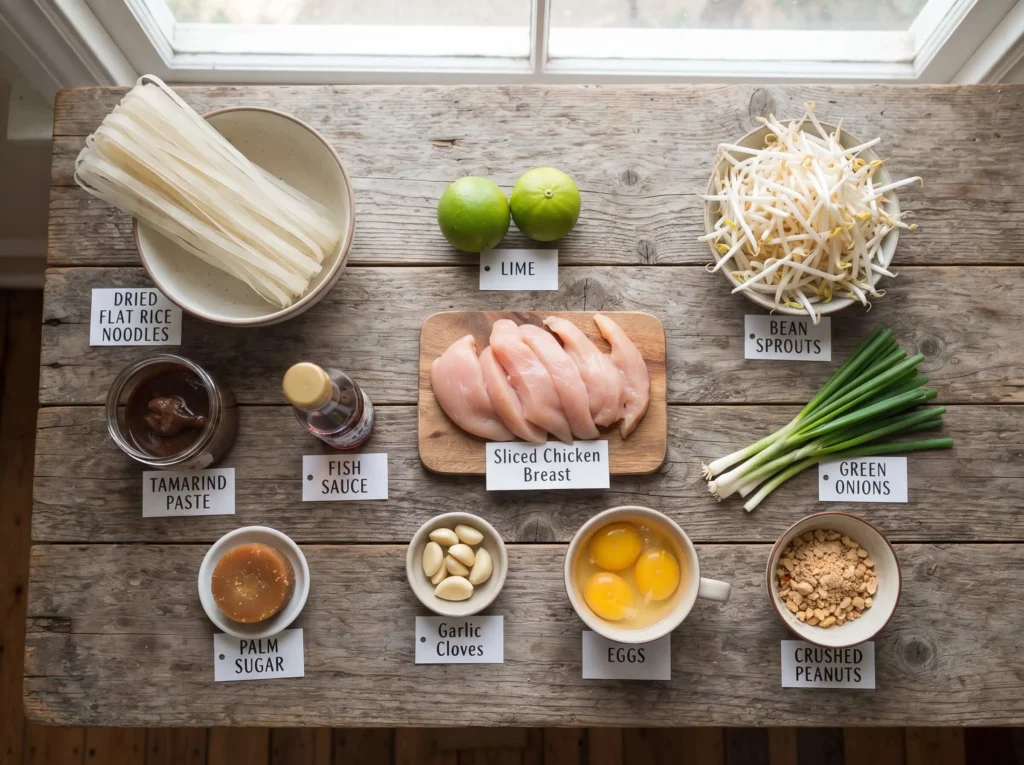
This recipe comes together in three main stages: soaking the rice noodles and mixing the tamarind-based sauce, stir-frying the chicken and aromatics in a hot pan, then combining everything with the noodles and sauce until evenly coated and heated through. Here’s everything you’ll need.
Pad Thai Recipe
Pad Thai Recipe

Equipment
- Large wok or skillet
- Mixing bowls
- Tongs
Ingredients
Noodles and Sauce
- 8 oz dried flat rice noodles
- 3 tbsp tamarind paste
- 3 tbsp fish sauce
- 3 tbsp palm sugar or brown sugar
- 1 tbsp lime juice
Stir-Fry
- 2 tbsp vegetable oil
- 1 lb boneless skinless chicken breast or thigh, sliced thin
- 3 garlic cloves minced
- 2 large eggs
- 2 cups bean sprouts divided
- 3 green onions cut into 1-inch pieces
- ¼ cup crushed roasted peanuts divided
- Lime wedges for serving
- Chili flakes for serving, optional
Instructions
Soak the Noodles and Mix the Sauce
- Soak the dried rice noodles in warm water for 20-30 minutes, until pliable but still slightly firm, since they will finish cooking in the pan later. Drain and set aside.
- In a small bowl, whisk together the tamarind paste, fish sauce, palm sugar, and lime juice until the sugar is mostly dissolved.
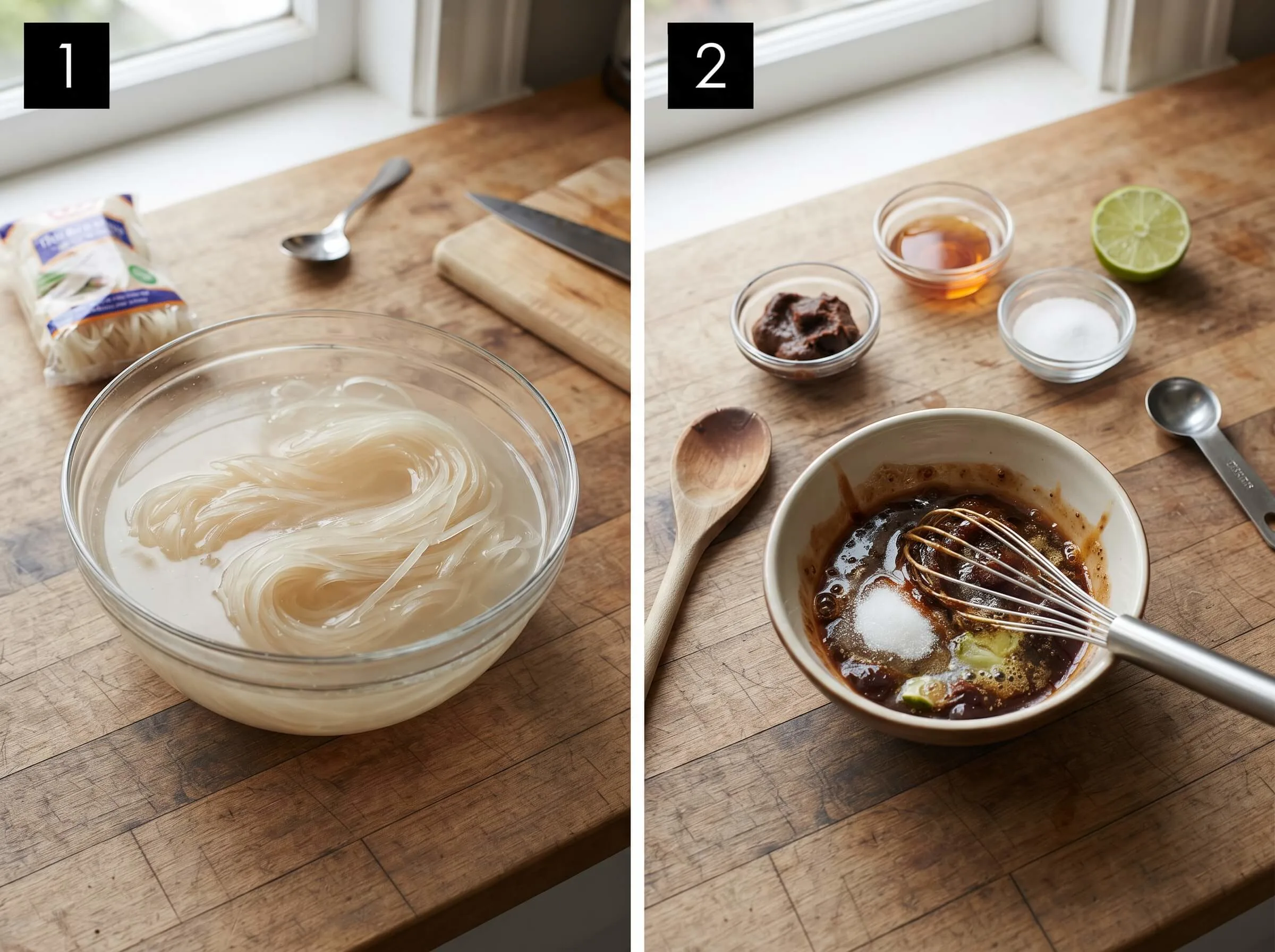
Stir-Fry the Chicken and Aromatics
- Heat the vegetable oil in a large wok or skillet over high heat. Add the sliced chicken and stir-fry for 4-5 minutes, until mostly cooked through.
- Push the chicken to one side of the pan, add the minced garlic to the empty space, and cook for 30 seconds until fragrant. Crack the eggs into the same space, scrambling them quickly, then mix everything together.
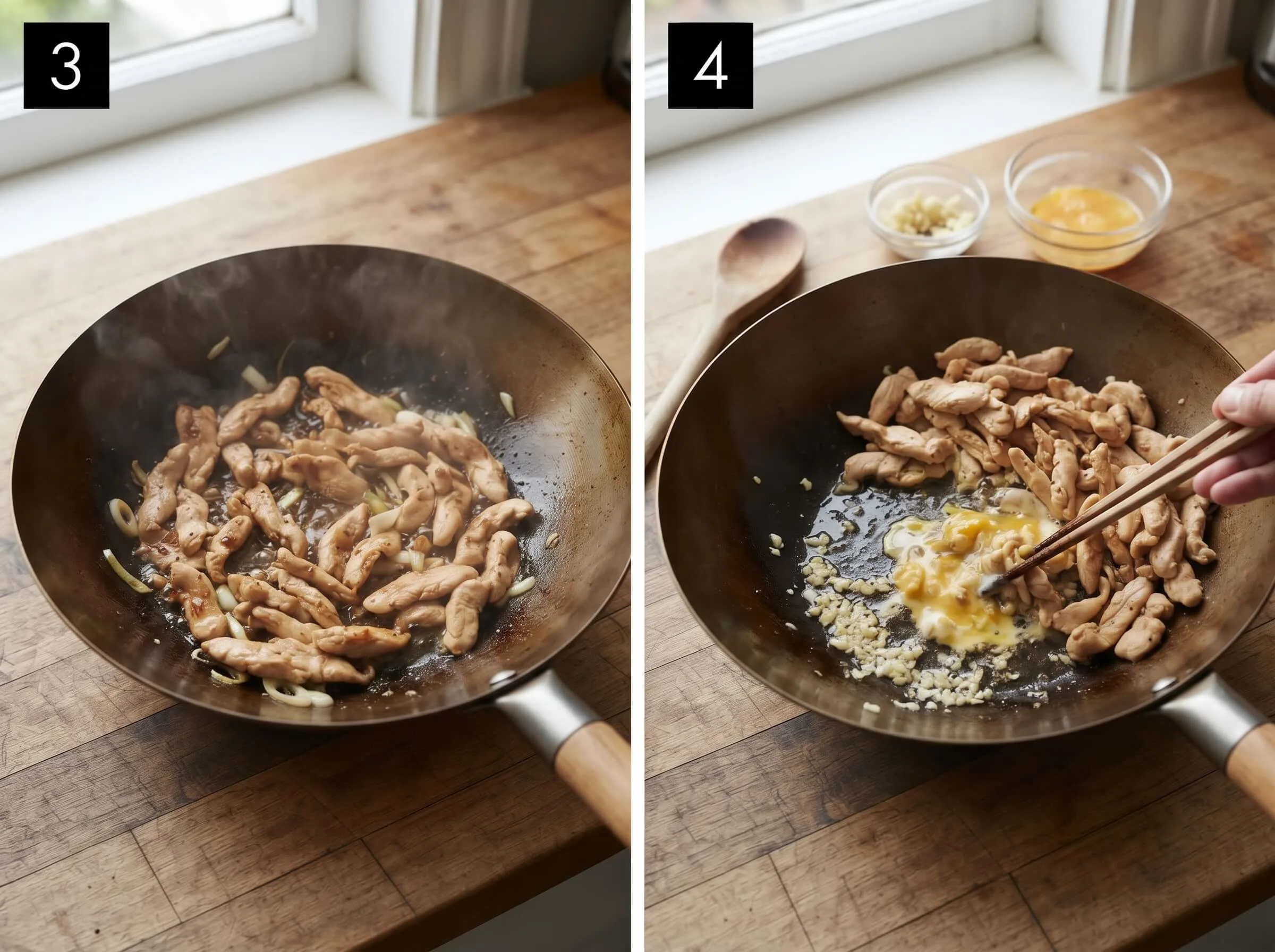
Add the Noodles and Finish
- Add the drained noodles to the pan along with the sauce mixture, tossing everything together continuously for 2-3 minutes, until the noodles have softened fully and absorbed the sauce.
- Add half of the bean sprouts, the green onions, and half of the crushed peanuts, tossing for another minute to combine and slightly wilt the sprouts.
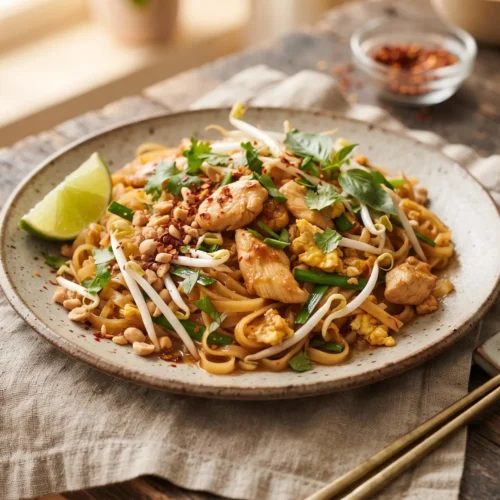
- Remove from heat and transfer to serving plates, topping with the remaining bean sprouts and peanuts. Serve immediately with lime wedges and chili flakes on the side.
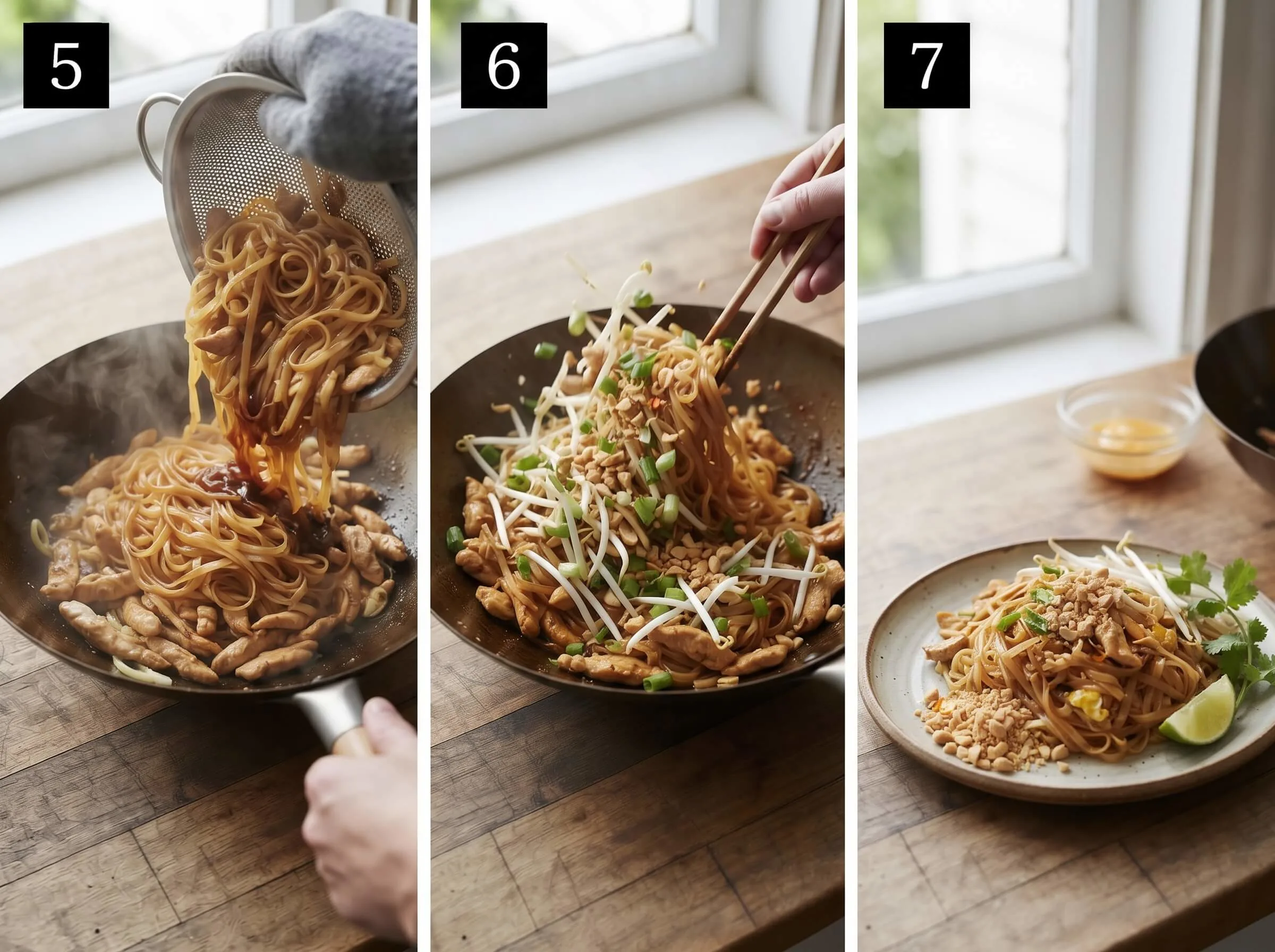
Notes
- Soaking the noodles just until pliable, rather than fully soft, is important, since they continue cooking once they hit the hot pan, and starting too soft can lead to mushy, overcooked noodles in the final dish.
- Working quickly once the noodles and sauce go into the pan helps everything cook evenly without the noodles sticking or clumping together.
- Tossing continuously during the final stages of cooking, similar to a proper wok technique, helps distribute the sauce evenly across every noodle.
- If tamarind paste isn’t available, a mixture of lime juice and a small amount of brown sugar can approximate some of the tanginess, though the flavor won’t be quite as complex as using real tamarind.
- Leftover pad thai keeps in the refrigerator for up to 3 days, though the noodles may firm up slightly, so a small splash of water when reheating helps loosen everything back up.
Frequently Asked Questions
What makes this an authentic Pad Thai recipe rather than a simplified version?
This recipe relies on real tamarind paste for the sauce’s characteristic tang, rather than substituting it with ketchup or vinegar, which are common shortcuts in less traditional versions. Using tamarind, along with properly soaked rice noodles and a quick, high-heat stir-fry method, keeps this version closer to how pad thai is traditionally made in Thailand.
Where can I find tamarind paste for this pad thai recipe?
Tamarind paste is typically available at Asian grocery stores, and increasingly at larger well-stocked supermarkets in the international foods aisle. It’s worth seeking out specifically for this dish, since it’s genuinely difficult to replicate its distinct tangy flavor with common pantry substitutes.
Can I make a chicken pad thai recipe with shrimp instead?
Yes, shrimp is actually one of the most common pad thai protein choices alongside or instead of chicken. Simply substitute an equal amount of peeled, deveined shrimp, adjusting the cook time down slightly since shrimp cooks much faster than chicken.
Why are my pad thai noodles mushy?
This usually happens from oversoaking the dried noodles before cooking, since they continue to cook once added to the hot pan. Soak them only until pliable but still slightly firm, checking a noodle by tasting it partway through the soaking time.
Is there a simple Pad Thai recipe version without hard-to-find ingredients?
While authentic tamarind paste is worth seeking out, this recipe otherwise relies on fairly accessible ingredients like rice noodles, fish sauce, eggs, and chicken, most of which can be found at a regular grocery store, making this a genuinely approachable dish even for a first attempt.
Why is my pad thai too sweet or too salty?
The balance between tamarind, fish sauce, and sugar can vary depending on specific brands used, so it’s worth tasting the sauce before adding it to the pan and adjusting slightly, adding a touch more lime juice if it’s too sweet, or a bit more sugar if it’s too salty or sour.
Can I make this dish vegetarian or vegan?
Yes, tofu can replace chicken for a vegetarian protein, and a vegetarian fish sauce substitute, often made from soy, can replace traditional fish sauce. The eggs can also be omitted entirely for a fully vegan version.
What’s the best pad Thai recipe pairing for sides?
Fresh lime wedges, extra crushed peanuts, and bean sprouts served on the side let everyone customize their plate to taste, which is actually how pad thai is traditionally served at many Thai restaurants and street food stalls.
Can I make pad thai ahead of time for meal prep?
This dish is genuinely best enjoyed fresh, since the noodles can continue absorbing moisture and change texture as they sit. If needed, you can prep all the individual components, sauce, sliced chicken, and soaked noodles, ahead of time, then do the actual stir-frying quickly right before eating.
Twists & Ideas
You Can Add
A drizzle of chili oil or a sprinkle of extra chili flakes adds more heat for anyone who prefers a spicier pad thai.
Thinly sliced Thai basil added along with the green onions brings an aromatic, slightly anise-like flavor that pairs well with the tangy sauce.
Dried shrimp, a traditional addition in many authentic versions, can be added alongside the fresh protein for extra depth and umami.
A squeeze of extra lime right before serving brightens up the overall flavor even further.
You Can Replace
Shrimp or tofu can replace chicken, as mentioned in the FAQ, for a different protein or a vegetarian version of this dish.
A vegetarian fish sauce alternative can replace traditional fish sauce, as covered in the FAQ, for a fully vegetarian or vegan pad thai.
Coconut sugar can replace palm sugar or brown sugar for a slightly different, more caramel-forward sweetness.
Rice vermicelli can replace flat rice noodles if that’s what’s available, adjusting soaking time since thinner noodles soften faster.
Recipes You May Enjoy
- Pollo Guisado Recipe
- Mango Sticky Rice Recipe
- Pad Kra Pao Recipe
- Tostones Recipe
- Mofongo Recipe
- Majarete Dominicano Recipe
- Tres Leches Cake Recipe
- Japanese Curry Recipe
A Noodle Dish Worth Perfecting at Home
Pad Thai has earned its place as one of the most beloved noodle dishes worldwide, and getting that signature balance of sweet, sour, salty, and savory flavors right at home is genuinely achievable with the right technique. Between properly soaked noodles, a real tamarind-based sauce, and a quick, high-heat stir-fry, this dish delivers restaurant-quality flavor without needing a trip to a Thai restaurant.
Whether you’re making this recipe for a fast weeknight dinner, following this chicken pad thai recipe for a reliable go-to meal, or specifically chasing an authentic Pad Thai recipe experience close to what’s served in Thailand, this dish delivers consistently balanced, flavorful results every time. Once you’ve nailed the noodle soaking and sauce technique here, this recipe becomes one of those recipes you’ll want to make again and again whenever a craving hits.
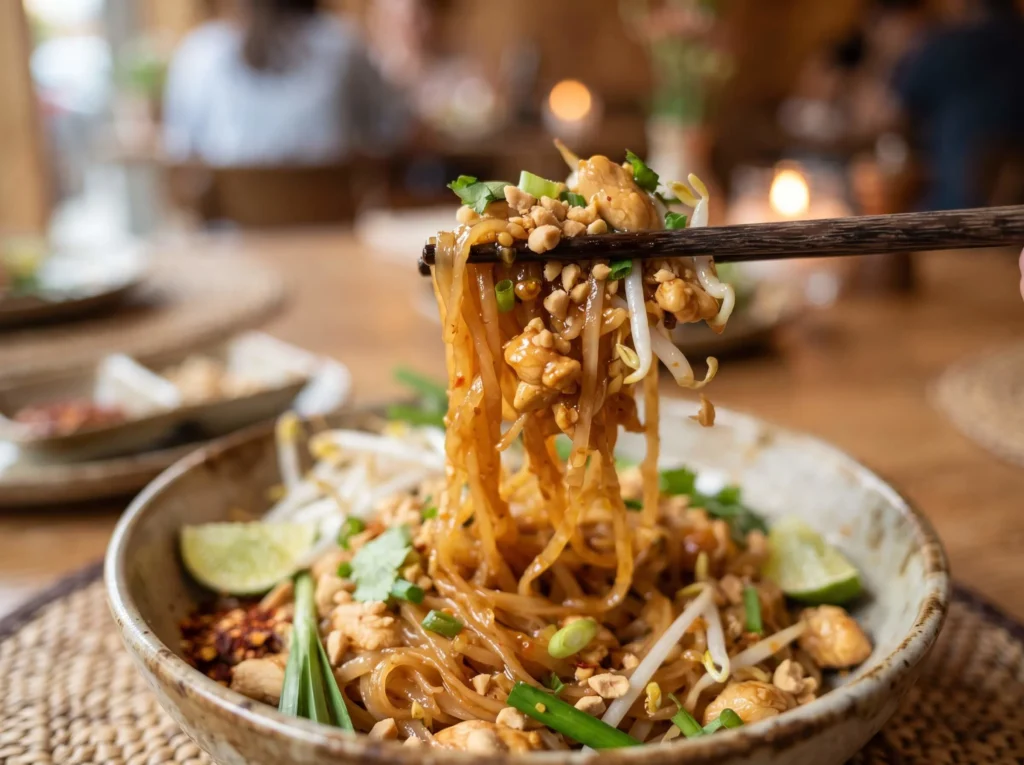
Tried This Recipe? Leave a Review!
There are no reviews yet. Be the first one to write one.