Tostones Recipe: A Delicious One Ingredient Dish
Table of Contents
Twice-Fried Plantains That Define Caribbean Cooking
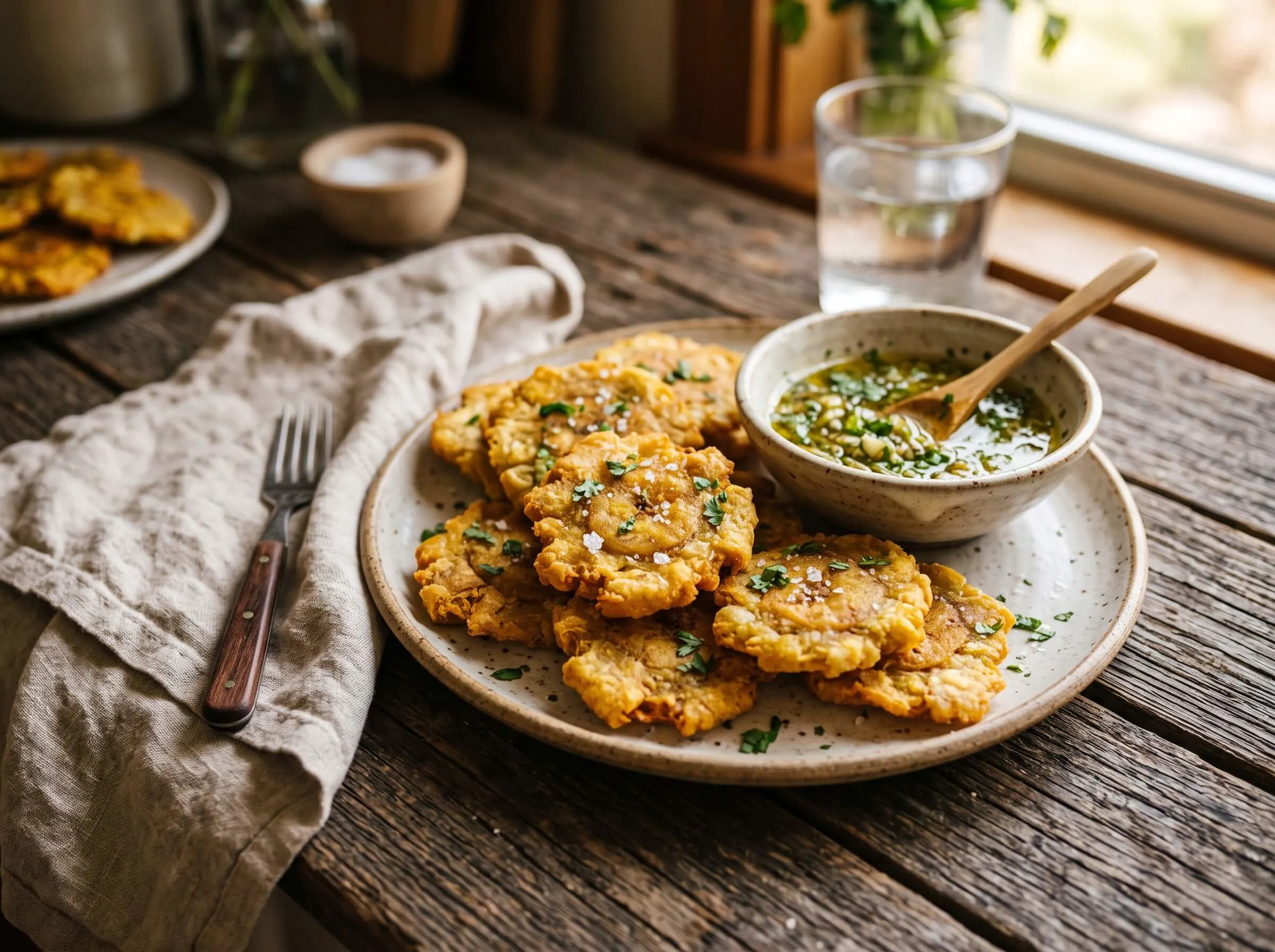
Tostones are one of the most beloved side dishes across the Caribbean and Latin America, made from green plantains that are fried, flattened, and fried again until golden and crispy. This tostones recipe walks through that classic double-fry technique, delivering the same crunchy, savory bite found at Dominican and broader Caribbean tables.
Tostones, sometimes called tostone in singular form, have deep roots across the Caribbean and Latin America, with variations found in Puerto Rico, Cuba, and throughout Central America, each region putting its own subtle spin on the technique, something Smithsonian Magazine has written about when covering the shared culinary history of plantain dishes across the Caribbean. A recipe dominicano in particular holds a central place in Dominican cuisine, often served alongside nearly every meal as a beloved staple side.
Using green, unripe plantains is essential to a proper tostones recipe, and Serious Eats has explained the science behind this choice, noting that unripe plantains contain far more starch and far less sugar than ripe, yellow plantains, which is exactly what allows them to fry up crispy rather than caramelizing and turning soft and sweet the way ripe plantains do when fried into maduros.
The double-fry technique is really what defines tostones as a dish, and Bon Appétit has broken down why this method works, explaining that the first fry cooks the plantain through and softens it enough to flatten, while the second fry at a slightly higher temperature is what develops that signature crispy, golden exterior once the pieces are pressed thin.
Salting properly is a small but important detail, and The Kitchn has pointed out that salting tostones immediately after the second fry, while they’re still hot, allows the salt to adhere much better than salting them once they’ve cooled, which is why timing matters even for a step that seems simple on its own.
Whether you’re making an easy recipe for a quick side dish or want the full authentic technique found in Dominican kitchens, this recipe delivers that same crispy, savory plantain dish that pairs with nearly everything.
Why You’ll Love This Recipe
This tostones recipe delivers that genuinely crispy, golden exterior people love about this dish, using a straightforward double-fry technique that’s easier than it might initially seem.
Green plantains are inexpensive and widely available, making this an easy tostones recipe to prepare regularly without needing any specialty ingredients.
This versatile side dish pairs with nearly any main course, from braised meats to grilled seafood, making it a genuinely useful recipe to have on hand.
What to Serve With Tostones
Pollo guisado or any braised, saucy chicken dish pairs beautifully here, letting the crispy tostones soak up extra sauce on the plate.
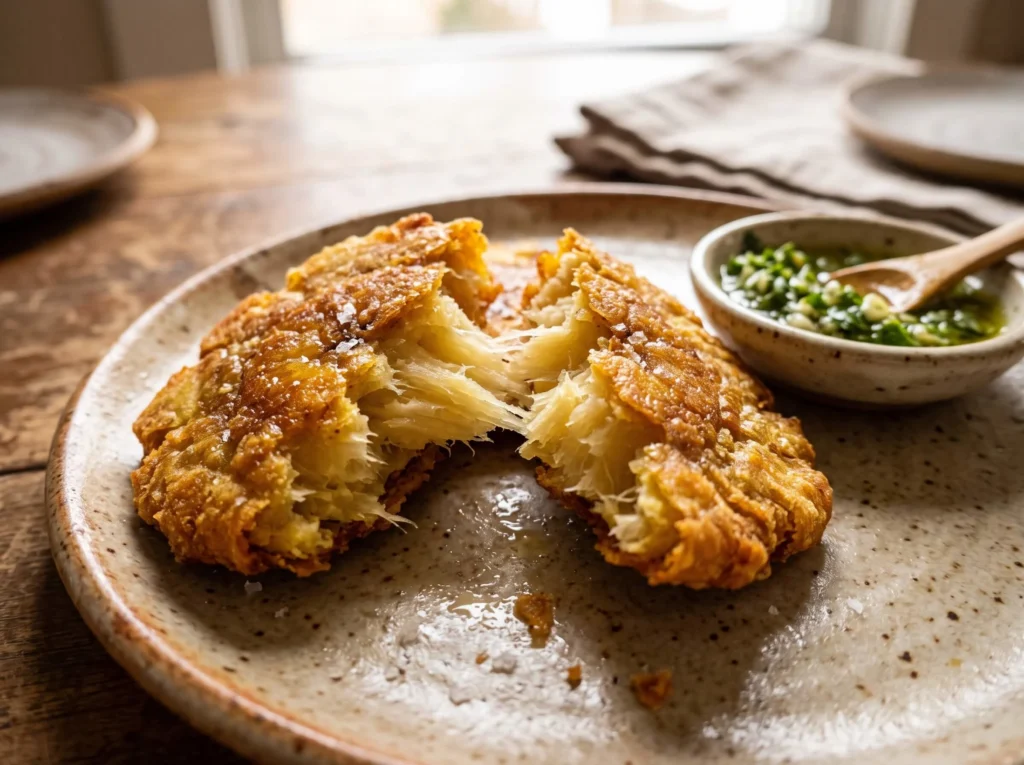
A simple garlicky dipping sauce, sometimes called mojo, made from garlic, olive oil, and lime juice, complements the plain, savory flavor of the plantains.
Grilled fish or shrimp alongside and creates a light, satisfying meal with contrasting textures.
How This Tostones Recipe Comes Together
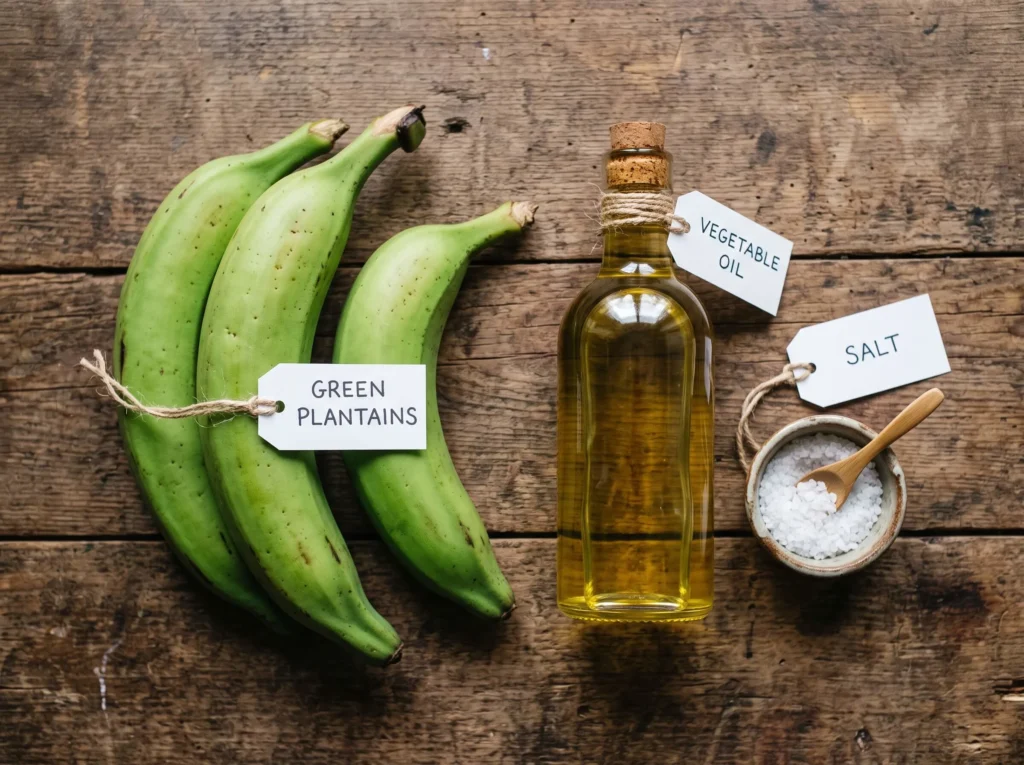
This recipe comes together in three main stages: peeling and cutting the plantains before the first fry, flattening the partially cooked pieces, then frying them a second time until golden and crispy. Here’s everything you’ll need.
Tostones Recipe
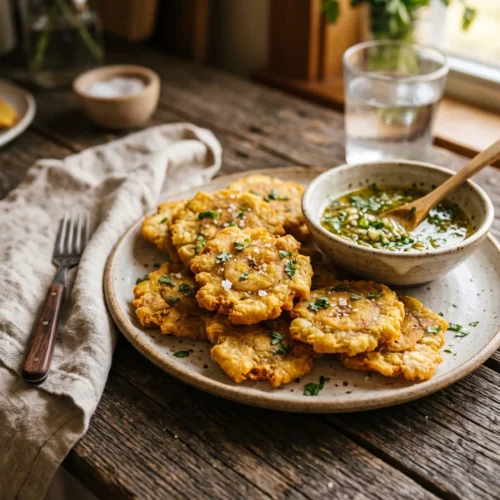
Tostones Recipe

Equipment
- Deep pot or skillet for frying
- tostonera (plantain press) or a flat-bottomed cup
- Tongs
Ingredients
- 3 green plantains
- Vegetable oil for frying
- Salt to taste
- Water for soaking (optional)
Instructions
Prepare the Plantains
- Cut off both ends of each plantain, then score the skin lengthwise with a knife and peel it away, since green plantain skin is much tougher than a ripe banana peel and often needs to be pried off in sections.
- Cut the peeled plantains into pieces about 1 to 1.5 inches thick.
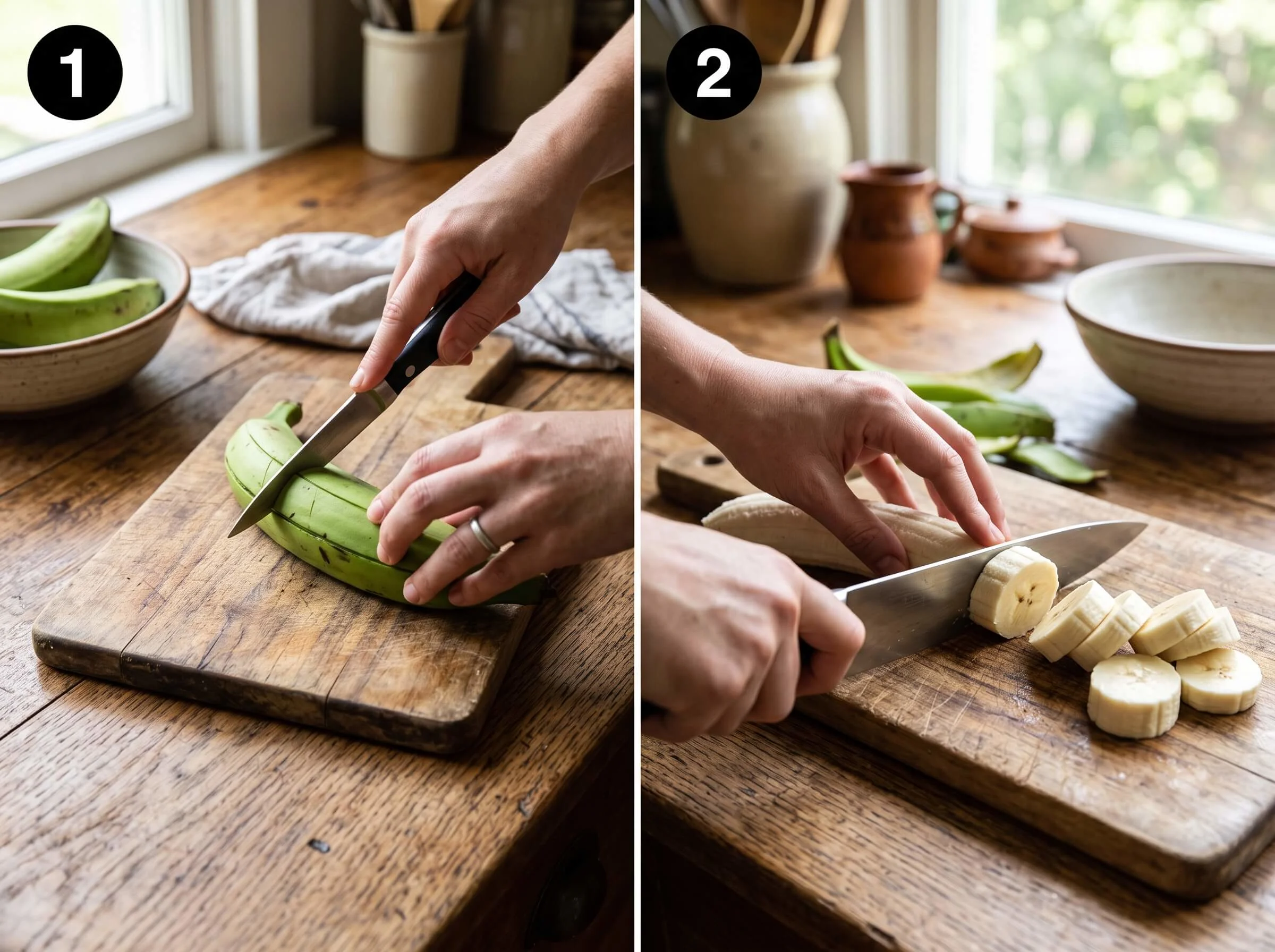
First Fry
- . Heat about 1.5 inches of vegetable oil in a deep pot or skillet to 325°F (165°C). Fry the plantain pieces in batches for 3-4 minutes per side, until they turn a light golden color and become slightly softened, but not fully crispy yet.
- Remove the pieces with tongs and drain on a paper towel-lined plate, letting them cool slightly for a couple of minutes so they’re easier to handle.
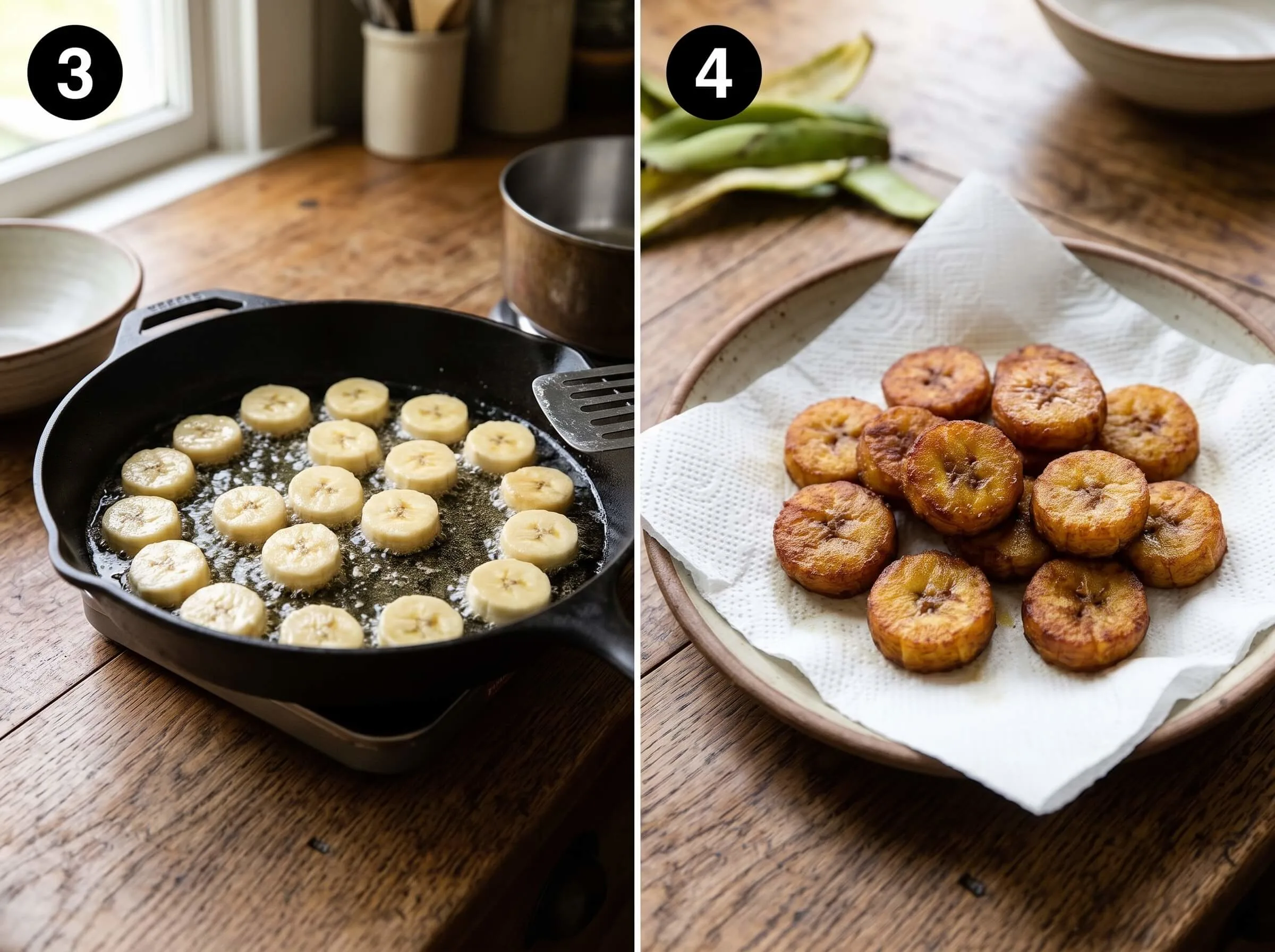
Flatten the Plantains
- Using a tostonera, or the flat bottom of a cup or jar, press down firmly on each piece of plantain to flatten it into a disc about ¼-inch thick.
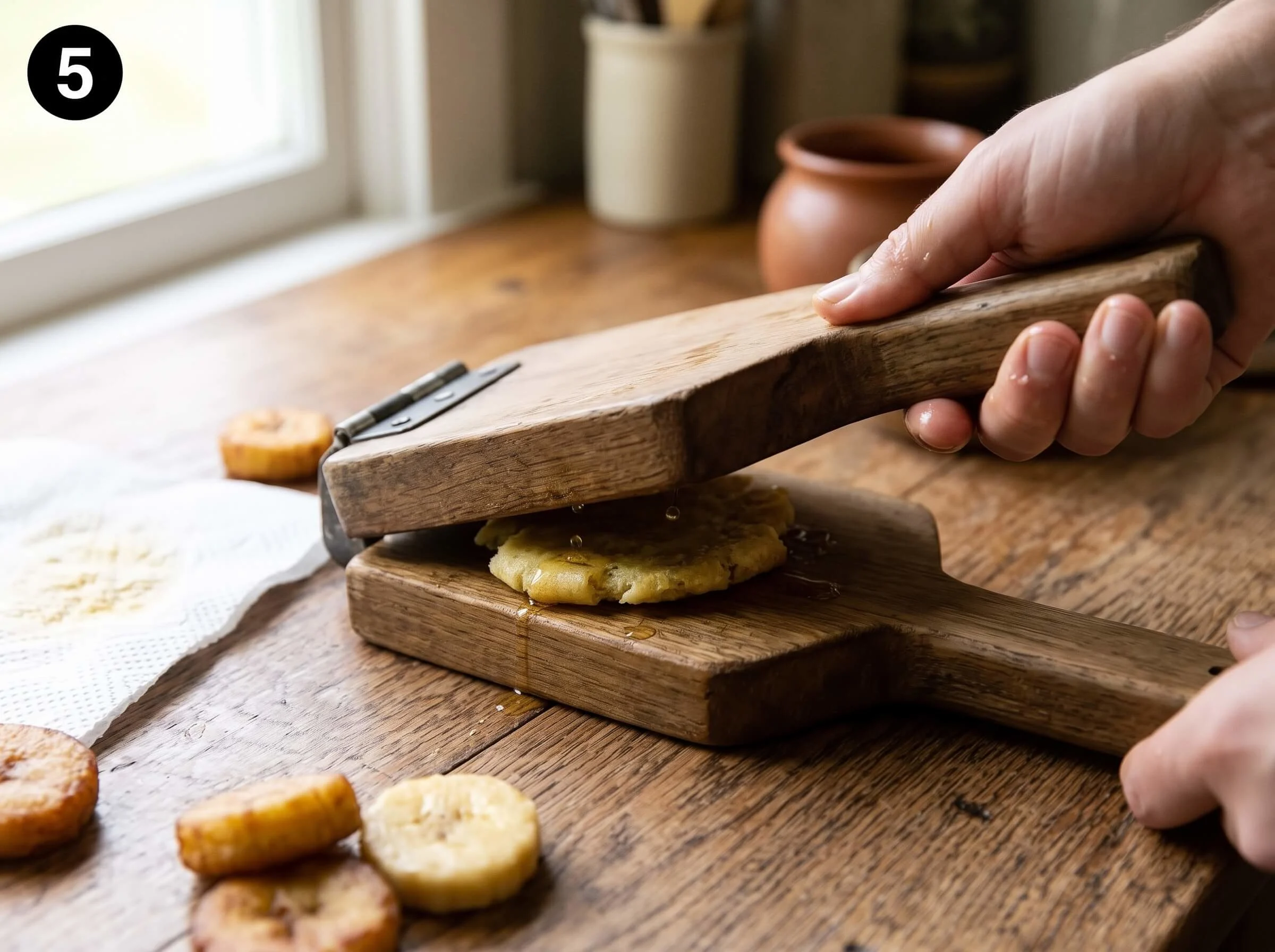
Second Fry
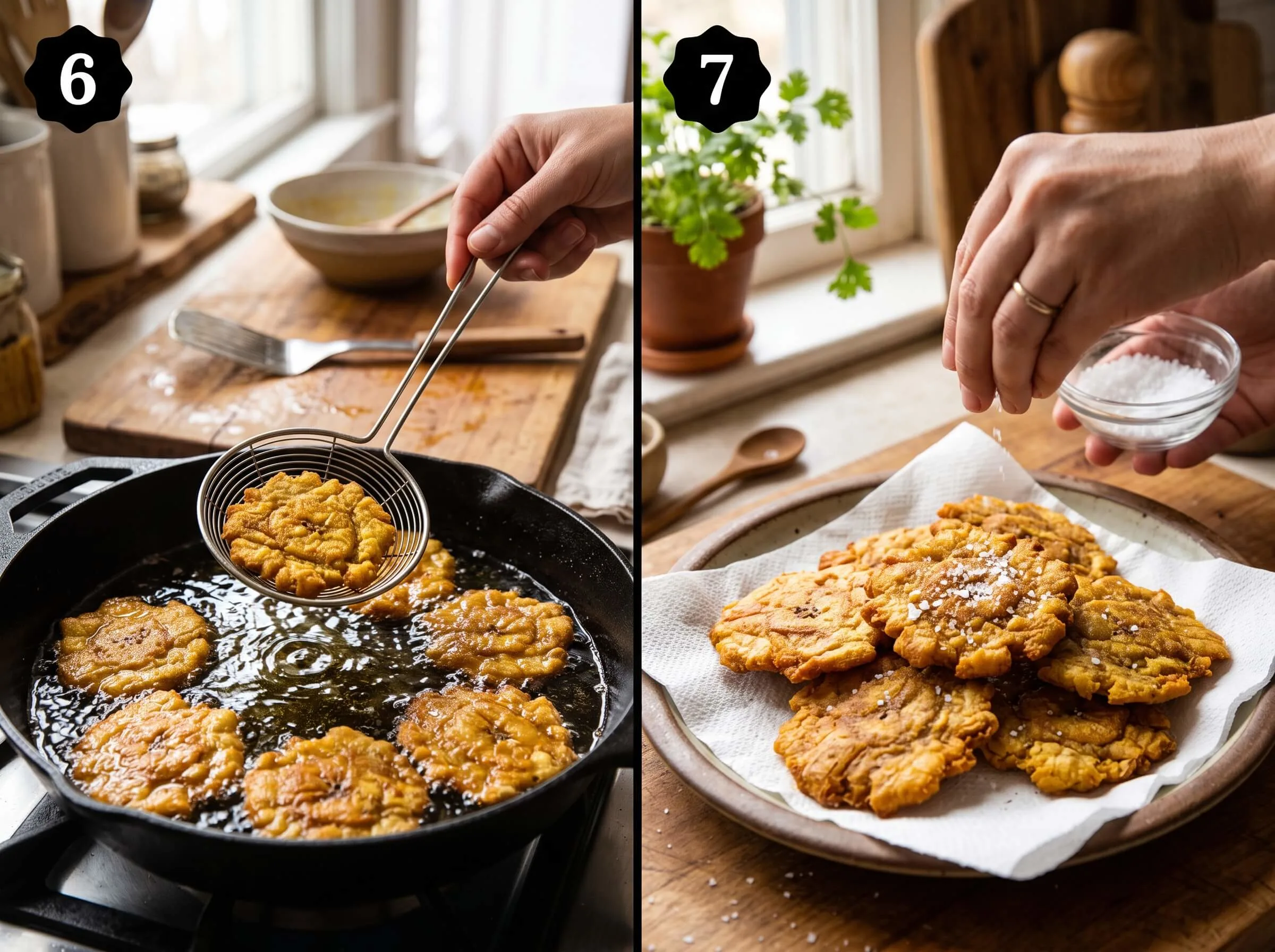
- Increase the oil temperature to 350°F (175°C). Fry the flattened plantains a second time for 2-3 minutes per side, until deeply golden and crispy on the outside.
- Remove and drain on a fresh paper towel-lined plate, then immediately salt the hot tostones to taste, letting the salt adhere while they’re still warm.
Notes
- Using genuinely green, unripe plantains is essential for this recipe, since ripe or partially ripe plantains contain too much sugar and won’t fry up crispy the same way.
- Some cooks soak the fried plantain pieces briefly in salted water between the first and second fry, which can help enhance flavor and crispness, though this step is optional and not strictly necessary for good results.
- Salting the tostones immediately after the second fry, while they’re still hot, helps the salt stick much better than waiting until they’ve cooled down.
- If you don’t have a tostonera, a flat-bottomed cup, jar, or even the bottom of a plate works just as well for flattening the plantains.
- Tostones are best enjoyed immediately after frying, since they lose their crispiness fairly quickly once they cool and sit for too long.
Frequently Asked Questions
What’s the difference between tostones and maduros?
Tostones are made from green, unripe plantains and are savory and crispy, while maduros are made from ripe, yellow-to-black plantains and are sweet, soft, and caramelized when fried. The two dishes use the same base ingredient but at very different stages of ripeness, resulting in completely different flavors and textures.
Why is my tostones recipe not turning out crispy?
This usually happens from either not using sufficiently green plantains, not frying at a hot enough temperature during the second fry, or not flattening the pieces thin enough. Make sure your plantains are truly green and firm, and don’t skip pressing them thin before the final fry.
How do I peel a green plantain for this tostones recipe dominicano?
Green plantain skin is much tougher than a ripe banana peel and doesn’t come off as easily. Scoring the skin lengthwise with a knife first, then working your fingers or the knife blade under the skin to pry it away in sections, makes the process significantly easier than trying to peel it the way you’d peel a banana.
Can I make an easy tostones recipe without a tostonera?
Yes, a tostonera isn’t strictly necessary. The flat bottom of a sturdy cup, jar, or even a small plate works just as well for pressing the partially fried plantain pieces into flattened discs before the second fry.
Why do tostones need to be fried twice instead of just once?
The double-fry method is what creates the signature texture of this dish. The first fry cooks the plantain through and softens it enough to flatten, while the second fry at a higher temperature develops that crispy, golden exterior that a single fry alone wouldn’t achieve as effectively.
Can I make tostones ahead of time?
Tostones are genuinely best served immediately after frying, since they lose their crispy texture fairly quickly as they cool and sit. If you need to prepare in advance, you can do the first fry and flattening ahead of time, then do the second fry right before serving.
What’s a good dipping sauce to serve with this tostones recipe?
A simple garlic mojo sauce, made from minced garlic, olive oil, and lime juice, is a classic and easy pairing that complements the plain, savory flavor of the plantains without overwhelming them.
Can I bake or air fry tostones instead of deep frying them?
Yes, if you’d prefer to avoid deep frying, you can lightly coat the plantain pieces in oil and air fry at 380°F (195°C) for about 8-10 minutes total, flattening them between the first and second cooking stage, though the texture will be slightly less crispy than the traditional deep-fried version.
How long do leftover tostones keep, and can they be reheated?
Leftover tostones are best eaten fresh, but if needed, they can be stored in an airtight container in the refrigerator for a day or two. Reheating in an oven or air fryer helps restore some crispiness better than a microwave, which tends to leave them soft and slightly soggy.
Twists & Ideas
You Can Add
A sprinkle of garlic powder mixed into the oil during frying infuses a subtle garlicky flavor throughout the tostones.
A drizzle of garlic mojo sauce, as mentioned in the FAQ, right before serving adds an extra layer of flavor beyond just salt.
A sprinkle of finely grated parmesan or cotija cheese over the hot dish adds a salty, savory finish.
A squeeze of fresh lime juice right before serving brightens up the flavor of the crispy plantains.
You Can Replace
An air fryer can replace deep frying, as mentioned in the FAQ, for a lighter version of this recipe with a slightly less crispy result.
Sea salt or seasoned salt can replace plain table salt for a different flavor profile on the finished dish.
Coconut oil can replace vegetable oil for frying, giving a subtly different flavor to the finished plantains.
A rolling pin can replace a tostonera or cup for flattening, working the plantain gently between two pieces of plastic wrap or parchment paper.
Recipes You May Enjoy
- Greek Rice Recipe
- Pad Kra Pao Recipe
- Tofu Tacos Recipe
- Crispy Baked Sesame Tofu Recipe
- Marry Me Chickpeas Recipe
- Sweet Potato Taco Bowl
- enchiladas végétarien
A Crispy Staple Worth Making at Home
Tostones prove that a genuinely satisfying side dish doesn’t need a long ingredient list, just the right technique. Between the double-fry method and that perfectly timed salt, this simple plantain dish delivers a crispy, savory bite that pairs beautifully with almost any main course across Caribbean and Latin American cooking.
Whether you’re making this recipe as a quick vegan side dish, following an easy tostones recipe for your first attempt at working with green plantains, or specifically chasing a recipe dominicano experience close to what’s served in Dominican households, this dish delivers consistently crispy, satisfying results every time. Once you’ve mastered the double-fry technique here, this recipe become a side dish you’ll want to make again and again alongside nearly everything you cook.
Tried This Recipe! Leave a Review?
There are no reviews yet. Be the first one to write one.