Sopa de Mariscos
Table of Contents
A Bowl That Tastes Like the Coast
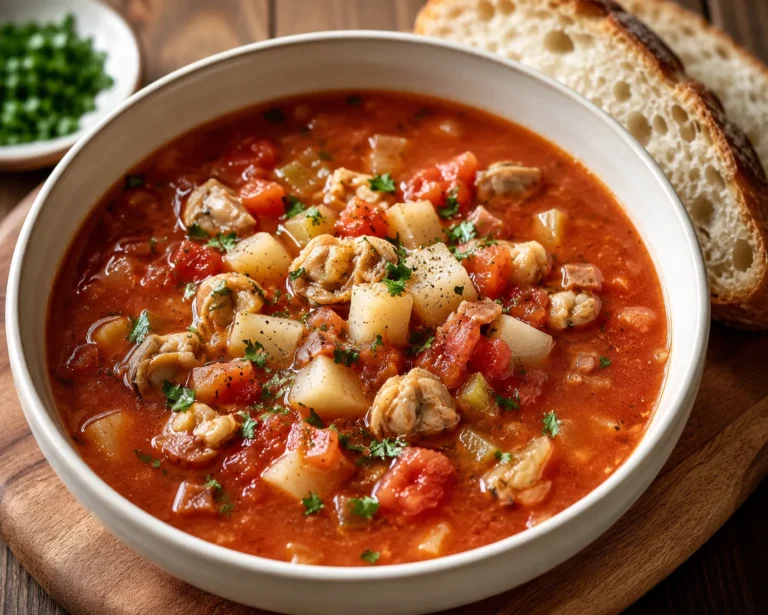
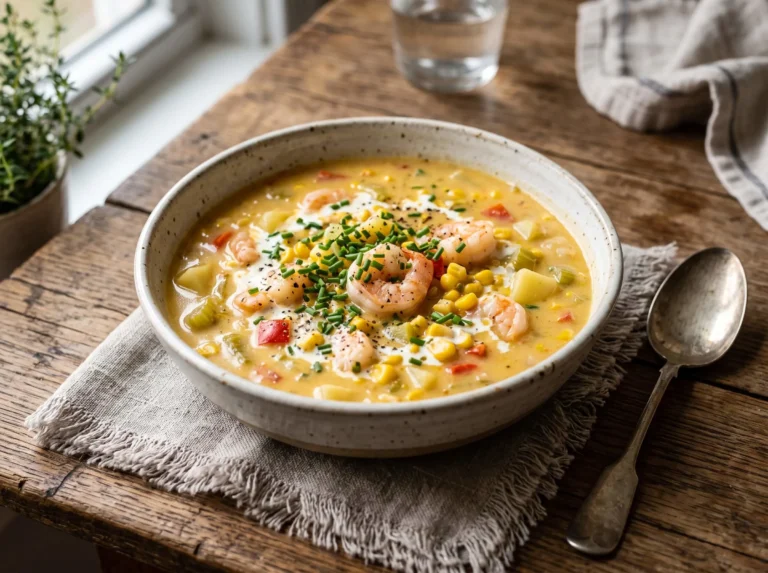
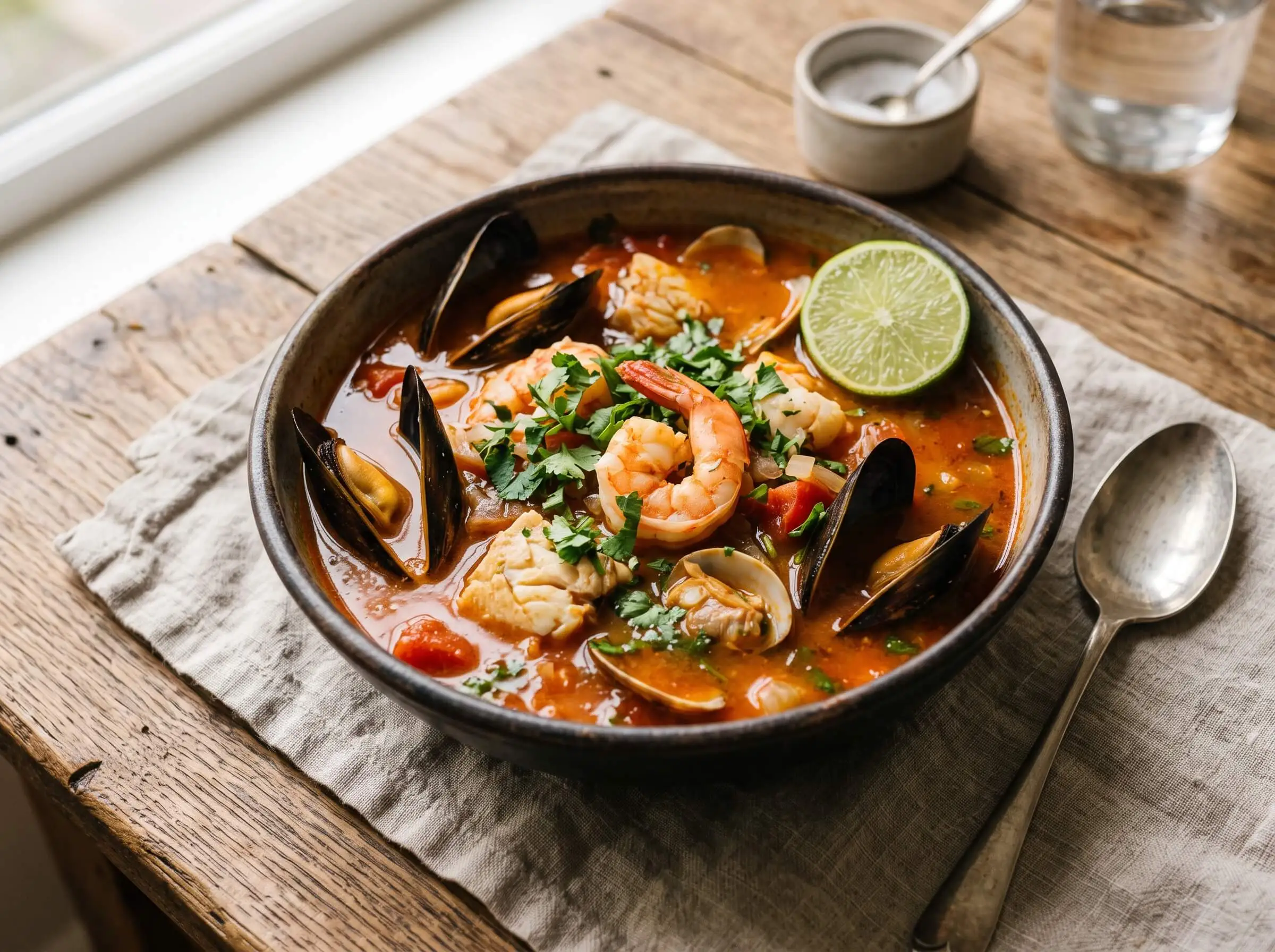
Sopa de mariscos is one of those dishes that manages to feel indulgent and comforting at the same time. This rich, tomato-based seafood soup is a staple across Latin American coastal cuisine, packed with shrimp, fish, and often shellfish, simmered in a deeply flavorful broth built from aromatics, tomatoes, and warm spices. It’s the kind of dish that shows up at family gatherings, coastal restaurants, and Sunday dinners alike, precisely because it manages to feel both hearty and light depending on how it’s served.
The dish has roots across several Latin American countries, with regional variations found in Mexico, Peru, and various Central American coastal communities, each putting their own spin on the base broth and seafood combination, something Bon Appétit has written about when covering the broader family of Latin American seafood soups and stews. In coastal Mexican kitchens specifically, sopa de mariscos often leans into a deeply savory tomato base with a noticeable kick of heat, while Peruvian versions sometimes incorporate more citrus and herbs, showing just how adaptable this dish is depending on region and personal taste.
What ties most versions of sopa de marisco together is a rich, tomato-forward broth that gets built slowly, layering in flavor from sautéed aromatics before the seafood ever hits the pot. Serious Eats has covered this principle extensively when discussing seafood soups and stews broadly, pointing out that delicate proteins like shrimp and fish should always go in toward the end of cooking, since they cook quickly and can easily turn rubbery or overcooked if simmered too long alongside a slower-cooking broth base.
The tomato and spice base in this soup often includes ingredients like cumin, oregano, and a bit of heat from chili, giving it a warmth that’s distinct from lighter, broth-based seafood soups found in other cuisines. The Spruce Eats has discussed how these warm spice combinations show up across Latin American cooking broadly, adding depth to dishes without necessarily making them overwhelmingly spicy, striking a balance that makes the dish approachable for a wide range of palates.
Seafood itself brings more to the table than just flavor. Shrimp and white fish are both excellent sources of lean protein, and Healthline has written about how seafood-based diets are often associated with a range of health benefits, largely due to their protein content paired with beneficial fats found in many types of fish, making this soup a satisfying option that also brings some nutritional upside to the table.
If you’re searching for the best sopa de mariscos recipe to bring that same coastal, restaurant-quality flavor into your own kitchen, this version focuses on building a properly developed broth first, then finishing everything with tender, perfectly timed seafood so nothing ends up overcooked by the time it hits the bowl.
Why You’ll Love This Recipe
This sopa de mariscos recipe leans into a deeply flavorful, tomato-based broth that’s built up in layers, giving the finished soup a complexity that’s hard to get from a quicker, less developed base.
The seafood stays tender throughout, since it’s added toward the end of cooking rather than simmered for a long time, which keeps the shrimp and fish from turning rubbery or overdone by the time the soup is ready to serve.
It’s also a fairly adaptable recipe, since it welcomes different types of seafood depending on what’s fresh or available, making it easy to customize without losing what makes a good sopa de marisco recipe work in the first place.
What to Serve With Sopa de Mariscos
Warm corn tortillas or crusty bread are a natural pairing here, perfect for soaking up any extra broth left in the bowl.
A simple side of white rice can turn this into a more filling meal, giving you something to spoon the broth and seafood over if you want a heartier presentation.
A wedge of lime served on the side lets everyone brighten up their own bowl with a bit of extra acidity right before eating.
How This Sopa de Mariscos Comes Together
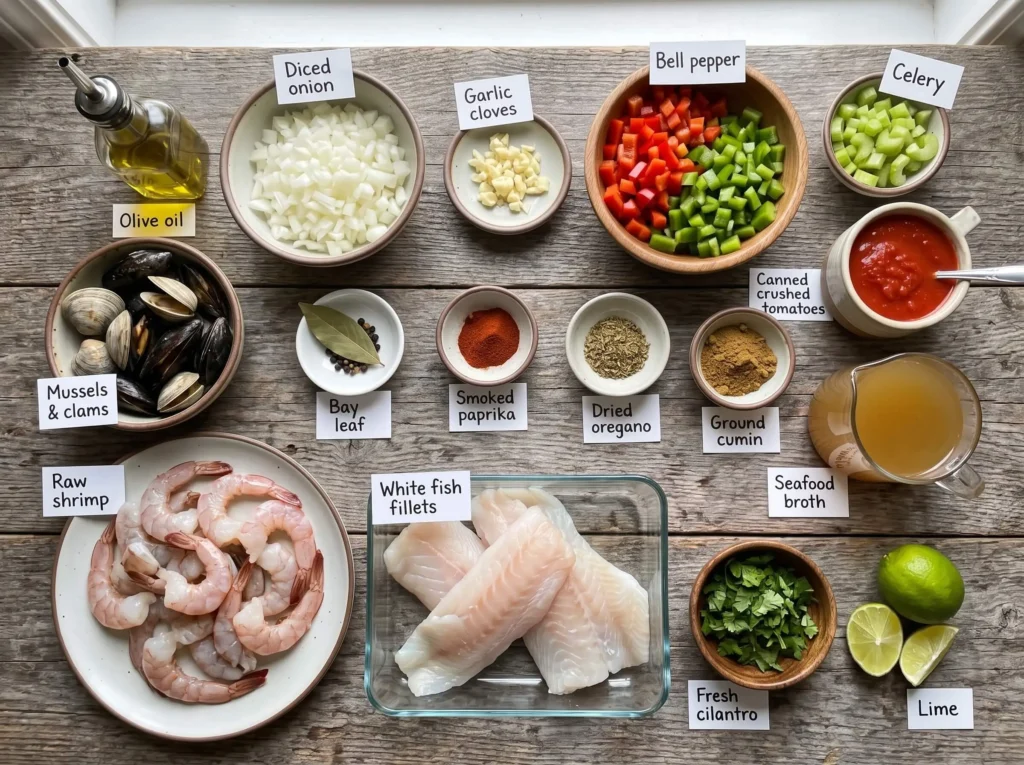
This recipe is built in three main stages: sautéing aromatics and building a rich tomato-based broth, letting that broth simmer long enough to develop deep flavor, then adding the seafood toward the end so everything finishes perfectly tender. Here’s everything you’ll need.
Sopa de Mariscos Recipe
Sopa de Mariscos

Equipment
- Large pot or Dutch oven
- blender or immersion blender (optional)
- Wooden spoon
Ingredients
- 2 tbsp olive oil
- 1 medium yellow onion diced
- 3 garlic cloves minced
- 1 bell pepper diced
- 2 celery stalks diced
- 1 can 28 oz crushed tomatoes
- 6 cups seafood or fish broth
- 1 tsp ground cumin
- 1 tsp dried oregano
- ½ tsp smoked paprika
- ¼ tsp cayenne pepper optional, for heat
- 1 bay leaf
- 1 lb shrimp peeled and deveined
- 1 lb white fish fillets cut into chunks
- ½ lb mussels or clams scrubbed (optional)
- Salt and pepper to taste
- Fresh cilantro chopped, for garnish
- Lime wedges for serving
Instructions
Sauté the Aromatics
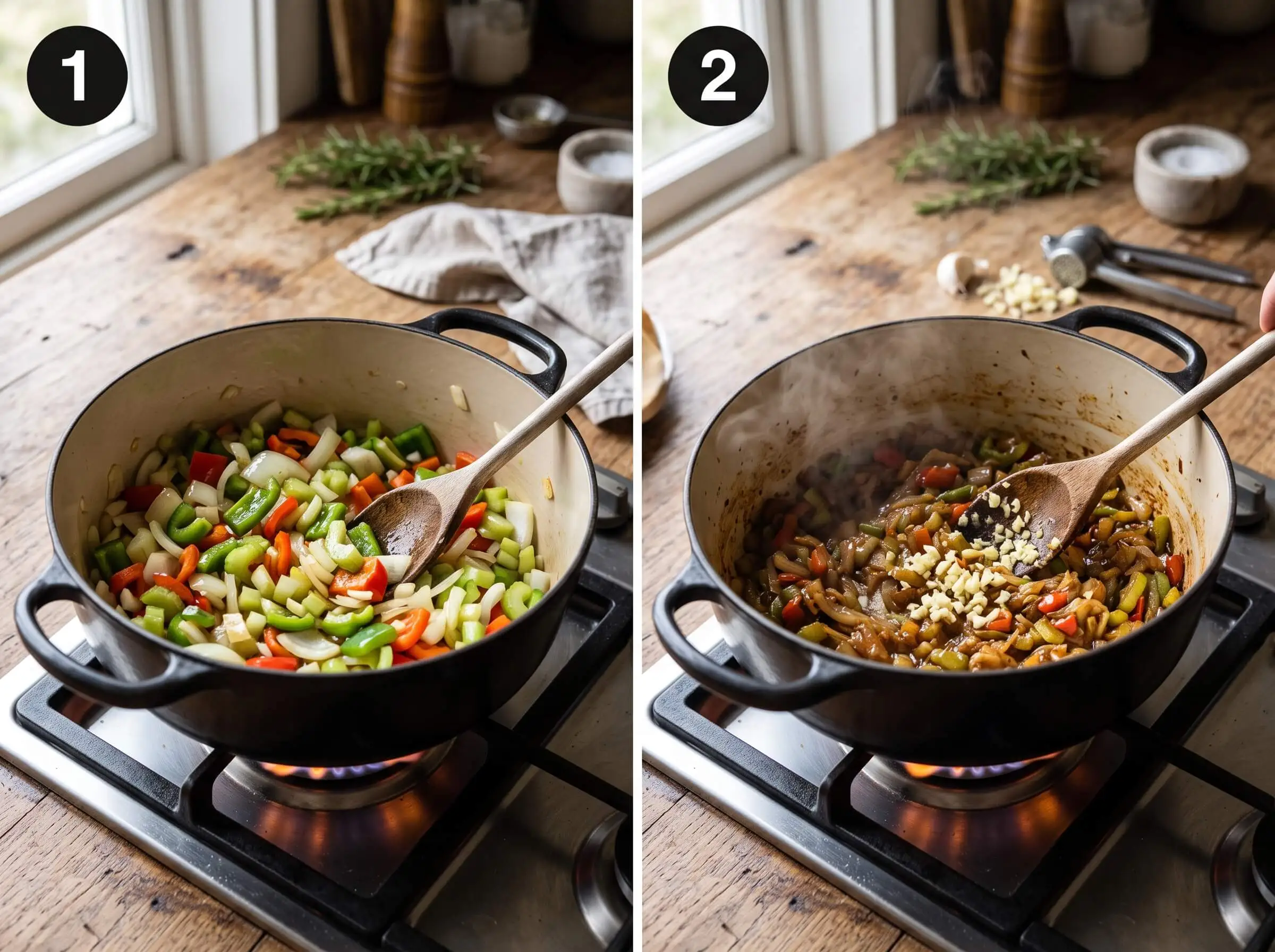
- Heat the olive oil in a large pot or Dutch oven over medium heat, then add the diced onion, bell pepper, and celery. Cook for 6-7 minutes, stirring occasionally, until the vegetables have softened and the onion turns translucent.
- Add the minced garlic and cook for another 30-45 seconds, stirring constantly, until fragrant but not browned, since burnt garlic can turn bitter and affect the flavor of the entire broth.
Build and Simmer the Broth
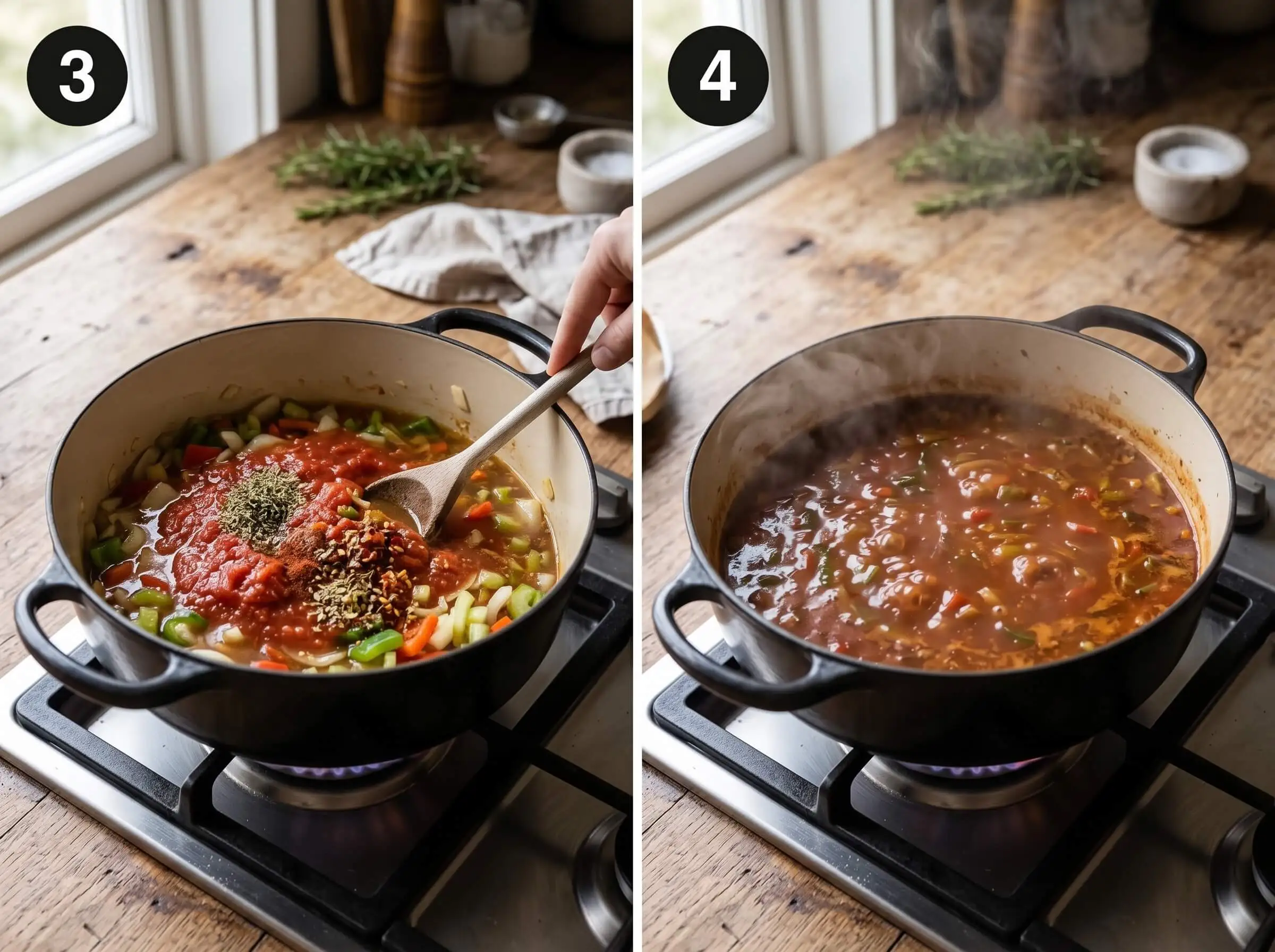
- Stir in the crushed tomatoes, seafood broth, cumin, oregano, smoked paprika, cayenne pepper if using, and bay leaf, mixing everything together until well combined. Bring the mixture to a boil, then reduce the heat to a gentle simmer.
- Let the broth simmer uncovered for 15-20 minutes, stirring occasionally, to allow the flavors to develop and deepen. This step is important, since a rushed broth won't have the same rich, layered flavor that makes a good sopa de mariscos recipe stand out.
Add the Seafood and Finish
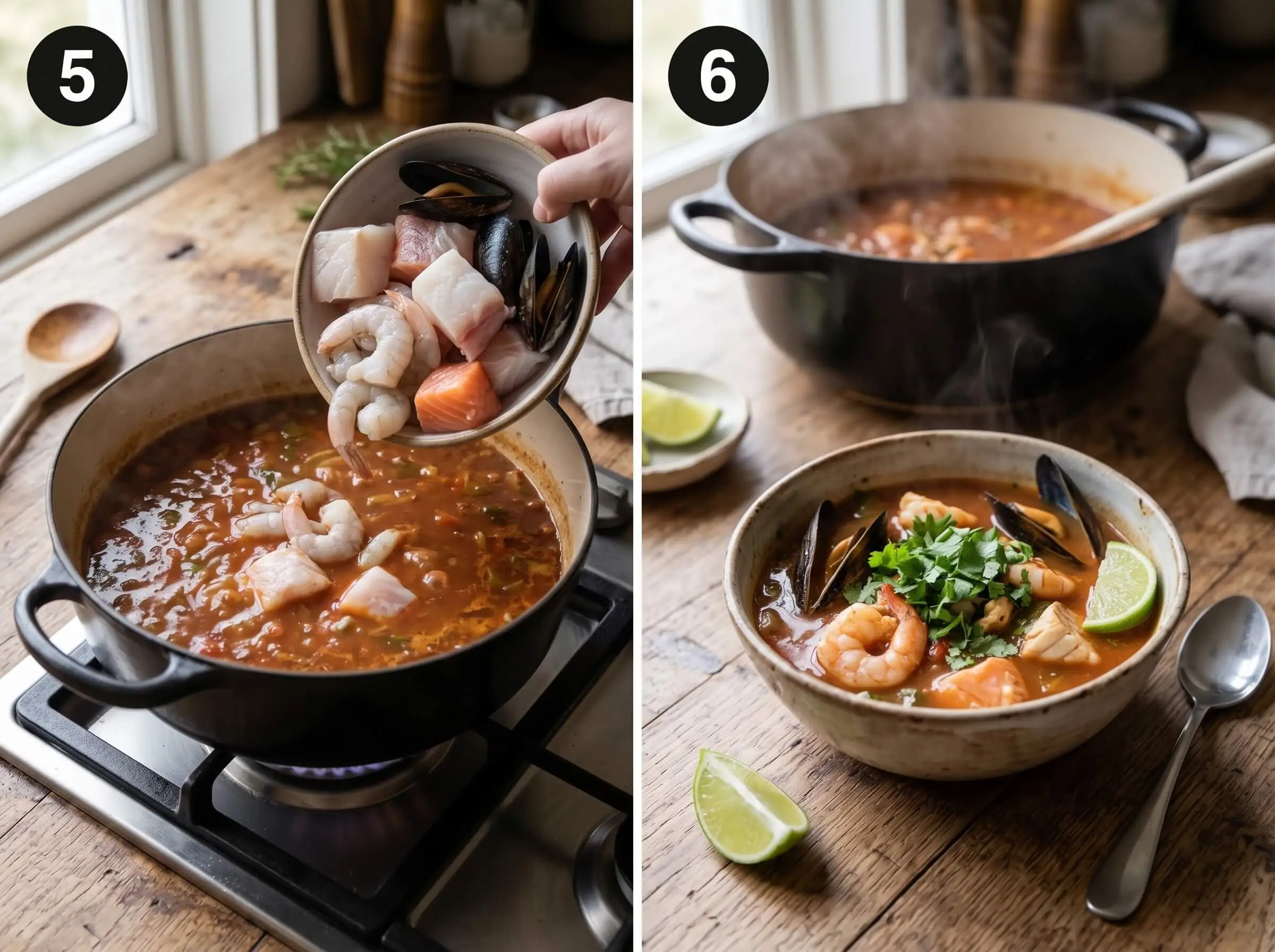
- Add the shrimp, fish chunks, and mussels or clams if using, directly into the simmering broth. Cook for 5-7 minutes, just until the shrimp turns pink and opaque, the fish flakes easily, and any shellfish shells have opened, discarding any that remain closed after cooking.
- Remove the bay leaf, season the soup with salt and pepper to taste, then ladle into bowls and garnish with fresh cilantro. Serve immediately with lime wedges on the side for squeezing over each bowl.
Notes
- Letting the tomato-based broth simmer for the full suggested time before adding any seafood makes a real difference in the final flavor, so try not to rush through that step even if you’re hungry and ready to eat.
- Adding the seafood toward the end of cooking, rather than simmering it for a long time, is the key to keeping everything tender instead of rubbery or overcooked.
- If using mussels or clams, discard any that don’t open after cooking, since this usually means they weren’t fresh to begin with.
- Fresh seafood broth or fish stock will give the richest flavor here, but a good quality store-bought version works well too if fresh isn’t available.
- This soup tends to taste even better the next day once the flavors have had more time to meld, so leftovers are a great option if you’re not in a rush to eat it all right away.
Frequently Asked Questions
Can I use a different type of seafood in this sopa de mariscos recipe?
Yes, this recipe is flexible enough to work with squid, scallops, crab, or a seafood mix instead of or alongside the shrimp and fish, as long as the total amount of seafood stays roughly the same and you adjust the cook time slightly for any seafood that cooks especially quickly, like squid or scallops, to avoid overcooking them.
Why does my broth taste flat or one-dimensional?
This usually happens when the broth doesn’t simmer long enough before the seafood goes in, since the tomato and spice base needs time to properly develop and deepen in flavor. Let the broth simmer uncovered for the full suggested time, and taste and adjust the seasoning with salt, pepper, or a bit more cumin before adding the seafood.
Can I make this best sopa de mariscos recipe spicier?
Absolutely, you can increase the cayenne pepper, add a diced jalapeño along with the other vegetables, or stir in a spoonful of your favorite hot sauce right before serving if you want more heat than the base recipe provides.
Is sopa de marisco naturally gluten-free?
Yes, as written, this recipe doesn’t contain any gluten-based ingredients, though it’s always worth double-checking the labels on your specific broth and canned tomatoes, since some processed products can contain hidden gluten-based additives or thickeners.
Can I make this soup ahead of time?
The tomato-based broth can absolutely be made a day or two ahead and stored in the refrigerator, which actually helps the flavors develop even further. It’s best to add the seafood fresh right before serving, though, since seafood doesn’t hold up as well to reheating and can become overcooked or tough if simmered again after the initial cooking.
How do I know when the seafood is fully cooked?
Shrimp should turn pink and opaque throughout, with no gray or translucent spots remaining, and white fish should flake easily with a fork. If using mussels or clams, they’re done once the shells have opened, and any that remain closed after cooking should be discarded rather than eaten.
Can I freeze this sopa de mariscos recipe?
It’s best to freeze just the tomato-based broth without the seafood, since seafood doesn’t freeze and reheat particularly well, often becoming rubbery or mushy. Freeze the broth for up to 3 months, then thaw and reheat it before adding freshly cooked seafood right before serving.
Twists & Ideas
You Can Add
A splash of dry white wine added along with the broth deepens the overall flavor of the soup with a subtle acidity that pairs well with the seafood.
Diced potatoes added along with the broth, simmered until tender before the seafood goes in, turn this into a heartier, more filling meal.
A handful of corn kernels stirred in near the end adds a bit of natural sweetness that balances the savory, spiced broth.
Crumbled queso fresco sprinkled over each bowl right before serving adds a salty, tangy finish that pairs nicely with the rich tomato base.
You Can Replace
Vegetable broth can replace the seafood broth for a lighter base if seafood broth isn’t available, though the overall flavor will be slightly less rich.
Firm white fish like cod or halibut can replace tilapia if that’s what’s available, without needing to change the cook time much.
Fresh tomatoes, blended or finely chopped, can replace canned crushed tomatoes if you prefer using fresh produce, though you may need to simmer the broth a bit longer to reduce excess liquid.
Squid or octopus can replace or join the mussels and clams for a different seafood combination, adjusting cook time slightly since squid cooks very quickly and can turn rubbery if overdone.
Recipes You May Enjoy
- Seafood Casserole Cheesy & Comforting
- Greek Lemon Chicken Orzo Soup
- Cajun Catfish Recipe
- Poke Tuna Bowl
- Salmon Marinade
- Manhattan Clam Chowder Recipe
A Soup Worth Slowing Down For
Sopa de mariscos is proof that a truly great soup doesn’t need to be complicated, it just needs time for the right flavors to develop. Between the deeply savory tomato base, the warm spice blend, and perfectly timed seafood that stays tender rather than overcooked, every spoonful delivers that rich, coastal flavor that makes this dish so beloved across Latin American kitchens.
Whether you’re making this sopa de mariscos recipe for a cozy family dinner, searching for the best sopa de mariscos recipe to impress guests, or simply craving a comforting bowl of something warm and seafood-forward, this dish delivers on both flavor and presentation without requiring advanced cooking skills. Once you’ve nailed the timing between the broth and the seafood, this is a recipe you’ll likely find yourself returning to any time you want something that tastes like it took far more effort than it actually did.
Tried This Recipe? Leave a Review!
There are no reviews yet. Be the first one to write one.